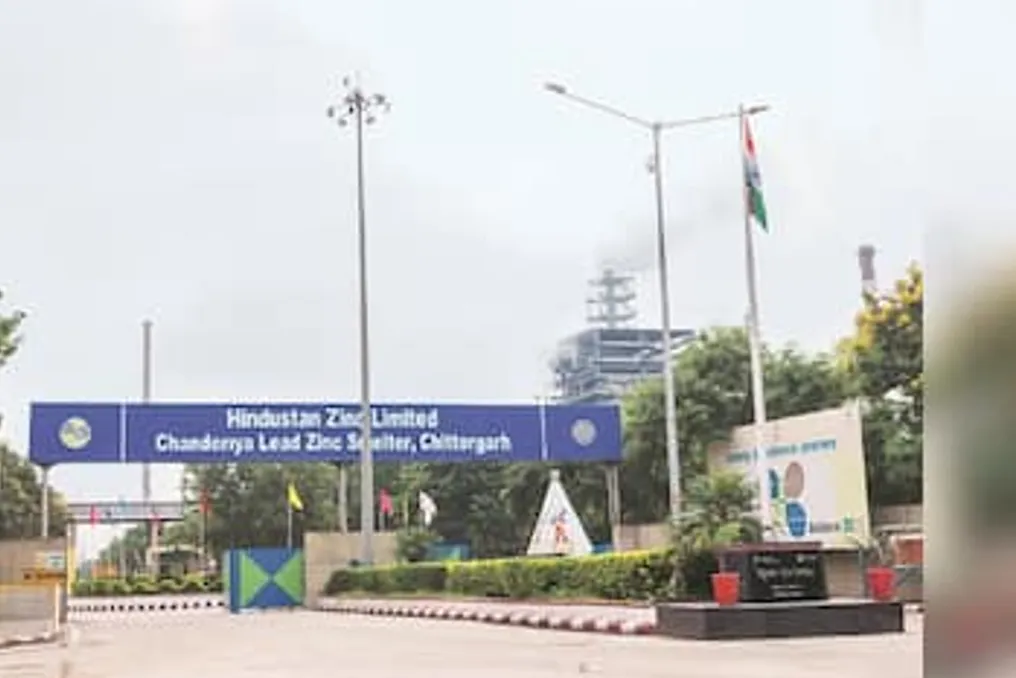
Hindustan Zinc Ltd has announced plans to invest approximately 80,000 crore rupees (equivalent to about 8.5 billion US dollars) over the next three to five years. The goal of these investments is to increase metal production capacity from the current 1.1 million tonnes per annum (MTPA) to 2 MTPA. This decision was made following the approval of the HZL Growth Program 2.0 by the Board of Directors.
According to the report submitted to the regulator, the planned expansion will allow for an addition of approximately 1 MTPA to metal production. The investments will be directed towards constructing new zinc and lead smelting units, establishing a silver refining plant, increasing ore mining and processing capacities, as well as conducting geological surveys and related infrastructure development.
The plan includes a budget for the previously approved integrated zinc smelter in Debari, which was sanctioned by the Board of Directors in June 2025. Following internal assessment and optimization, the capacity of this project has been increased to 265 thousand tonnes per annum (KTPA) within the original budget.
Expansion of Zinc, Lead, and Silver Capacities
Under the HZL 2.0 program, Hindustan Zinc intends to increase its total smelting capacity from 1,144 KTPA to 2,021 KTPA. This includes an additional increase in zinc smelting capacity by 765 KTPA and lead smelting capacity by 200 KTPA. Zinc smelting capacity is projected to reach 1,611 KTPA, and lead smelting capacity to reach 410 KTPA.
The expansion involves commissioning a new zinc smelter with a capacity of 500 KTPA and a lead smelter with a capacity of 200 KTPA over the next three to five years. Furthermore, the company plans to increase silver processing capacity from 800 tonnes per annum (TPA) to 1,500 TPA through the construction of a new silver refining plant with a capacity of 700 TPA.
According to the company, after the commissioning of the integrated zinc smelter in Debari, expected to have a capacity of 265 KTPA, the company will achieve 1.4 MTPA capacity in processed metals by fiscal year 29. Subsequent expansion will allow this capacity to be increased to 2 MTPA.
Increase in Ore Mining and Processing Capacities
The proposed expansion also covers the company's mining and processing operations to support a higher level of metal production. Hindustan Zinc plans to raise the total ore mining capacity from 19.3 MTPA to 35 MTPA, representing an increase of 15.7 MTPA.
The expansion will affect existing mining sites in Rampura Agucha, Kayad, Sindesar Kurd, Rajpura Dariba, and Zawar, as well as the development of the Bamnia Kalan project. Planned additions include 1.5 MTPA in Rampura Agucha and Kayad, 1 MTPA in Sindesar Kurd, 5.4 MTPA in Rajpura Dariba, 4.3 MTPA in Zawar, and 3.5 MTPA in Bamnia Kalan. The company clarified that the ore mining figures are based on a conceptual plan and may change after detailed project elaboration.
Additional investments of 3,823 crore rupees are also planned for the tailings processing plant in Rampura Agucha, whose products will be used as raw material for the smelters.
Steel Sector Expansion to Stimulate Zinc Demand
Hindustan Zinc links its expansion plans to the forecasted growth in zinc consumption, particularly in the rolled steel and infrastructure sectors. According to the company's investor presentation, the black steel production capacity in India is expected to grow from 205 million tonnes in fiscal year 2025 to 300 million tonnes by fiscal year 2030.
The same presentation suggests that domestic demand for zinc could double over the next five to ten years due to the expansion of steel production capacity. Global zinc demand is forecast to grow at a compound annual growth rate of 1.4% over the next decade, driven by infrastructure development and electrification.
The company also noted growing demand from construction, automotive, renewable energy, and manufacturing sectors as a factor supporting zinc consumption. According to the presentation, government capital expenditure on infrastructure amounted to 11.21 trillion rupees in fiscal year 2026. In the same fiscal year, India added 54.6 GW of renewable energy capacity, and passenger car sales grew by 7.9% year-on-year.
Hindustan Zinc also anticipates a decline in mined zinc supply after 2030 due to mine closures and limited new projects. The company estimates that declining ore quality and delays in new project implementation could further restrict supply.