
European Court of Auditors recommends increasing private sector involvement in EU education projects
Read more
Noticias ao Minuto
noticiasaominuto.com

European Court of Auditors recommends increasing private sector involvement in EU education projects

The European Court of Auditors (ECA) recommended increasing the involvement of the private sector in European Union (EU) projects aimed at supporting education and vocational training in the least developed countries, including activities under the Global Portal.

According to the report 'EU Support for Education and Technical Vocational Training in Least Developed Countries' (EFTP), auditors concluded that assistance to the Commission for Least Developed Countries (PMD) in the area of EFTP was targeted at current needs and was generally well coordinated.

Nevertheless, the ECA noted the existence of 'gaps in the strategic structure' and insufficient assessment of project consequences and impact, and expressed serious concern about the sustainability of funded initiatives.

In this regard, the ECA strongly recommended that 'the Commission promote greater participation of the private sector in the design and implementation of EFTP projects,' setting a deadline of the end of 2027.

The EU executive body stated in its response to this report that 'in accordance with the recommendations of the Special Report, the Commission will continue to strengthen the participation of the private sector in EFTP actions and improve monitoring of employment outcomes.'

The Commission also added that EFTP support in LDCs is carried out 'under complex operational conditions,' especially in light of the recommendation that Brussels should 'increase the sustainability of projects.' The Commission argued that 'limited institutional capacity and underdeveloped and largely informal labor markets can pose challenges to the sustainability of interventions, as well as to the visibility and measurement of results and effectiveness.'

Similar stories

Iranian Chamber of Commerce Guide Calls on State Bodies to Support Private Investment
Read more
www.tehrantimes.com

Iranian Chamber of Commerce Guide Calls on State Bodies to Support Private Investment

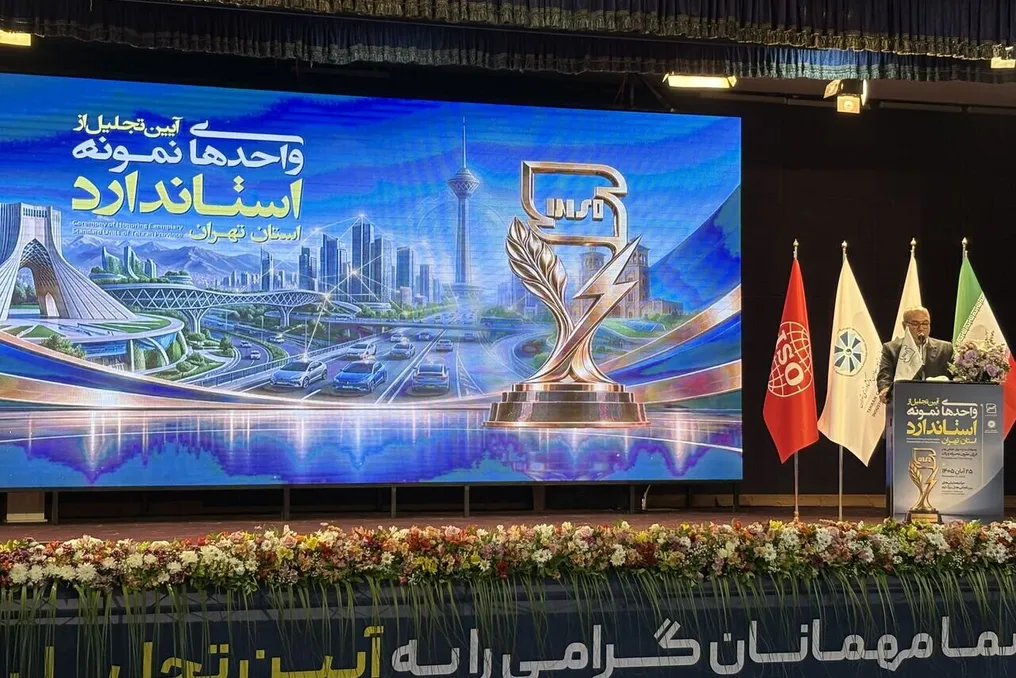
The head of the Tehran Chamber of Commerce, Industry, Mining and Agriculture (TCCIMA) stated on Monday that state and public institutions should act as proponents of private investment rather than competing with private businesses. He called for reforms to improve the business climate and stimulate economic growth.

Mahmoud Najafi Arab noted that China's economic experience demonstrated how state structures can direct resources and activities to support investment and the development of the private sector. He emphasized that in China, the state sector and management systems serve the development of private enterprises, whereas in Iran, some state agencies and public institutions sometimes become competitors to the private sector.

Such conditions complicate economic activity, Najafi Arab stated, strongly urging the government to take measures to improve the business environment and facilitate operations for enterprises. He reported that producers and business owners face numerous challenges, including limited access to financing and investment capital, difficulties in securing raw materials, and other production constraints that threaten the continuous operation of companies.

Maintaining production, preserving jobs, and adhering to quality standards under such conditions require significant effort, competent management, and responsibility. Companies recognized for their commitment to standards have shown that quality can be maintained even with limitations through technical expertise, efficient management, and qualified human resources.

Najafi Arab highly praised enterprises that prioritize quality improvement and standard compliance, noting their vital role in expanding production and strengthening consumer trust. He described Tehran as one of the country's main industrial, commercial, and service centers, pointing out that the concentration of production capacity, enterprises, and scientific-specialized institutions in the province means that improvements in quality and productivity matter not only for the region.

He stressed that standards are a key factor in public trust and economic competitiveness, adding that they go beyond technical rules and regulations, helping to increase productivity, protect consumer rights, and enhance the reputation of Iranian products. Najafi Arab emphasized that achieving sustainable quality is not only the duty of producers; businesses striving to maintain quality, modernize equipment, and expand operations also require a stable environment, predictable rules, and adequate access to production resources.

Therefore, in addition to measures to ensure compliance with standards, improving the business climate and removing production barriers should be a priority. Najafi Arab also advocated for constructive cooperation between the private sector and state bodies, stating that direct dialogue can help more accurately identify business problems and develop practical solutions.

Private schools in Uzbekistan will receive state support for creating conditions for educating children with special needs
Read more
podrobno.uz

Private schools in Uzbekistan will receive state support for creating conditions for educating children with special needs

Private educational institutions in Uzbekistan can now receive state subsidies on the condition of opening special correctional classes for pupils with special educational needs.

The amount of financial support will vary depending on the region. According to the new procedure, the number of students in each such correctional class must not exceed twelve people.

How to receive the subsidy

This new regulation was officially approved by a government decree. To qualify for the subsidy, a private school must submit a corresponding application through the 'YAMIH' system to the territorial administration overseeing the provision of educational services at the school's location.

Application review takes one working day. If there are no grounds for refusal, a contract is concluded between the parties.

Amount of financial assistance

The monthly subsidy amount is determined individually for each child. In Tashkent, the payment amount will be 11 BRV, equivalent to 4.84 million soms. In regional centers and the city of Nukus, the subsidy will be 9.5 BRV (4.18 million soms), while in other districts and cities it will reach 8.5 BRV (3.74 million soms).

Previously, there was a report about plans for annual assessment of the psychological state of students in kindergartens, schools, and higher education institutions in Uzbekistan.

Ministry of Agriculture announced the implementation of a document on public-private partnerships in the agricultural sector
Read more
www.tehrantimes.com

Ministry of Agriculture announced the implementation of a document on public-private partnerships in the agricultural sector

The Ministry of Agriculture announced that the Comprehensive Document for the Development of Public-Private Partnerships in the Agricultural Sector has been notified for implementation. The goal of this document is to utilize the potential of the private sector, develop investments, and accelerate the execution of plans and projects in the agricultural sphere.

According to a report from the IRNA agency of the Ministry of Agriculture, the preparation of this document was based on the provisions of the Law on the Seventh Five-Year National Development Plan and the Law on Financing Production and Infrastructure, as well as current laws and regulations concerning the implementation of public-private partnership projects. The document has been sent to relevant departments for execution.

In accordance with this notification, the 'Comprehensive Document for the Development of Public-Private Partnerships in the Agricultural Sector' was developed taking into account the specifics of this industry and to maximize the investment and participation capabilities of the private sector. Technical and organizational aspects, as well as the opinions of the country's Planning and Budgeting Organization, were taken into account during its preparation, and the final text was notified as an appendix.

This notification emphasizes that deputy ministers, heads of affiliated organizations, general directors of specialized parent companies and affiliated institutions, heads of provincial agricultural organizations, and general directors of independent offices must take measures to accurately implement the provisions of the document within their areas of responsibility.

Furthermore, responsible departments have been instructed, in compliance with current laws and rules, to prepare reports on the progress of implementing the document at specified intervals and submit them to the Department of Economic Issues of the Deputy Minister for Economic Affairs of the Ministry of Agriculture.

The implementation of this document can serve as a basis for strengthening the role of the private sector in the development of the agricultural sector, ensuring the financial resources necessary for infrastructure and plans, and more effectively utilizing investment opportunities.

Popular