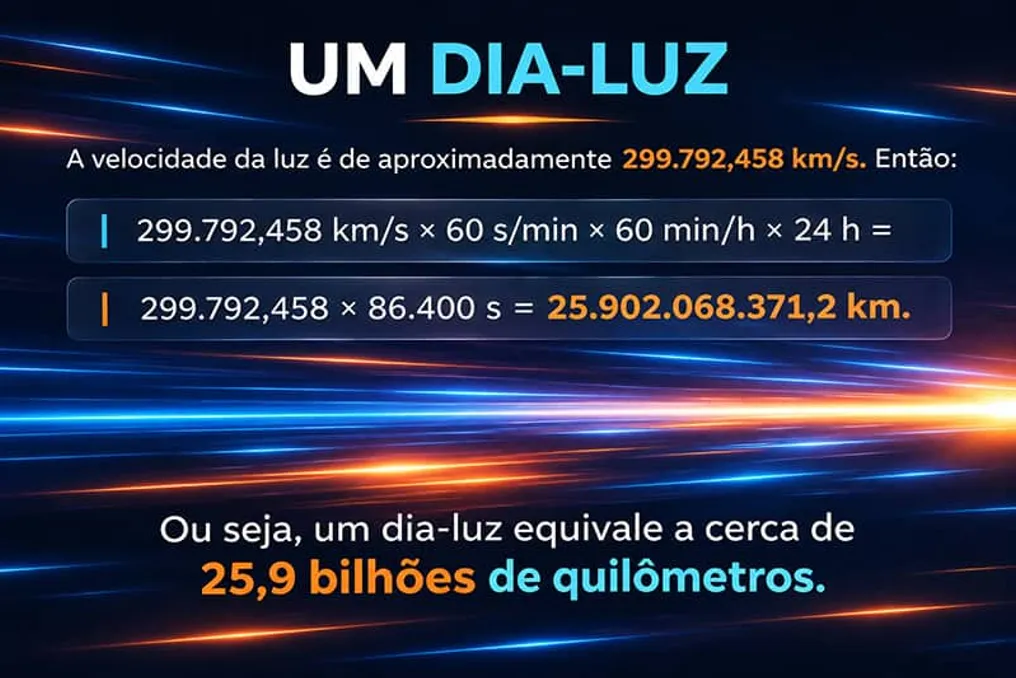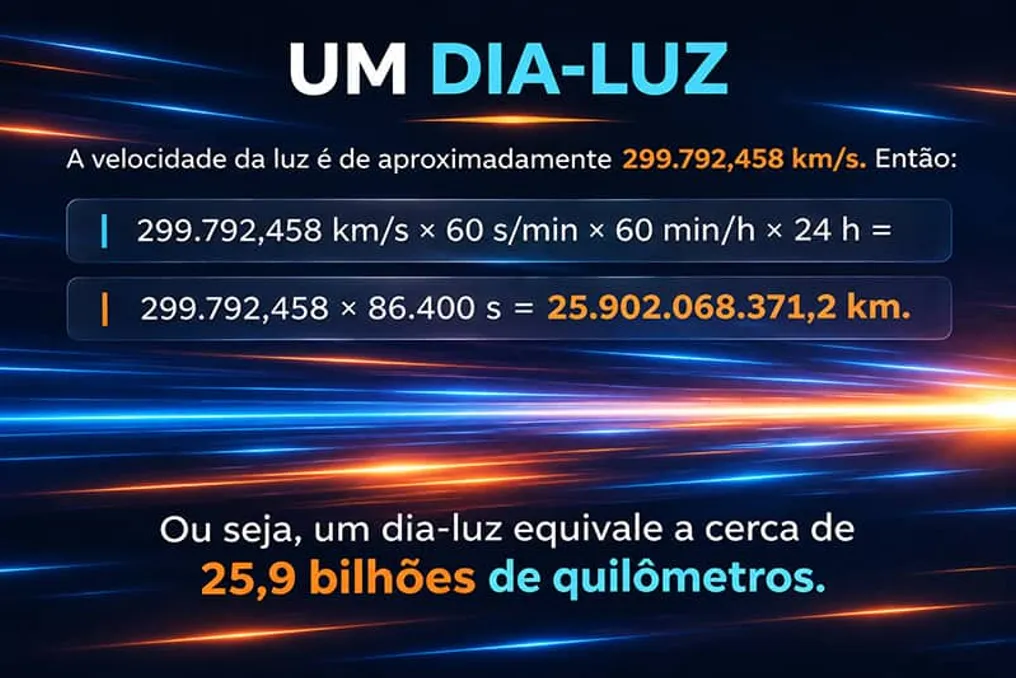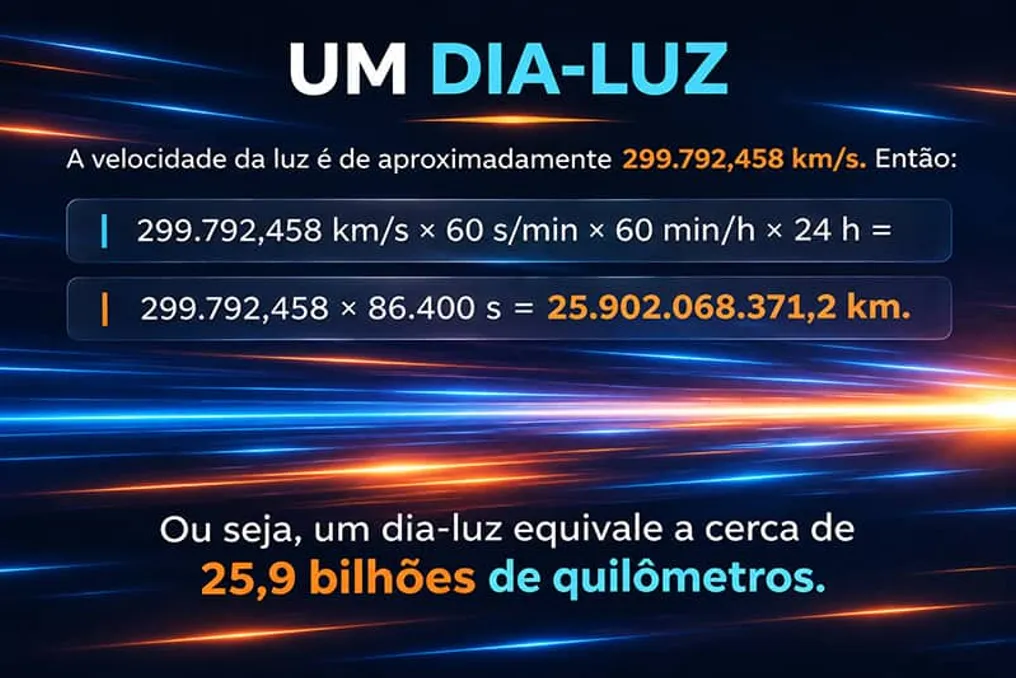
The Voyager 1 probe, launched by NASA in 1977, is about to reach an unprecedented milestone in space exploration: for the first time, a human-made artifact will be one light-day away from Earth, which is equivalent to approximately 25.9 billion kilometers. This event is expected to occur this week.
One light-day represents the distance light travels in a 24-hour period in a vacuum. This concept follows the same logic as the light-year, a well-established unit in astronomy that measures the path of light over the course of a year. Considering that light travels at about 300 thousand kilometers per second, one light-day corresponds to approximately 25.9 billion kilometers.
Since its launch, Voyager 1 has continuously explored the cosmos. In 2012, the probe achieved a historic feat by crossing the heliopause, which constitutes the boundary of the solar wind-dominated heliosphere, thus becoming the first human spacecraft to officially enter interstellar space.
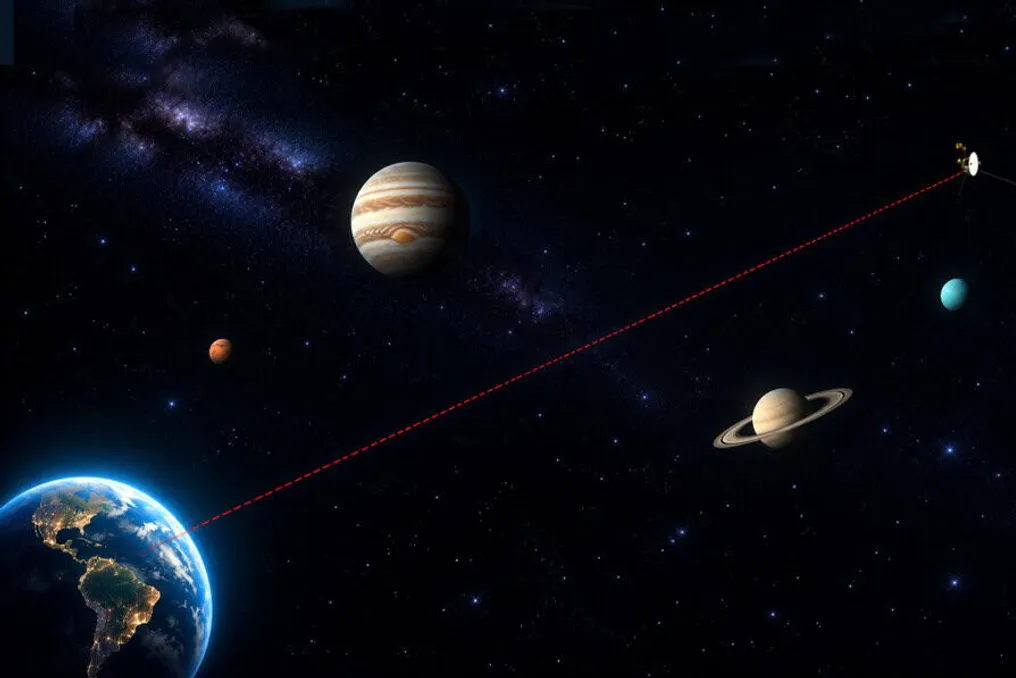
Currently, the probe is located about 173 astronomical units (AU) from Earth. Since one astronomical unit corresponds to the average distance between our planet and the Sun, fixed at just over 149 million kilometers, the current location of the spacecraft exceeds 25.8 billion kilometers from here.
Even though it is billions of kilometers from Earth, Voyager 1 continues to transmit data to NASA. To do this, it uses a high-gain antenna that directs radio signals to the planet. Although these electromagnetic waves travel at the speed of light, they require almost 24 hours to cover the distance between the probe and Earth.
This implies that any instruction sent from Earth takes about a day to reach the probe, and a subsequent response requires a similar interval. Consequently, a complete round-trip communication can take almost 48 hours.
The reception of this data depends on large antennas installed on Earth, designed to receive extremely weak signals. The responsible equipment processes these transmissions to recover the scientific information sent by the spacecraft. The transit time of the signals also allows for the calculation of Voyager 1's distance, as NASA uses the transmission interval, knowing the speed of light, to determine the probe's position.
In 2012, upon crossing the heliopause, the boundary of the heliosphere formed by the influence of the solar wind, Voyager 1 became the first spacecraft to enter interstellar space. However, crossing this barrier does not necessarily mean abandoning the Solar System, as there is no single definition for the limit of the latter. One interpretation suggests that this limit extends to where the gravitational attraction of the Sun still exerts an effect on bodies.
From this perspective, the boundary is beyond the Oort Cloud, a distant region that houses frozen bodies. According to NASA, the Voyager probes will still take approximately 40 thousand years to reach this limit, covering a distance equivalent to about two light-years.