
Vadodara woman seeks help from support service after AI advice on divorce
Read more
Aaj Tak
www.aajtak.in

Vadodara woman seeks help from support service after AI advice on divorce

A striking case emerged from Vadodara, Gujarat, where a teacher began seeking solutions to conflicts with his wife using artificial intelligence (AI). According to the wife, after receiving advice from the AI, her husband started recording audio and video of their arguments, which only worsened the disagreements, ultimately leading him to insist on a divorce.

Eventually, the distressed wife sought help from the women's helpline 'Abhyam'. After consultation with the team, they decided to talk to each other and save their relationship.

This incident occurred in the Chani area of Vadodara. A 25-year-old woman living there contacted the 'Abhyam' helpline and reported that her marriage was solemnized about two years ago through an online platform with family consent. Her husband works as a teacher in a private school.

The woman had previously worked but decided to become a homemaker after the wedding. Her husband insisted that she start working again, while she was not ready for it. This issue became the cause of disputes between them over the last six months.

According to the woman, for the past two months, her husband used AI to find an exit from marital disagreements. He started acting according to the AI's advice. An accusation arose that the AI advised him to record videos and audio of the fights. Following this, the teacher began documenting conflicts with his wife, which, in the woman's opinion, intensified the tension between them.

The woman recounted that during this process, the AI advised her husband to get a divorce. Subsequently, the teacher began insisting on the divorce, while the wife did not want to end the relationship. Due to the constantly escalating arguments, she reached out to the 'Abhyam' helpline.

After receiving the complaint, the 'Abhyam' team contacted the couple and conducted a consultation with them. The team explained that decisions regarding family relationships should not be made based on machine advice, but rather through mutual communication and understanding. They advised the couple to give their relationship time and try to understand each other's feelings and desires. As a result, the husband and wife talked and decided to stay together.

It was also noted that the couple's marriage was inter-ethnic. They lived alone in Vadodara, while the family resided in the village. When the disputes escalated, the family also advised them to divorce but did not intervene further. Nevertheless, after the consultation by the 'Abhyam' team, they decided to save their relationship. It is currently reported that the matter is being resolved through mutual agreement.
Similar stories

European countries plan to create migrant centers in Rwanda for those whose asylum applications were rejected
Read more
www.aajtak.in

European countries plan to create migrant centers in Rwanda for those whose asylum applications were rejected

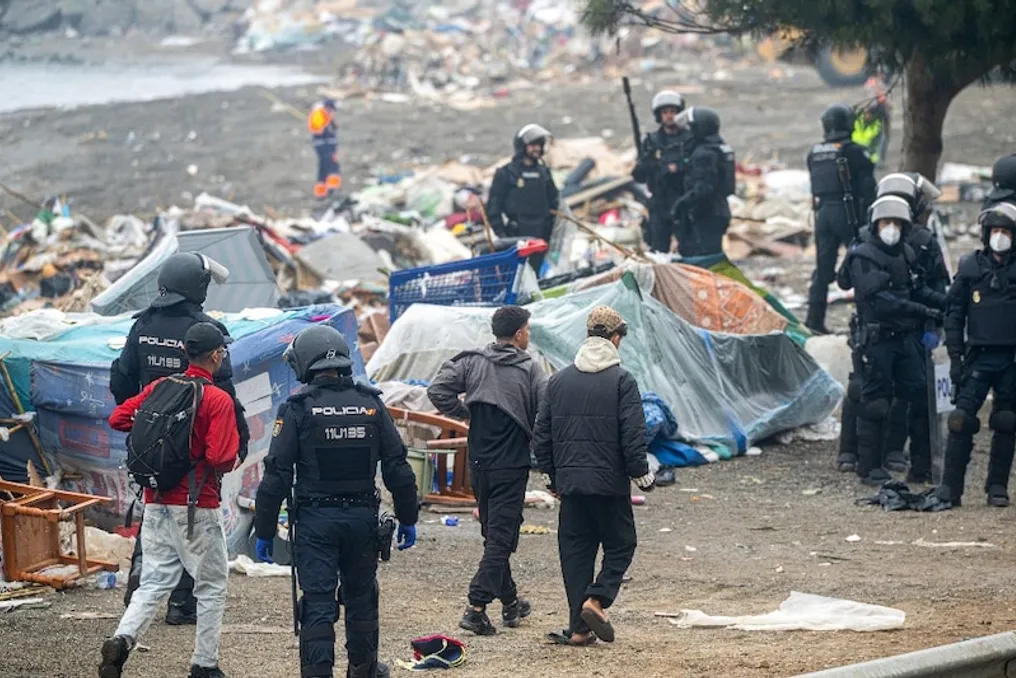
Several European countries announced on Monday the development of a plan to create a 'migrant hub' in Rwanda. This center is intended to house individuals who have applied for asylum but whose applications were rejected. The center is planned to begin operations next year.

The European Union has been striving for many years to tighten migration legislation, reduce the number of asylum seekers arriving in the group of 27 countries, and return migrants who do not have the right to reside in Europe. The creation of such centers outside of Europe is an important part of this strategy.

Austria, Denmark, Germany, Greece, and the Netherlands are involved in guiding this plan. Austrian Chancellor Christian Thaler stated during negotiations with officials from other European countries and the Rwandan Minister of Internal Affairs that the goal is to launch the first center in Rwanda next year.

Danish Prime Minister Mette Frederiksen noted that this agreement will help address serious issues of illegal migration. According to her, it will allow for the eradication of smugglers' activities, the restoration of border control, and the reduction of the causes of irregular migration.

However, human rights organizations have opposed this initiative. They argue that European states cannot guarantee the protection of the rights of migrants sent to centers or prisons in third countries. Clementine de Montjoy, a researcher on Africa and expert on Rwanda from Human Rights Watch, stated that such centers are an attempt by the EU to shift its responsibilities onto other countries. She added that funding such programs by Rwanda could harm the people sent there and bring economic and political benefits to a government accused of serious human rights violations both domestically and abroad.

Proponents of the plan, meanwhile, argue that these 'return hubs' will be an alternative for migrants who cannot return to their home country but also lack legal grounds to stay in Europe. European officials emphasized that European and international law will be observed in these centers. In recent years, EU rules have changed due to growing political and public pressure on migration issues. In June, European parliamentarians voted to authorize member states to create such centers outside the EU. These centers can be established by individual countries or groups of countries, and asylum seekers whose applications have been rejected may be directed there instead of their home countries.

New Uzbekistan as a land of intercultural unity and tolerance
Read more
uza.uz

New Uzbekistan as a land of intercultural unity and tolerance

In the context of modern globalization, strengthening intercultural unity, religious tolerance, and mutual respect is one of the most important conditions for societal stability, peace, and progress.

This is especially true in Uzbekistan, where representatives of various nations and ethnicities reside; preserving these values is of paramount importance. It is extremely important to strengthen feelings of tolerance and solidarity among young people.

Popular