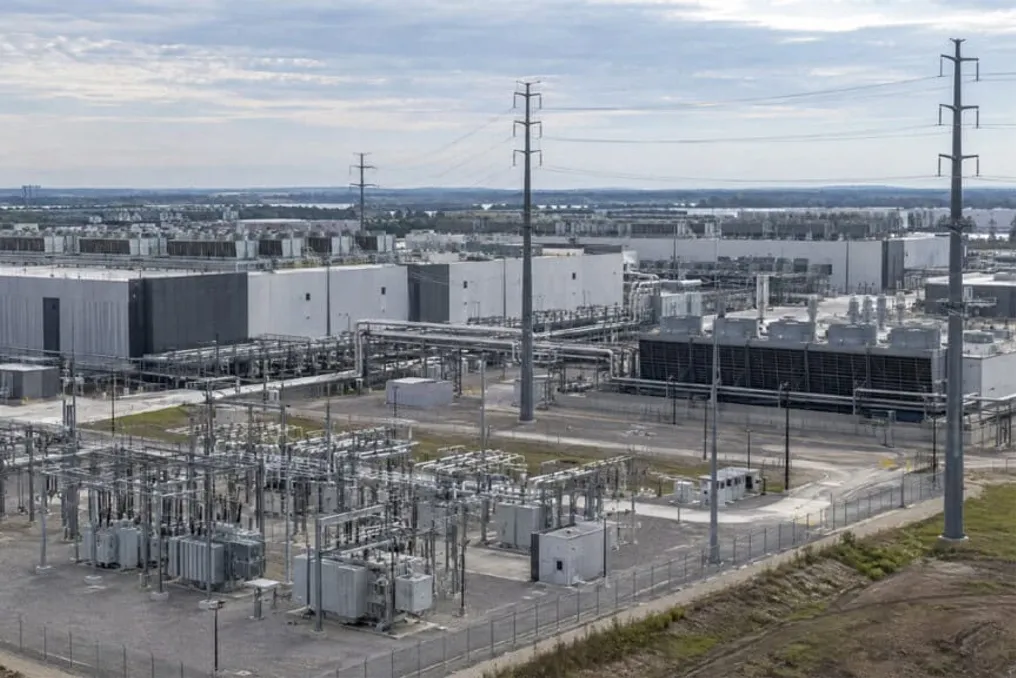
IMF and UN warn of financial and environmental risks stemming from the advancement of Artificial Intelligence
Read more
Olhar Digital
olhardigital.com.br

IMF and UN warn of financial and environmental risks stemming from the advancement of Artificial Intelligence

Authorities from the International Monetary Fund (IMF) and the UN issued warnings this Monday (16) regarding the financial and environmental risks generated by the rapid growth of artificial intelligence (AI).

While the IMF highlights vulnerabilities in sector financing, climate leaders demand greater environmental responsibility in the expansion of this technology.

Kristalina Georgieva, Managing Director of the IMF, emphasized that the global economy is heavily dependent on AI, stating that it is supported 'on one leg, the leg of AI.' In an interview given to CNBC during the Association of Southeast Asian Nations (ASEAN) summit held in the Philippines, she warned that a sudden loss of investor confidence could negatively impact economic growth.

According to the organization's estimates, circulating financing among AI companies exceeded US$ 1 trillion (approximately R$ 5.6 trillion), with about two-thirds of this amount obtained through debt. In this scheme, capital invested in a company is returned to the investor through purchase orders. Georgieva observed that although the volume is not yet very large, it demonstrates accelerated growth.

Nvidia is central to these transactions, having lost over US$ 1 trillion (about R$ 5.6 trillion) in market value in the last month. CNBC linked this stock pressure to allegations involving extramarital relationships attributed to former CEO Jensen Huang, including a case with a person suspected of being a Chinese spy.

Tim Arcuri, a UBS analyst, projected that a possible reduction in investments in Nvidia could subtract US$ 50 billion (about R$ 280 billion) or more from the system. This risk is aggravated by the rising cost of corporate loans, driven by increasing interest rates.

In October, the IMF had raised its global growth projection to 3.1% in 2026, counting on AI investments to maintain economic activity. However, the organization also signaled an adverse scenario: if the technology does not meet market expectations, US stocks could fall by 20% in 2026, and world production would be 1.1% below the reference target by 2028.

At COP31, held in Antalya, Turkey, Simon Stiell, UN Executive Secretary for Climate Change, characterized artificial intelligence as a technology of 'great potential' and 'great danger.' During the presentation of a voluntary commitment, he declared that AI acts as a 'double-edged sword' in combating global warming.

The technology has the capacity to assist in hurricane forecasting and increase energy efficiency. However, the data centers used to train models of major American and Chinese corporations demand enormous amounts of water and electricity. The expansion of these facilities has generated various reactions.

Stiell called on CEOs and boards of directors to align their investments with international climate goals, prioritizing renewable sources to supply data centers. The voluntary initiative, promoted by the Turkish presidency, also advocates for increasing the share of AI infrastructure with low or zero greenhouse gas emissions. Mehmet Fatih Kacir, the Turkish Minister of Industry and Technology, reported that the commitment received 80 endorsements, without specifying whether these are from nations, companies, or both.

Similar stories

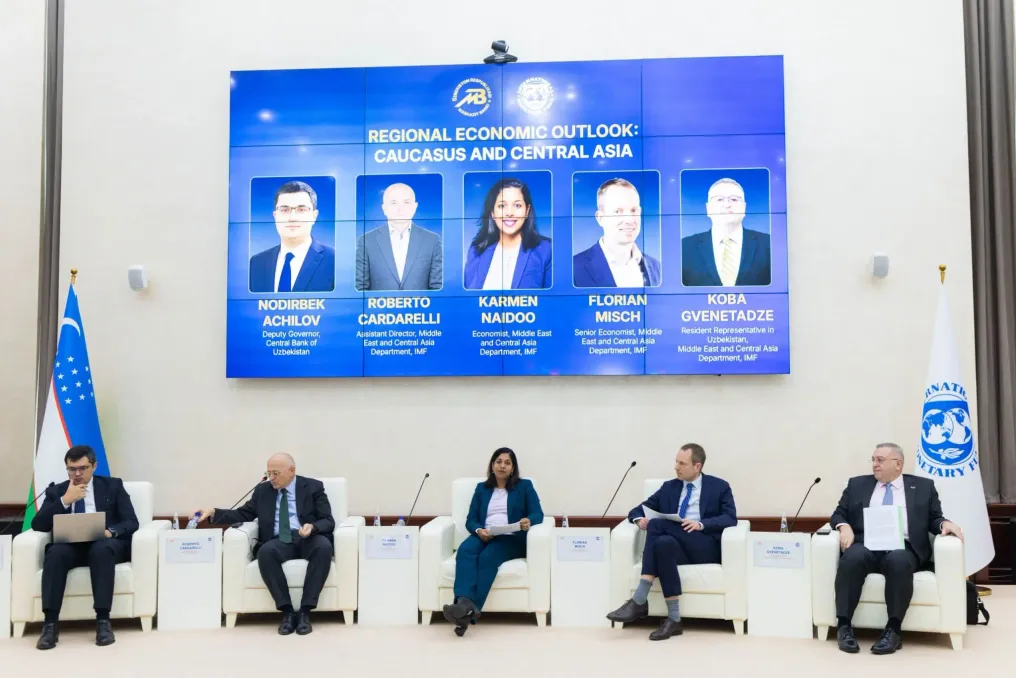
International Monetary Fund warns of threat to Uzbekistan's economy related to subsidized lending
Read more
uzdaily.uz

International Monetary Fund warns of threat to Uzbekistan's economy related to subsidized lending

The International Monetary Fund (IMF) views pressure to expand targeted and subsidized lending as one of the internal risks to Uzbekistan's economy. The Fund plans to publish separate studies on interest rates and the practice of targeted lending in the country in 2027.

Koba Gvenetadze, the IMF representative in Uzbekistan, announced these plans during the presentation of the fund's regional economic forecast at the Central Bank.

When outlining risks to the economic forecast, Gvenetadze divided them into external and internal factors. External risks include global economic uncertainty, geopolitical events, and fluctuations in commodity prices.

Among the internal threats, he pointed to the possibility of procyclical increases in government spending when revenues exceed planned figures, including increased gold receipts. Additionally, he noted potential pressure related to the expansion of subsidized and targeted lending programs.

The IMF is preparing two analytical projects concerning Uzbekistan's economic policy. One will examine interest rates, while the other will focus on targeted lending. Gvenetadze stated that the results of both studies are scheduled to be released in 2027.

Targeted lending involves issuing loans under favorable conditions based on government decisions. Such loans may have interest rates that do not reflect the market value of borrowing. This circumstance can weaken the transmission mechanism of monetary policy, as the Central Bank's decisions on the key rate do not fully influence the cost of borrowing across the entire economy.

The IMF also noted that Uzbekistan continues to make efforts to strengthen the transmission of monetary policy. The Central Bank has kept its key rate at 14% since March 2025. The fund's regional report also emphasizes that relatively small and shallow credit markets, including Uzbekistan's, could amplify the impact of future external shocks on inflation.

UN calls for attention to environmental risks of data centers in Uzbekistan's energy sector
Read more
uzdaily.uz

UN calls for attention to environmental risks of data centers in Uzbekistan's energy sector

The rapid development of artificial intelligence is leading to increased consumption of electricity and water, creating additional strain on energy infrastructure. This warning was issued by Simon Steell, Executive Secretary of the UNFCCC, during a high-level roundtable on green digital transformation at COP31 in Antalya on November 16.

According to Steell, artificial intelligence has enormous potential for solving climate problems, but its rapid expansion carries significant economic and environmental risks. He emphasized that 'artificial intelligence and other advanced technologies are a double-edged sword. The task is to mitigate their harmful impact, enhance their transformative potential, and use these technologies responsibly.'

The Executive Secretary noted that the growing demand for electricity from data centers creates additional stress on power systems. If this demand is met using fossil fuels, greenhouse gas emissions increase, which hinders the achievement of international climate goals. Furthermore, there is a serious issue of shifting the costs of energy infrastructure onto consumers.

Steell stated that households and businesses should not face higher electricity bills, increased pollution contributing to global warming, and rising inequality in exchange for promises of future technological benefits. He also pointed to instances where data center developers build their own on-site gas power plants to bypass existing grid limitations.

Water consumption is another growing concern. In some countries, local communities are already opposing the construction of data centers due to concerns about water supply, electricity costs, and environmental impact. In light of this, Steell called on technology companies to disclose their energy and water consumption, improve infrastructure efficiency, and power data centers with renewable energy. He stressed: 'Claims of future emission reductions cannot justify increased pollution today.'

At the same time, the head of the UN Climate Secretariat highlighted that artificial intelligence can become an important tool for climate change adaptation. Specifically, AI technologies can improve flood early warning systems, help farmers prepare for droughts, enhance grid efficiency, and facilitate the integration of solar and wind generation.

Steell also stressed the need to ensure developing countries have access to financing, computing power, and reliable data. In his view, the transition to energy is happening at different speeds in developed and developing economies, and artificial intelligence should help bridge this gap, not deepen it. For Uzbekistan, which is expanding its digital infrastructure and renewable energy potential, these issues are of practical importance. The growth of computing power requires careful consideration of electricity availability, grid resilience, and efficient water resource management.

The 'Antalya Declaration on AI' was also presented at COP31—a voluntary framework aimed at reducing the environmental impact of artificial intelligence and promoting AI-based climate solutions.

Popular