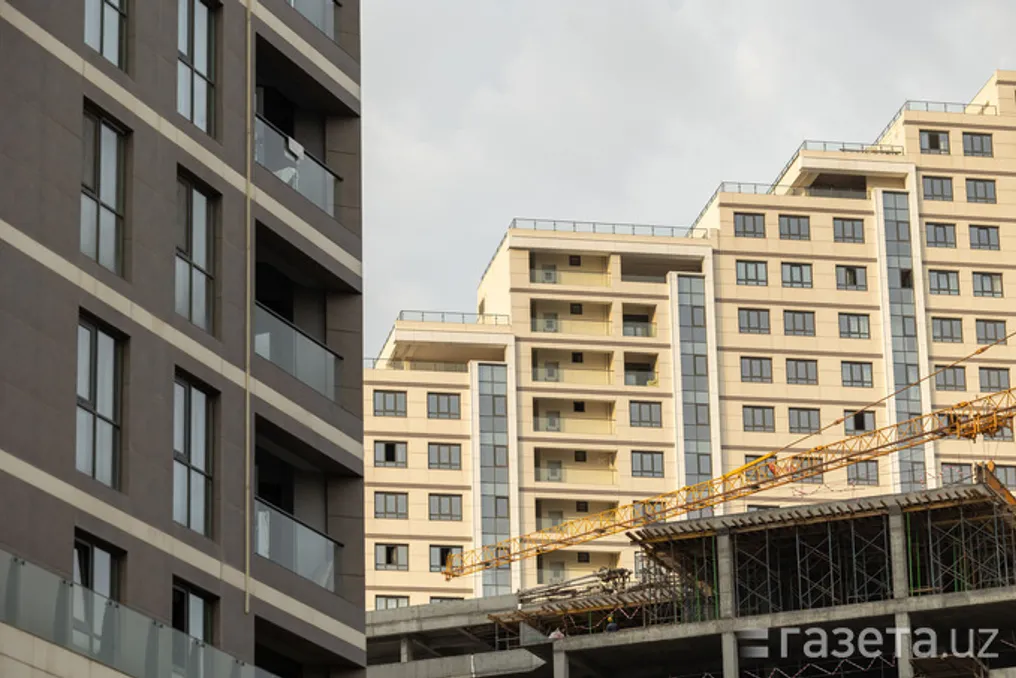
Plans to increase the share of banks in mortgage financing in Uzbekistan by reducing the burden on the budget
Read more
Gazeta.uz
gazeta.uz

Plans to increase the share of banks in mortgage financing in Uzbekistan by reducing the burden on the budget

Uzbekistan plans to increase the share of participation of banks and the Mortgage Refinancing Company in providing mortgage loans from the current 43% to 60% over a three-year period. This decision was announced by President Shavkat Mirziyoyev during a meeting dedicated to the state budget project and key macroeconomic indicators for 2027.

The head of state noted that the mortgage market is one of the main factors of the country's economic growth. He emphasized the need to increase the share of banks and the mortgage company in the market to 60% within three years to reduce the financial burden on the budget, which will allow for savings of at least 12 trillion soms.

The President instructed the Minister of Economy and Finance Jamshid Kuchkarov and the Chairman of the Central Bank Timur Ishmetov to prepare proposals regarding new ways of financing mortgages. He required them to present a plan within two weeks on how 25 trillion soms can be attracted next year through the introduction of new mechanisms, compared to 23 trillion soms allocated this year.

As a result of these measures, the volume of funds allocated for mortgage lending in 2027 will increase by 2 trillion soms, corresponding to an 8.7% increase compared to the planned figures for 2026.

Current Mortgage Financing Model

According to data from the Ministry of Economy and Finance, from January to September 2026, mortgage loans totaling 20.9 trillion soms were issued to the population. This figure exceeds the amount for the same period last year by 5.9 trillion soms, or 39%.

The distribution of these funds showed that out of the total volume of 12.8 trillion soms provided over nine months, 6.1 trillion soms covered the state budget, 6.1 trillion soms came from commercial banks' own funds, and another 2 trillion soms came from the Mortgage Refinancing Company. Thus, approximately 61% of the loans actually issued were covered by the budget, while banks and the mortgage company accounted for about 39%. At the meeting, the president mentioned that the current share of the latter is 43% (likely referring to the ten-month figure).

According to the Central Bank of Uzbekistan, as of November 9, 2026, the average interest rate for mortgage loans reached 21.7% per annum. This figure included secondary housing market mortgages issued exclusively using the own funds of banks and the Mortgage Refinancing Company over the last ten working days.

Among the 19 banks, the lowest average rates were recorded by 'Asakabank' at 18.7%, Octobank at 19.8%, and Orient Finans Bank at 20.2%. The highest rates were recorded at Asia Alliance Bank (26%), Apex Bank (25%), and Ipak Yuli Bank (24.6%), creating a difference of 7.3 percentage points between the minimum and maximum rates.

Specifically, the average rate at 'Mortgage Bank' was 21.7%, at National Bank it was 21.1%, at 'Kapitalbank' it was 20.9%, and at 'Uzpromstroybank' (SQB) and 'Business Development Bank' (BRB) it was 20.8%, and at 'Agrobank' it was 22.1%.

In February 2026, the president set a target volume for mortgage lending of 23 trillion soms with his decree, including 12.3 trillion soms from the budget, 7.7 trillion soms from banks, and 3 trillion soms from the mortgage company. Additionally, 2.7 trillion soms was allocated for subsidizing initial payments and interest payments for 2026. As of October 1, 1.21 trillion soms in subsidies had actually been paid out, of which 800.3 billion soms went to compensate part of the interest, and 407.8 billion soms helped 13,722 citizens with down payments.

Previously, the publication 'Gazeta' reported that from January to June, Uzbek banks provided mortgage loans totaling 13.1 trillion soms, which is almost 39% more than the previous year. The number of borrowers increased by 34.8%, reaching 42.6 thousand people. The average rates for loans financed from the republican budget were 16.8%, from banks—20.1%, and from the Mortgage Refinancing Company—21.6%.
Similar stories

Central Bank of Uzbekistan plans to introduce floating-rate loans and deposits tied to the UZONIA index
Read more
uzdaily.uz

Central Bank of Uzbekistan plans to introduce floating-rate loans and deposits tied to the UZONIA index

The Central Bank of Uzbekistan intends to develop proposals for introducing loans and deposits with a floating interest rate that will be linked to the interbank benchmark UZONIA. This initiative is included in the draft of the main monetary policy guidelines for the period 2027–2029, according to a document published by the regulator.

The proposed financial instruments are designed to accelerate the transmission of money market rate changes to banks and their clients. Currently, changes in the Central Bank's key rate do not automatically lead to adjustments in the rates offered by commercial banks for loans and deposits.

The rates for new banking products depend on funding costs, competition, risk assessment, and other factors. Tying banking products to a market benchmark will allow for faster reflection of changes in the cost of money under credit terms and deposit agreements.

How floating-rate products will work

Interest rates on such products can change during the term of the agreement in accordance with a pre-agreed formula. For example, a bank may set the loan rate as the UZONIA rate plus a fixed premium. If the benchmark decreases, the borrower's debt servicing cost may decrease; if it increases, the cost of servicing the loan will rise.

The document presents a hypothetical example: with a UZONIA rate of 14% and a bank margin of five percentage points, the annual rate will be 19%. If the benchmark drops to 12%, the rate will fall to 17%, provided all other contractual conditions remain unchanged. A similar mechanism can be applied to deposits, but the draft does not yet specify the frequency of rate reviews, the size of premiums, or the categories of loans and deposits that will utilize these instruments.

Risks identified by the regulator

The Central Bank warns that sharp fluctuations in interest rates can affect borrowers' ability to service their debts. Therefore, the regulator plans to implement new instruments gradually and cautiously. Training seminars on interest rate risk management are also planned for commercial banks.

When market rates rise, borrowers may face increased debt servicing costs. Long-term loans and borrowings of highly leveraged companies may be particularly sensitive to such changes. Conversely, a decrease in market rates can reduce payments on floating-rate loans, which must be stipulated in the initial contract terms.

According to Article 62 of the Law on Banks and Banking Activities, banks are prohibited from unilaterally changing the terms of signed agreements. This restriction applies to interest rates on loans, the procedures for determining them, and deposit rates. Consequently, tying products to UZONIA itself does not grant banks the right to arbitrarily change the terms of existing contracts.

What is UZONIA?

UZONIA (Uzbek Overnight Index Average) is a benchmark that measures the cost of short-term borrowing in national currency between commercial banks in Uzbekistan. Unlike the Central Bank's key rate, which is set by the regulator's council, UZONIA is calculated based on actual interbank transactions. Starting from August 2025, the calculation includes secured overnight repos conducted between banks using government securities. In addition to the daily rate, UZONIA indicators for 7, 30, 90, and 180 days are published, calculated based on the cumulative change in the rate. This data is available on the Central Bank's official website.

Central Bank plans to develop an interest rate swap market

As part of efforts to develop interest rate risk management tools, the regulator also intends to introduce mechanisms for the daily assessment and monitoring of such risks in the operational systems of commercial banks. It also plans to organize the publication of daily indicative quotes for interest rate swaps tied to UZONIA on the interbank trading platform of the foreign exchange exchange. An interest rate swap allows parties to exchange interest payments, for example, based on fixed and floating rates, and is used to manage risks arising from changes in borrowing costs. The Central Bank also plans to prepare methodological materials for commercial banks and conduct training seminars on interest rate risk management. Currently, the Central Bank's key rate stands at 14% per annum. At the meeting on November 4, 2026, the regulator left it unchanged, citing strong domestic demand and persistent inflation risks.

Over 175 trillion soums allocated for education and healthcare in Uzbekistan in 2027
Read more
podrobno.uz

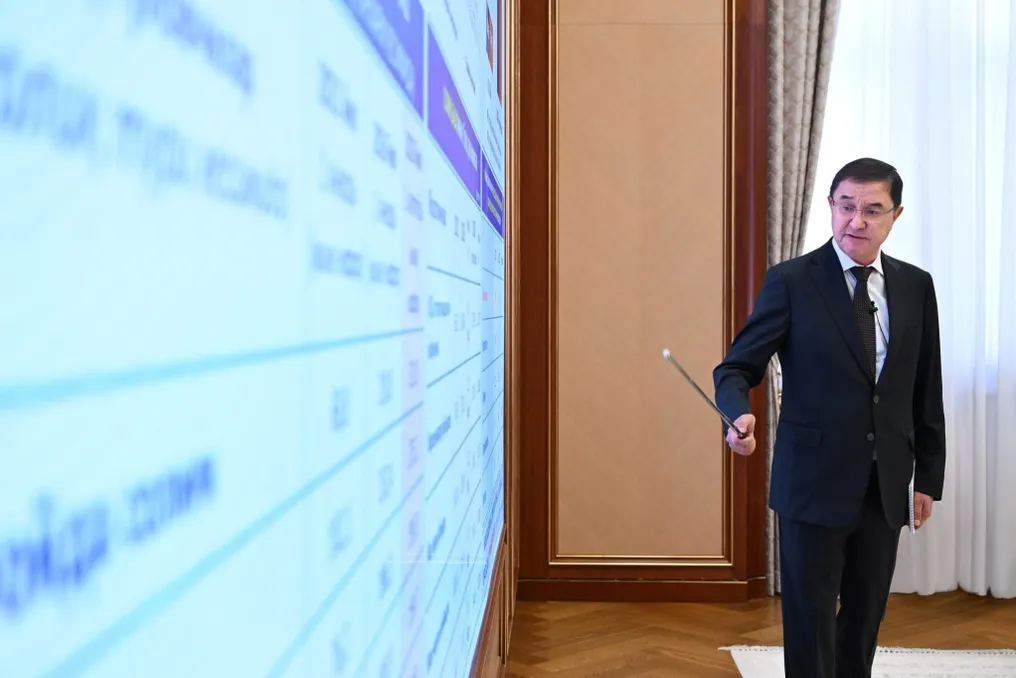
Over 175 trillion soums allocated for education and healthcare in Uzbekistan in 2027

In Uzbekistan, state budget expenditures are planned for 464 trillion soums for 2027, with projected revenues of 416 trillion soums. Special attention is paid to financing reforms in the education and healthcare sectors, which have been allocated approximately 175.7 trillion soums.

Discussion of the Budget Draft and Priorities

Information about these plans was presented at a meeting chaired by President Shavkat Mirziyoyev, which focused on the draft budget and the priorities of fiscal and tax policy. According to the presented calculations, 114.3 trillion soums will be directed to the education sector next year, an increase of 14 trillion soums from last year's figure. Healthcare expenditures will amount to 61.4 trillion soums, showing a growth of 12 trillion soums.

Furthermore, 70 trillion soums are earmarked for improving infrastructure in regions and mahallas, as well as for increasing citizen employment and income, developing human capital, and strengthening the social protection system. It was noted that the social orientation of the State Budget will be maintained in the coming year.

Tax Policy and Macroeconomic Stability

It is planned that the main tax rates will remain unchanged in 2027. However, to increase budget revenues, methods such as stimulating economic activity, expanding the tax base, combating the shadow economy, and improving customs and tax administration are intended to be used. To increase collections, digital solutions and artificial intelligence technologies will be applied more actively, and more favorable conditions for doing business will be created.

Significant attention is being paid to maintaining macroeconomic stability. It is projected that the inflation rate next year will not exceed 6 percent, and the overall fiscal deficit will be kept within 3 percent of GDP. The President emphasized the need to ensure the effective use of all budget funds and minimize non-targeted expenditures.

Specifically, it was ordered to begin the pilot implementation of a digital control system that will ensure full monitoring of fund expenditure during the implementation of construction projects under the investment program. New ways to stimulate economic growth were also discussed at the meeting, including expanding private capital participation in the banking system, increasing lending volume, applying public-private partnership mechanisms, and intensifying interaction with international financial institutions.

At the conclusion of the meeting, key vectors of the State Budget draft for 2027 were determined. In accordance with current legislation, this document will undergo discussion in local Kengashs before being submitted for consideration by the Legislative Chamber of the Oliy Majlis.

Popular