Kazakhstan introduces additional rules for cargo transportation to Uzbekistan and Afghanistan
Read more
Podrobno.uz [uz]
podrobno.uz

Kazakhstan introduces additional rules for cargo transportation to Uzbekistan and Afghanistan

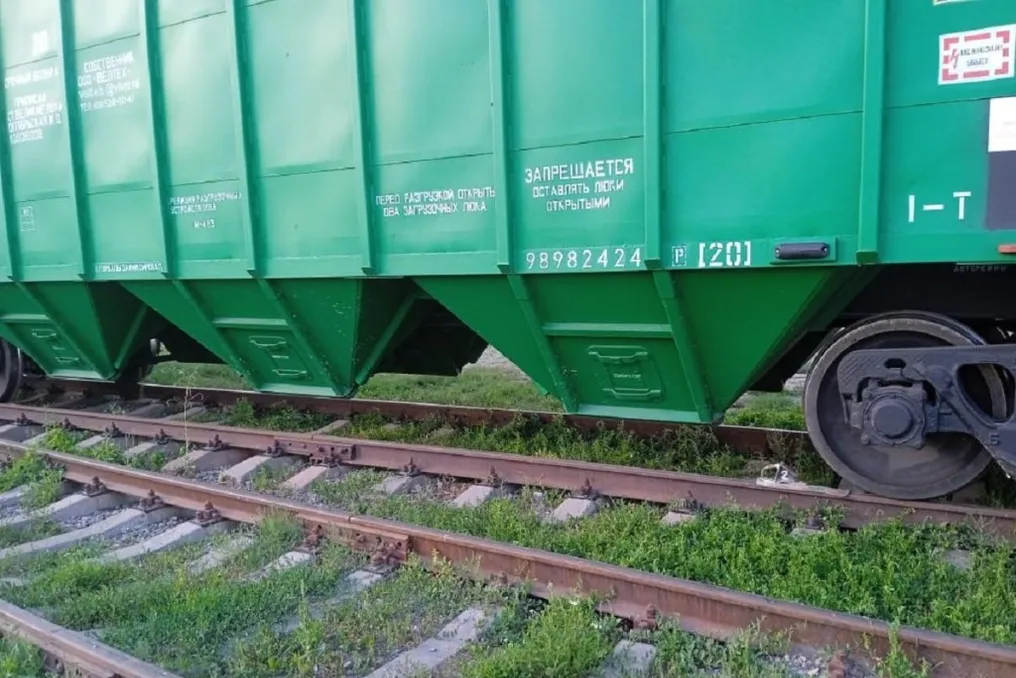
The national railway company of Kazakhstan, 'KTZ', has introduced new conditions for transporting goods to Uzbekistan and Afghanistan when using wagons belonging to other railway administrations. This decision was made in response to the requirements of 'Uzbekistan Railways', which aim to accelerate the process of returning empty wagons to their countries of original registration.

These updated rules came into force on November 13 and will remain valid until a special directive is issued. The changes apply to shipments conducted through interstate junction points such as 'Saryagash', 'Oasis', and 'Maktaaral'. The restrictions apply exclusively to rolling stock of foreign fleets, including wagons belonging to other railway companies, while wagons registered in Kazakhstan or Uzbekistan are unaffected.

According to the new requirements, a telegram instruction must be prepared in advance for sending goods in such wagons. This instruction must clearly specify the destination of the empty wagon after unloading is complete. Furthermore, the shipper is obliged to cover the cost of the return transport and include all details of the return route in the SMGS consignment note. This instruction must be attached to all transport documents.

The documentation must specify the destination station of the empty wagon, information about the recipient and the payer of the transport, as well as the details of the return route, participating border crossings, and carriers.

Carriers refuse to accept goods in wagons of foreign fleets if the necessary instructions or corresponding markings are missing. If violations in document preparation are discovered after the start of the shipment, the shipper must rectify the deficiencies within the established period; otherwise, the cargo may be returned to the departure station. All additional costs associated with wagon downtime, cargo return, and other expenses will be borne by the shipper.

'KTZ' emphasized that the purpose of introducing these rules is to ensure the prompt return of foreign fleet wagons to their country of registration while fulfilling the requirements of 'Uzbekistan Railways'. It was previously reported that additional fees were also introduced for shipments from Uzbekistan to Afghanistan via Termez, which took effect on November 7, and these new tariffs from 'Uzbekistan Railways' depend on the type of cargo and the length of the route.
Similar stories

Uzbekistan approves new rules for distributing export and import quotas in connection with WTO accession
Read more
podrobno.uz

Uzbekistan approves new rules for distributing export and import quotas in connection with WTO accession

Updated regulations governing the distribution of import and export quotas for goods have been adopted in Uzbekistan. These changes are driven by the country's preparations for accession to the World Trade Organization (WTO).

The Cabinet of Ministers approved the relevant resolution, which defines the procedure for using quotas, licensing, and other administrative measures in international trade. It is specified that customs duties, taxes, and fees are not covered by these restrictions.

Grounds for imposing restrictions

The new document outlines 17 different grounds for imposing such restrictions. These include the need to ensure food security, protect the health and lives of citizens, national security issues, and the preservation of cultural values. It is emphasized that such measures must be temporary and cease after the reasons for their introduction have been eliminated.

Quota distribution mechanism

A combined system will be the main method for quota distribution. Half of the available volume will be allocated to companies that are already major players in the external trade market for that specific product. The remaining portion of the quotas will be distributed on a 'first come, first served' priority basis.

Participants in foreign economic activities who are considered traditional exporters and importers are those whose share of supplies of the relevant product is at least 5%. If an allocated quota is not used within one month, it automatically transfers to the general waiting pool.

Entrepreneurs can apply to use quotas through the my.gov.uz portal by attaching a customs declaration. Automatic determination of the queue order will be based on the date and time of document registration in the Customs Committee system. Information on the current volume of quotas, their balances, and the queue status will be available in real-time through the 'Single Window' system, excluding data constituting commercial secrets.

The document also details liability measures for violations. Companies that falsify documents, provide false information, or fail to use an allocated quota without prior notification to customs services may be excluded from the quota distribution process for up to one year.

This document will enter into force on the day of Uzbekistan's official accession to the WTO, the completion of which is planned for this year.

Kazakhstan and Uzbekistan begin test cargo shipments along new railway line
Read more
podrobno.uz

Kazakhstan and Uzbekistan begin test cargo shipments along new railway line

Trial cargo transportation has commenced between Kazakhstan and Uzbekistan along the newly constructed railway line connecting Darbaza and Maktaaral. The first train carrying Kazakh coal was sent along this route in October. Full launch of this direction is planned for December.

This was reported by the Prime Minister of Kazakhstan, Olzhas Bektenov, during a meeting of the board of directors of the Samruk-Kazyna fund. He emphasized that the opening of this new railway branch is a significant step towards strengthening transport links between the two states.

The new line is intended to reduce the load on the existing 'Saryagash – Tashkent' section, which currently handles most of the cargo transported between Kazakhstan and Uzbekistan. This route will provide access to the Uzbek station 'Syrdarya' and allow for a substantial increase in transport volumes.

Construction work on this branch began in November 2023. The main section of the line will be almost 130 kilometers long, and the total length of the entire line will reach 152 kilometers. Although work is still ongoing, the official launch of the new route for regular traffic is scheduled for December 2026.

For Uzbekistan, the launch of this line is important not only in the context of trade with Kazakhstan. This additional railway branch can expand transport opportunities to countries such as China, Russia, and Belarus, as well as integrate into international transport corridors.

Furthermore, the new line is being considered as a potential route within the international 'North-South' transport corridor, which connects the region's countries with Iran and Middle Eastern states. Previously, the parties also agreed on a significant increase in air traffic, increasing the number of flights between Almaty, Astana, and Tashkent to 60 weekly in each direction.

Kazakhstan postpones the introduction of a deposit for trucks at the border with Uzbekistan
Read more
podrobno.uz

Kazakhstan postpones the introduction of a deposit for trucks at the border with Uzbekistan

International freight carriers will not be required to pay a guarantee payment of 86.5 thousand tenge for reserving a spot in the electronic queue at three checkpoints connecting Kazakhstan and Uzbekistan. The planned new rules, which were supposed to come into force on November 9, have been postponed, and the exact date of their commencement has not yet been set.

The decision to mandate a guarantee contribution for freight carriers was announced previously. Initially, it was assumed that this innovation would start operating on November 9, 2026. However, the State Revenue Department of Turkestan Region has informed about the postponement of these deadlines.

Who and where does the new measure apply

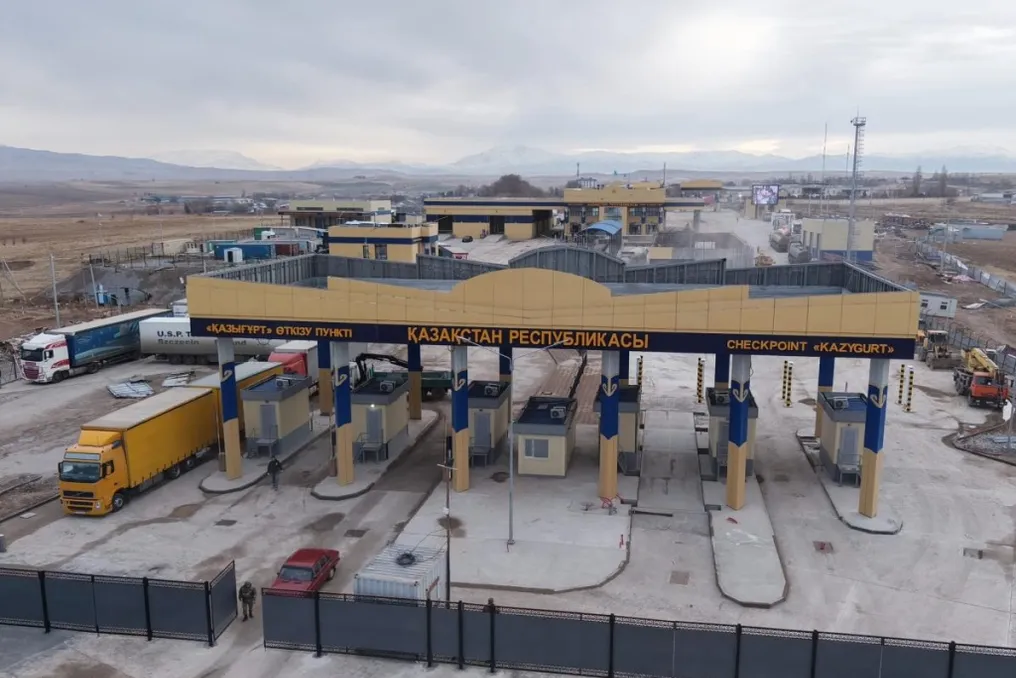
This measure applies exclusively to international freight carriers who book travel time through the 'Kazygurt', 'B. Konysbayev', and 'Atameken' checkpoints in the Turkestan region. The required security amount is set at 20 MRP, which amounts to 86.5 thousand tenge. It is important to note that this is not a fee for crossing the border itself, but a refundable guarantee deposit.

Conditions for refunding and retaining the deposit

According to previously approved rules, the carrier must have the necessary security amount in a special electronic account before booking the queue. If the freight transport arrives at the checkpoint at the agreed time, the deposited funds are fully refunded. The deposit may only be forfeited if certain conditions are met: for example, if the carrier fails to appear at the booked time twice consecutively within 90 calendar days, the funds may be transferred to the state budget.

The State Revenue Committee also specified that refunded funds can be reused for subsequent bookings. Nevertheless, details regarding the procedure for withdrawing money from the electronic account to a bank account, refund timelines, and rules for canceling a booking have not yet been fully disclosed.

Increase in load on border crossings

The initiative to introduce a deposit was driven by the high traffic volume at Kazakh-Uzbek checkpoints. In early November, drivers reported long traffic jams near the 'B. Konysbayev' crossing, where the queue length could reach 25 kilometers, and waiting times could take up to three days.

According to the State Revenue Committee, between January and October 2026, 741.5 thousand vehicles crossed the border between Kazakhstan and Uzbekistan, exceeding the previous year's figure by 16.2%. Over 320 thousand vehicles passed through the 'B. Konysbayev' checkpoint alone. On some days, traffic intensity reached 1,500 vehicles against a design capacity of one thousand.

The department pointed out that some drivers arrive at the border without prior registration in the CarGoRuqsat system and make reservations on site. In the opinion of government representatives, this practice contributes to the creation of additional queues on approach roads.

Important information for carriers

Despite the delay in introducing the deposit, the CarGoRuqsat electronic queue system continues to operate as usual. Carriers still need to book time in advance to cross the border and plan their route.

Currently, the latest official announcement is the notification about the postponement of the launch of new requirements, and a new date for the introduction of the guarantee deposit has not been announced. Carriers should remember that the security amount is tied to the value of the Monthly Calculation Indicator (MRP). If the new rules start in 2027 and the MRP changes, the deposit amount may also be adjusted. Therefore, it is recommended to rely solely on current official announcements from government bodies.

Previously, Kazakhstan also provided clarifications on the implementation of the QazETA electronic entry permit system for citizens of 85 countries entitled to visa-free travel. This document will be issued free of charge, and its absence starting July 1, 2027, will be grounds for refusal of entry. The new rules will also affect citizens of Uzbekistan.

Popular