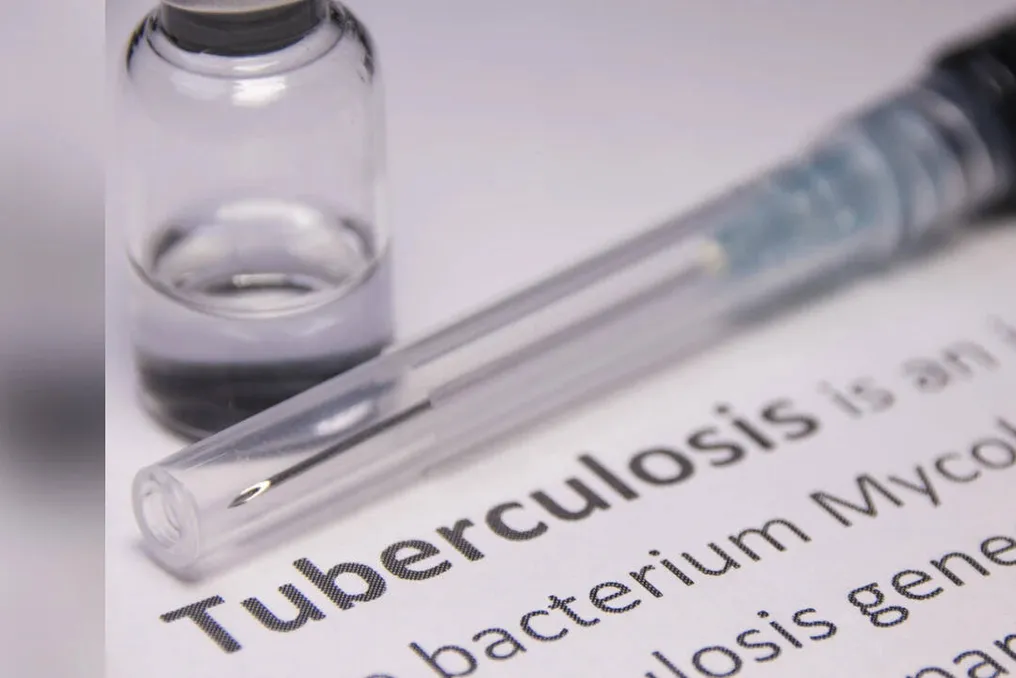
IISc Researchers Discover Antibiotic Combination Capable of Reversing Tuberculosis Drug Resistance
Read more
The times of India
timesofindia.indiatimes.com

IISc Researchers Discover Antibiotic Combination Capable of Reversing Tuberculosis Drug Resistance

Scientists from the Indian Institute of Science (IISc) have discovered an antibiotic combination that has shown the ability to reverse resistance to isoniazid—a first-line drug for treating tuberculosis (TB)—both in laboratory settings and in mice.

Tuberculosis continues to be one of the most persistent health challenges globally.

The authors of this study are Nagasuma Chandra (corresponding author), Amit Singh (co-author), Sukriti Pal (co-author), and Shalini Birua (co-author).

Similar stories

WHO calls for strengthening the fight against antibiotic bacterial resistance
Read more
noticiasaominuto.com

WHO calls for strengthening the fight against antibiotic bacterial resistance

The World Health Organization (WHO) acknowledged advances in combating antimicrobial resistance, but emphasized the urgent need to intensify efforts in areas such as prevention, diagnosis, and correct antibiotic use.

Jean-Pierre Niemazi, interim director of the WHO's antimicrobial resistance department, warned at a press conference in Geneva that antimicrobial resistance is widespread and poses a serious threat to the future of modern medicine.

The emergence of resistance occurs because bacteria have developed the ability to resist drugs created to fight them, rendering many of these substances ineffective. This process has been aggravated by the massive use of antibiotics in humans, animals, and food production, driving the development of Antimicrobial Resistance (AMR) and making it one of the leading causes of infection-related mortality globally.

Niemazi stressed that drug-resistant infections cause deaths for years without full awareness of this dimension. According to the WHO, resistant superbugs are directly responsible for over one million deaths and contribute to about five million annual fatalities.

A survey conducted by the WHO in 183 countries showed that nearly ten out of ten nations have a national action plan against this problem, a significant increase compared to the 79 countries registered in 2017. However, Pravasha Prakash, technical officer of the WHO's AMR department, reported that only 42 nations declare having a plan that is simultaneously funded, implemented, and monitored.

Prakash warned that although countries are progressing in various phases, efforts need acceleration to meet the goals set for 2030, including a 10% reduction in deaths caused by antimicrobial resistance worldwide.

One of the main weaknesses identified is access to adequate diagnostics. Sylvia Bertagnolo, head of the surveillance unit for resistance and laboratory strengthening, reported that only 36% of countries have a national reference laboratory capable of testing the resistance of all fungi and bacteria monitored by the WHO, while the goal for 2030 is 80%.

Bertagnolo explained that without laboratory tests, healthcare professionals are forced to treat patients without knowing the origin of the infection or which antibiotic will be effective.

Recent data from the organization's global surveillance system indicate that in 2023, one in every six confirmed bacterial infections in the laboratory—among those reported to the WHO—showed resistance to the antibiotics used in treatment.

In response to this situation, the WHO announced the creation of two new tools to help countries strengthen their diagnostic capabilities. One specifies the tests that must be available at each level of the health system, from primary care to specialized hospitals. The other compiles 73 laboratory procedures, covering everything from sample collection to the identification of pathogenic agents and the performance of antibiotic sensitivity tests.

Despite the advances in diagnostics, the organization maintains that this is not enough. The WHO also advocates for improving the use of existing antibiotics, given that the emergence of new treatments does not keep pace with the progression of resistances.

Additionally, the WHO reiterates that infection prevention, vaccination, improved access to water and sanitation, along with appropriate antimicrobial use, are the central methods for combating antimicrobial resistance. Niemazi concluded the warning by stating that, without a stronger reaction, 39 million deaths could be attributed to antimicrobial resistance by 2050.

Data Center: Tuberculosis Mortality in India Decreased by 38% Since 2015
Read more
timesofindia.indiatimes.com

Data Center: Tuberculosis Mortality in India Decreased by 38% Since 2015

According to data from the Ministry of Health of India, the number of deaths from tuberculosis (TB) in the country decreased by 38% between 2015 and 2025. The mortality rate dropped from 28 to 18 cases per hundred thousand population.

The WHO Global Tuberculosis Report for 2026 indicates that India achieved its first milestone of a 35% reduction in mortality under its TB Control Strategy in 2025, which occurred five years after the initially set deadline of 2020.

The Ministry also reported a successful treatment rate of 94% among patients with drug-sensitive TB. This progress is attributed to enhanced case finding, the use of rapid molecular diagnostics, portable X-ray machines supported by artificial intelligence, timely treatment, and nutritional support.

Nevertheless, drug-resistant TB remains a serious problem: in 2025, only 42% of approximately 3.7 lakh global cases of rifampicin-resistant TB were included in the treatment program. India, along with four other high-burden countries, accounts for about 60% of the global treatment gap.

As part of an intensified campaign, the government identified nearly 15 lakh people with TB who showed no obvious symptoms. Between December 7, 2024, and November 8, 2026, the TB Mukt Bharat Abhiyan initiative covered over 250 million people, during which more than 1.1 billion X-rays and 300 million molecular tests were conducted.

According to the ministry, the campaign detected 4.864 million TB cases, including 1.497 million asymptomatic cases. The first intensive 100-day campaign started in December 2024 in 347 high-priority districts across 33 states and union territories, and was subsequently expanded nationwide. The second 100-day campaign began on March 24 of this year and targets 1.58 million villages and high-risk districts, as well as crowded areas and vulnerable populations.

Identifying asymptomatic cases is crucial because individuals without signs of the disease may not seek medical examination. Active screening helps detect them and direct them to treatment sooner.

The Ministry links the improvement in mortality rates and treatment outcomes to the intensification of case finding, the use of rapid molecular diagnostics, AI-supported portable X-ray machines, timely treatment, and nutritional support.

The Nikshay digital platform supports patient tracking and treatment monitoring, while the Nikshay Poshan program provides nutritional assistance to eligible patients. The Nikshay Mitra initiative mobilizes private individuals and organizations to support people undergoing treatment.

The Ministry stated that in 2025, 67,933 panchayats were declared TB-free, and 96% of the TB program's funding needs were covered by domestic resources.

However, the WHO report notes a significant data gap: estimates of TB incidence in India for the period 2010–2025 are being revised following the completion of the first round of district-level surveillance and national TB prevalence surveys. WHO is expected to update India's profile after technical discussions on the new data, likely in early 2027.

India accounts for approximately one-quarter of the global TB burden. In 2025, 10.6 million people worldwide contracted TB, and 1.13 million people died from the disease. The global decline in TB incidence between 2015 and 2025 was only 14%, significantly less than the target of 50% set by the TB Control Strategy for 2025.
Popular