IMF warns that shallow credit markets could amplify inflationary shocks
Read more
UzDaily
uzdaily.uz

IMF warns that shallow credit markets could amplify inflationary shocks

According to the International Monetary Fund's (IMF) regional economic forecast, shallow credit markets in Uzbekistan, Tajikistan, and Kyrgyzstan are capable of worsening the impact of future supply shocks on inflation levels.

These findings were presented by Carmen, an economist at the IMF's Department for the Middle East and Central Asia, during a presentation of the report at the Central Bank of Uzbekistan. The Fund analyzed how global supply chain disruptions affected inflation between 1997 and 2026.

The calculations showed that in countries with shallow credit markets, the overall inflation rate increases by approximately 2.3% within two years following such a shock. In countries with more developed credit markets, the inflation response to similar disruptions is statistically insignificant.

The IMF explains this difference by citing the characteristics of financial markets and monetary policy. In markets with low depth, inflation expectations are less entrenched, and the transmission of central bank decisions to the broader economy occurs less effectively. Consequently, monetary authorities must implement more aggressive policy tightening to restore price stability.

The Fund noted that several factors have helped mitigate the impact of external shocks in the region, including high fuel subsidies, widespread use of managed exchange rates, and relatively strong central bank independence.

Nevertheless, vulnerabilities may increase in the future due to rising public debt and underdeveloped credit markets in some states. The economist emphasized: 'However, debt growth can amplify future supply shocks, just as relatively shallow credit markets do compared to other emerging markets, in several economies, including Uzbekistan, Tajikistan, and the Kyrgyz Republic.'

The study also found that fuel subsidies and central bank independence are the main reasons for differences in inflation response across countries. In countries with low central bank independence, a supply shock increases inflation by 6.3% over two years, whereas with high independence, the increase is 1.5%.

The IMF recommends that regional countries maintain fiscal space, avoid non-targeted fuel subsidies, and strengthen state institutions. Furthermore, the Fund calls for the development of credit markets, insisting that in countries where trust in the central bank remains low or financial markets are insufficiently developed, monetary authorities must respond to external shocks more decisively.
Similar stories

International Monetary Fund warns of threat to Uzbekistan's economy related to subsidized lending
Read more
uzdaily.uz

International Monetary Fund warns of threat to Uzbekistan's economy related to subsidized lending

The International Monetary Fund (IMF) views pressure to expand targeted and subsidized lending as one of the internal risks to Uzbekistan's economy. The Fund plans to publish separate studies on interest rates and the practice of targeted lending in the country in 2027.

Koba Gvenetadze, the IMF representative in Uzbekistan, announced these plans during the presentation of the fund's regional economic forecast at the Central Bank.

When outlining risks to the economic forecast, Gvenetadze divided them into external and internal factors. External risks include global economic uncertainty, geopolitical events, and fluctuations in commodity prices.

Among the internal threats, he pointed to the possibility of procyclical increases in government spending when revenues exceed planned figures, including increased gold receipts. Additionally, he noted potential pressure related to the expansion of subsidized and targeted lending programs.

The IMF is preparing two analytical projects concerning Uzbekistan's economic policy. One will examine interest rates, while the other will focus on targeted lending. Gvenetadze stated that the results of both studies are scheduled to be released in 2027.

Targeted lending involves issuing loans under favorable conditions based on government decisions. Such loans may have interest rates that do not reflect the market value of borrowing. This circumstance can weaken the transmission mechanism of monetary policy, as the Central Bank's decisions on the key rate do not fully influence the cost of borrowing across the entire economy.

The IMF also noted that Uzbekistan continues to make efforts to strengthen the transmission of monetary policy. The Central Bank has kept its key rate at 14% since March 2025. The fund's regional report also emphasizes that relatively small and shallow credit markets, including Uzbekistan's, could amplify the impact of future external shocks on inflation.

CEA Expert Claims Supply Shocks Are Weakening Monetary Policy Effectiveness
Read more
business-standard.com

CEA Expert Claims Supply Shocks Are Weakening Monetary Policy Effectiveness

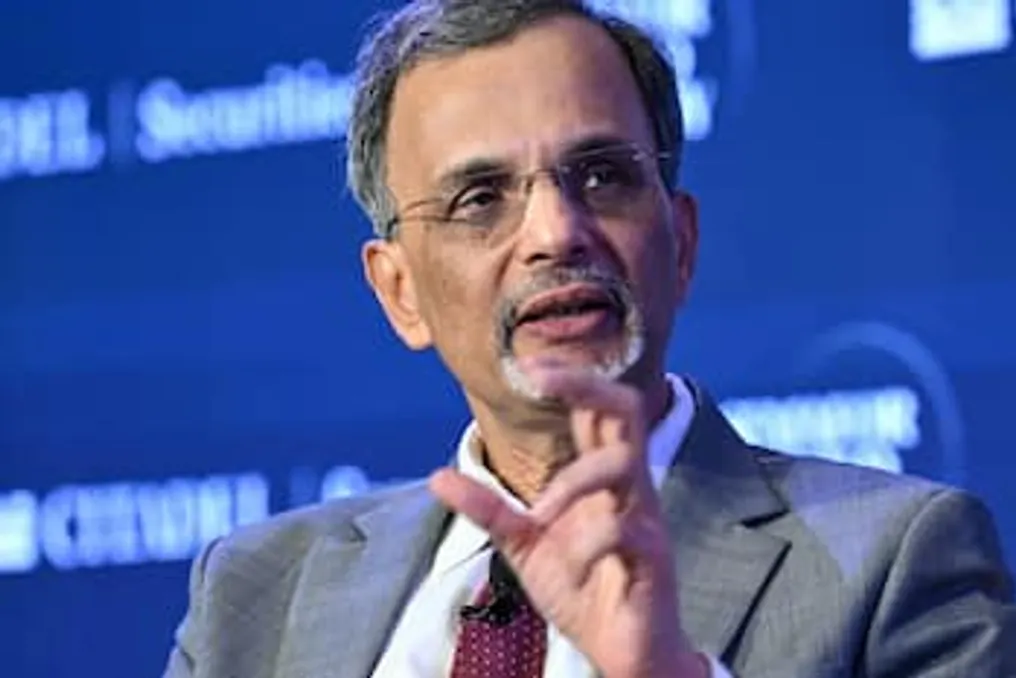
The Chief Economic Advisor at Anant Nageswaran stated on Friday that monetary policy tools, such as interest rate changes, may become less effective in combating inflation in a world increasingly vulnerable to supply chain disruptions.

He noted that fiscal and other government measures will become more significant because raising interest rates will not solve supply-side problems and might even have the opposite effect. Speaking at the 9th Annual Food Systems Dialogue, he emphasized that amid persistent supply issues, countries will have to apply various flexibilities within the inflation targeting framework.

Nageswaran added that since very few countries have reached their inflation target since 2022, this system will remain the basis, but countries will be forced to exercise creative freedom in its application.

Rising prices, especially for energy globally, are a consequence of supply chain disruptions following the war between Russia and Ukraine, which has been ongoing since February 2022, as well as the Middle East crisis. In this situation, major central banks worldwide, including the US Federal Reserve, have raised interest rates in an attempt to curb inflation.

For instance, the Reserve Bank last month raised the repo rate by 25 basis points to 5.50 percent for the first time in almost four years to reduce inflation, which exceeded the central bank's upper limit of 6 percent in October. This is the first time in two years that retail inflation has exceeded the RBI's upper limit of 6 percent. The central bank is obligated to keep inflation within the range of 2-6 percent; in October 2024, retail inflation was 6.25 percent.

Referencing some reports, Nageswaran suggested that for the next 25-30 years, or possibly longer, the world will be defined by supply shocks. He stated that as countries use supply chains as a weapon and utilize natural waterways and other bottlenecks, the ability to solve these problems through simple increases or decreases in interest rates will cease to be feasible.

In such a scenario, Nageswaran called for agriculture to be restored as the main driver of economic growth. Furthermore, he pointed out that the emergence of artificial intelligence and immigration restrictions in various countries could slow down job creation in the service sector.

Moody's forecasts weakening global credit conditions in 2027 due to rising financing costs
Read more
business-standard.com

Moody's forecasts weakening global credit conditions in 2027 due to rising financing costs

Moody's Ratings stated on Tuesday that it expects a deterioration in global credit conditions in 2027. The main reasons cited for this forecast are the increase in financing costs and rising energy prices, which are putting pressure on borrowers.

In its report on global credit conditions for 2027, Moody's Ratings analyzes key factors that may shape the credit markets in the coming year. The company notes that investments in artificial intelligence will remain significant, but investors will increasingly assess whether the increase in revenue and productivity justifies such large expenditures.

Moody's Ratings emphasized that 'business model disruptions will become more apparent: some companies will benefit from stronger demand and productivity, while others will face increased competition and reduced pricing power.'

Furthermore, the agency expects that government intervention, including tariffs, regulation, export controls, and strategic investments, will play an increasing role in the outcomes of the credit market. Moody's added that since many of these tools can be introduced or revoked by administrative decisions, policy may change rapidly, which will continue to affect trade, capital allocation, and competition in 2027.

Increased spending on energy security, critical minerals, defense, and climate resilience will create opportunities for certain sectors while increasing costs for others. Moreover, higher refinancing costs will put additional pressure on issuers and borrowers with high debt levels and significant maturities in the near future.

The agency concluded that 'Moody's Ratings expects a weakening of global credit conditions in 2027, as higher financing costs and elevated energy prices will create points of pressure, even as major economies continue to expand.'

Popular