
Linux Veteran Reduces Activities in Project Due to Volume of Code Generated by Artificial Intelligence
Read more
Tecnoblog
tecnoblog.net

Linux Veteran Reduces Activities in Project Due to Volume of Code Generated by Artificial Intelligence

Months ago, Linus Torvalds had warned that Artificial Intelligence was overwhelming Linux developers, and this concern was confirmed by the recent decision of Lorenzo Stoakes to reduce his participation in the project. This change is significant, as Stoakes was responsible for supervising four sectors related to kernel memory management.

The core issue does not lie with AI itself, but rather with the use of AI-assisted tools for detecting bugs in Linux and, above all, the code these tools produce. These mechanisms have generated an excessive volume of error reports and proposed fixes (patches), making management difficult for developers.

A particularly problematic aspect is that much of these AI-generated reports or patches refer to low-priority bugs that were already in the correction queue or had been recently resolved. However, AI has also identified valid problems or tuning points, but at a pace that Linux developers were not accustomed to following.

The apparent reason for Stoakes reducing his involvement was precisely this accelerated pace imposed by AI. Lorenzo Stoakes, although less known than Linus Torvalds, is a British software engineer with vast experience contributing to Linux and currently works at Arm. His area of specialization is memory management, a topic on which he even published a book titled The Linux Memory Manager.

On November 10, Stoakes communicated to the official kernel mailing list: 'Due to the current demand for code reaching the kernel resulting from AI-generated [series of changes], I unfortunately do not have enough availability to provide reviews, except in areas where I remain [as a maintainer]'. He added an apology, explaining that given current trends, he wished to make his inbox more manageable.

It is important to note that this reduction does not constitute abandoning the project. Stoakes will maintain his role as a maintainer of the four memory management areas he has monitored for years, but will stop providing reviews or code for subsystems outside his direct purview.

The main motivation for this decision is indeed the increased demand coming from AI-driven reviews. As the engineer told The Register, 'yes, AI is part of the reason; generally, [the volume of notifications] went from 'once a week' to 'daily' and now to 'half of what I see in review'.' Although Linus Torvalds suggested that certain parts of the kernel have reached a state of equilibrium with AI, Stoakes' case demonstrates that there is still much work to be done to achieve this same balance in other parts of the project.

Similar stories

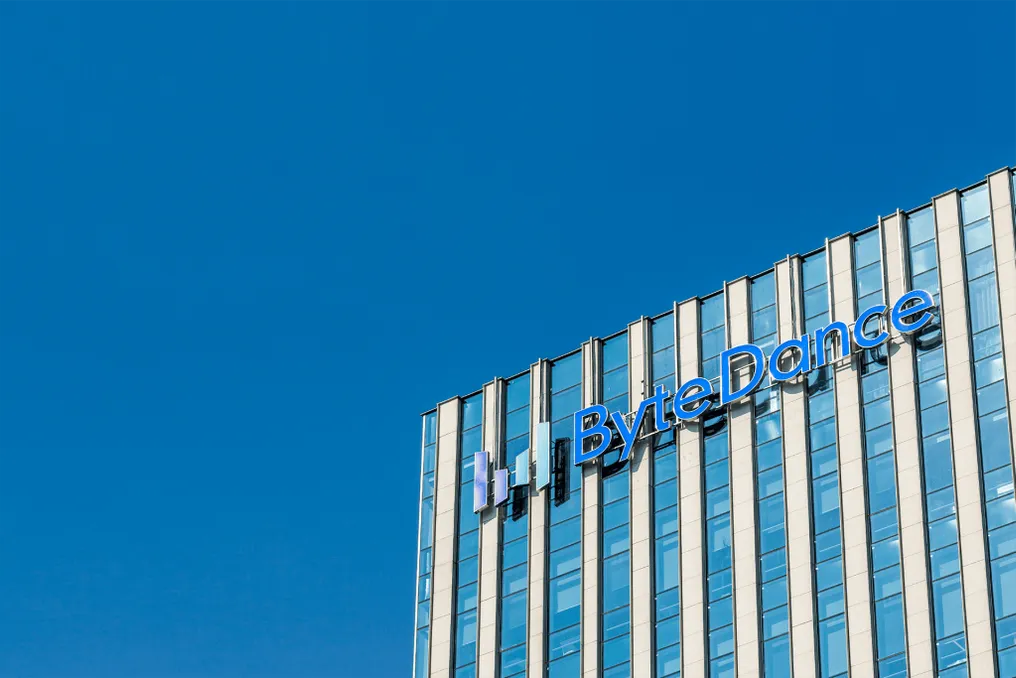
Head of AI Chip Department at ByteDance Resigns
Read more
technode.com

Head of AI Chip Department at ByteDance Resigns

According to LatePost, Shi Yunfeng, who led the teams for AI chip and data processing development at ByteDance, has submitted his resignation and is handing over his responsibilities.

Shi joined ByteDance in 2018 and reported to Yan Zhenyuan, head of the company's cloud business at Volcano Engine.

ByteDance began forming its AI chip development team in 2019, focusing on creating a specialized accelerator modeled after Google's Tensor Processing Units. The goal of this project was to improve energy efficiency and performance for the company's proprietary artificial intelligence tasks.

Although the chip was sent to production this year, reports indicate that its characteristics fell below expectations. Currently, the team is working on developing the next generation of this chip.

Boeing plans to cut workforce by 5% and delay 737 aircraft production timelines
Read more
www.aajtak.in

Boeing plans to cut workforce by 5% and delay 737 aircraft production timelines

American airline Boeing plans to reduce its commercial division's workforce by 5%. This reduction will be carried out through both layoffs and forced terminations. Notifications of the reduction are expected to be issued in December.

The company faces constant difficulties in achieving target aircraft production figures, which has also affected its plans for improving its financial position. Boeing has postponed the production deadlines for the 737 aircraft and moved the goal of achieving $10 billion in free cash flow, equivalent to approximately 93,487,000 million rupees, to 2029.

Staffini Pope, head of Boeing commercial airplanes, notified employees about the upcoming reduction via an internal message. According to Reuters, she stated that the company needs to make changes to the production schedule, which will give more time to manufacturing partners and the supply chain to stabilize their operations.

According to the company's website, Boeing's commercial airliner division employed 50,494 people at the end of December 2025. Before the announcement on Monday, many Boeing employees were already expressing concern about possible layoffs.

Boeing is struggling to increase the production of its popular narrow-body 737 aircraft. CEO Kelly Ortberg previously told analysts last month that the company would not be able to meet its production and delivery targets for these aircraft this year.

It is now expected that the company will reach a production rate of 47 Boeing 737 aircraft per month in early 2027. Previously, the company had forecast reaching this level by summer 2026.

Production problems have also affected other company projects. Boeing is struggling to increase the production of its wide-body 787 aircraft from 8 to 10 units per month. According to Reuters, delays have also occurred in the 767 and 777 aircraft programs.

The staff reduction is happening while Boeing is trying to fix its financial situation. Ortberg hinted that the company is unlikely to meet the $10 billion free cash flow target by 2029. This is one year later than analysts had anticipated.

This financial metric is considered important because Boeing has been trying for years to recover from operational crises, disputes, growing debt, and intense regulatory scrutiny. Ultimately, Boeing will change its production plan and cut personnel in the commercial division by 5%, while the production timelines for the 737 aircraft will be extended, and the hope of achieving the financial goal will be postponed until 2029.

SUSE reduces staff by 10% due to the implementation of artificial intelligence
Read more
www.aajtak.in

SUSE reduces staff by 10% due to the implementation of artificial intelligence

SUSE, a company specializing in open-source software development, is planning a major workforce reduction. According to media reports, the company intends to lay off 10 percent of its total employees. The primary reason cited for this reduction is artificial intelligence (AI).

The company currently employs about 1900 people, and an estimated 190 employees may be laid off. Dirk Peter Van Leuven, the company's CEO, stated that the layoffs are occurring due to automation and the advancement of AI.

The CEO sent out a memorandum on November 2nd, stating that the reduction is linked to artificial intelligence (AI) and automation. He also noted that the company has analyzed its team structure, skills, and strategy. As AI capabilities continuously grow, the company must revise its workflows. The letter emphasized that the company cannot continue operating with the current design and costs.

He added that modern tools already contribute to increasing team speed and help employees work faster. However, he pointed out that some existing positions are no longer required.

It is reported that employees whose positions will be eliminated will be notified on November 4th. Individual meetings will begin next week. Subsequently, the company will present its strategy for 2027 on November 16th. Job cuts are happening because of AI and automation; previously, Google, Microsoft, and Oracle have also laid off hundreds of employees.

Popular