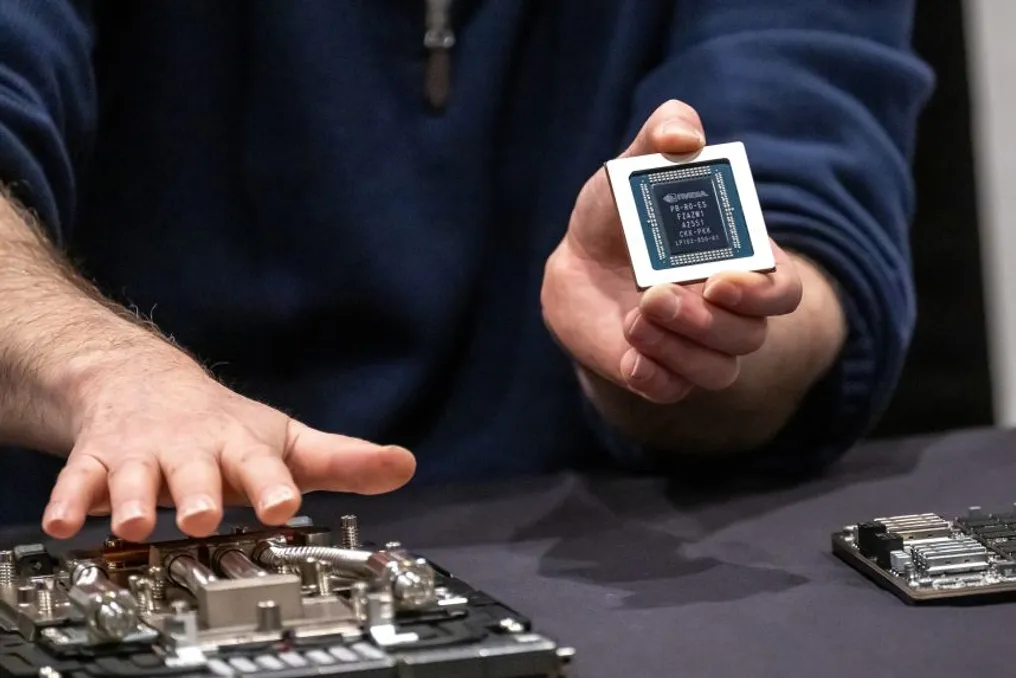
Nvidia CEO Jensen Huang Resigns After Scandal Revealing Vulnerability of Big Tech Leaders
Read more
Egypt Independent
www.egyptindependent.com

Nvidia CEO Jensen Huang Resigns After Scandal Revealing Vulnerability of Big Tech Leaders

Leaders of major technology companies often possess an aura of invincibility because a small group of people manages the world's most valuable technology corporations, producing advanced products that fuel global markets and the economy. These executives are rarely scrutinized and have never been overthrown. For instance, OpenAI attempted, but failed, to fire its CEO Sam Altman, and Elon Musk maintained power after severely damaging Tesla's reputation during his political activities.

The myth of infallibility was shattered on Thursday when Jensen Huang, Nvidia's CEO for 33 years, an ally of the United States President, and co-founder of the world's most valuable artificial intelligence company, resigned. Many business leaders have faced downfall due to scandals similar to the one involving Huang; the falls of former executives from American Apparel, Boeing, Intel, McDonald’s, and Hewlett-Packard shared similar characteristics.

However, the scale and significance of Huang's departure are incomparable. Jeffrey Sonnenfeld, a senior research fellow in the Leadership Studies program at Yale School of Management, noted: 'This is something unique. In the corporate world, it is undoubtedly the biggest fall.'

This incident sends a clear signal: if Huang could be forced out, any leader can face something similar. Huang seemed untouchable. Perhaps he was until this week, when his extramarital affair became public knowledge and could no longer be ignored by the board of directors.

Nvidia and Huang were inseparable for decades. He maintained an extremely flat organizational structure with 60 direct reports and lacked a clear succession plan. He asserted that the company was built in such a way that he was the only one capable of running it. Huang's genius was legendary; in 2013, a decade before ChatGPT emerged, he correctly predicted that the company's GPUs would become the foundation for AI. He was right, and his company became the first whose market capitalization reached $5 trillion.

Thus, the board of directors could not dispute Huang's decisions despite numerous mistakes and poor bets. It appeared he remained unconcerned about reports dating back more than a year regarding strange dealings between Nvidia and Megaspeed—a major Nvidia client run by Alice Huang, an alleged Chinese agent with whom Jensen Huang had a relationship. The board did not investigate when The New York Times reported last month that US intelligence feared Alice Huang might be a spy, or when photos of her CEO and Alice Huang appeared online.

Only when the scandal became an inevitable topic of public discussion this week did the board hire external counsel to conduct an investigation. Another revelation—from The New York Times about an alleged connection between Huang and a subordinate he managed—ultimately forced him out. Nell Minow, chair of the corporate governance consulting firm ValueEdge Advisors, called it a failure of the board to fulfill its duties.

Minow stated: 'The biggest failure of corporate boards is succession planning, and there is no evidence that this was done here. We like to think about superstar CEOs and founders, but they are never as special as they seem.'

Huang's aura of invincibility stems from one of his favorite prides: the humble founding of Nvidia in 1993 at a Denny's meeting and how its shaky start forced him to repeatedly save the company from the brink of collapse. He created the company motto: 'Our company is 30 days from bankruptcy.' However, Minow believes the board misinterpreted past success as proof of Huang's unique talents.

In her view, the greatest risk to the company's life is not failure, because when a company is on the verge of collapse, everyone works together to solve problems. Instead, the greatest risk arises when a company performs outstandingly: no one can sustain such exponential growth, and the board begins to attribute success to intangible things, such as uniquely talented leaders.

Minow noted: 'This creates enormous pressure on the Denny's snowflake genius. It is like a baseball team on an unending winning streak that no one can explain. The whole team starts wearing lucky socks. The Nvidia board assumed it had a lucky CEO.'

Huang may have held immense power at Nvidia, but later tech founders have managed to build a buffer around themselves that proved even stronger than Huang's. Huang is an exception among his tech CEO peers: he controls only 3.6 percent of his company's stock. Many founders, including Meta CEO Mark Zuckerberg, Tesla and SpaceX CEO Elon Musk, and the upcoming Anthropic CEO Dario Amodei, have dual-class share agreements that give them significantly more votes than common shareholders—and effectively unilateral control over their corporations.

Even these stronger protective barriers can be permeable. Shareholders are not powerless against dual-class share structures or seemingly untouchable CEOs: they can launch lawsuits against companies, which have already been filed against Nvidia.

It remains unclear whether even such a wealthy and powerful CEO as Musk could survive a scandal like Huang's. Tesla's friendly, Musk-selected board began searching for a replacement CEO and successfully convinced him to focus on the company after he spent most of 2024 and 2025 almost exclusively on political attention, thereby damaging Tesla's global brand.

Sonnenfeld stated: 'There are many myths in the tech industry that there is one person uniquely qualified to run a company. That is untrue: they have human weaknesses, they are imperfect, and they are replaceable.'

The Nvidia board's decision was unequivocal: any other Nvidia employee would have been fired if they engaged in Huang's alleged behavior. Huang could have jeopardized his company's trade secrets if stolen by foreign competitors. He lost the trust of Nvidia's customers and demonstrated insincerity to his board. Huang lost legitimacy to the leadership.

This means that a CEO—even a visionary leader of AI chip production—can be held accountable, just like any other employee who violates the company's code of conduct. And on Thursday, he was removed from the company he built.
Similar stories

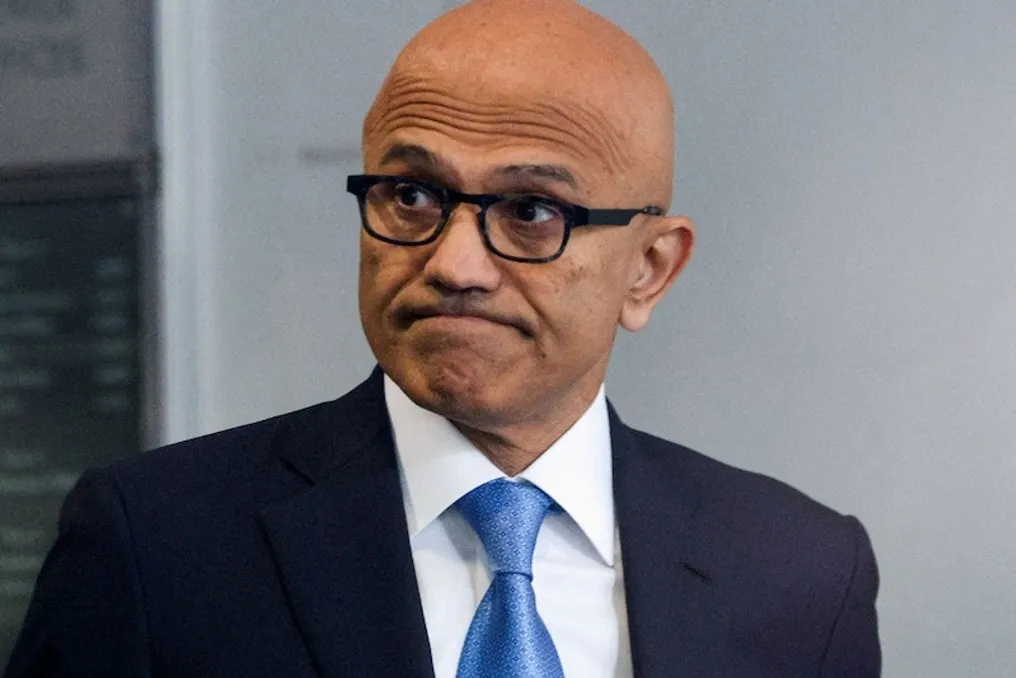
Microsoft service issues raise questions about Satya Nadella's AI race strategy
Read more
www.aajtak.in

Microsoft service issues raise questions about Satya Nadella's AI race strategy

Microsoft services, including Outlook, Teams, and Microsoft 365, were inoperable for 16 hours, leading to billions of dollars in losses worldwide. Although the company continues to report that it is working on a swift resolution and that services are functioning for some users, the issue remains relevant.

The outage affected businesses, government institutions, and individual users. However, following this failure, questions are arising not only about server malfunctions. Experts and users on social media and Reddit are questioning the strategy of Microsoft CEO Satya Nadella. They argue that the company has focused excessively on launching new features and products in the artificial intelligence (AI) race, while the value of experienced engineers maintaining legacy systems has been sidelined.

One post on X stated that many senior engineers who understand the company's older systems no longer work there. It was also suggested that after layoffs and employee departures, it has become harder for remaining engineers to fix bugs in outdated systems. The post's author further claimed that Microsoft's internal incident management tool, IcM, failed to load during the outage.

These claims have not yet been independently verified, and Microsoft has not stated that a shortage of experienced engineers caused the outage. Nevertheless, discussions surrounding the company's AI strategy, layoffs, and the reliability of old systems raise a serious question: is Microsoft paying enough attention to strengthening existing systems by investing in the future of AI?

According to an official update from Microsoft services, some servers were not undergoing automatic health checks, causing them to stop functioning, and their traffic was rerouted to other servers, causing overload. Later, the company clarified that the main procedure for establishing secure connections on the affected servers was under excessive strain, leading to the cessation of server responses to user requests. Microsoft performed a server restart, rerouted traffic via alternative paths, and checked certain configurations.

This impacted several other services, such as Outlook, Exchange Online, Teams, SharePoint, Copilot, and Microsoft 365. Until November 13, some users continued to experience intermittent problems. The company reported that it found no signs of cyberattacks or malicious activity.

Under Satya Nadella's leadership, Microsoft made AI a core business priority. The company integrated Copilot into Windows, Microsoft 365, Teams, and other products, and accelerated AI infrastructure development through partnerships with OpenAI and investments in large data centers.

Parallel to this strategy, major decisions regarding staffing levels and costs were made within the company. In July 2026, Microsoft announced the layoff of approximately 4,800 employees, citing changes in the commercial and Xbox business and resource reallocation according to priorities. Previously, in 2025, the company had also conducted workforce reductions: in May 2025, about 6,000 employees were laid off, and in July 2025, another approximately 9,000 people were dismissed.

In October 2026, Microsoft also presented a financial support plan for the voluntary departure of around 60,000 employees, which exceeded a quarter of the company's total workforce. However, this should not be viewed as mass layoffs. These decisions have now become a subject of discussion on social media following the recent outage. The question arises: has the company weakened the teams responsible for its old and critical systems in the pursuit of cost reduction and increased investment in AI?

It is not enough to simply write code for a large software system to function. Engineers working with legacy systems know how different components are interconnected, what changes were made previously, and what is a safe way to resolve failures. This is known as institutional knowledge in technical terminology. When experienced staff leave the company, and their expertise is not properly transferred to other engineers, resolving a serious problem can take longer.

Some developers on Reddit report that the rollback process, which used to take about 45 minutes, now takes five hours. They also claim that after engineers knowledgeable about old systems left, current teams have to work overtime to resolve issues.

Microsoft's investments in AI have become a significant part of its business decisions. According to Reuters, this is the case.

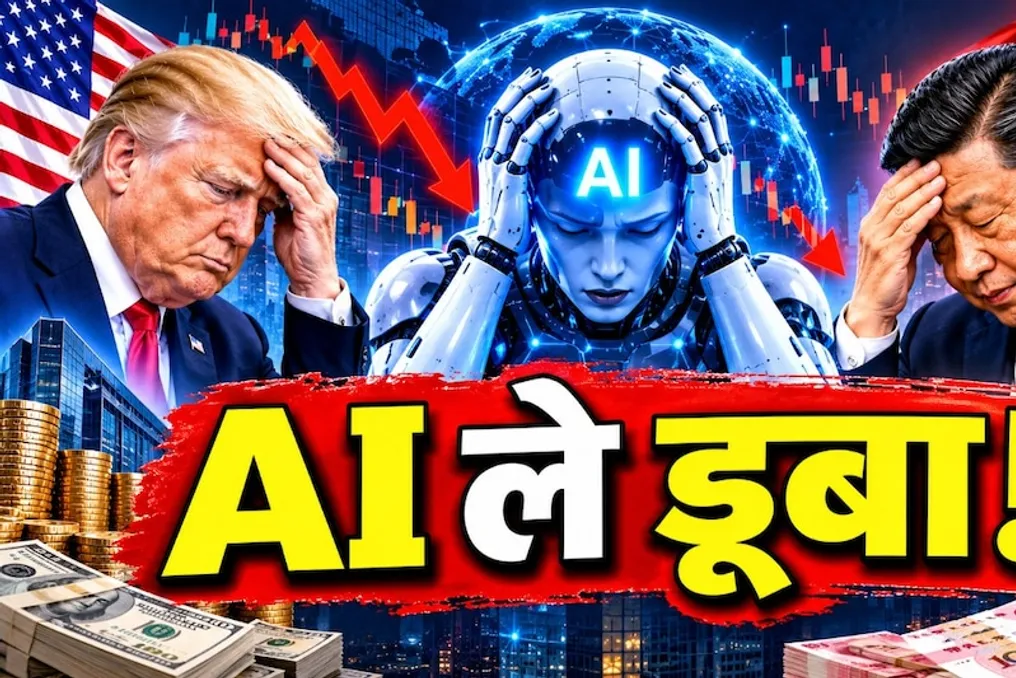
AI Bubble Burst Causes Economic Crisis in the US and China, Affecting Global Markets
Read more
www.aajtak.in

AI Bubble Burst Causes Economic Crisis in the US and China, Affecting Global Markets

Previous notions that artificial intelligence (AI) would lead to a new global revolution and change all aspects of life are beginning to crumble. Large companies that bet on AI are facing serious difficulties, and this phenomenon is not limited to one country; the more a country focused on AI, the greater the economic damage it incurs.

Currently, AI is on the verge of bursting its 'bubble.' This threatens a serious blow to both technological superpowers and countries dependent on technology and finance. Although no one knows the final outcome, the current situation is causing concern as leading countries in AI have already suffered significant financial losses. Meanwhile, countries that lagged in the AI race faced smaller risks.

The reasons for this sharp turn remain unclear. Was an AI structure created that is now collapsing under its own weight? It was previously claimed that AI would become the greatest technological revolution in human history, transforming industries and making people's lives high-tech and simple. In anticipation of this world, global tech giants and investors invested billions of dollars without properly accounting for risks.

However, this brilliant image is starting to fade. Technological leaders participating in this mad AI race look depressed and are under pressure. The main problem is that, despite huge investments, a clear and sustainable plan for profiting from AI has not yet been developed. Since the return received from the market does not match the colossal costs of creating models, investor confidence has begun to weaken, which is reflected in global markets.

The International Monetary Fund (IMF) and the World Bank have also begun assessing the potential damage to various countries. Experts point out that the biggest economic blow will likely fall on America, as this is where the center of the global AI revolution is concentrated. Giants such as Microsoft, Google, OpenAI, Nvidia, and Meta are actively concentrating on AI, and currently, the greatest chaos is observed in the American stock market.

Popular