Volkswagen tested the pre-series of its pickup truck and asked a farm manager for his opinion after a few days of use. Upon receiving the vehicle back, the engineer questioned the manager about his impressions. The latter commented that the model did not show major differences compared to other available vehicles, but noted that after driving all day, it did not cause the feeling of tiredness or fatigue observed in the others.
The engineer returned the pickup to the factory to share this evaluation with the team. This information was reported by an employee involved in the development of the VW Tukan pickup, in response to an inquiry about how Volkswagen plans to respond to what has been called the 'Chinese tsunami' and how its models will compete with Chinese technology.
The answer given was based on the company's 'DNA,' referring to more than 70 years of experience in Europe and Brazil in developing best-selling automobiles, allowing it to understand driver preferences and after-sales needs in each market, such as road conditions and fuel type in Brazil.
Although Brazilian consumers have rapidly adopted Chinese electrified vehicles due to their technology, design, quality, and especially competitive prices, national factories are reacting. Stellantis was a pioneer in Brazil by presenting an electrification plan with the first locally designed hybrids.
In Brazil, Volkswagen maintains good performance, registering growing market share while other brands lose ground. A partnership with China is being implemented for the successor to the Amarok; this new project, named 'Patagonia,' used a platform from the Chinese company SAIC, developed by VW engineering in Brazil, and is ready to be produced in Argentina. Furthermore, the local model line will be reinforced with the production of hybrids and the import of electric vehicles from the headquarters.
In Germany, the headquarters faces difficulties, as its first generation of electric vehicles was not competitive against Chinese or Tesla models. Production costs were at least 20% higher than those of competitors, resulting in falling sales, full lots, and a billion-dollar loss, generating a deep crisis.
However, the company does not succumb to the crisis, as it is accustomed to adversity. VW executives recall that the company has already overcome two difficult periods. The first occurred in the 1970s, when other brands introduced compact models to compete with the Beetle, a project dating back to the 1930s. Models like the Ford Escort and Opel Kadett, which had front engines and other innovations, forced Volkswagen into a radical change, culminating in the complete modernization of factories and the launch of the Golf in 1974, followed by the Passat, which consolidated its leadership in the European market.
After this first crisis caused by European manufacturers, Asian challenges emerged two decades later. Japanese and Korean brands also threatened Volkswagen, leading the company to invest in new technologies, processes, and quality, which materialized in the fourth generation of the Golf in 1997.
Currently, Volkswagen needs to solve two complex problems: meeting environmental regulations (especially in Europe) and dealing with Chinese competition. The latter has left it 'groundless' due to high costs, technological delay in its first electric line, and the need for new investments in mechanical, electronic, supplier, and manufacturing process architectures.
Additionally, there is strong competition with Chinese companies, which manage to develop their models faster while maintaining a high standard of design, technology, connectivity, quality, and affordable prices.
VW's response to this new crisis has been swift: the company announced the closure of four factories and the reduction of approximately 50,000 jobs out of its 660,000 workers by 2030. To reduce costs, partnerships were established in the United States and China aimed at accelerating the development of software, electronic, and mechanical architectures that will be shared across various models.
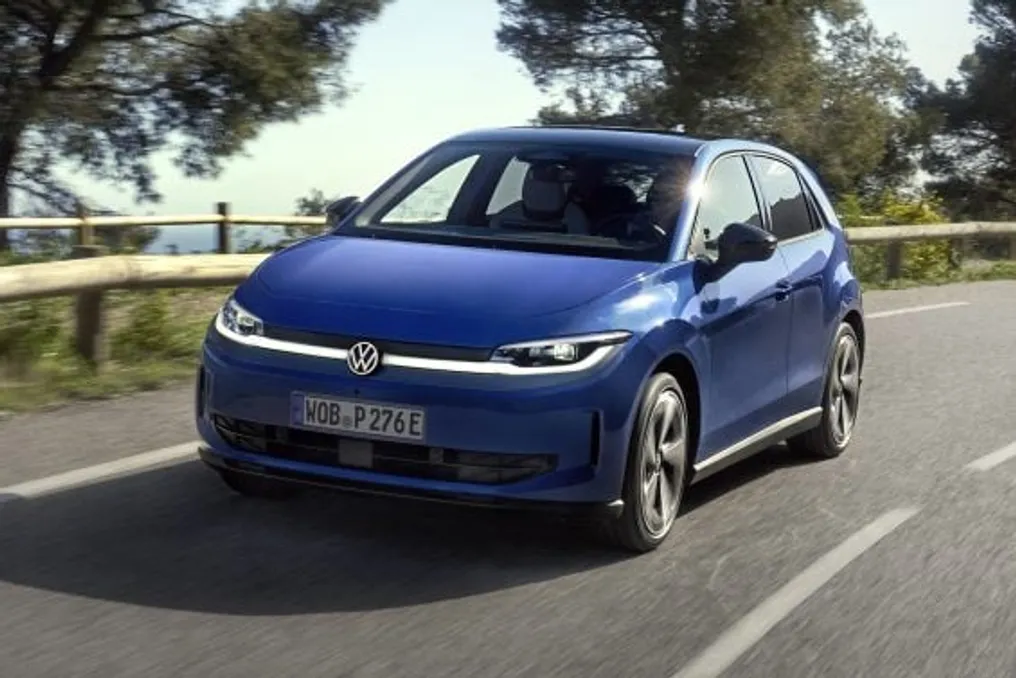
A new cycle of vehicles, launched in May of this year, includes the new ID.Polo, an electric hatchback that generated a four-month waiting list in Europe, with its basic model costing 25,000 euros (approximately R$ 160,000).
In Brazil, the new VW Tukan pickup represents a new concept for the brand, focusing on updating the pillars that define the quality and competitiveness of a car, without losing the traditional drivability of its models. This is the result of decades of market understanding, deep knowledge of consumer habits, and excellence in after-sales service, summarized in its 'DNA.'
Volkswagen's top executives believe that this accumulated knowledge over decades will be difficult for the Chinese to assimilate quickly. One factor helping the company overcome another difficult phase is the market perception of this almost intangible characteristic of its products: the excellent drivability of its vehicles. As the farm manager who tested the Tukan pickup stated: 'I don't know why, but it's better.'