
Scientists predicted the end of the world in November 2026; the forecast proved incorrect
Read more
Aaj Tak
www.aajtak.in

Scientists predicted the end of the world in November 2026; the forecast proved incorrect

Previously, there was widespread speculation that the world would end on December 21, 2012, but nothing happened after December 22. Similarly, in 1960, some scientists conducted a study suggesting that the end of the world would occur in November 2026.

This forecast assumed that human population growth would reach a level where there would be no room left for life on Earth, and all people would perish. However, nothing like that actually happened, and everyone remains safe.

In fact, a scientific paper titled 'Doom'sday Study' was published in 1960. This study predicted that the world would cease to exist by November 13, 2026. Since three days have passed since that date without any events occurring, another prediction related to the 'Doom'sday Study' has proven false. As expected, nothing happened, and people did not die from pressure due to overpopulation of the planet.

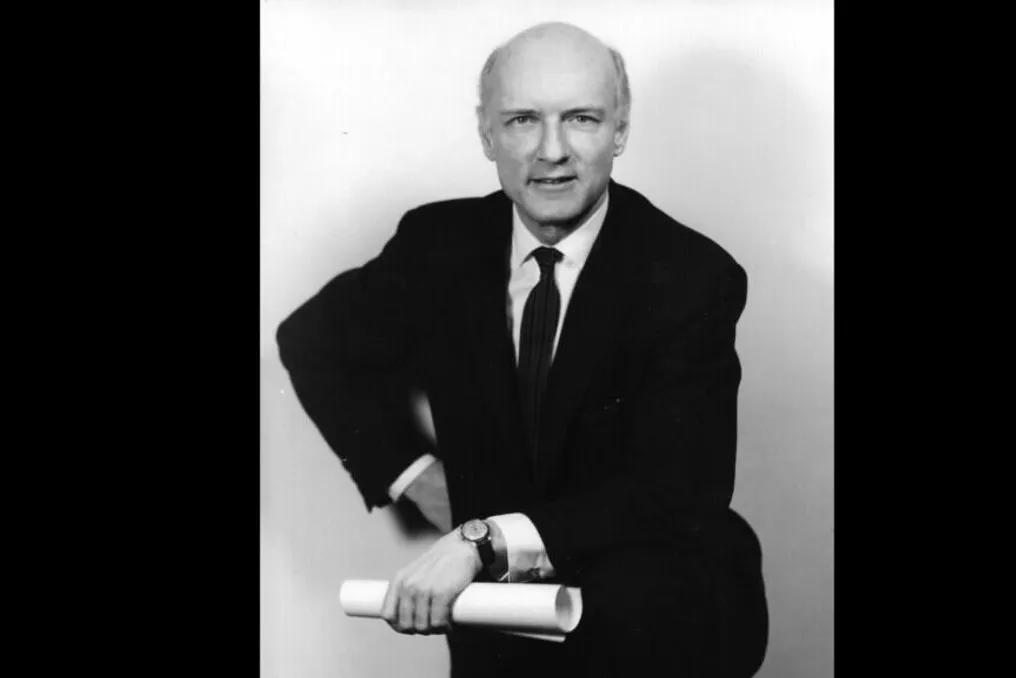
A team of scientists led by physicist Heinz von Forster conducted this study. They believed that if the rate of human population growth continued at the pace of the last two thousand years, the numbers would eventually reach infinity. They argued that future generations would not die of starvation but would perish because the population would become so large that people would begin to die being crushed against each other. To support this prediction, the scientists used a mathematical formula.

They studied the rate of population increase and developed a model assuming a constant accelerated increase in the number of people. According to these calculations, Friday, November 13, 2026, was the date when the world's population was supposed to become infinite. Naturally, imagining life on Earth with such a huge population was impossible, but it did not happen.

A significant reason for this was the slowdown in birth rates in developed countries around the 1960s. After the war, the global birth rate increased for a period, but then this trend declined.

According to a United Nations report, the world population may reach its peak by 2085. After that, stagnation or a decline may begin. Estimates suggest the world population will then be around 10.3 billion people. Thus, many developed countries are currently more concerned about declining birth rates and an increasing elderly population rather than growing populations.

Nevertheless, this does not mean that humanity is free from dangers. Threats such as climate change, global warming, epidemics, and the danger of nuclear weapons still exist. There is also a symbolic clock called the 'Doomsday Clock,' which shows how close humanity is to doom. This clock setting has been maintained by the Bulletin of the Atomic Scientists since 1947. Currently, the clock was set just 85 seconds before midnight on January 27, 2026, which is the most alarming level to date, indicating numerous serious threats to the world.
Similar stories

Analysis of the 1960 mathematical prediction on population growth and the date of November 13, 2026
Read more
olhardigital.com.br

Analysis of the 1960 mathematical prediction on population growth and the date of November 13, 2026

The date of November 13, 2026, associated with an apocalypse prediction, originated from a mathematical equation published in 1960. However, the original study did not aim to predict the destruction of Earth, but rather to warn about the rapid increase in population.

November 13, 2026, which recently gained prominence on social media, derives from a scientific study conducted 66 years ago. It is essential to clarify that this projection never indicated the end of the planet or the disappearance of humanity on that date.

The article, titled Doomsday: Friday, 13 November, A.D. 2026, was prepared in 1960 by physicist Heinz von Foerster, along with researchers Patricia M. Mora and Lawrence W. Amiot. The authors used a mathematical projection of population growth to reach a singularity point, where the projected population would tend toward infinity.

Although the catchy title turned the work into a lasting scientific curiosity, the crucial caveat was often ignored: it was a mathematical extrapolation, not a literal prophecy about the future of humanity. The basis of the equation was the maintenance of a historically observed trend of population growth.

However, the scenario has changed drastically with the evolution of societies and demographic patterns. In recent decades, the decrease in birth rates in various global regions has significantly altered this landscape. Although the population continues to grow, the pace has slowed down, moving away from the curve established by scientists in 1960.

Current data from the United Nations (UN) illustrates this divergence. In 2024, the world population was estimated at about 8.2 billion inhabitants. UN projections indicate that growth should continue until reaching a peak near 10.3 billion in the mid-2080s, followed by a gradual decline.

The UN also reports that the global fertility rate dropped from 3.3 children per woman in 1990 to approximately 2.3 in 2024. More than half of countries and territories already register rates below the level necessary to maintain long-term population stability, excluding migration.

This information demonstrates the deviation of demographic behavior from the trend predicted by last century's researchers, meaning there is no evidence that humanity is heading toward the infinite population suggested by the mathematical model. The case of von Foerster serves as an example of how scientific findings can acquire new meanings when decontextualized.

The study maintains its historical importance, serving as a reference for debating the limits of mathematical projections and the dangers of assuming that past trends will repeat indefinitely. Additionally, the date of November 13 coincided with von Foerster's birthday, which contributed to the provocative tone of the title.

In summary, the world has not ended; there was never a reliable scientific prediction that this would happen on that day. What expired was merely the deadline of a mathematical projection that, since its creation, should have been seen as a warning about population growth, not as a countdown to the end.

1960 Scientific Study Predicted Global Population Reaching Critical Point in 2026
Read more
noticiasaominuto.com

1960 Scientific Study Predicted Global Population Reaching Critical Point in 2026

Is there an end of the world today? A scientific study published in 1960 predicted that global population growth would reach an extreme limit on November 13, 2026, which was the date presented 66 years ago.

This forecast arose from a study prepared by Heinz von Foerster, Patricia M. Moran, and Lawrence V. Amitot, and was published in the journal Science. The study itself was titled 'Domsday: Friday, 13 November, A.D. 2026'. Von Foerster and his team of scientists used demographic data spanning about two millennia to create a mathematical model that predicted increasingly accelerated population growth.

It is important to note that the calculation never assumed a meteorite impact, nuclear war, or any other external event; it concerned a scenario where population growth could reach 'infinity'. The researchers reached this conclusion by observing that the time interval required for the world population to double was shrinking over centuries. If this trend continued, they predicted that the intervals between doublings would theoretically decrease to zero ('infinity'), leading to the date of November 13, 2026.

When the study was published, it caused a worldwide stir, and one of Heinz von Foerster's goals was specifically to draw attention to the problem of overpopulation. Furthermore, the choice of the doomsday date—Friday the 13th—also served as a warning about the problem of excessive population growth.

Population will reach 10.3 billion in 2080

According to a report by the United Nations Department of Economic and Social Affairs (DESA), the planet's population is projected to reach 10.3 billion people by 2080. However, the same report indicates that after reaching its peak, the Earth's population should gradually decline by the end of the century.

Popular