Jensen Huang's departure from Nvidia reignites discussion on succession planning in large tech companies
Read more
Olhar Digital
olhardigital.com.br

Jensen Huang's departure from Nvidia reignites discussion on succession planning in large tech companies

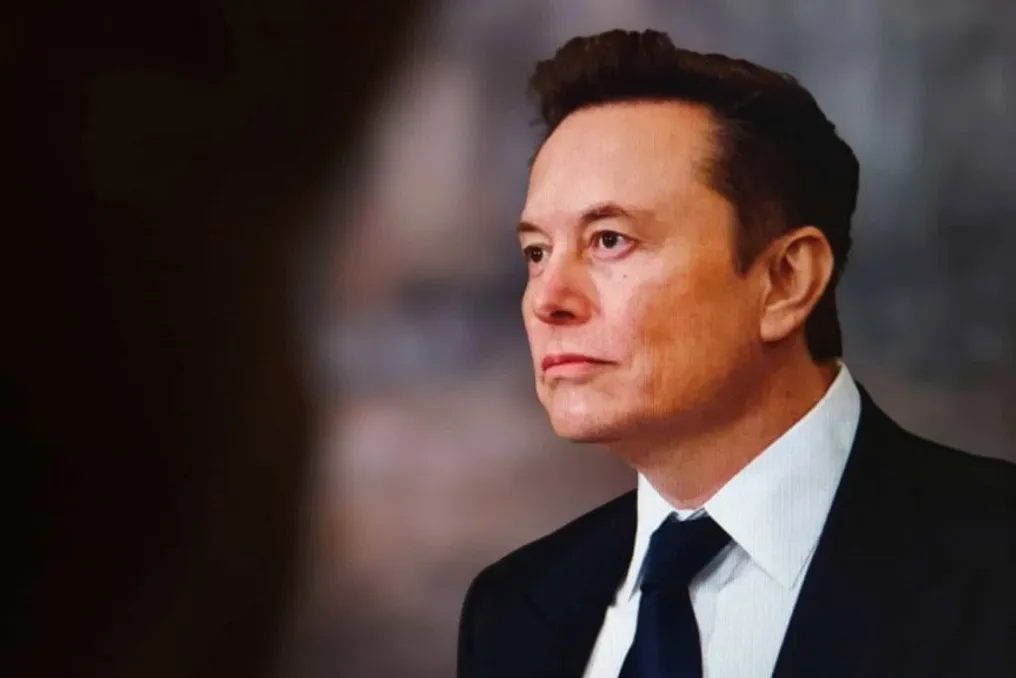
Jensen Huang's departure from Nvidia's leadership has exposed a governance issue that also plagues other tech giants: the lack of defined plans for replacing their founders.

This situation highlights companies such as Tesla, SpaceX, and Meta, whose operations and strategies heavily rely on their key executives. In Elon Musk's case, financial documents already point to the risks inherent in the absence of this entrepreneur.

Both Tesla and SpaceX state in their financial documents that Musk's absence could lead to serious business consequences. Specifically, in public offering records, SpaceX mentioned that finding an individual with similar skills to his and capable of inspiring the same market confidence would be a long and uncertain process.

At Tesla, the succession structure is outlined among clauses tied to the last two installments of a compensation package valued at US$1 trillion (approximately R$5.6 trillion), designed to keep Musk at the company until the mid-next decade.

The absence of an established successor also causes anxiety among investors. Shareholder Ross Gerber compared Jensen Huang's situation to what he considers one of Musk's biggest fears, emphasizing the entrepreneur's geopolitical exposure, particularly due to his involvement in the war in Ukraine through Starlink.

The difficulty in structuring succession is not limited to Musk's companies. For Nell Minow, president of ValueEdge Advisors, preparing for the replacement of executive directors is one of the most crucial tasks of a board of directors. She observes that this responsibility is often neglected because the leaders themselves hesitate to discuss the possibility of leaving office, fearing loss of power or alteration of internal corporate dynamics.

Meta also acknowledges the dangers associated with the absence of its founder. The company's financial documents indicate that Mark Zuckerberg's unavailability could negatively impact its operations. Furthermore, the executive holds the majority of the company's voting rights and participates in high-risk activities, such as combat sports and aviation.

While these corporations are questioned about their succession plans, Nvidia is dealing with the mobilization of investors and entrepreneurs supporting Jensen Huang's return. The board is conducting an independent investigation into the reasons for his departure, while CFO Colette Kress temporarily assumes the role of CEO.

An online petition managed to gather over 170,000 signatures in favor of the executive's return. Elon Musk, Garry Tan, and Tim Sweeney expressed their support for the initiative, and Huang's allies are seeking ways to pressure the company's management.

However, the prospect of his return faces resistance. Government authorities and analysts present divergent views on the possibility of Huang resuming his position, given scrutiny from American legislators and national security investigations.

This debate encompasses companies of great economic relevance and in the financial market. Nvidia, Tesla, SpaceX, and Meta collectively employ over 280,000 people and represent almost 20% of the market value of shares in the S&P 500 index. The magnitude of these businesses explains why the absence of a director can transcend an internal issue and become a concern for the technology sector and investors.
Similar stories

Jensen Huang's departure from Nvidia raises questions about export control and company ties
Read more
www.tehrantimes.com

Jensen Huang's departure from Nvidia raises questions about export control and company ties

The departure of Jensen Huang from Nvidia, a company that has become an indispensable supplier for the AI boom and convinced Washington of its dependence on American leadership, raises more complex questions. His resignation on Thursday casts doubt on how a company with such political influence ended up at the center of a scandal related to export control that the Trump administration allegedly failed to prevent.

The immediate scandal is personal: Huang admitted to an extramarital affair, and reports of other relationships with Nvidia subordinates have increased pressure on the board of directors. However, a more significant concern is his connection to Alice Huang, a former executive at Singaporean Megaspeed. US officials suspect her of working for Chinese intelligence, although there is no public proof; the investigation into Megaspeed's activities is better documented.

Nvidia states that it has no basis to believe that company secrets or US national security interests were compromised. The company announced that Huang stepped down as president, CEO, and director immediately. Colette Kress, the CFO, was appointed interim CEO, and long-time director Harvey K. Jones became the company's first chairman of the board. After 33 years of leadership, he became the public face of the company. Shares fell by 14 percent on Thursday after already declining from record highs amid concerns over AI valuations.

Megaspeed and the espionage narrative

Megaspeed acquired large volumes of Nvidia equipment and established data center capacities in Southeast Asia that could be leased to Chinese clients. The publication The Information reported that companies associated with Alice Huang facilitated the sale of at least $7.5 billion worth of Nvidia chips through Chinese firms since 2023. US authorities are reportedly investigating whether the equipment was rerouted to China in violation of export restrictions. Megaspeed claims to conduct legitimate business and has promised to cooperate with American investigators.

The situation in Singapore complicates the espionage allegations. The Singapore Ministry of Home Affairs stated that it launched an investigation into Megaspeed in February 2025 regarding alleged false statements during server purchases and related commercial offenses. It explicitly noted that Alice Huang was not subject to an espionage investigation. In February 2026, police found insufficient evidence of her alleged offenses. Nevertheless, she was issued a strict warning for knowingly providing inaccurate information to downplay her role and was banned from entering Singapore. The investigation into Megaspeed and six other companies remains open.

This does not resolve the US investigation nor rule out rerouting, but it leaves a gap between public evidence and Washington's most dramatic claim. Practical issues are more concrete: who bought the chips, where did the equipment end up, which clients used the computing power, and whether Nvidia and US regulators properly vetted these transactions. Beijing is also trying to reduce China's dependence on Nvidia by promoting domestic alternatives and restricting the import of American processors. Reuters reported this month that about 600,000 H200 chips were in Hong Kong because Beijing did not approve large-scale shipments to the mainland. Chinese companies remain interested in Nvidia's software and computing power, but the government is pushing them toward local suppliers. The private network leveraging China's demand for Nvidia power does not, in itself, constitute a state intelligence operation.

Did the White House know

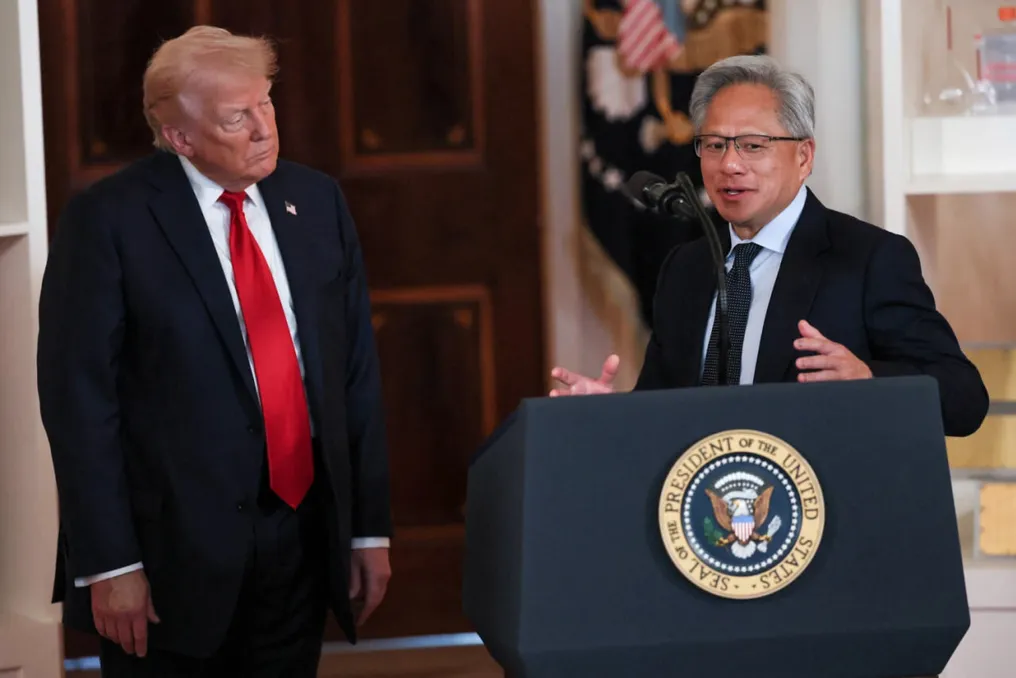
The political question is why Megaspeed remained outside the Department of Commerce's Entity List, which can restrict access to American goods and technologies, despite warnings from other agencies. The New York Times reported that the Department of Commerce's request stalled after Nvidia's legal counsel contacted an official. The department publicly did not accept this version. The Times also reported that the Department of Commerce had not added the company to the list for over a year, the longest pause in 18 years. Warnings reached the White House. The Washington Post reported that Secretary of State Marco Rubio informed President Donald Trump in May about intelligence regarding Huang's relationship with Alice Huang, shortly before the Nvidia head joined Trump's trip to China. Huang still boarded Air Force One. Later, Trump defended him as a decent person and gave an ambiguous explanation of when he first learned of the allegations.

On Friday, Treasury Secretary Scott Bessent aired the dispute publicly. He stated that the Treasury Department, the Pentagon, the State Department, and the US Trade representative supported including Megaspeed on the Entity List for several months, but the decision rested with the Department of Commerce. 'The Department of Commerce holds the pen,' he told CNBC. Bessent also questioned whether Nvidia properly vetted Megaspeed and potential shell intermediaries. His remarks shifted focus from intelligence speculation to the administration's failure to use powers that, in their view, were sufficient to prevent sensitive chips from reaching China. The contradiction is evident in Trump's own policy. After lobbying by Huang, the administration permitted the sale of Nvidia H200 chips to approved Chinese clients, reversing previously imposed restrictions. Now, high-ranking officials are arguing over whether a Southeast Asian company should be blacklisted for allegedly helping Chinese clients gain access to Nvidia technology. The administration tried to protect commercial access while promising to limit China's technological growth. Megaspeed demonstrates what happens when these goals clash, and compliance becomes a matter of interagency policy. Congress demands answers. Republican committee chairs requested a closed briefing from Huang on Nvidia's security practices before his departure, and lawmakers say they still want to hear from him. Washington faces an uncomfortable reckoning: explaining why its own warnings failed to prompt action from the Department of Commerce, and whether the industry, which has privileged access to the White House, can even be regulated.

Popular