IMF calls on Uzbekistan to prepare National Investment Fund companies for privatization
Read more
UzDaily
uzdaily.uz

IMF calls on Uzbekistan to prepare National Investment Fund companies for privatization

The IMF representative in Uzbekistan, Koba Gvenetadze, stated that Uzbekistan must bring the companies owned by the National Investment Fund (UzNIF) into compliance with international standards before the privatization process.

These statements were made during the presentation of the IMF's regional economic review for the Caucasus and Central Asia, which took place at the Central Bank of Uzbekistan.

The National Investment Fund of the Republic of Uzbekistan was established by a presidential decree on August 27, 2024. Its main goal is to support long-term sustainable economic growth and development of the country for the benefit of the population.

The fund holds strategic stakes ranging from 25% to 40% in several large state enterprises. The fund's portfolio covers companies operating in the energy, utilities, telecommunications, banking, finance, and transport sectors.

In the utilities sector, the portfolio includes the regional electricity distribution company Hududiy Elektr Tarmoqlari, Uzsuvtaminot, Hududgazta'minot, and the national electricity grid operator O'zbekiston MET. Energy companies in the portfolio are TPPs (Issiqlik Elektr Stansiyalari) and Uzbekhydroenergo. The telecommunications sector is represented by Uzbektelecom.

In the banking and finance sphere, the fund holds stakes in Uzpromstroybank (SQB), the Uzbek Republican Commodity and Raw Materials Exchange, and the insurance company Uzbekinvest. The transport portfolio includes Uzbekistan Airways, Temiryo'linfratuzilma, which is responsible for railway infrastructure, and Toshshahartransxizmat (ToshBUS).

Gvenetadze noted: 'The Investment Fund of Uzbekistan has been created, and stakes in state enterprises have been transferred to it. The initial public offering of shares was quite successful. Now, the companies whose shares are in the fund must be prepared for privatization, and we very much hope that this process will be successful.'

He emphasized that privatization must be based on transparent rules and supported by proper communication. In his opinion, this will help attract reliable investors willing to ensure the sustainable operation of companies after the change of ownership.

The IMF representative explained that having transparent principles means striving to attract the most reliable and interested investors who commit to guaranteeing the correct functioning of the organization under new conditions.

Accelerating reforms of state enterprises is one of the priorities of the IMF's economic policy. The fund believes that such changes can increase productivity, support non-inflationary economic growth, and expand opportunities for the private sector.

Gvenetadze added that state enterprises can remain where markets have failed to create the necessary conditions. However, such companies must still operate provided that sound and transparent management principles are observed and they undergo reforms.

The IMF also recommends linking state support for enterprises with the implementation of corporate governance principles. The fund specifically drew attention to contingent liabilities arising from state enterprises and Public-Private Partnership (PPP) projects, calling them a potential risk to public finances. Gvenetadze concluded that the authorities of Uzbekistan have already taken important steps to improve the management of PPP projects.
Similar stories

International Monetary Fund warns of threat to Uzbekistan's economy related to subsidized lending
Read more
uzdaily.uz

International Monetary Fund warns of threat to Uzbekistan's economy related to subsidized lending

The International Monetary Fund (IMF) views pressure to expand targeted and subsidized lending as one of the internal risks to Uzbekistan's economy. The Fund plans to publish separate studies on interest rates and the practice of targeted lending in the country in 2027.

Koba Gvenetadze, the IMF representative in Uzbekistan, announced these plans during the presentation of the fund's regional economic forecast at the Central Bank.

When outlining risks to the economic forecast, Gvenetadze divided them into external and internal factors. External risks include global economic uncertainty, geopolitical events, and fluctuations in commodity prices.

Among the internal threats, he pointed to the possibility of procyclical increases in government spending when revenues exceed planned figures, including increased gold receipts. Additionally, he noted potential pressure related to the expansion of subsidized and targeted lending programs.

The IMF is preparing two analytical projects concerning Uzbekistan's economic policy. One will examine interest rates, while the other will focus on targeted lending. Gvenetadze stated that the results of both studies are scheduled to be released in 2027.

Targeted lending involves issuing loans under favorable conditions based on government decisions. Such loans may have interest rates that do not reflect the market value of borrowing. This circumstance can weaken the transmission mechanism of monetary policy, as the Central Bank's decisions on the key rate do not fully influence the cost of borrowing across the entire economy.

The IMF also noted that Uzbekistan continues to make efforts to strengthen the transmission of monetary policy. The Central Bank has kept its key rate at 14% since March 2025. The fund's regional report also emphasizes that relatively small and shallow credit markets, including Uzbekistan's, could amplify the impact of future external shocks on inflation.

IMF classifies Uzbekistan's exchange rate as floating regime
Read more
uzdaily.uz

IMF classifies Uzbekistan's exchange rate as floating regime

The International Monetary Fund (IMF) has changed the classification of Uzbekistan's exchange rate regime, moving it from a system similar to a crawling peg to a floating exchange rate system. IMF representative Koba Gvenetadze recommended maintaining the flexibility of the sum to protect the economy from external shocks.

These statements were made during the presentation of the regional economic forecast at the Central Bank of Uzbekistan. Gvenetadze noted that the previous regime was similar to a crawling peg, and now it is floating.

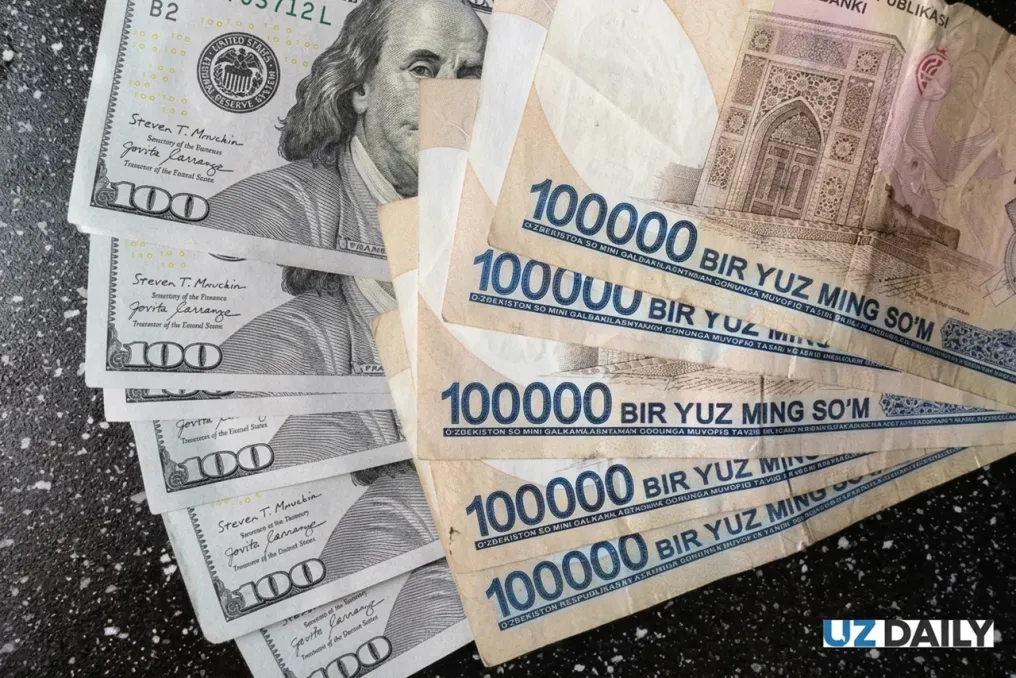
According to Gvenetadze, just one or two years ago, market participants expected the sum to depreciate against the US dollar by 7–10% annually. However, this depreciation did not occur amid improving key economic indicators.

The IMF representative emphasized that a floating exchange rate is an integral part of the inflation targeting system used by the Central Bank. He added that the Central Bank of Uzbekistan has overcome the so-called 'fear of a floating rate,' and Uzbekistan now has a floating exchange rate.

IMF emphasizes the need to develop hedging instruments

The transition to a floating exchange rate requires the creation of tools for hedging currency risks. Gvenetadze advised the treasury departments of commercial banks to develop capabilities to offer such instruments to clients.

He described the main advantage of a flexible currency regime—its ability to mitigate the impact of external shocks on the economy because it 'isolates the economy from the shock.' To support this thesis, Gvenetadze referred to a study presented in the IMF report.

According to the fund's calculations, in countries with flexible exchange rates, supply shocks affect prices faster, but subsequent production losses are smaller. Under less flexible exchange rate regimes, the impact of such shocks on prices is weaker, but production reduction occurs more significantly in the second year after the shock.

IMF supports maintaining the key rate at 14%

The Central Bank of Uzbekistan has maintained its key policy rate at 14% since March 2025, which the IMF considers acceptable. The fund advises maintaining tight monetary conditions until inflation sustainably approaches the Central Bank's target of 5%.

Nodirbek Achilov, Deputy Chairman of the Central Bank of Uzbekistan, stated that further inflation reduction is becoming more difficult as it approaches the target. He explained that when they started inflation targeting, it was around 20%, and now it is in single digits, for example, around 6.5%, and changing these figures requires significant attention and multiple measures.

Uzbekistan plans to list shares of Uzbekistan Airways and SQB on IPO in 2027–2028
Read more
uzdaily.uz

Uzbekistan plans to list shares of Uzbekistan Airways and SQB on IPO in 2027–2028

According to the Ministry of Economy and Finance, Uzbekistan intends to conduct an Initial Public Offering (IPO) of shares from five major companies in the National Investment Fund's portfolio between 2027 and 2028. Among these companies are Uzbekistan Airways and Uzpromstroybank (SQB).

Other enterprises included in the list are the National Electric Networks of Uzbekistan, Uzbekhydroenergo, and Uzbektelecom. These companies cover the aviation, energy, hydropower, telecommunications, and banking sectors. They are currently undergoing transformation processes and preparing for entry into international capital markets.

The National Investment Fund itself previously conducted an IPO on May 18, 2026. During the placement of 35.45% of shares on the London and Tashkent stock exchanges, $692 million was raised, of which over $660 million was directed to the state budget.

Demand for the fund's shares exceeded the supply by four times. International investors expressed interest amounting to over $2.9 billion, and demand on the Tashkent Stock Exchange reached 260 billion soums.

On October 14, the fund organized an Investors Day event in Tashkent, attended by over 250 foreign investors whose total assets exceeded $2.5 trillion. The Ministry reported that 40% of the participants were existing fund shareholders, and 60% were new investors.

On October 16 in Tashkent, Corporate Governance Day 2026 took place. Participants of this event identified six priority areas for improving corporate governance in companies within the fund's portfolio. These include ensuring high-quality financial reporting in accordance with International Financial Reporting Standards (IFRS), adhering to the corporate calendar, and reviewing key performance indicator systems. Long-term financial models, strengthening key corporate functions, and strategies to increase company value were also named as priorities.

Popular