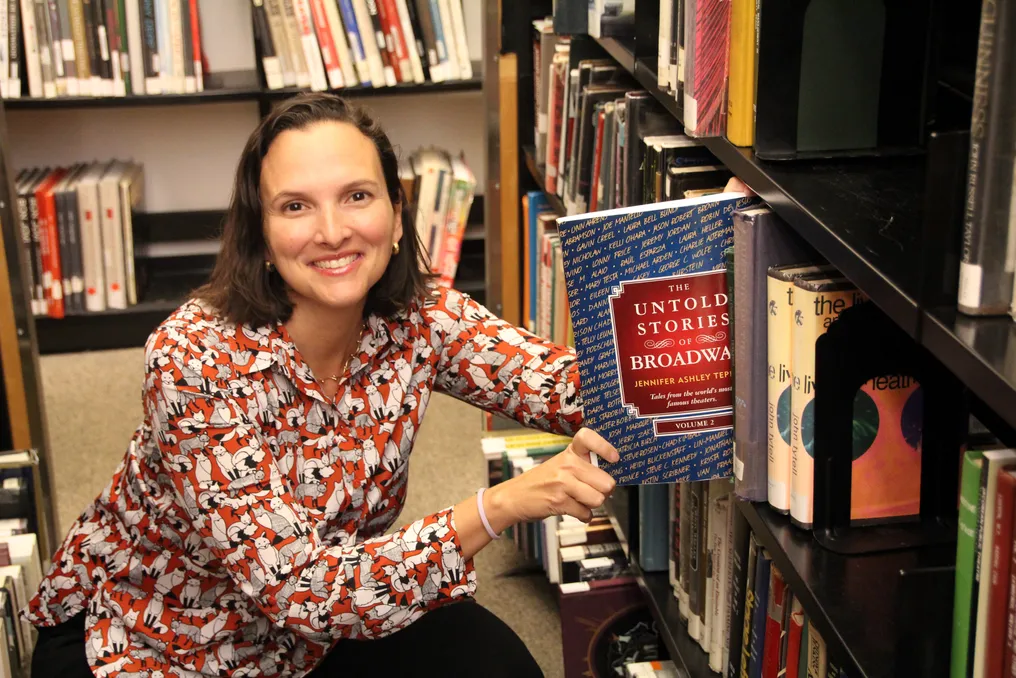
Roberta Pereira, originally from Rio de Janeiro, assumed the position of executive director of the New York Public Library for the Performing Arts in January 2024. This institution, located in Lincoln Center, is part of the New York Public Library and holds collections focused on music, dance, theater, and film.
Recently, the Brazilian gained international attention due to a remarkable achievement: she secured a donation of $60 million for the library, the highest amount in its history. Roberta has an arts background from Wesleyan University and the David Geffen School of Drama at Yale. Previously, she worked as Executive Director of the off-Broadway company "The Playwrights Realm," where she produced the play "The Wolves," a Pulitzer Prize finalist. Her experience also includes performances on Broadway and in the West End in London.
A resident of New York for over ten years, the Carioca was nominated for a Tony Award and won the Olivier Award. However, her main dedication is to the administration of the library, recognized as a prestigious research center and one of the world's largest repositories dedicated to the performing arts, containing over 15 million items. Furthermore, the institution offers high-level exhibitions, all free of charge.
During a guided tour, Roberta Pereira detailed that the library goes beyond books, housing museum-worthy exhibitions at no cost. Currently on display is an exhibition about dancer Martha Graham until January 2, 2027, and the exhibition Unleashed: Pets of the Performing Arts, valid until February 6, which explores the connection between artists and their pets. The latter features images and accounts of animals that were in the lives of prominent art figures, such as Billie Holiday and Mikhail Baryshnikov.
She emphasized the value of artists' personal records for understanding the creative process. Citing names like jazz musician Wayne Shorter or renowned choreographer Jerome Robbins, she explained that the archive reveals the process, not just the final result. Jerome Robbins' notebooks, for example, show sketches and ideas for works like West Side Story, highlighting the creativity of these individuals. It is also possible to observe failures, such as the archive of Hal Prince, a famous Broadway producer and director, who had iconic shows like The Phantom of the Opera and Sweeney Todd, but also productions that did not succeed.
The creative process is dynamic, much like a change of light. The library keeps old scores of The Sound of Music, showing alterations made by the composers. Thousands of videos are also part of the collection; it is possible to see Baryshnikov rehearsing or Lin-Manuel Miranda in the early stages of his career, before the success of Hamilton in In the Heights.
One of the most curious items mentioned is a strand of Beethoven's hair. Roberta highlighted that in the performing arts—theater, dance, and music—the live presentation is ephemeral. The library's interest lies in preserving these manifestations in various ways, whether through recordings or written records and composers' notes.
Although she frequented the library before being hired, she described her first visit during the global selection process. She felt it was the ideal place to work. She believes her Carioca and Brazilian origin contributes to her career because she understands the relevance of diversity of voices and perspectives in the arts.
For her, working at the library united all aspects of her journey: from reading books in childhood to the passion for theater developed in Rio. Her first trip to New York was at age 14, motivated by the desire to see a Broadway show. She considers it transformative to work in a space that brings together books, arts, theater, dance, and music, and that is free, something uncommon in New York.
Passionate about the library, she encourages others to visit. Her goal was to share the collection with the world, especially children in Brazil who dream of acting, allowing them to view videos of actors and read notes. This vision inspired the donor, who returned with a proposal that became the largest individual donation in the history of the New York Public Library: $60 million, celebrating the institution's 60th anniversary.
After months of work, Roberta celebrated the confirmation of the donation in Rio with her family. With over 15 million items, much of which requires in-person access on the third floor, the plan is to make the entire collection globally accessible within the next five years. She expressed a desire to see a Broadway musical with Brazilian identity.
According to Roberta, passion for what one does is fundamental, especially for immigrants working in the arts. She emphasizes that there are countless roles in the arts, not just those known as actor or playwright. She graduated in design and production, behind-the-scenes areas, and considers it important to show these diverse opportunities, as the professional path can be an unknown dream.