Discussion of a Scene from the Film 'Ramayana': Why Ravana Kept Jatayu's Claw
Read more
Aaj Tak
www.aajtak.in

Discussion of a Scene from the Film 'Ramayana': Why Ravana Kept Jatayu's Claw

One scene from the film 'Ramayana' is currently being actively discussed. During a fierce battle between Ravana and Jatayu, Jatayu wounds Ravana, tearing off his head with his claws. However, Ravana, using his divine power, instantly restores his head and deals an even stronger blow to Jatayu.

After killing Jatayu, Ravana breaks off a claw and keeps it. This scene has attracted viewers' attention, and the reason for this action is being debated.

In the film 'Ramayana', the roles of Ravana and Jatayu were played by actors Yash and Anupam Kher, who provided the voiceover for Jatayu. The battle scene between Ravana and Jatayu has garnered widespread discussion among viewers.

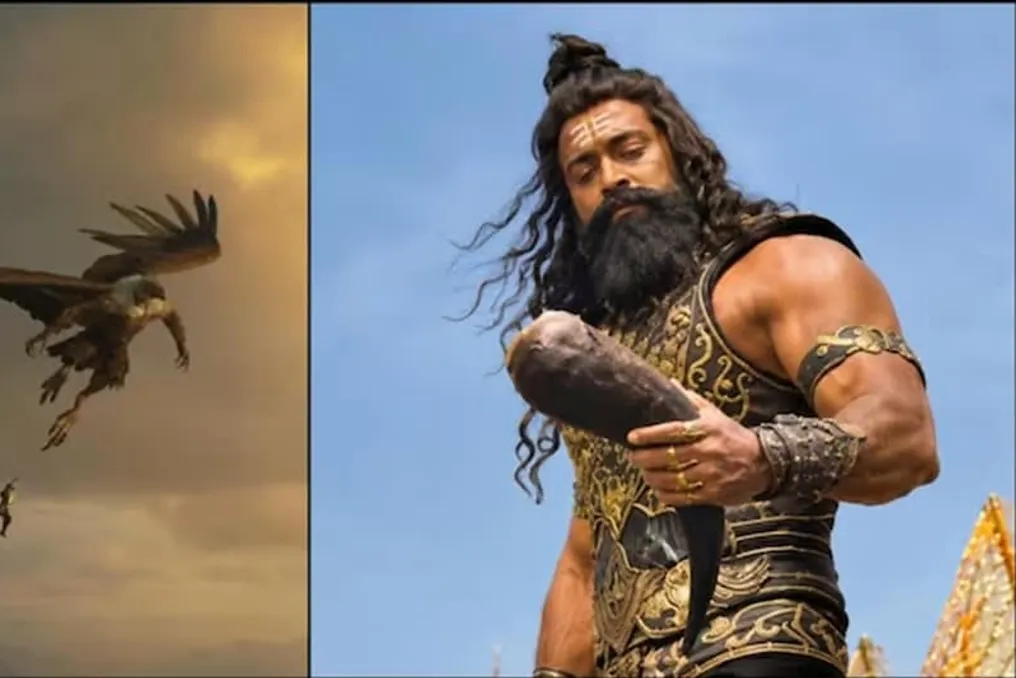
During Sita's abduction, the old griffin Jatayu throws all his strength into the fight against Ravana. In this scene shown in the film, Ravana breaks off Jatayu's claw at the end of the fight and keeps it.

During the brutal struggle, Jatayu tears off Ravana's head with his claws. Despite this, Ravana possesses the ability to regenerate his severed head. He quickly regains a new head thanks to his divine might and inflicts an even more powerful blow on Jatayu. During the battle, Ravana also cuts one of Jatayu's wings with his sword. Seriously wounded, Jatayu loses consciousness. Before throwing Jatayu out of the Pushpaka flying vehicle, Ravana breaks off his claw and preserves it.

This episode can be interpreted as a reflection of Ravana's arrogance and wounded pride. Ravana was an arrogant ruler who considered all beings in the three worlds his slaves. He desired for everyone to bow before his divine powers. When the old bird wounded him, even separating his head from his body, Ravana could not accept this humiliation.

Thus, Jatayu's claw could serve as a symbol of preserving the memory of this insult. Perhaps even after defeating Jatayu, Ravana did not want to forget his valor. This represents a creative cinematic scene demonstrating his arrogance.

In the epic 'Ramayana', Jatayu's story symbolizes bravery, duty, and the defense of a woman's honor. When Ravana abducts Mother Sita and takes her to Lanka, Jatayu comes out to stop him. Jatayu knew that Ravana was extremely powerful, and opposing him would not be easy. Nevertheless, he uses all his strength to protect Sita. He attacks Ravana with his beak, claws, and wings. During the fight, he not only wounds Ravana but also damages his flying vehicle, the Pushpaka.

This episode shows that Jatayu fought against evil without regard for the limits of his age and strength. He did not hesitate to risk his life to save Mother Sita.
Similar stories

Discussion of the imbalance between Rama and Ravana in a film based on the Ramayana epic
Read more
www.aajtak.in

Discussion of the imbalance between Rama and Ravana in a film based on the Ramayana epic

Nitesh Tiwari's film, based on the ancient Indian epic 'Ramayana,' has sparked significant discussions on social media following its premiere. The focus of the discussions has shifted from the character of Rama to that of Ravana.

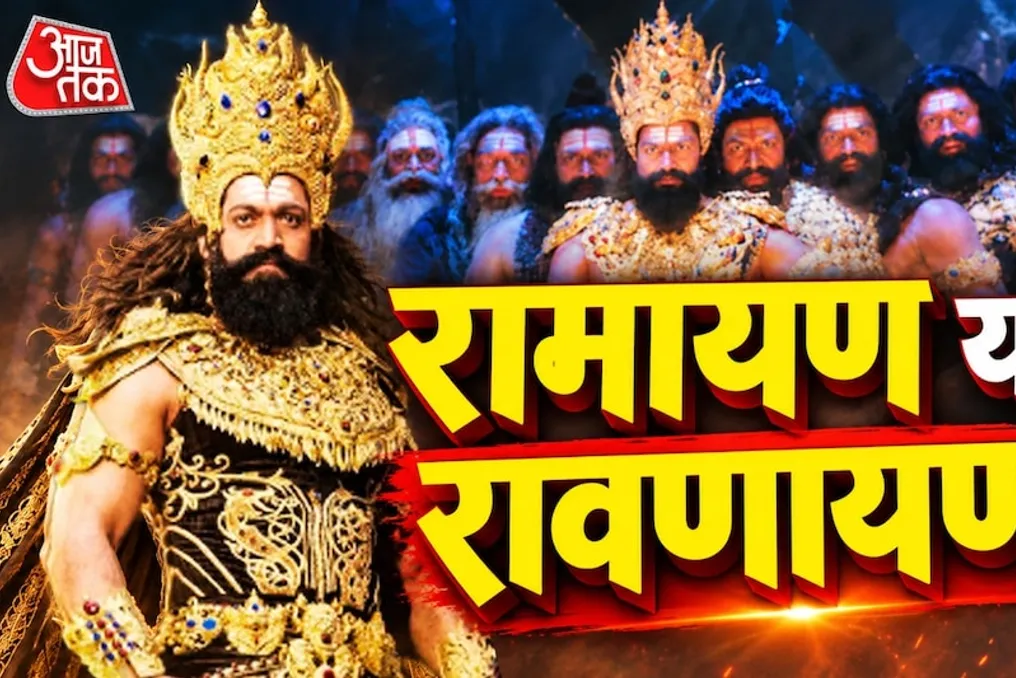
A large portion of viewers question the exaggerated, 'bigger than life' portrayal of the character Ravana. Some argue that Ravana is given such a central role in the film that Lord Rama appears merely as a secondary character in his own story.

Critical remarks are also heard on social media. One user noted the excessive glorification of Ravana and the depiction of Lord Rama as weak. Another commentator stated that the deities in the film are presented as tyrants, and Shurpanakha as a victim. A third user compared the traditional 'Ramayana' with this version, noting that in Namita Malhotra's adaptation, Ravana is made the main pillar of the narrative, whereas in the original, it is a story about Lord Rama.

Nitesh Tiwari's film does not begin with Rama, but with the appearance of Ravana. His clan is persecuted by the gods and forced to work in slavery under the god of wealth Kubera, which ultimately leads them to rebellion. However, it is emphasized here that Ravana and his family are not shown as victims; their subjects are the ones who suffer from food shortages.

At the beginning of the film, Ravana is depicted playing the vina, Vibhishana studying knowledge from his scriptures, and Kumbhakarna feasting heartily. After this, Ravana undergoes severe asceticism, receives divine blessings, and conquers Lanka, where he subsequently rules. The film meticulously shows his path to power.

The question arises whether the film truly praises Ravana. Upon careful examination, there is some truth to this idea. A good aspect of the film is that it does not present Ravana as an 'incomprehensible hero.' His arrogance is constantly evident. The most tragic moment is his killing of Vidhitha, Shurpanakha's husband, simply out of spite. This murder occurs because Vidhitha mistreated women and tried to possess her. This version lacks the portrayal of a 'restrained Ravana.'

How good is Ravana, feminist Ravana?

Turning to the strong creative elements, it is worth noting how Ravana's ten heads are portrayed with different voices and personalities. This allowed Yash to play the character as a ruler, warrior, devotee, and a person with many flaws. But this is where the film's main question arises: why did Ravana kidnap Sita?

In Nitesh Tiwari's film, the insult to Shurpanakha becomes one of the key reasons for the decision to abduct Sita. In Valmiki's 'Ramayana,' the abduction of Sita is described in detail. Valmiki offers a more complex interpretation of Ravana. In the 34th sura, 'Aranyakanda,' of the epic, Shurpanakha informs Ravana of Sita's extraordinary beauty and urges him to make her his wife. She advises him to kill Rama and Lakshmana to obtain Sita. When Ravana, disguised as an ascetic, arrives at Sita in Panchavati, Valmiki again explains that he is completely consumed by sensuality. His attraction to Sita and desire to possess her are at the center of this episode. Shurpanakha's insult adds another aspect to Ravana's decision, but it does not eliminate the role of sensuality and the desire to 'possess.'

In this context, the film's emphasis is very important: the theme of nose cutting and revenge is brought to the forefront, which changes Ravana's intentions. Ravana, his rule, and glimpses of Rama

The author's main complaint lies in the imbalance between Rama and Ravana. Ravana is given enough time to demonstrate his lineage, ambitions, relationships, and path to power. He is even given a good speech about what he will do for his people: no hierarchy, no division. Whoever eats Ravana will be his people. This speech was presented so convincingly that ordinary people might say, 'We need not Raja Rama, but Raja Ravana.'

Meanwhile, Rama's life is presented only as a series of important moments: his wedding, preparations for coronation, and exile into the forest. Although all these events are included, if more time had been dedicated to some of them, viewers could have related to them emotionally better. Very little is shown about how Rama interacts with his people. Where is that Raja Rama we are talking about? Nitesh Tiwari, please explain.

The question was raised by a member of the censorship board

Despite users on social media writing whatever they want, that can be dismissed. But what if the member of the censorship board himself called the film 'Ravanayana'? Indeed, the famous film critic, recipient of the National Film Award, Vino...

3.
Critique of the film 'Ramayana': remarks on CGI, character portrayals, and plot development
Read more
www.aajtak.in

Critique of the film 'Ramayana': remarks on CGI, character portrayals, and plot development

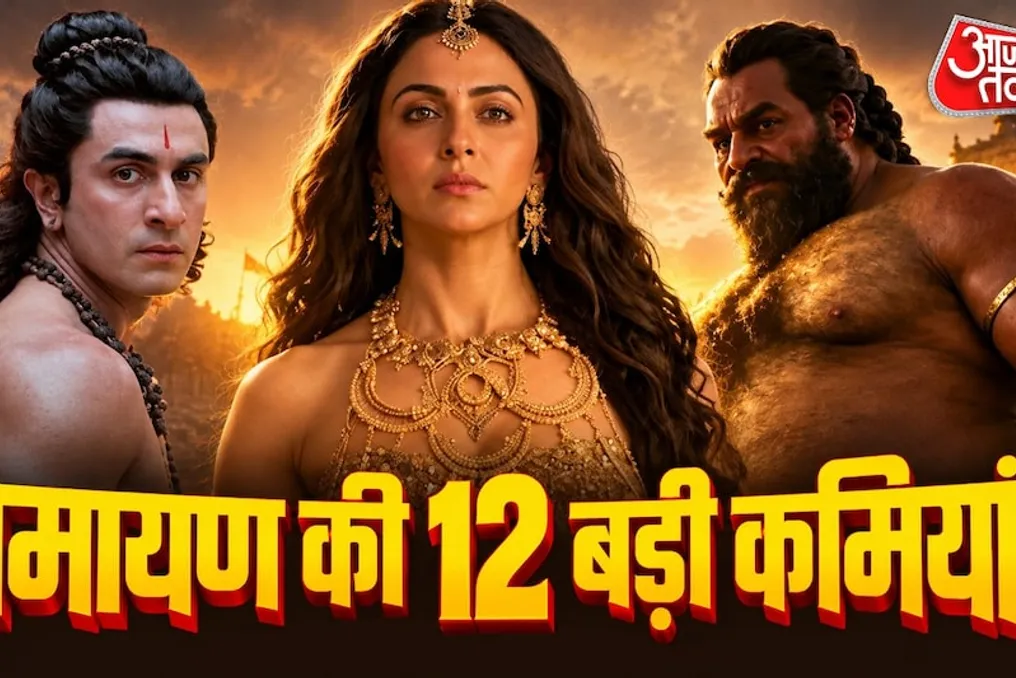
Bringing a great story like the Ramayana to the screen is a complex task that requires preserving not only grandeur but also emotional depth, character dignity, and the seriousness of the mythological world. However, in the film 'Ramayana,' featuring Ranbir Kapoor, Sai Pallavi, and Yash, there is a tendency where the creators seem to have moved away from important aspects of the narrative for the sake of flashy CGI and visual effects.

Looking at the faces and appearance of many characters, the excessive use of technology is clearly felt. Some figures look like cartoon characters, and their mannerisms and presence in the frame do not always align with the spirit of the story.

Even the scene of Rama's exile failed to make a strong impression. When Rama is shown crossing the river by boat at night, this key moment of the Ramayana should have conveyed emotional depth, sacrifice, and the beginning of a new life. But the presentation of the scene did not evoke such an emotional response. Instead of focusing on the state of the characters' souls and the pain of exile, this important moment was reduced merely to beautiful visual effects.

The creators missed the connection between Ravana and Mahadeva. In the Ramayana, Ravana is depicted not just as a powerful king and villain, but also as a devoted follower of Mahadeva. His asceticism, devotion to Shiva, and spiritual side give his personality a special depth. This important aspect is insufficiently addressed in the film. Although the figures of Brahma and Vishnu are shown, Ravana's connection to Mahadeva was not presented convincingly. This is regrettable because devotion to Shiva is an integral part of Ravana's character.

CGI technologies are widely used in the film. The attempt to present the divine world, vast sets, and demons looks grand, but the effect is not consistent everywhere. The faces of many characters appear too digital, which makes it difficult to establish an emotional connection with them. It gives the impression that the emphasis was placed on the excessive brightness of the world rather than its realism.

The portrayal of Kumbhakarna, played by Faisal Malik from 'Panchayat,' looks comical rather than imposing. His appearance and scenes in Lanka are often perceived as comedy rather than something serious. Kumbhakarna is a colossal and influential character in the Ramayana whose presence should inspire fear and a sense of power, but here his image weakens the atmosphere even before he has a chance to influence the viewer.

The battles with demons in the forest were also disappointing due to VFX. When Rama, Sita, and Lakshmana fight a demon and a demoness in the forest, the scene does not make a strong impression. The three heroes run through the forest, and an entire army of Asuras is visible behind them. However, there is a lack of realism in this battle scene. The appearance of the demons and the fights themselves look so artificial that the viewer cannot fully immerse themselves in what is happening. Where there should be fear and excitement, there is the falseness of CGI.

Ramayana Film: A Detailed History of Ravana and How He Became the Ruler of Lanka
Read more
www.aajtak.in

Ramayana Film: A Detailed History of Ravana and How He Became the Ruler of Lanka

The first part of the Ramayana film, created by Namit Malhotra with a budget of 40 billion rupees, has premiered in theaters, generating significant public excitement. This is one of the first large-scale Indian productions presented on the world stage. The project was directed by Nitesh Tiwari. The first part covers events leading up to the Aranya Kanda according to Valmiki's Ramayana, including the abduction of Sita and the heroic death of Jatayu.

Nitesh Tiwari based his film on Valmiki's original Ramayana, presenting not only the story of Lord Rama but also detailing the narrative of Ravana. Unlike previous Ramayana films where Ravana is often mentioned merely as a source of Rama's power, director Tiwari showed the entire trajectory of Ravana's life without any simplification.

In the first part, viewers learn how Ravana was born in the Asura Kula. His mother, Kaikasi, and uncle, Sumali, were defeated by the gods, after which they were forced to live underground in Lanka. Since Ravana was a master of knowledge, he decided to seek blessings from the gods for the benefit of his lineage. In search of this, he traveled far to worship Brahma, and his asceticism was so intense that the earth heated up from his might. Eventually, Brahma granted him a blessing that he could not die by the hands of humans.

Furthermore, the film shows Ravana ruling the entire planet, including Lanka, and his power extends across all three worlds. Viewers are also given an opportunity to learn more about Ravana's family. When he expands his kingdom on Earth, he marries Mandodari. Later, he arranges the wedding of his sister Shurpanakha to Vidyadhara, viewing it as a political maneuver. Nitesh Tiwari dedicated as much attention to Ravana as he did to Lord Rama.

In the first part, viewers see how powerful, corrupted, and sinful Ravana is. The question of how Lord Rama will confront such a mighty Ravana in the second part and how he will defeat him will be revealed during Diwali 2028. Yash played the role of Ravana in the film, and Ranbir Kapoor played the role of Lord Rama.

Popular