Minister announced the launch of a fund for monetizing bank assets next week
Read more
Tehran Times
www.tehrantimes.com

Minister announced the launch of a fund for monetizing bank assets next week

The Minister of Economy announced that a fund designed to assist banks in monetizing their real estate assets and using these assets to attract financing will be presented next week.

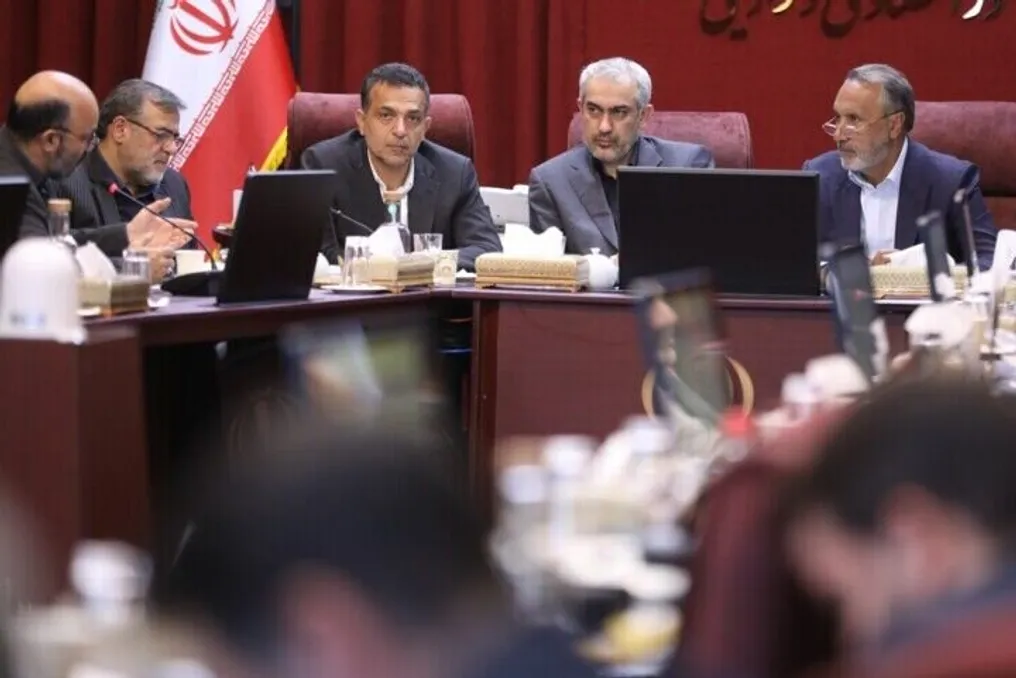
According to the proposed scheme, banks will be able to transfer their real estate properties to the fund established by the Ministry of Economy in exchange for investment units. These units can then be sold on the market or used as financing and collateral instruments, Madanizadeh specified during a meeting with members of the parliamentary Civil Affairs Committee.

He added that this fund will help transform unused assets into usable financial resources by providing investment units for trading, thereby increasing financing opportunities.

Madanizadeh also noted that procedures for monetizing state and public assets have been accelerated in recent months, and improvements in the review and approval process have allowed state institutions to apply this system more actively.

Furthermore, the Minister of Economy called for amendments to the housing construction incentive law, as the existing structure and financing mechanisms have not achieved the expected results in supporting people in purchasing housing.

He emphasized that legal reforms and new financial instruments are required for the more effective use of the banking network and capital market in financing the housing sector. At the same time, Madanizadeh reminded that banks must operate within the legal framework while ensuring the rights of depositors and shareholders.

He mentioned an improvement in banking services indicators in housing finance over the past two years, noting that the data indicates a growing role of banks in supporting this sector. The Minister expressed hope that the banking system can provide greater assistance to people in buying homes and maintaining housing finance.

Unlike many other countries where a significant portion of bank portfolios and balances is directed towards mortgage loans or housing finance securities, the Iranian banking system has limited participation in this area, leaving most of the responsibility to Bank Maskan.

Madanizadeh explained that diversifying housing finance will require restructuring the banks' financial operations and cleaning up their balance sheets to create a greater capacity to allocate resources to national priorities, as well as broader use of various financial instruments, including those available through the capital market.

He reported that the proposal to amend the housing production law was put forward last year, but its implementation was postponed due to events and restrictions related to the war. The Ministry of Economy, the Central Bank, and the banking network agreed that the current structure and mechanisms of the law, despite stated goals, may not necessarily lead to the desired result—an increase in homeownership.

Madanizadeh added that the ministry, together with the Central Bank and the Ministry of Transport and Urban Development, is working on preparing a draft law to revise this law. He strongly urged members of the relevant working group to advance this proposal so that the necessary amendments can be presented to the parliamentary Civil Affairs Committee.


Similar stories

Plans to increase the share of banks in mortgage financing in Uzbekistan by reducing the burden on the budget
Read more
gazeta.uz

Plans to increase the share of banks in mortgage financing in Uzbekistan by reducing the burden on the budget

Uzbekistan plans to increase the share of participation of banks and the Mortgage Refinancing Company in providing mortgage loans from the current 43% to 60% over a three-year period. This decision was announced by President Shavkat Mirziyoyev during a meeting dedicated to the state budget project and key macroeconomic indicators for 2027.

The head of state noted that the mortgage market is one of the main factors of the country's economic growth. He emphasized the need to increase the share of banks and the mortgage company in the market to 60% within three years to reduce the financial burden on the budget, which will allow for savings of at least 12 trillion soms.

The President instructed the Minister of Economy and Finance Jamshid Kuchkarov and the Chairman of the Central Bank Timur Ishmetov to prepare proposals regarding new ways of financing mortgages. He required them to present a plan within two weeks on how 25 trillion soms can be attracted next year through the introduction of new mechanisms, compared to 23 trillion soms allocated this year.

As a result of these measures, the volume of funds allocated for mortgage lending in 2027 will increase by 2 trillion soms, corresponding to an 8.7% increase compared to the planned figures for 2026.

Current Mortgage Financing Model

According to data from the Ministry of Economy and Finance, from January to September 2026, mortgage loans totaling 20.9 trillion soms were issued to the population. This figure exceeds the amount for the same period last year by 5.9 trillion soms, or 39%.

The distribution of these funds showed that out of the total volume of 12.8 trillion soms provided over nine months, 6.1 trillion soms covered the state budget, 6.1 trillion soms came from commercial banks' own funds, and another 2 trillion soms came from the Mortgage Refinancing Company. Thus, approximately 61% of the loans actually issued were covered by the budget, while banks and the mortgage company accounted for about 39%. At the meeting, the president mentioned that the current share of the latter is 43% (likely referring to the ten-month figure).

According to the Central Bank of Uzbekistan, as of November 9, 2026, the average interest rate for mortgage loans reached 21.7% per annum. This figure included secondary housing market mortgages issued exclusively using the own funds of banks and the Mortgage Refinancing Company over the last ten working days.

Among the 19 banks, the lowest average rates were recorded by 'Asakabank' at 18.7%, Octobank at 19.8%, and Orient Finans Bank at 20.2%. The highest rates were recorded at Asia Alliance Bank (26%), Apex Bank (25%), and Ipak Yuli Bank (24.6%), creating a difference of 7.3 percentage points between the minimum and maximum rates.

Specifically, the average rate at 'Mortgage Bank' was 21.7%, at National Bank it was 21.1%, at 'Kapitalbank' it was 20.9%, and at 'Uzpromstroybank' (SQB) and 'Business Development Bank' (BRB) it was 20.8%, and at 'Agrobank' it was 22.1%.

In February 2026, the president set a target volume for mortgage lending of 23 trillion soms with his decree, including 12.3 trillion soms from the budget, 7.7 trillion soms from banks, and 3 trillion soms from the mortgage company. Additionally, 2.7 trillion soms was allocated for subsidizing initial payments and interest payments for 2026. As of October 1, 1.21 trillion soms in subsidies had actually been paid out, of which 800.3 billion soms went to compensate part of the interest, and 407.8 billion soms helped 13,722 citizens with down payments.

Previously, the publication 'Gazeta' reported that from January to June, Uzbek banks provided mortgage loans totaling 13.1 trillion soms, which is almost 39% more than the previous year. The number of borrowers increased by 34.8%, reaching 42.6 thousand people. The average rates for loans financed from the republican budget were 16.8%, from banks—20.1%, and from the Mortgage Refinancing Company—21.6%.

Central Bank of Uzbekistan plans to introduce floating-rate loans and deposits tied to the UZONIA index
Read more
uzdaily.uz

Central Bank of Uzbekistan plans to introduce floating-rate loans and deposits tied to the UZONIA index

The Central Bank of Uzbekistan intends to develop proposals for introducing loans and deposits with a floating interest rate that will be linked to the interbank benchmark UZONIA. This initiative is included in the draft of the main monetary policy guidelines for the period 2027–2029, according to a document published by the regulator.

The proposed financial instruments are designed to accelerate the transmission of money market rate changes to banks and their clients. Currently, changes in the Central Bank's key rate do not automatically lead to adjustments in the rates offered by commercial banks for loans and deposits.

The rates for new banking products depend on funding costs, competition, risk assessment, and other factors. Tying banking products to a market benchmark will allow for faster reflection of changes in the cost of money under credit terms and deposit agreements.

How floating-rate products will work

Interest rates on such products can change during the term of the agreement in accordance with a pre-agreed formula. For example, a bank may set the loan rate as the UZONIA rate plus a fixed premium. If the benchmark decreases, the borrower's debt servicing cost may decrease; if it increases, the cost of servicing the loan will rise.

The document presents a hypothetical example: with a UZONIA rate of 14% and a bank margin of five percentage points, the annual rate will be 19%. If the benchmark drops to 12%, the rate will fall to 17%, provided all other contractual conditions remain unchanged. A similar mechanism can be applied to deposits, but the draft does not yet specify the frequency of rate reviews, the size of premiums, or the categories of loans and deposits that will utilize these instruments.

Risks identified by the regulator

The Central Bank warns that sharp fluctuations in interest rates can affect borrowers' ability to service their debts. Therefore, the regulator plans to implement new instruments gradually and cautiously. Training seminars on interest rate risk management are also planned for commercial banks.

When market rates rise, borrowers may face increased debt servicing costs. Long-term loans and borrowings of highly leveraged companies may be particularly sensitive to such changes. Conversely, a decrease in market rates can reduce payments on floating-rate loans, which must be stipulated in the initial contract terms.

According to Article 62 of the Law on Banks and Banking Activities, banks are prohibited from unilaterally changing the terms of signed agreements. This restriction applies to interest rates on loans, the procedures for determining them, and deposit rates. Consequently, tying products to UZONIA itself does not grant banks the right to arbitrarily change the terms of existing contracts.

What is UZONIA?

UZONIA (Uzbek Overnight Index Average) is a benchmark that measures the cost of short-term borrowing in national currency between commercial banks in Uzbekistan. Unlike the Central Bank's key rate, which is set by the regulator's council, UZONIA is calculated based on actual interbank transactions. Starting from August 2025, the calculation includes secured overnight repos conducted between banks using government securities. In addition to the daily rate, UZONIA indicators for 7, 30, 90, and 180 days are published, calculated based on the cumulative change in the rate. This data is available on the Central Bank's official website.

Central Bank plans to develop an interest rate swap market

As part of efforts to develop interest rate risk management tools, the regulator also intends to introduce mechanisms for the daily assessment and monitoring of such risks in the operational systems of commercial banks. It also plans to organize the publication of daily indicative quotes for interest rate swaps tied to UZONIA on the interbank trading platform of the foreign exchange exchange. An interest rate swap allows parties to exchange interest payments, for example, based on fixed and floating rates, and is used to manage risks arising from changes in borrowing costs. The Central Bank also plans to prepare methodological materials for commercial banks and conduct training seminars on interest rate risk management. Currently, the Central Bank's key rate stands at 14% per annum. At the meeting on November 4, 2026, the regulator left it unchanged, citing strong domestic demand and persistent inflation risks.

Turkic Investment Fund completes first deal in Turkey, providing financing to Şekerbank
Read more
uzdaily.uz

Turkic Investment Fund completes first deal in Turkey, providing financing to Şekerbank

The Turkic Investment Fund (TIF) contributed $10 million to a syndicated loan of $170 million for the Turkish bank Şekerbank T.A.Ş., marking the fund's first transaction in the country, according to the fund's press service.

This agreement was announced in Istanbul on November 9, 2026. Turkey is one of the founding states of this fund.

Details of the Loan Agreement

This five-year loan has senior repayment priority. The financing was arranged by the Dutch development bank FMO to support Şekerbank's operations in inclusive and sustainable banking. The syndicate includes seven international development institutions and investors focused on social and environmental impact.

Participants include FMO, Proparco, the private sector financial division of the French Development Agency Group (AFD), and the Austrian Development Bank (Oesterreichische Entwicklungsbank AG, OeEB). Other participants are Finnfund, Turkic Investment Fund, BlueOrchard Microfinance Fund (BOMF), and responsAbility Investments AG.

Purpose of Funds

Şekerbank plans to use the received funds to issue loans to micro, small, and medium-sized enterprises in rural areas engaged in cross-border trade and services. Another target group is companies owned or managed by women. A portion of the financing will also be directed towards supporting investments in sustainable agriculture and the transition to a 'green' economy.

Şekerbank was founded in 1953 in Eskişehir using savings from farmers in cotton cooperative associations. Its headquarters are in Istanbul, and its shares are listed on the Borsa İstanbul stock exchange. The bank serves 239 branches in 68 provinces.

Management Statements

The fund's CEO, Ramil Babaev, noted that participation in this financing was the Turkic Investment Fund's first transaction in Turkey. He expressed satisfaction with the opportunity to cooperate with Şekerbank.

Babaev emphasized that the bank's 73 years of experience and extensive client base among rural SMEs provide a solid foundation for partnership. He added that the fund's involvement combines two key areas of the Fund's mandate: developing the private sector by expanding access to financial services and promoting regional economic integration.

He specified that TIF's financing is intended for Şekerbank clients involved in cross-border trade, providing services, expanding their business, or forming joint ventures with partners from the fund's member states. Babaev thanked Şekerbank for its commitment to common goals and FMO for arranging the syndicate.

The Turkic Investment Fund is the first international financial organization jointly established by Turkic states. It was created by a decision of the Council of Heads of State of the Organization of Turkic States (OTS). The fund's goal is to strengthen economic cooperation, develop intra-regional trade, and support sustainable development throughout the Turkic world. The fund finances micro, small, and medium-sized enterprises, access to financial services, physical and digital infrastructure, renewable energy, agriculture, transport and logistics, as well as cross-border trade. To support these activities, it often co-finances projects and invests alongside leading multilateral development banks and financial development institutions.

Popular