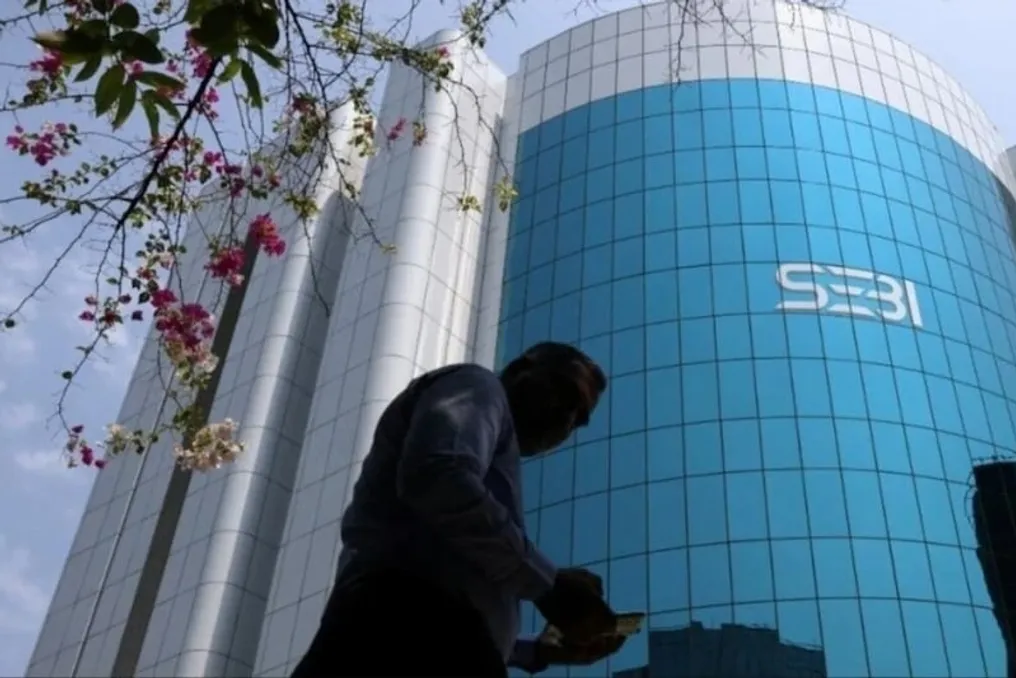
SEBI establishes expert group to review IPO, FPO, and capital raising norms
Read more
Business Standard
business-standard.com

SEBI establishes expert group to review IPO, FPO, and capital raising norms

The Securities and Exchange Board of India (SEBI) has formed a subgroup under its Primary Market Advisory Committee (PMAC). This group is tasked with analyzing the provisions governing Initial Public Offerings (IPOs), Further Public Offerings (FPOs), preferential allotments, and Qualified Institutional Placements (QIPs).

The main objective of this initiative is to simplify regulatory requirements and facilitate access to capital markets for eligible companies. The expert group will review the SEBI Regulations on Issue of Capital and Disclosure Requirements, 2018.

The regulator intends to align regulatory requirements, eliminate duplication in procedures and disclosure, and enhance the clarity and uniformity of regulatory rules. The review will cover the eligibility criteria for issuers in various forms of capital raising, lock-in periods for promoters and pre-issue capital, as well as application, allotment, and listing mechanisms.

Furthermore, the panel will examine disclosure requirements in offer documents and other prescribed reports, as well as pricing norms and price determination structure, including the definition and disclosure of price bands and minimum prices.

Ashish Chauhan, Managing Director and CEO of NSE, chairs this group. Members include representatives from BSE, Institute of Chartered Accountants of India, Institute of Company Secretaries of India, ICICI Securities, Kotak Investment Banking, Khaitan & Co, S&R Associates, Stakeholder Empowerment Services, and CII. The subgroup has the authority to invite additional members or subject matter experts and stakeholders. Final recommendations will be presented to the PMAC for consideration.


Similar stories

Sebi Regulator to Issue Guidelines for AI Use in Capital Markets to Protect Investors
Read more
yourstory.com

Sebi Regulator to Issue Guidelines for AI Use in Capital Markets to Protect Investors

Sebi Chairman Tuhin Kanta Pandey stated that the market regulator will soon publish detailed rules regarding the responsible application of artificial intelligence (AI) in capital markets. He emphasized the need to strike a balance between technological innovation and protecting investor interests.

According to the head of Sebi, the proposed directives will focus on establishing appropriate safeguards for the use of AI. These measures include disclosure requirements, defining accountability for regulated entities, and implementing a human-in-the-loop approach to decision-making processes to ensure human oversight over critical decisions.

In June 2025, Sebi (Securities and Exchange Board of India) released a draft consultative document outlining the fundamental principles for the responsible use of machine learning (ML) and artificial intelligence (AI) applications and models in securities markets.

These guidelines aim to optimize the benefits and minimize potential risks associated with integrating AI/ML-based applications into securities markets, thereby ensuring investor protection, market integrity, and financial stability.

Speaking at the opening of the Sebi pavilion at the 45th India International Trade Fair 2026, organized by the India Promotion Council for Trade, Pandey noted that the regulator is continuously strengthening its cybersecurity system to counter growing cyber threats.

He highlighted increasing concerns regarding cyberattacks targeting financial institutions and cryptocurrency platforms, as well as social media influencer-related digital fraud.

In response to these threats, the regulator introduced a structured incident response mechanism in May of this year, which aligns with the reporting template of the Financial Stability Board (FSB).

Regarding quantum computing risks, the Chairman reported that Sebi is inventorying cryptographic systems and identifying areas where cryptography is used to assess potential vulnerabilities. He stressed that global markets are preparing for the risks posed by quantum computing and expects concerns to become more pronounced around 2032–2035, insisting on the necessity of completing preparations in advance.

Concerning AI adoption, Pandey added that Sebi has developed several supervisory tools, including the 'Sudarshan' tool, which is being demonstrated at international regulatory forums. The regulator is also working to enhance its AI capabilities through international initiatives and sets of supervisory tools.

Furthermore, the Chairman stated that Sebi is reviewing its regulatory framework to ensure that the use of AI by market participants does not jeopardize investor protection, market safety, or integrity.

On matters concerning startups and the listing system, the Sebi chief also announced that the regulator has formed a working group to study ways to enhance the attractiveness of the Innovators Growth Platform (IGP) for startups, especially those in deep technology and biotechnology sectors that require a long period before achieving profitability.

He noted that the existing platform has not reached the desired level of engagement, and the regulator is considering possible changes to help such companies reach public markets earlier. The goal is to provide investors clarity regarding the higher risks associated with such ventures while simultaneously enabling participation in their long-term growth potential. However, he declined to share details regarding budget discussions.

Razorpay and Sembcorp Green Infra Receive SEBI Approval for IPOs
Read more
yourstory.com

Razorpay and Sembcorp Green Infra Receive SEBI Approval for IPOs

Financial firm Razorpay Software Ltd and Sembcorp Green Infra, an independent renewable energy producer, have received approval from the regulator SEBI to launch Initial Public Offerings (IPOs), as the market learned on Friday.

Razorpay had submitted draft documents to SEBI confidentially back in June for its IPO. Meanwhile, Sembcorp Green Infra presented preliminary documents to the Securities and Exchange Board of India (SEBI) in August with the aim of raising up to INR 3,750 crore through the IPO.

According to updated information, after reviewing the draft documentation, the regulator sent its final comments to Razorpay on November 3, and to Sembcorp Green Infra on November 13. These comments mark an important stage in the IPO process, allowing the companies to continue preparations for the public offering while adhering to current regulatory requirements.

Razorpay has not disclosed the expected size of the offering, but sources familiar with the matter estimate it to be in the range of INR 5,000 to INR 6,000 crore. The company, founded in 2014 by Harshil Mathur and Shashank Kumar, provides various financial services, including payment acceptance, banking operations, payouts, payroll, and lending, through an integrated platform. It serves millions of businesses across India, from startups and SMEs to large corporations.

In 2020, Razorpay achieved unicorn status and has since expanded beyond payments, creating a broader ecosystem of financial services for businesses. Its offerings allow sellers to manage fundraising, payouts, payroll, cash flow, and access to capital through a single platform. The company is supported by investors such as Peak XV Partners, GIC, Tiger Global, Ribbit Capital, Lone Pine Capital, Alkeon Capital, and TCV.

The confidential filing method allows companies to submit draft documents for SEBI review without immediately disclosing sensitive business information to the public. Regarding Sembcorp Green Infra, according to the draft red herring prospectus, its proposed IPO is a completely new issuance of equity capital without an Offer for Sale (OFS) component from distributors. The funds from the IPO will be used to repay certain loans by the company and its subsidiaries.

The planned capital raise will help strengthen the company's balance sheet as it expands its renewable energy portfolio. As of March 31, 2026, Sembcorp Green Infra had an operational renewable energy capacity of 3.60 GW and approximately 4.04 GW/GWh under construction. Its pipeline includes 2.61 GW of renewable energy capacity and 1,433 MWh of Battery Energy Storage System (BESS) capacity. The company is also increasing its focus on complex renewable energy projects, including hybrid, storage-supported, Round-the-Clock (RTC), and Firm and Dispatchable Renewable Energy (FDRE) sources.

SGIL, promoted by Sembcorp Utilities Pte Ltd and Sembcorp Industries Ltd, has 105 projects across 13 states and union territories. Earlier this month, its subsidiary MakeMyTrip, listed on Nasdaq, received SEBI approval to launch its first public offering.

SEBI Implements New Settlement Framework; Know Detailed Information on New Rules
Read more
www.aajtak.in

SEBI Implements New Settlement Framework; Know Detailed Information on New Rules

The Securities and Exchange Board of India (SEBI) has implemented a new settlement framework effective from November 7, 2026. This new framework will allow eligible individuals and entities to resolve specific regulatory actions through a structured system. These revised rules include provisions for online applications, a settlement amount calculator, and expedited settlement in certain cases.

SEBI had issued the notification of this change on October 8. This new regulation, called the 'Settlement Regulation for Administrative and Civil Proceedings 2026', will replace the existing 2018 settlement framework, incorporating transitional and savings provisions.

To simplify the application process, SEBI has launched an online settlement application facility, a settlement amount calculator, Frequently Asked Questions (FAQs), and a dedicated help desk. The regulator has also released an explanatory video to help applicants understand how the settlement amount is calculated.

According to SEBI, eligible persons can apply for settlement under the Settlement Regulation, 2026. Under this framework, eligible applicants can request the settlement of determined actions in various stages, provided they meet the prescribed conditions.

As per the rules, the non-refundable application fee is set at ₹25,000 for general citizens, while it is ₹35,000 for other applicants. The minimum settlement amount is set at ₹3 lakh for first-time applicants and ₹7 lakh for other applicants.

However, the final amount will depend on several factors, including the original amount, the stage of the action, the nature and severity of the alleged violation, the regulatory action, and mitigating or aggravating circumstances. Applications related to proceedings pending before SEBI must generally be submitted within 120 days of receiving a show cause notice or supplementary show cause notice, but this timeline does not apply to special actions pending before the Securities Appellate Tribunal or the Supreme Court.

The new rules introduce violation-based and monetary limit-based fast-track settlement procedures. Under the monetary limit mechanism, applications with a settlement amount up to ₹10 lakh can qualify for expedited processing without any waiver, remedial measures, or additional regulatory conditions.

Some serious violations are excluded from the settlement framework. These include cases involving willfully defaulting debtors, fraudulent debtors, and absconding economic offenders. Based on the regulations, actions that threaten market-wide outcomes, significant investor losses, or market integrity may also be excluded.

Additionally, this rule allows settlement with confidentiality benefits for applicants who provide assistance in investigations or audits under certain conditions. The settlement application will be reviewed by an internal committee and a high-powered advisory committee, which will recommend appropriate terms. Subsequently, a panel of full-time members of SEBI will decide whether to accept or reject the application. The objective of this changed framework is to maintain safeguards against serious violations in the securities market while simplifying regulatory settlements.

Popular