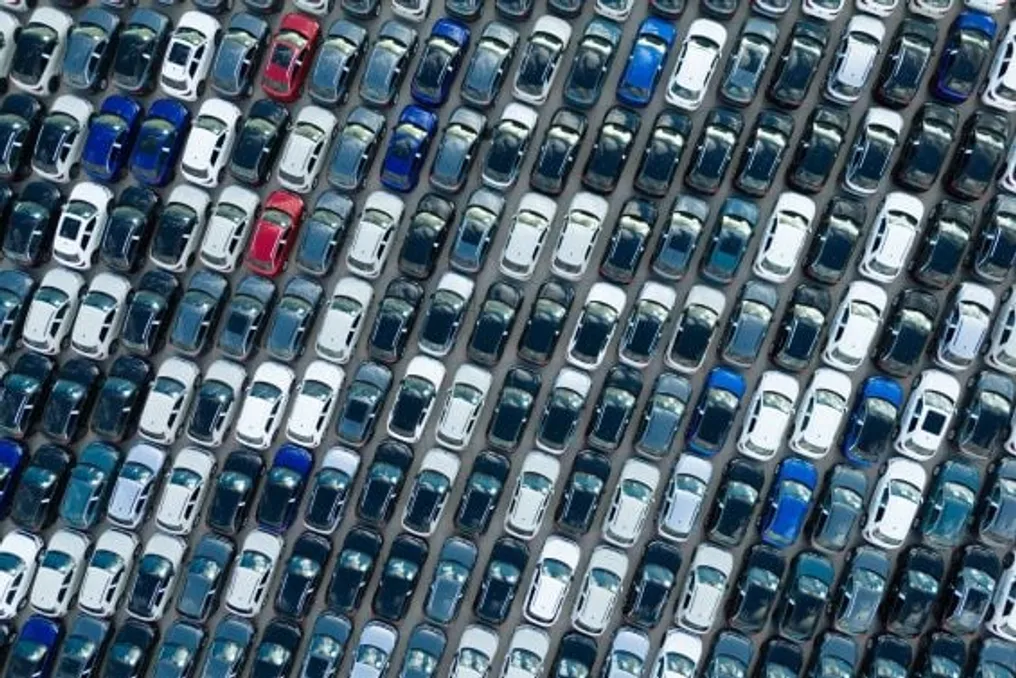
Global sales of electric cars grow in October, driven by Europe and Chinese exports
Read more
AutoPapo
autopapo.com.br

Global sales of electric cars grow in October, driven by Europe and Chinese exports

Sales of electric vehicles and plug-in hybrids showed a global recovery in October, with an 8% increase compared to the same period last year. This growth was significantly influenced by factors external to China.

In total, 2.09 million units were sold in the month, raising the cumulative total from January to October to 17.5 million, representing an overall increase of 5% for the period.

Europe was a major driver of this growth, recording 510 thousand units sold, a 36% increase. This European advance is mainly attributed to 100% electric vehicles, which grew by 49%. Factors such as available subsidies, rising fuel prices, European Union emission regulations, and a greater variety of models are explaining this rise.

Within Europe, Germany stood out, where electric and plug-in cars accounted for over 45% of all new vehicles registered.

In contrast, China, which holds the largest global market, saw its sales decrease by 12%, reaching 1.14 million units. Due to weak domestic demand, manufacturers intensified their export strategies, shipping nearly 600 thousand electric and plug-in cars in October, setting a monthly record.

These exported vehicles contributed to an 85% growth in the rest of the world, excluding China, Europe, and North America, totaling 300 thousand units, more than double the volume recorded in North America.

In the United States, October marked the first month after the expiration of the federal tax credit for electric cars, which occurred in September of the previous year. For this reason, the 24% increase in the region may be misleading, as Charles Lester, Data Manager at Benchmark, stated that the American market stabilized at a lower level without recovering.

Brazil is part of the group of markets with the greatest expansion; however, Benchmark Mineral Intelligence points out that the sector's momentum in the country is limited. The consultancy observed that part of this initial growth was driven by importers who anticipated shipments before the progressive increase in import tax and amid a fuel crisis that stimulated demand.

It is expected that when tariffs reach the maximum limit and fuel prices fall, the main support for the Brazilian market will come from local BYD production.

Additionally, the Brazilian Electric Vehicle Association (ABVE) reported that 54,486 electrified vehicles, including hybrids that do not require external charging, were sold in Brazil in October, marking a record for the segment.

Similar stories

Over 300 thousand electric vehicles sold in India: Demand growth and company leadership
Read more
www.aajtak.in

Over 300 thousand electric vehicles sold in India: Demand growth and company leadership

The demand for electric vehicles in the Indian market is showing steady growth, reflected on the roads where significantly more electric cars can now be seen, especially in major cities. Sales have reached record levels.

In 2026, sales of electric passenger vehicles exceeded the 300,000 unit mark for the first time. Notably, this figure was achieved just one and a half months before the end of the year, surpassing the results of the entire previous year. Tata Motors maintained its lead in this race, while Mahindra secured second place, overtaking MG Motor.

According to VAHAN data, from January 1 to November 9, 2026, a total of 304,701 electric vehicles, including SUVs and MPVs, were sold in the country. This volume exceeds the figures for the same period last year by 66%. In 2025, 195,571 electric passenger cars were sold for the full calendar year, meaning that as of now in 2026, 109,130 more units have been sold, representing an increase of about 56%.

The growth in demand for electric vehicles this year accelerated starting in June, when monthly sales first exceeded 30,000 units, and this trend continued for the following five months. Sales set a new record in September.

The growing demand for electric passenger vehicles is influencing the entire electric vehicle market in India. To date in 2026, 29.7 million electric vehicles have been sold in the country, of which 304,701 are electric cars, SUVs, and MPVs. Consequently, the share of passenger vehicles in the total electric vehicle sales volume has increased to 10%, up from 8% last year.

Nevertheless, two-wheeled models lead the electric vehicle market, with 18.5 million units sold, accounting for 62% of the market. Next are three-wheeled electric vehicles, with 785,965 units sold, making up 26% of the market. Commercial electric vehicle sales amounted to 28,865 units, corresponding to approximately 1% of the market.

In the electric passenger vehicle segment, Tata Motors remains the largest company. From January 1 to November 9, 2026, the company sold 120,895 electric cars, which is 58% more than the 76,644 units sold in 2025. Tata Motors' share in the total volume of electric passenger vehicles sold this year is about 40%.

Tata Motors has the largest portfolio of electric vehicles. Among the company's six models, the Nexon EV is the best seller. Additionally, there is increased interest in the updated Tiago EV and Punch EV models.

The most significant change this year occurred in the battle for second place. Mahindra & Mahindra managed to secure the second position, surpassing MG Motor. The company sold 69,660 electric SUVs in 2026, which allowed it to increase its market share to 23%.

MG sold 56,988 electric cars so far. Its market share is 19%, placing it in third place. Last year, the company sold 57,239 electric cars for the full calendar year, holding a market share of 29%. The most popular MG model became the Windsor EV.

Vinfast, a Vietnamese electric vehicle manufacturer that entered the Indian market about a year and a half ago, has also made progress. To date, the company has sold 15,867 electric cars, ranking fourth with a 5% market share.

European electric vehicle market presents new challenges for Chinese automakers
Read more
technode.com

European electric vehicle market presents new challenges for Chinese automakers

Chinese automotive brands captured 12.7% of the new car market in Europe in the third quarter of 2026, surpassing Japanese brands (11.9%) for the first time in a full quarter, according to Dataforce data.

In Norway, the share of these brands reached 22.5% in October, as reported by the Norwegian Road Traffic Council (OFV).

The activities of several automakers demonstrate their momentum: on October 7, the first production test of the XPeng G9L model concluded at the Magna plant in Austria. On October 16, Leapmotor and Stellantis began production of the B10 model at the Stellantis plant in Spain, with plans for the B05 model announced three days later.

Recently, on October 27, Great Wall Motor announced an agreement to produce the Ora 5 model in Bulgaria. Production is planned to start in early 2027, with an annual capacity of 50,000 vehicles.

These production plans reflect the ambitions of Chinese automakers in Europe, driven by tougher competition in the domestic market, the attractiveness of foreign growth, and changing trade rules in Europe.

In 2025, China produced nearly 75% of global electric vehicles and over 80% of battery cells, giving its manufacturers significant advantages in scale and cost.

The International Energy Agency (IEA) estimates that manufacturing a small crossover in China costs more than 30% less than in developed economies. This cost gap has attracted suppliers' attention.

Japanese company Koito Manufacturing is dismantling BYD and Aito headlights to study their design and materials; one engineer warned that reducing costs is necessary to maintain competitiveness, according to Nikkei Asia on November 9.

Nevertheless, low costs could not alleviate domestic pressure: in 2025, EV production exceeded demand by 20%, and the price war squeezed margins, forcing automakers to seek overseas markets.

Some companies are also competing technologically by developing driver assistance systems, cabin software, and adapting chips independently. An XPeng insider told TechNode: 'Equipment production can be replicated, but the intelligent architecture, which is constantly evolving across all vehicle lines, requires sustained long-term investment.'

Exports of Chinese electric vehicles more than doubled in 2025, reaching a record 2.5 million units. Sales of Chinese EVs in Europe grew by almost 50%, amounting to about 940,000 units. However, according to the IEA, more than half of Chinese EVs exported abroad go to markets other than Europe and the US.

Shipping cars from China may incur higher tariffs, additional logistics costs, and longer delivery times. Local assembly helps solve these problems while facilitating the adaptation of vehicles to local conditions.

An XPeng insider noted: 'Local production increases supply chain efficiency, reduces trade risks, and brings us closer to end-users.'

However, local production is not always feasible. The choice between exporting, contract assembly, and establishing local plants depends on market size, trade rules, supply chains, and regulations, added the insider.

The proposed EU Industrial Accelerator Act could tie certain state incentives and procurement to 'Made in Europe' rules, potentially increasing costs for Chinese exporters. According to the IEA, this proposal would require relevant small EVs and corporate vehicles to be assembled in the EU, with 70% of components sourced in the EU (excluding batteries) in certain cases, as well as separate battery origin rules. This issue is still under discussion.

Reuters reported that an agreement between Beijing and Brussels in October could cut exports of Chinese hybrid and plug-in hybrid vehicles to the EU by more than half within four years, while battery-cell Chinese EVs remain subject to EU anti-dumping duties.

Looking back at XPeng's entry into the Norwegian market in 2020, which was its first foreign market, an insider suggested that the company might have underestimated differences in consumer preferences, sales channels, and subsidies in Europe, as well as the pace of changes in trade policy.

XPeng now considers long-term demand, policy stability, compliance costs, and the possibility of local production when assessing markets. The company prefers exporting to smaller or politically unstable markets, considering fully knocked down (CKD) assembly or local plants where market size, trade rules, supply chains, and regional strategy support local production. The partnership with Magna in Austria is one such example.

XPeng's choice may reflect a broader calculation facing Chinese automakers in Europe: how much to produce locally, how much to procure regionally, and whether economic viability remains as trade rules change.

New Energy Vehicle Sales Are Growing in South Africa
Read more
techcentral.co.za

New Energy Vehicle Sales Are Growing in South Africa

In the first nine months of 2026, South Africans purchased more new energy vehicles than in the entire previous year, with most of them being plug-in hybrids. Plug-in hybrids are selling more than two and a half times as often as fully electric vehicles.

According to industry body Naamsa, published in its October sales report on Monday, the total number of new energy vehicle sales—including hybrids, plug-in hybrids, and battery electric vehicles—reached 22,389 by the end of September. This figure is 34% higher than the 16,703 units sold throughout all of 2025, and there is still a quarter of the year left.

Rechargeable vehicles accounted for 50.5% of new energy sales this year, surpassing half of the cumulative volume in July. Of these, 8,082 were plug-in hybrids, and 3,217 were battery electric vehicles, compared to 11,090 traditional hybrids that cannot be charged from the electrical grid.

Battery electric vehicles (BEVs) made up about 14% of new energy sales and less than 1% of approximately 490,000 new cars sold in the first nine months. The publication TechCentral reported in August that the hybrid boom was masking the stagnation of the fully electric car market.

Fuel costs rose sharply in October: petrol with an octane rating of 95 in the Inland region exceeded the 30 rand per liter mark for the first time, reaching 30.25 rand on October 7, which is 12.4% higher than in September. According to Naamsa, even after the reduction in fuel levy announced in the medium-term budget—a decrease of 1.50 rand per liter for petrol and 3 rand per liter for diesel from November 4—the price of petrol will remain approximately 39% higher than the January level based on October prices.

Popular