The Legend of Zelda: Ocarina of Time maintains top score on Metacritic for 28 years
Read more
Olhar Digital
olhardigital.com.br

The Legend of Zelda: Ocarina of Time maintains top score on Metacritic for 28 years

In the video game industry, which has undergone profound changes in almost three decades—with graphical evolution, larger open worlds, and new technologies—one title remains remarkably untouched: The Legend of Zelda: Ocarina of Time, with 99 points on Metacritic.

This Nintendo classic, released on November 23, 1998, for the Nintendo 64, holds the top spot among the best-rated games in the platform's history, even after 28 years. This feat is notable, given that other highly acclaimed titles, such as Grand Theft Auto IV, Red Dead Redemption 2, Super Mario Galaxy, and The Legend of Zelda: Breath of the Wild, have failed to surpass this score.

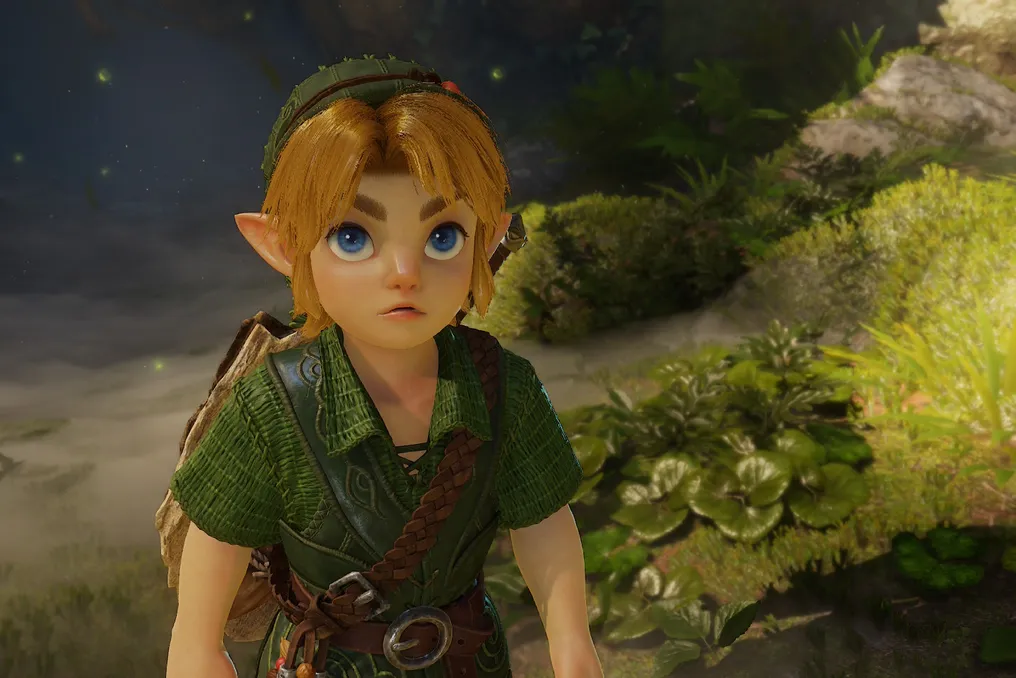
The discussion about this record resurfaced in 2026, driven by the release of the Ocarina of Time remake for the Nintendo Switch 2. The new version received 96 points in initial reviews, making it one of the best-rated games of the year, but falling short of the original.

Metacritic compiles reviews from specialized outlets to calculate a weighted average, known as the Metascore. The list considered in this context focuses on the highest score recorded for a version of each game, preventing repetitions of titles released on multiple platforms.

Data indicates that achieving 97 points is already an uncommon feat, and even revolutionary franchises like Grand Theft Auto, Halo, and Metroid have not reached Zelda's 99 points.

The presence of games released between the late 1990s and early 2000s also draws attention, a period characterized by the popularization of three-dimensional graphics and the consolidation of new mechanics. One reason for Ocarina of Time's prominence lies in its 1998 release. At that time, 3D games were still developing solutions for problems that seem simple today, such as camera control, exploration of complex environments, and combat in open spaces.

The Nintendo title was fundamental in establishing crucial benchmarks for action-adventure games, particularly through the Z-Targeting system, which allowed the camera to lock onto enemies and objects. The combination of elements such as exploration, puzzles, combat, and narrative contributed to the game becoming a standard for subsequent productions.

However, the game's historical relevance does not solely justify the 99 points. The result is also linked to how the reviews were aggregated. A central argument from ranking critics is the disparity in the number of reviews used to calculate the scores. Ocarina of Time has a Metascore based on only 22 specialized critical reviews.

In contrast, The Legend of Zelda: Breath of the Wild, released in 2017, achieved 97 points with 117 reviews, while Red Dead Redemption 2 also reached 97 points with 109 reviews in the examined version. This demonstrates that the games were evaluated in very different contexts.

During the 1990s, specialized video game coverage was smaller, and fewer publications were included in these surveys. Today, major releases can receive reviews from dozens or even hundreds of outlets. A higher volume of reviews increases the chances of divergent opinions influencing the final average, although this does not mean a smaller sample guarantees a higher score.

Another relevant point is that Metacritic does not use a simple arithmetic mean; the platform applies different weights to publications based on its own editorial criteria. Furthermore, scores are segmented by platform, meaning the same game can have different ratings on PlayStation, Xbox, Nintendo Switch, or PC. For this reason, directly comparing titles separated by decades requires caution.

On Metacritic, Ocarina of Time maintains the position of the game with the highest score from specialized critics, which is a verifiable data point within the platform's methodology. However, the Metascore does not directly measure a work's cultural impact, commercial success, or player preference. A game can be historically vital to the industry without achieving a near-perfect score. Similarly, an excellent launch review does not guarantee that all its mechanics will age well.

The Ocarina of Time remake itself, released in 2026, exemplifies this distinction. Despite receiving positive reviews, its initial score fell below the original version, even with modern updates included. Thus, Ocarina of Time's 99 points reflect both the recognition of a generational milestone and the way specialized criticism evaluated video games at that time. After 28 years, the record persists, raising the question of whether experiences created in such disparate eras can be compared using only a single score.
Similar stories

Comparison between Zelda: Ocarina of Time from 1998 and its 2026 remake
Read more
olhardigital.com.br

Comparison between Zelda: Ocarina of Time from 1998 and its 2026 remake

The Legend of Zelda: Ocarina of Time, initially released in 1998 for the Nintendo 64, established itself as a fundamental title in video game history. After 28 years, this classic was re-released in a completely overhauled version for the Nintendo Switch 2.

This remake, which launched on November 5, 2026, maintained the essence of Link's journey in Hyrule but added functionalities impossible on the original hardware. Innovations include updated graphics, cinematic sequences, improvements to the combat system, and, unprecedented for the franchise, full Brazilian Portuguese localization, including voice acting.

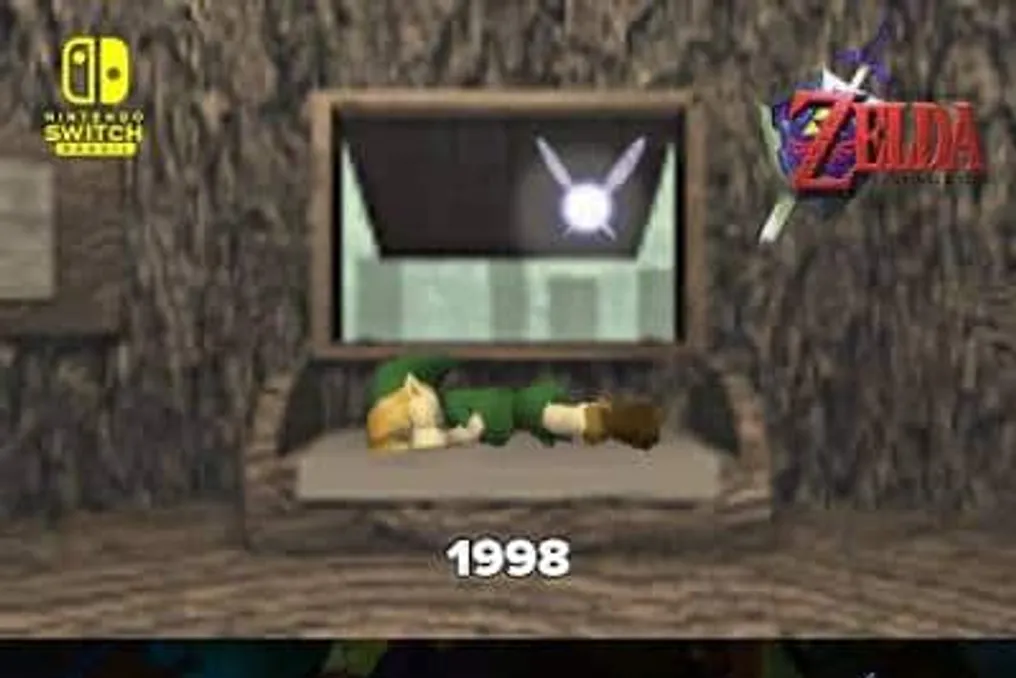
A notable distinction lies in the visual aesthetic. In 1998, Ocarina of Time marked a turning point in three-dimensional games, allowing Link to explore Hyrule in a 3D environment with freedom of movement, various areas, and a camera system that set standards for the action-adventure genre. However, the technological limitations of the time were visible in character models, textures, and scene complexity.

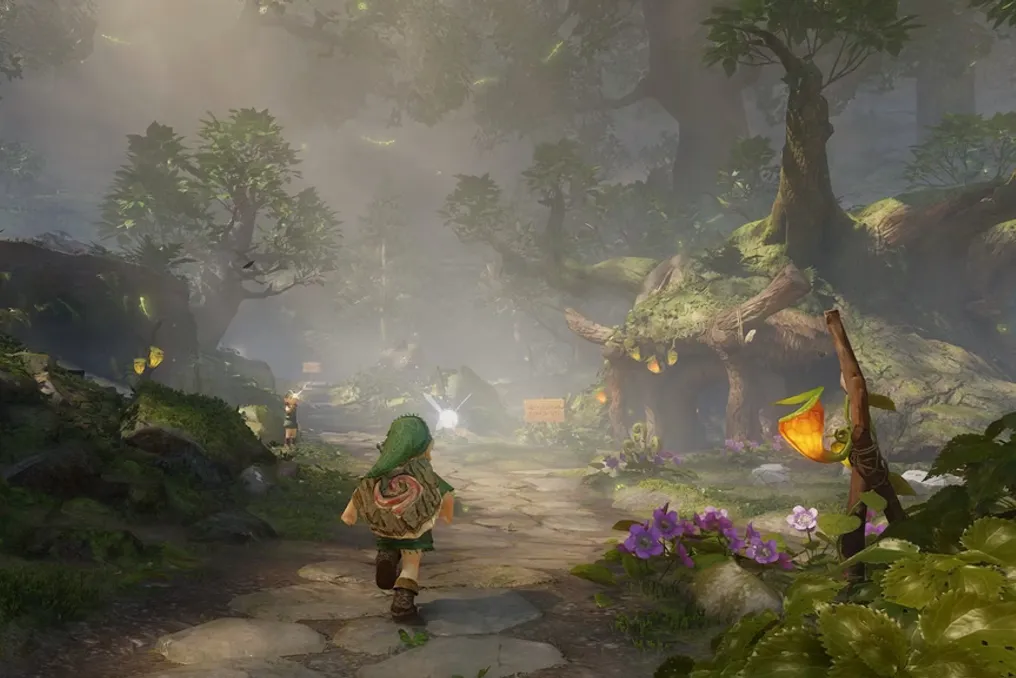
The 2026 remake brings a visual reconstruction of the adventure, featuring more detailed environments, redesigned characters, and renewed cinematic scenes. Nintendo's intention, according to specialized press reviews, was to modernize the presentation without altering the visual identity or atmosphere of the original game.

The fighting system was crucial in elevating Ocarina of Time to a benchmark level in third-person action games. On the Nintendo 64, Z-Targeting functionality allowed the player to keep the camera focused on adversaries and characters during confrontations, aiding navigation in three-dimensional spaces. In the 2026 edition, combat received enhancements, considered by critics to be an advancement in the gaming experience.

Despite these changes, the remake preserves the original architecture, maintaining exploration, puzzle-solving, and narrative progression as central pillars. This approach has generated mixed opinions; while some media celebrated the fidelity to the classic, others felt Nintendo could have implemented more significant innovations.

One aspect missing from analyses was the Master Quest mode, known for offering alternative variations in Ocarina of Time's challenges and dungeons.

For the Brazilian audience, one of the most relevant transformations is not related to graphics or mechanics, but rather to the language. The Ocarina of Time remake is the first title in the saga to feature complete Brazilian Portuguese localization, covering both text and voice acting.

Eiji Aonuma, the series producer, commented in an exclusive interview with Omelete that the localization process has undergone major changes since 1998. He reported that back then, it was common for translations to only begin after development was completed or even after the initial release. Currently, localization can start in the early stages of production, allowing various languages to be integrated into the project before its completion.

Aonuma also emphasized the importance of Brazilian players being able to experience the adventure in their native language. This novelty signals a significant evolution in Nintendo's relationship with the Brazilian public, especially given the long wait for official translations of the franchise.

Even with technological advancements, the remake could not match the historical evaluation of the original game. The Nintendo 64 version holds 99 points on Metacritic, the highest score recorded on the platform for a video game. The 2026 remake debuted with 96 points, based on 81 specialized press reviews, according to data released by Critical Hits.

Outlets such as IGN, IGN Brazil, Eurogamer, GamesRadar+, VGC, and Destructoid gave top marks to the new version. Positive reviews primarily focused on the visual update, the quality of the cinematic presentation, and the maintenance of elements that defined the original as a classic. Conversely, some analyses pointed out that the conservative stance limited the potential for novelty compared to the 1998 experience.

It is necessary to consider the historical context when comparing the scores: the original Ocarina of Time Metascore is based on 22 reviews, while the 2026 version had already accumulated 81 reviews upon its launch.

Ocarina of Time from 1998 remains a historical milestone due to its contribution to the development of three-dimensional games. Its combat system, dungeon structure, exploration of Hyrule, and fusion of narrative and gameplay influenced multiple generations of creators. The 2026 remake, on the other hand, offers a more accessible way to experience this adventure, with a modern presentation and full support for the Brazilian audience. The new iteration proves that modernizing a classic does not necessarily mean reinventing it, as the original remains a record of a decisive moment in video game history, while the remake seeks to preserve that experience for new generations.

Zelda: Ocarina of Time Remake sells 5.2 million copies in four days on Nintendo Switch 2
Read more
olhardigital.com.br

Zelda: Ocarina of Time Remake sells 5.2 million copies in four days on Nintendo Switch 2

The remake of The Legend of Zelda: Ocarina of Time registered sales of 5.2 million copies in the first four days after its launch, as announced by Nintendo this Wednesday, the 11th.

This exclusive title for the Nintendo Switch 2 was made available on the market on November 5, 2026, and reached this sales target by the end of the 9th. The number includes both physical and digital editions.

With this performance, Ocarina of Time has established itself as Nintendo's fastest-selling game on the Switch 2 globally, according to the company. This record applies only to titles released by Nintendo, as not all third-party developers and publishers provide sales data segmented by platform, which prevents a complete comparison with the console's entire catalog.

In less than a week, the new version surpassed the accumulated sales of other games in the franchise. Among these titles are The Legend of Zelda: Echoes of Wisdom, which had sold 4.09 million units after seven months, and A Link Between Worlds, originally for Nintendo 3DS, with 4.26 million copies.

Despite this strong start, the remake is still considerably behind the biggest commercial successes of the series. Leading the ranking is The Legend of Zelda: Breath of the Wild, with 35.76 million units sold, followed by Tears of the Kingdom, with 22.71 million.

Ocarina of Time, which had its original release for Nintendo 64 in 1998, is recognized as one of the most significant games in the Zelda franchise's history. The updated version for Switch 2 incorporates modernizations focused on maintaining the essence and structure of the original title.

In its review, the portal Video Games Chronicle (VGC) gave the remake top marks, praising Nintendo's choice to update certain aspects of the experience without fundamentally altering the adventure.

The commercial success demonstrates that the return of one of the series' most emblematic games found a vast audience on the new console, attracting both veteran players and a new generation of enthusiasts.

The Legend of Zelda: Ocarina of Time Remake arrives on Switch 2 with modernized graphics
Read more
super.abril.com.br

The Legend of Zelda: Ocarina of Time Remake arrives on Switch 2 with modernized graphics

The game The Legend of Zelda: Ocarina of Time, originally released in November 1998, had its initial review recorded by the Metacritic website, which was only created three years after its release. Although the site did not exist at the time, the team included the title's score, based on 22 journalist reviews, resulting in a notable rating of 99 out of 100.

Nearly a quarter of a century later, the game's relevance remains evident. Nintendo has released a remake of Ocarina of Time, featuring updated graphics, which will be available this Thursday, the 5th, for the Switch 2 console. Even with the modernization, the game continues to make a strong impression.

Players can explore extensive and complex caves, collect various items, confront adversaries, as well as solve puzzles and disarm traps. The game maintains a difficulty progression that develops almost perfectly, managing to be simultaneously challenging and relaxing, characteristic of the Zelda series.

This title pioneered the presentation of three-dimensional environments, utilizing the processing power of the Nintendo 64, which was considerable for the time. The remake inherits this visual quality, although it presents some peculiarities. When playing on the Switch 2 connected to a TV, the graininess and flickering of details are noticeable, unlike in handheld mode, where this is less apparent. For example, the characters' hair may appear to vibrate when viewed up close.

These effects are consequences of the upscaling process, where the console runs the game in a lower resolution and uses artificial intelligence to increase image quality. This contrasts with Nvidia's DLSS technology, present in the Switch 2, which generally produces near-perfect results. However, these small flaws are quickly forgotten as the player becomes immersed in the narrative and gameplay.

Ocarina of Time is considered a fundamental element in the Zelda franchise timeline, offering important discoveries about its mythology. However, the story is accessible and well-told, allowing anyone to appreciate it without prior knowledge of the saga.

The remake also incorporates the motion sensors of the Switch 2, allowing the player to aim at enemies using projectile weapons just by tilting the controller. This functionality works well but offers the option to disable it to use the traditional aiming method with the analog stick.

It is important to note that Ocarina of Time does not possess the same depth or vast scale as more recent titles, such as Breath of the Wild (2017) and Tears of the Kingdom (2023). This limitation is inherent to 1990s technology. Despite this, the game remains excellent, being appealing both to those who follow video game evolution and to those who are simply looking for entertainment.

The release of The Legend of Zelda: Ocarina of Time is scheduled for this Thursday, the 5th, priced at R$ 329.90 for the Switch 2 console. It will also be available in physical format, costing R$ 439.90 on Amazon.

Popular