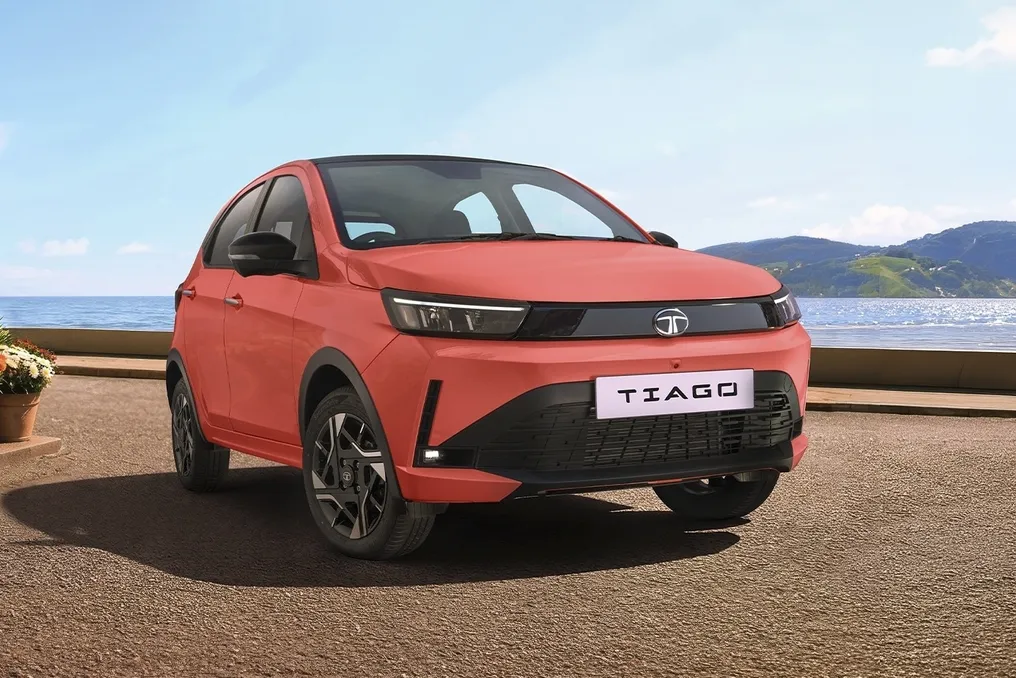
Tata Tiago sales reach 70 thousand units in India; company also sold over 200 thousand Tata Punch
Read more
Aaj Tak
www.aajtak.in

Tata Tiago sales reach 70 thousand units in India; company also sold over 200 thousand Tata Punch

Demand for compact hatchbacks is consistently high in the Indian market, leading almost every car manufacturer to have a presence in this segment. Tata Motors, known for its powerful SUVs and large vehicles, recently introduced its most affordable model—the Tiago. This small hatchback has gained popularity among buyers due to its sturdy build, high safety ratings, and low price.

According to sales reports, 70,555 units of the Tata Tiago were sold from January to October of this year. However, over these eight months, Tata's best-selling model was its most budget-friendly SUV, the Tata Punch, which sold 202,794 units. Following the Punch, the Tata Nexon ranked second during the same eight months, with sales volume reaching 1,96,490 units.

The price of the Tata Tiago starts from 4.77 lakh to 8.62 lakh (excluding taxes). The car is also available with an CNG option. It is equipped with a 1.2-liter three-cylinder Revotron petrol engine, which generates 86 horsepower and 113 Nm of torque. In CNG mode, the engine produces 75.5 horsepower and 96.5 Nm of torque. Transmission options include a 5-speed manual gearbox and a 5-speed AMT.

The petrol version offers a fuel efficiency of about 20 km per liter, while the CNG version achieves up to 26 km per kilogram. Some media sources claim that running costs are approximately 4.20 rupees per kilometer, equating to about 425 rupees for every 100 kilometers driven.

In terms of features, the car offers an infotainment system with a touchscreen up to 10.25 inches, a digital instrument cluster, a 360-degree view camera, and blind spot monitoring. Additionally, automatic climate control, cruise control, rear air vents with AC, wireless charging, and connected car technology are available.

For safety, all variants are equipped with six airbags, Anti-lock Braking System (ABS) with Electronic Brake-force Distribution (EBD), Electronic Stability Control, Traction Control, Hill Hold Assist, ISOFIX child seat mounts, and rear parking sensors.
Similar stories

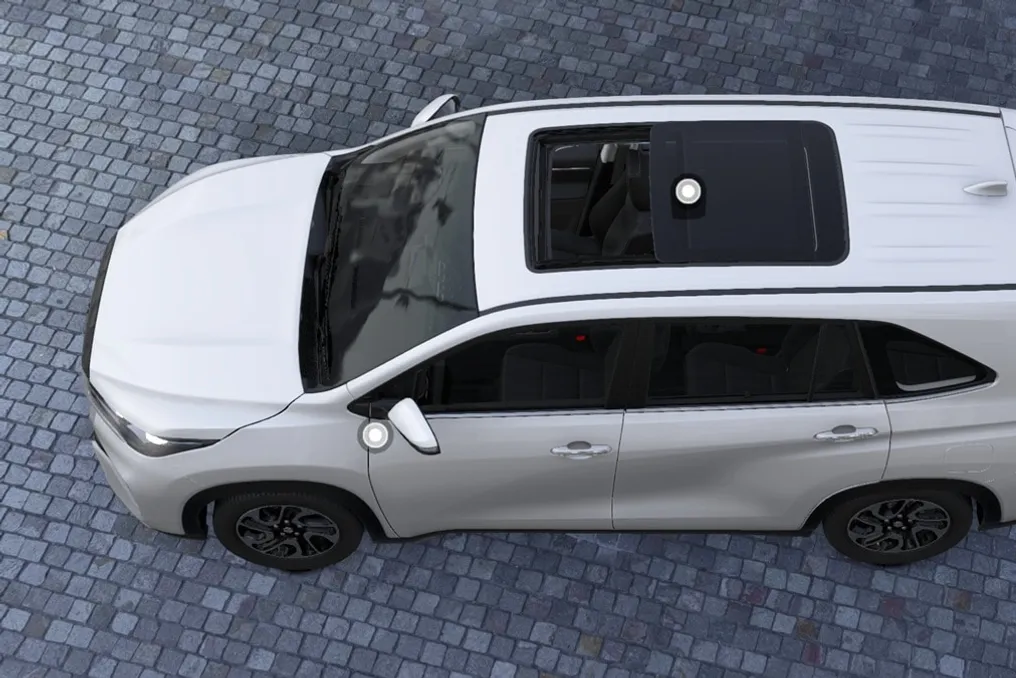
Premium Maruti Invicto model faces low sales, recording only 303 customers in 31 days
Read more
www.aajtak.in

Premium Maruti Invicto model faces low sales, recording only 303 customers in 31 days

Although Maruti is a leader in the Indian car market, and even its less popular models sell better than the top products of other companies, there are vehicles in the brand's portfolio that barely find buyers. Sales of these models do not even reach 1000 units.

In this list, the Maruti Suzuki Invicto ranks lowest, being the least sold car from Maruti Suzuki. It is noteworthy that this model actually belongs to Toyota, yet the demand for it within Toyota's portfolio is quite high.

In October 2026, only 303 units of the Maruti Suzuki Invicto were sold. This situation is not isolated; 301 units were sold last October, and only 272 in September.

This is the most expensive car in the Maruti portfolio. This three-row MPV was introduced by the company in July 2023 and is available for purchase at Nexa Maruti showrooms. The Invicto is equipped with a 2.0-liter four-cylinder gasoline hybrid engine supplemented by an electric motor.

This configuration provides power from 184 to 186 hp and features an e-CVT transmission. The declared fuel consumption is 23.24 kilometers per liter. The car is front-wheel drive and comes in a seven-seater configuration. Maruti offers it in two variants.

The car is equipped with features such as 6 airbags, a panoramic roof, ventilated front seats, a 360-degree camera, and Suzuki Connect. The top Alpha Plus variant includes a large screen, an electrically powered rear door, an improved audio system, and higher quality upholstery. The price of the car ranges from 25.02 to 28.80 lakhs excluding taxes.

A question arises regarding the reasons for the low sales of this car. One reason is related to the image of Maruti, which is known for its affordable and reliable cars. Buyers consider it more advantageous to choose other brands when purchasing a premium vehicle. Another significant factor is the low residual value of the Maruti Invicto compared to the Toyota Innova Hycross.

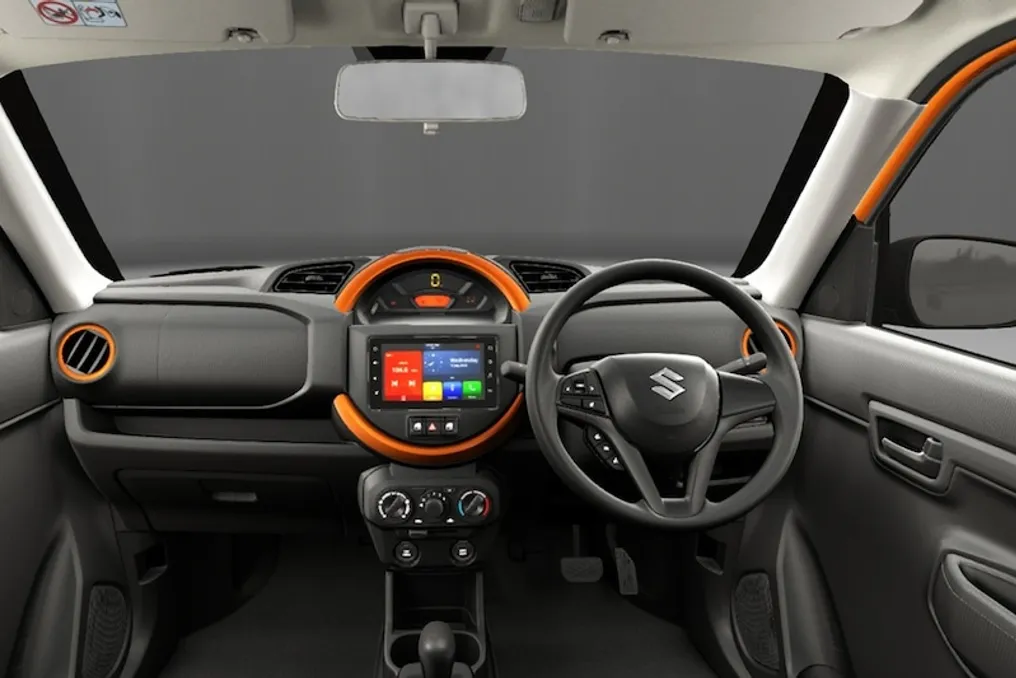
Maruti Suzuki S-Presso with 32 km mileage and price of 3.50 lakh rupees sells slowly despite its specifications
Read more
www.aajtak.in

Maruti Suzuki S-Presso with 32 km mileage and price of 3.50 lakh rupees sells slowly despite its specifications

Maruti Suzuki is the largest automotive company in the country, offering a wide range of models compared to other brands. Although most best-selling cars belong to Maruti, there are some company models that are struggling to attract buyers.

Sales problems concern not only the company's most expensive model but also its most affordable one. Specifically, there is low demand for the Maruti Suzuki S-Presso, which is the cheapest car in the company in India.

In October 2026, Maruti Suzuki sold 212,384 units, demonstrating a 20 percent year-on-year growth in the domestic passenger car market. Compared to October of last year, when 176,318 units were sold, the company also showed month-on-month growth.

Despite the overall growth, sales of the Maruti Suzuki S-Presso remain low. In October, this model became the second least sold in the company, surpassed only by the Maruti Invictus. According to the Auto Pandit report, only 566 units of the S-Presso were sold in October, compared to 2,857 in October of last year. This represents an 80 percent year-on-year decline in sales of this model.

The Maruti Suzuki S-Presso is an entry-level vehicle, with a starting price of 3.50 lakh rupees ex-showroom. It is equipped with a 998 cc K10 Dual Jet petrol engine. The car is available in both petrol and CNG versions. This engine develops 68 hp and 89 Nm of torque.

The S-Presso is fitted with a 5-speed manual transmission and a 5-speed automatic transmission. The claimed fuel consumption for the petrol version is 25.3 kilometers per liter, and for the CNG variant, it is 32.73 kilometers per kilogram. The model is also equipped with features such as two front airbags, ABS, EBD, ESP, hill start assist, and rear parking sensors.

Popularity of alternative fuel vehicles grows in India: CNG, hybrids, and EVs surpass gasoline and diesel models
Read more
www.aajtak.in

Popularity of alternative fuel vehicles grows in India: CNG, hybrids, and EVs surpass gasoline and diesel models

A noticeable shift is occurring in the Indian automotive market: the dominance of gasoline is weakening as vehicles running on compressed natural gas (CNG), hybrid, and electric models gain popularity. In October, the share of these three types of vehicles exceeded that of gasoline cars.

Meanwhile, the total volume of car sales decreased by 14.23% year-on-year. However, compared to September, the market showed an increase of 18.86%, indicating that the market is not stagnant but rather that consumer preferences are changing. Data provided by FADA confirms this trend.

According to the latest FADA data, 507,768 passenger vehicles were sold in October. Nevertheless, the timing of Diwali in November influenced October's sales. This month sees a significant change in buyer preferences, with consumers increasingly choosing alternative fuel vehicles over gasoline and diesel ones.

Comparing with last year, 592,032 passenger vehicles were sold nationwide in October of the previous year. Compared to this year, the figure dropped to 507,768 units, reflecting a 14.23% decline in year-on-year sales. However, when compared to September 2026, the picture looks much better: 427,213 passenger vehicles were sold in September, while in October, the number increased to 507,768 units, representing a monthly sales growth of 18.86%.

FADA believes that the drop in annual sales should not be seen as a lack of market demand. The main reason is the high demand last year, when the Navratri and Diwali festivals occurred simultaneously in October. Furthermore, purchases grew despite the reduction in tax rates under GST 2.0. In 2026, customers postponed their purchases for a while because Diwali was moved to November, which affected October figures.

In October, sales of passenger vehicles grew in both urban and rural areas, with the urban market showing better results. Compared to September, retail sales of cars in urban areas rose by 20.10%, accounting for 61.7% of total sales. In rural areas, the monthly growth was 16.90%, with the rural sector accounting for 38.3% of the total passenger vehicle sales.

The most significant change in the automotive market in October relates to fuel choice. For the first time, the combined share of vehicles with supplementary fuels, such as CNG, hybrids, and electric vehicles, surpassed the share of gasoline and ethanol blends. According to statistics, the overall share of gasoline and ethanol vehicles decreased to 41.60% in October, compared to 48.96% in October 2025. On the other hand, the share of vehicles with supplementary fuels grew to 41.83%. CNG vehicles contributed the most to this growth, reaching a share of 24.59%. The share of hybrid vehicles was 9.94%, and the share of electric vehicles was 7.30%. The share of diesel vehicles remained at 16.57%, indicating a shift by consumers from gasoline and diesel to other types of fuels.

One factor contributing to this is the rise in gasoline prices and recent debates surrounding E20. Consumers remain uncertain about E20 fuel. The government acknowledged that using E20 fuel could lead to a 3% to 6% decrease in fuel consumption. Additionally, the possibility of component damage in older vehicles may have forced buyers to change their choices.

Demand for electric passenger vehicles also significantly increased. During Navratri 2026, retail sales of electric vehicles jumped by 36.66%, reaching 13,349 units. This is attributed to the price of electric vehicles approaching the prices of gasoline and diesel models, as well as improved range, making EV purchase more accessible to customers.

According to FADA, the inventory level of passenger vehicles in October was maintained at 43–45 days, unchanged from September. However, it is expected that purchases will increase in November during Dhanteras and Diwali, which could lead to a decrease in dealer stock. Actual sales data during Diwali is yet to be received.

Popular