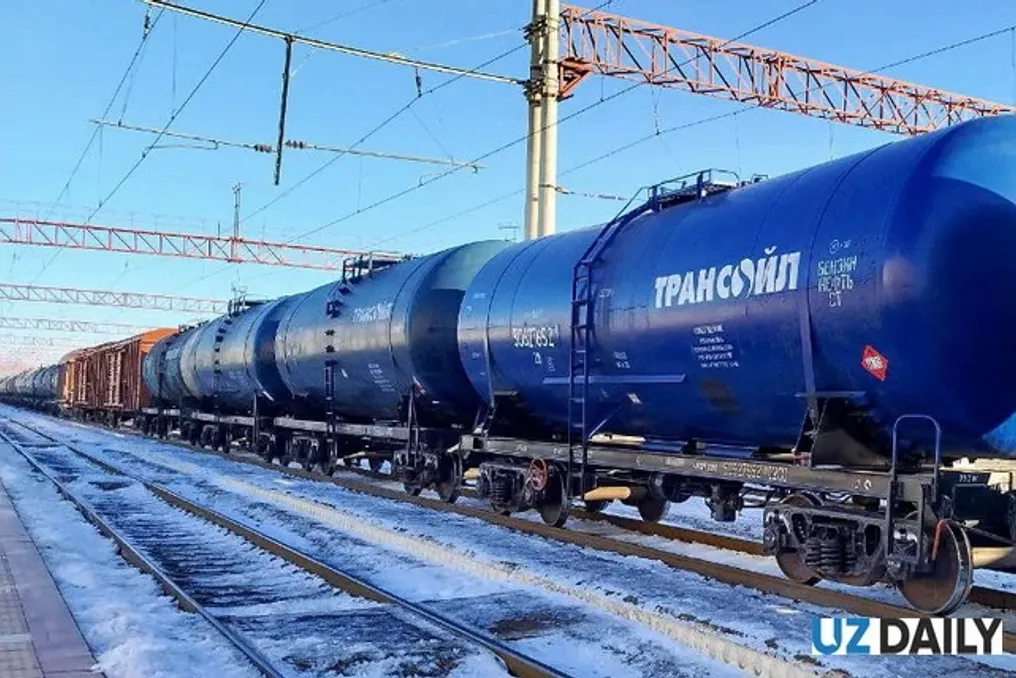
IMF forecasts that oil price growth up to $130 could reduce Uzbekistan's economic growth by 0.5 percentage points
Read more
UzDaily
uzdaily.uz

IMF forecasts that oil price growth up to $130 could reduce Uzbekistan's economic growth by 0.5 percentage points

The International Monetary Fund (IMF) stated that the protracted conflict in the Middle East and an increase in Brent crude oil prices to $130 per barrel could decrease Uzbekistan's economic growth rate by 0.5 percentage points compared to the baseline forecast.

This scenario is presented in the IMF's Regional Economic Outlook for the Caucasus and Central Asia, which was submitted to the Central Bank of Uzbekistan.

Roberto Cardarelli, Assistant Director of the IMF Department for the Middle East and Central Asia, noted that the baseline forecast is based on the assumption of the conflict ending and global oil prices declining. Under this scenario, the average price of Brent oil is projected at $96 per barrel this year and $86 next year.

The Fund also expects energy exports through the Strait of Hormuz to return to pre-conflict levels by the third quarter of 2027. The IMF believes that economic growth in the region remains resilient, but it will gradually slow down towards its potential level. Factors supporting economic activity include remittances and strong real credit growth.

An alternative scenario anticipates Brent oil prices rising to $130 per barrel in 2027, along with an additional drop in global oil supply of 4 million barrels per day. The impact of this scenario will vary depending on each country's position in the energy market. Oil exporters, including Azerbaijan, Kazakhstan, and Turkmenistan, may benefit from higher prices.

For energy-importing countries like Uzbekistan, this scenario means a reduction in economic growth of approximately 0.5 percentage points. Cardarelli characterized this as a noticeable but not critical shock to the economy. He added that although 0.5 percent is not a huge figure, the shock itself is not gigantic, but still significant.

He recalled that at the beginning of the conflict, he feared oil prices might rise to $200 per barrel, but such an increase did not occur.

IMF economist Carmen, who presented the inflation report head, reported that after the start of the war, inflation rose in Kyrgyzstan, Georgia, and Tajikistan. Conversely, inflation decreased in Uzbekistan and Kazakhstan. Cardarelli linked this trend to the fact that these two countries implemented the tightest monetary policy in the region.

A separate IMF study showed that central bank independence affects economies' ability to withstand external shocks. In countries with low central bank independence, the global supply chain shock increased inflation by 6.3% over two years, whereas in countries with highly independent central banks, this figure was 1.5%.

The IMF also warned that future external shocks may have a greater impact on countries with less developed credit markets, which include Uzbekistan, Tajikistan, and Kyrgyzstan.

Florian Misch, Senior Economist at the IMF, noted that the countries of the Caucasus and Central Asia are generally comparable to the rest of the world in terms of diversifying export markets and import sources. However, the region lags in the diversity of exported goods. According to the fund's calculations, most countries have not made significant progress in this area over the last 20 years.

The IMF also assessed the effectiveness of industrial policy measures. Calculations showed that export subsidies and industrial support measures require significant expenditure but have only a limited impact on export diversification. The Fund considers structural reforms, including measures to increase labor market flexibility and increase education spending, to be more effective.

Concluding the discussion, Cardarelli emphasized that changes in the global trading system offer the region more opportunities than threats. He specifically highlighted the development of the Middle Corridor and railway connections with China as promising directions.

Similar stories

IMF calls on Uzbekistan to create more jobs for youth
Read more
uzdaily.uz

IMF calls on Uzbekistan to create more jobs for youth

The IMF representative in Uzbekistan, Koba Gvenetadze, stated that Uzbekistan needs to transform strong economic growth into an improvement in living standards and an increase in job opportunities for young people and women.

These statements were made during the presentation of the IMF's regional economic forecast for the Caucasus and Central Asia, which took place at the Central Bank of Uzbekistan.

Gvenetadze noted that poverty levels are declining and GDP per capita is growing in Uzbekistan. Nevertheless, he emphasized the importance of assessing not only economic indicators but also their impact on citizens' lives.

The IMF representative noted that seeing such changes, it is important to understand how they affect the population. He added that the reduction in poverty in Uzbekistan is a result that policymakers wish to see.

He stressed that economic growth must be comprehensive and contribute to improving citizens' living conditions. Gvenetadze described the expected outcome of economic development as ensuring that growth 'is transformed into the well-being of the Uzbek people.'

The International Monetary Fund considers labor market reform a priority for structural transformation. The Fund pays particular attention to increasing the participation of youth and women in the workforce. Gvenetadze emphasized that the participation of youth, especially women, in employment is crucial given Uzbekistan's young population.

Discussing a new model of economic growth, he also pointed to the need to align vocational training with labor market demands. It was noted that it is important to consider the number of graduates from educational institutions, the specialties they qualify for, and the demand for these skills. The quality of education also remains a key factor.

The IMF's regional report also points to the link between human capital development and export diversification. According to the Fund's estimates, increased spending on higher education and greater labor market flexibility help expand the range of exported goods. However, the study showed that export subsidies and industrial policy have a minor comparable impact.

Gvenetadze stated that Uzbekistan's economic indicators remain strong, and development prospects are positive. However, the country needs to ensure a broader distribution of growth benefits and increase the economy's competitiveness. He concluded that it is now important for Uzbekistan to turn these positive results into citizen well-being, make the economy more competitive, and guarantee the creation of more jobs for the growing young population.

Furthermore, the IMF identified climate policy as another area for reform. The Fund recommends integrating climate goals into public financial management and implementing climate-related budget tagging.

IMF lowers forecast for Uzbekistan's gold exports in 2026
Read more
uzdaily.uz

IMF lowers forecast for Uzbekistan's gold exports in 2026

The International Monetary Fund (IMF) has lowered its forecast regarding Uzbekistan's gold exports in 2026. This change led to a revision of the current account deficit forecast from 3.2% to 5.1% of GDP, according to the fund's Resident Representative, Koba Gvenetadze.

These statements were made during the IMF's presentation of the regional economic review at the Central Bank of Uzbekistan. Gvenetadze noted that the main reason for this decrease was a sharp increase in imports against a backdrop of very high demand in the economy. Furthermore, gold exports were lower than expected, which raised several questions.

However, the fund's representative emphasized that the widening of the current account deficit does not mean that Uzbekistan's external position has become unstable. The IMF forecasts that the deficit will narrow to 4.6% of GDP by 2027.

Gold remains an important source of foreign currency inflows and budget revenues for Uzbekistan. Gvenetadze added that even though gold prices have not yet reached peak levels, they remain sufficiently high and generate additional budget revenues.

In this regard, the IMF recommends assessing the fiscal balance while excluding mineral extraction revenues, including gold. This indicator helps analyze public finances by taking into account the budget's dependence on raw material revenues. The fund also advises the government to accumulate additional income generated by high gold prices instead of using it to increase public spending.

The IMF views high gold prices as a factor capable of improving Uzbekistan's economic prospects but warns that the duration of favorable market conditions remains uncertain.

Meanwhile, Uzbekistan's non-gold exports continued to grow. According to Deputy Chairman of the Central Bank Nodirbek Achilov, non-gold exports increased by 32% from January to September 2026.

Uzbekistan aims to increase critical mineral production to $2.7 billion by 2030
Read more
podrobno.uz

Uzbekistan aims to increase critical mineral production to $2.7 billion by 2030

Uzbekistan plans to increase the output of sixteen types of vital mineral raw materials to over $2.7 billion by 2030.

These intentions were discussed by President Shavkat Mirziyoyev during the presentation of projects by the Uzbek Metallurgical Plant. By the end of 2026, the enterprise plans to implement twelve investment projects and expand the production of high-purity selenium and tellurium.

The President instructed to master the production of another eleven product types, including nickel, cobalt, graphite, antimony, copper, and platinum. Special attention is paid to the deep processing of tungsten: $1.1 billion in investments is planned for this area, and by 2030, the production volume is to be raised to nearly $2.2 billion.

During the meeting, the development of the 'Navoiuran' enterprise was also discussed. According to the presented plans, by 2030, the country's uranium extraction volume should double—from the current 7.5 thousand tons to 15 thousand tons, and the total volume of explored reserves should reach 200 thousand tons. To achieve this goal, the current year includes expanding geological exploration, creating additional production capacities, and providing 250 new jobs.

Furthermore, the President ordered the introduction of alternative methods in the uranium production process. It is planned that by 2030, the share of reagents replacing sulfuric acid will be 40%.

It was previously reported that the Eurasian Development Bank and the Uzbek Metallurgical Plant signed an agreement on cooperation in the field of mining and processing of critical minerals.

Popular