From January to September 2026, nearly 2.1 million attempts to visit phishing resources were blocked in Uzbekistan. These fake pages are created with the aim of stealing users' bank details and passwords.
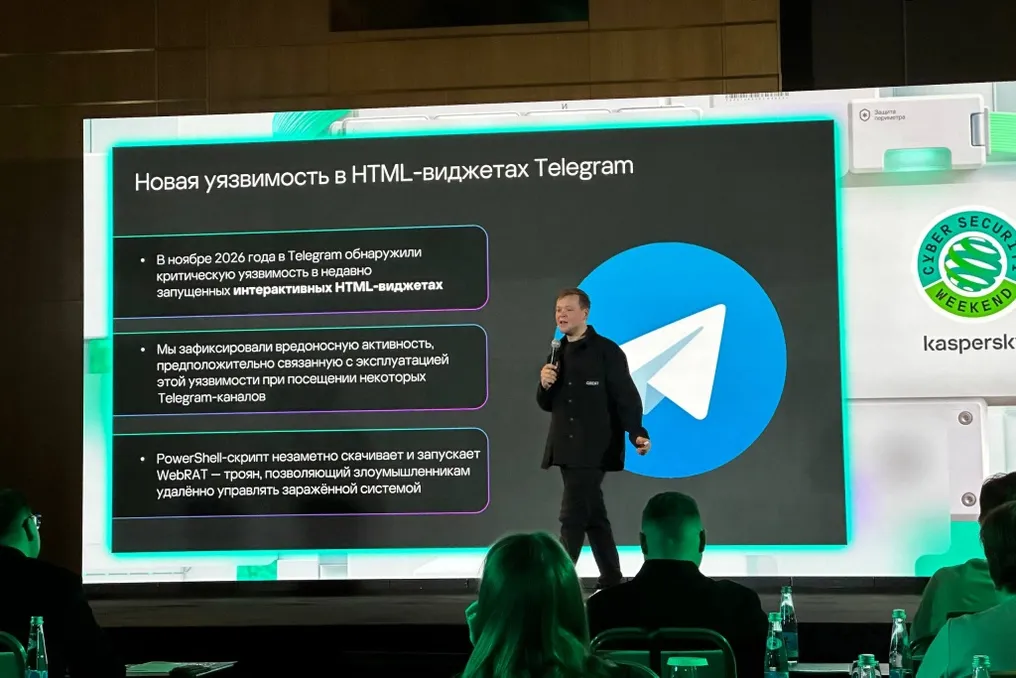
According to data presented at the Kaspersky CyberSecurity Weekend 2026 event in Tashkent, in the third quarter of 2026, the number of such attempts exceeded the figures of the first quarter of 2025 by more than threefold. It is important to note that blocking an attempt to open a dangerous website by security software does not guarantee that the user has not become a victim of fraudsters.
How the deception is carried out
One of the most common methods of deception involves emails mimicking messages from employers or well-known online services. During internal audits in Uzbek companies, it was found that 13% of staff clicked on links in emails concerning the alleged expiration of a password. Furthermore, 7% of employees responded to a notification about the approval of a ChatGPT work account, and another 6% responded to a message about alleged incorrect use of medical insurance.
These scenarios were part of controlled testing aimed at assessing employee susceptibility to fraud schemes, so the results obtained do not indicate actual account breaches.
Use of new technologies in fraud
Konstantin Isakov, a cybersecurity expert, reported on another tactic: attackers sent messages promising compensation payments. To increase trust, they used the legitimate Google service, but the links could lead to fake web pages.
Experts also note that fraudsters actively use artificial intelligence to create convincing messages free of grammatical errors. Consequently, even a well-written email should not be considered safe if it suddenly requires clicking a link, providing a password, or confirming bank card details.
Recommendations for users and companies
Valery Zubanov, Managing Director of Kaspersky Lab in Kazakhstan, Central Asia, and Mongolia, emphasized that companies must not only purchase protection tools but also conduct employee training on security rules. Specialists advise ordinary users to always check the website address and never enter passwords or SMS codes via links contained in suspicious messages.
Previously, Telegram users received warnings about fake notifications requiring them to undergo a 'security check' within twelve hours; in reality, such messages are used to steal accounts.