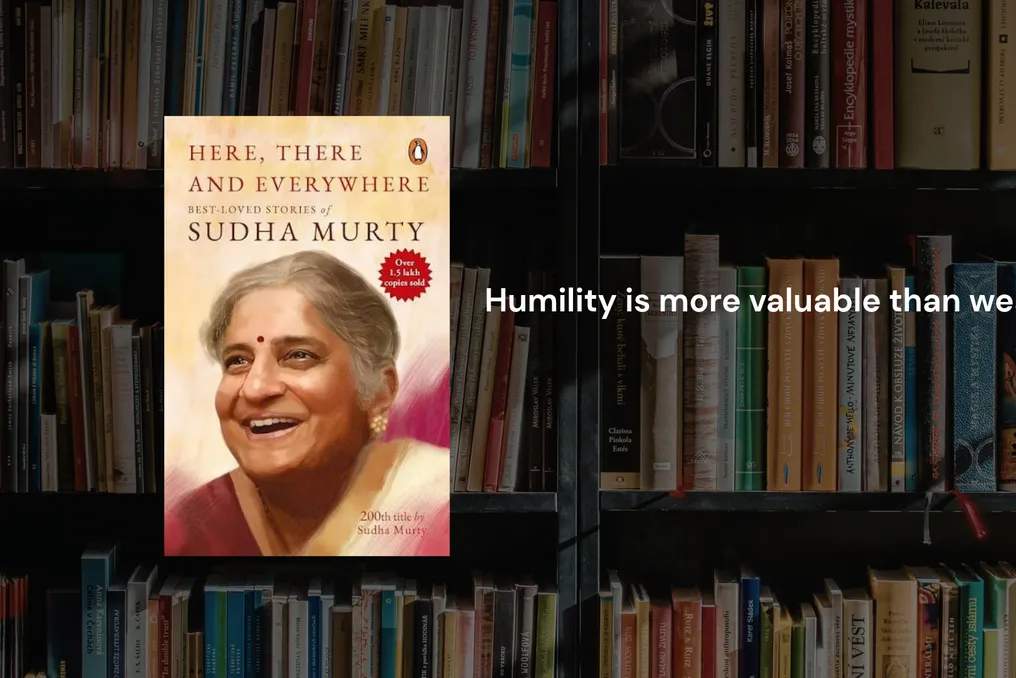
Sudha Murty shares five life lessons in the book 'Here, There and Everywhere'
Read more
YourStory [india, en]
yourstory.com

Sudha Murty shares five life lessons in the book 'Here, There and Everywhere'

The most significant life lessons are often found in everyday events, unexpected encounters, and the people we meet along the way. Sometimes a simple conversation or a small act of kindness can change our perception of the world.

In the collection 'Here, There and Everywhere,' Sudha Murty presents stories inspired by her own experiences and observations of people from different social strata. Through everyday situations, she explores human relationships, generosity, humility, and the values that give life meaning.

The book reminds readers that wisdom is not always found in great achievements; often, it is hidden in the simplest moments of daily life.

Small acts of kindness can have a long-term impact on people. Sometimes helping another person does not require wealth or influence; empathy and the willingness to understand their situation are enough.

The stories emphasize that even a minor gesture, such as helping a stranger or offering support during a difficult time, can make a significant contribution.

People often form judgments about others based on their clothing, financial status, education, or social background. However, appearance rarely reveals a person's true character or circumstances.

The book encourages readers to look deeper than outward appearances and treat everyone with dignity and respect.

Education extends beyond academic qualifications. It also gives people confidence in self-expression, the ability to make informed decisions, and to challenge societal expectations.

Through narratives based on various experiences, Murty shows how learning can open doors, especially for those facing economic and social barriers.

Success and financial prosperity do not automatically make a person better. More important is how we treat others, especially those who cannot offer us anything in return.

The book calls for maintaining humility regardless of achievements and remembering that kindness and character are more valuable than material possessions.

We often meet people without knowing about their experiences or the difficulties they have overcome. A stranger's behavior or circumstances may hide a story we have never considered.

The book reminds us to listen, observe, and approach people with compassion instead of jumping to conclusions. Every encounter can teach us something about human nature and life.

'Here, There and Everywhere' by Sudha Murty is a collection of stories that finds exceptional lessons in ordinary experience. Through encounters with people from different walks of life, the author explores kindness, courage, education, humility, and human relationships.

The main takeaway is that obtaining valuable knowledge does not always require extraordinary events. Sometimes the most important lessons are taught by the people we meet and the simplest moments we experience.

Similar stories

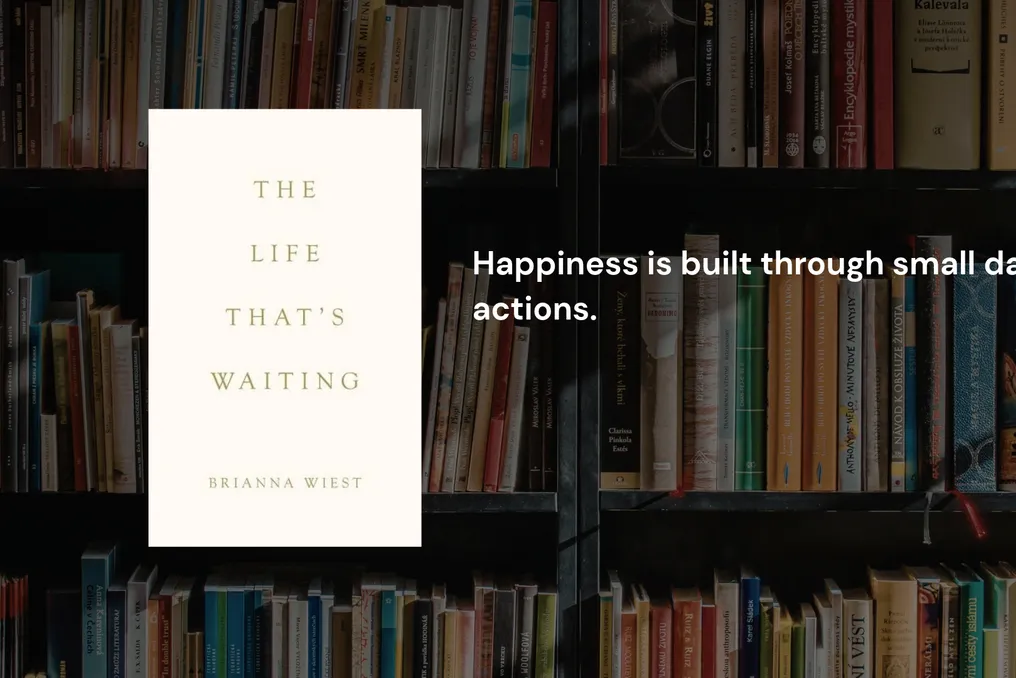
Five Lessons from Brianna West's Book 'The Life That Awaits'
Read more
yourstory.com

Five Lessons from Brianna West's Book 'The Life That Awaits'

The true life we desire often begins when we stop clinging to the life we think we should have. We spend too much time worrying about the future, comparing ourselves to others, and trying to control every outcome, forgetting to enjoy the present.

In 'The Life That Awaits,' Brianna West explores the concept of creating a life that feels authentic, meaningful, and aligned with who we are becoming. Through reflections on heartbreak, fear, uncertainty, happiness, and personal transformation, she encourages readers to let go of limiting behavioral patterns and make room for new possibilities.

The book reminds us that moving forward does not require having everything planned out. Sometimes the smallest decisions can bring us closer to the life we have always wanted.

We often assume that happiness will come after achieving a certain goal, finding the right relationships, or reaching a specific life stage. However, constantly waiting for the next big achievement prevents us from appreciating the present.

West urges readers to find happiness in small, repeated actions. Self-care, maintaining meaningful routines, expressing feelings, and setting aside time for what matters gradually contribute to building a more fulfilling life. The lesson is to stop viewing happiness as a distant destination and start building it through daily choices.

Sometimes things that once brought us comfort cease to support the people we are becoming. This could be old relationships, a familiar environment, limiting beliefs, or expectations we have carried for years. The book reminds us that leaving something behind does not mean it was never significant; it simply means that different stages of life require different decisions. We must allow ourselves to move forward without guilt for leaving what no longer aligns with our growth.

In a world where everyone shares their successes, milestones, and happiest moments, it is easy to feel like you are falling behind. Nevertheless, comparison often distracts us from understanding what we truly want. Instead of measuring our success by someone else's timeline, we should focus on building a life that reflects our own values and priorities. West encourages readers to reconnect with themselves rather than constantly seeking external validation. It is important to remember that creating a meaningful life does not require following someone else's schedule.

Many believe that finding one's purpose requires discovering one outstanding passion or making a fateful decision. But purpose doesn't always arrive as a clear answer. Sometimes it begins with small interests, meaningful conversations, creative ideas, or opportunities that spark curiosity. The book advises paying attention to these small signs and taking action instead of waiting for complete clarity.

You don't necessarily need to know where you are going. Sometimes just taking one significant step is enough to discover the next. Fear often arises before making an important decision or stepping into the unknown. It can make us doubt our abilities and convince us to stay in situations that no longer bring us joy. West urges us not to let fear prevent us from moving forward. Instead of waiting for complete certainty, start with one small action. Whether it's applying for a new opportunity, starting a project, having a difficult conversation, or making a personal decision—progress begins when you decide to act despite uncertainty.

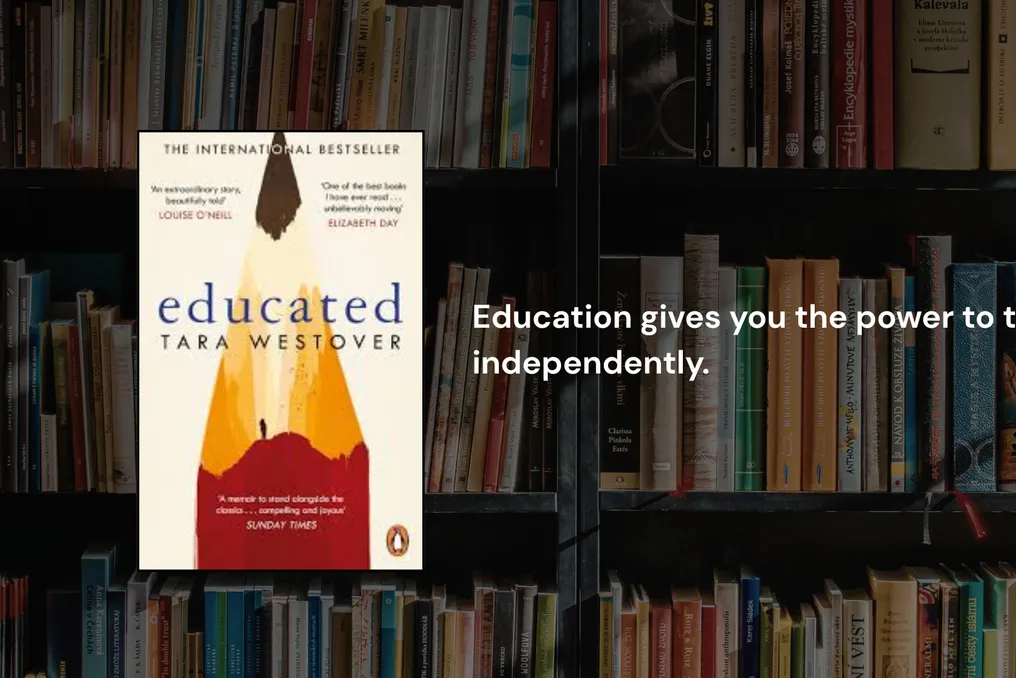
Five Lessons from Tara Westover's Book 'Educated' on the Value of Learning
Read more
yourstory.com

Five Lessons from Tara Westover's Book 'Educated' on the Value of Learning

Education is often perceived as a path to a better career, financial stability, and social recognition. However, Tara Westover's memoir 'Educated' demonstrates that learning can be something more: it can change one's self-perception, compel one to question established beliefs, and give the courage to build an entirely different life.

In this book, Tara Westover shares her experience growing up in a strict, survival-oriented family in rural Idaho, where formal education was not encouraged. Despite not attending traditional school as a child, she eventually went to university and earned a doctorate from Cambridge University.

Her story goes beyond academic achievements; it narrates the search for one's own voice, the challenging of conventional views, and the realization that circumstances should not dictate a person's future.

One of the key lessons drawn from the book is that education is not merely about accumulating diplomas or passing exams successfully. It teaches critical evaluation of information, understanding diverse perspectives, and forming one's own opinion.

As a child, Tara faced a limited worldview. When she began to learn independently and later pursued formal education, she discovered ideas and opportunities she had never known existed.

Her life journey reminds readers that true learning begins when a person is curious enough to question what they have always accepted as truth.

Tara's childhood circumstances could easily have limited her chances, but she refused to let her upbringing dictate the course of her life. Despite the lack of formal schooling, she worked diligently to gain knowledge and enrolled in some of the world's most respected academic institutions.

Her experience teaches a lesson that one's place of origin should not determine their final destination. The start of life may have an influence, but it should not become an insurmountable barrier.

Throughout the memoir, Tara wrestled with the question of her identity outside the confines of her family's beliefs and expectations. As she gained knowledge and life experience outside her environment, she began to form her own 'self.' Nevertheless, this process involves emotional difficulties, as personal growth sometimes requires questioning the people and ideas that once shaped us.

The book emphasizes that discovering one's true 'self' requires courage. This means acknowledging one's own values, making independent decisions, and accepting that choices may not align with the expectations of others.

One of the most emotional aspects of 'Educated' is Tara's struggle between maintaining family relationships and defending her own understanding of reality. As she changes, the relationships become increasingly complex. She has to face painful experiences and make difficult decisions regarding her boundaries and future.

This teaches that personal development does not always proceed smoothly. Sometimes moving forward requires acknowledging that certain bonds may change, and that protecting one's own well-being is also paramount.

Tara's academic journey proves that education does not necessarily have to follow a conventional timeline. She began formal education significantly later than most students, yet continued her studies at Brigham Young University, Harvard University, and Cambridge University.

Her story encourages readers not to compare their progress to someone else's schedule. Whether you want to learn a new skill, return to school, or explore a completely different profession, you can start at any age.

What matters is the desire to keep learning and developing. Tara Westover's 'Educated' serves as a powerful reminder that education can transform not only our knowledge but also our understanding of ourselves and the world around us. Through her deeply personal story, Tara shows that independence, self-knowledge, and personal growth often require making difficult choices. Her journey motivates readers to remain curious, question limiting beliefs, and take responsibility for their own future. Ultimately, being educated is not just about earning a degree; it is about gaining the freedom to think, to learn, to ask questions, and to become the person you choose to be.

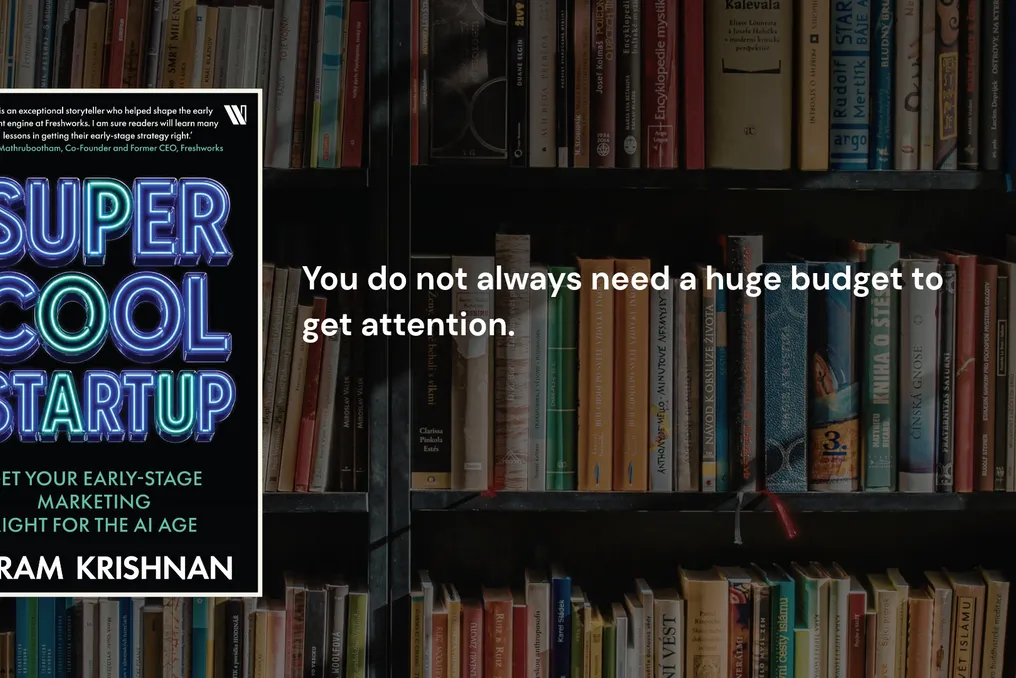
Five Lessons from Sairam Krishnan's Book 'Super Cool Startup' on Startup Marketing
Read more
yourstory.com

Five Lessons from Sairam Krishnan's Book 'Super Cool Startup' on Startup Marketing

Sairam Krishnan's book 'Super Cool Startup: Get Your Early-Stage Marketing Right for the AI Age' is a practical guide for entrepreneurs, startup founders, and marketers aiming to build recognizable, trustworthy, and memorable brands.

Drawing on his experience with companies like Freshworks and Atomicwork, as well as his involvement in the startup ecosystem, Krishnan explains that having an excellent product is not enough to build a successful business. Startups also require a clear narrative, meaningful content, an engaged community, effective public relations (PR), and a strong social media presence.

The book focuses on five key aspects of early-stage marketing: storytelling, content, community, PR, and guerrilla marketing, as well as social media. It provides valuable insights into how businesses can capture attention and build a marketing engine, especially in an era where artificial intelligence has simplified content creation but increased the importance of strategic judgment.

One of the most important takeaways from 'Super Cool Startup' is that developing a good product is only one component of business success. People must also understand why the product exists and why they should trust it.

Even if a startup has an innovative product, talented founders, and a promising business model, it may face difficulties attracting customers and standing out in a competitive market if it cannot clearly communicate its purpose and value.

Krishnan emphasizes storytelling as the foundation of startup marketing. A compelling brand story clarifies the problem the company aims to solve, the people it wants to help, and what makes its approach unique.

For example, instead of simply describing the product by its features, a startup can explain the everyday problem it solves and how it makes life easier for customers.

People need a reason to be interested in the product, not just a list of its functions. A clear and understandable story helps a startup gain recognition, trust, and a stronger connection with its audience.

A strong brand story requires appropriate content to reach the target audience. This is where content marketing becomes critically important. The book highlights content as one of the indispensable pillars of early-stage marketing. Whether it's an article, a newsletter, a case study, a video, or a social media post, content allows companies to convey their ideas and demonstrate their competence.

However, simply creating content to maintain online activity is not enough. Businesses must understand what their target audience wants to learn, what problems they are trying to solve, and what information will truly help them.

For instance, a startup offering marketing software might publish practical guides, industry reviews, customer stories, and educational videos instead of constantly advertising its product. This approach helps potential buyers understand the brand even before they consider purchasing.

It is important to focus on creating useful content rather than producing content solely for visibility. When companies regularly provide valuable information, they have a greater chance of gaining authority and audience trust.

Another important lesson from 'Super Cool Startup' is that successful brands must pay attention to building communities around their products and ideas. Customers might buy a product out of necessity, but a community gives them a reason to stay connected to the brand. When people feel involved in the company's journey, they can become advocates who recommend its products, share experiences, and represent the business to others.

Krishnan defines community building as a fundamental part of early-stage marketing. Instead of viewing customers merely as buyers, startups should create opportunities for meaningful interaction. This can include organizing online discussions, hosting webinars, creating customer groups, encouraging feedback, or bringing together people with similar interests.

For example, a fitness startup could create a community where members share their progress, exchange tips, participate in challenges, and support each other. Such interaction helps businesses build stronger relationships with their audience.

The focus should not only be on acquiring customers; you must give people a reason to be part of your brand's journey. A supportive community can become one of the startup's most valuable long-term assets.

Startups often operate with limited resources, making traditional advertising and large marketing campaigns an unaffordable luxury. Nevertheless, capturing attention does not always require significant financial outlay. In 'Super Cool Startup,' Krishnan highlights public relations (PR) and guerrilla marketing as important ways to attract attention and increase brand awareness. PR helps companies build trust through media coverage, industry discussions, founder interviews, and significant announcements. Guerrilla marketing, on the other hand, involves creative and unconventional methods of reaching an audience.

A startup can use these methods to create memorable impressions and generate buzz without relying entirely on expensive advertising campaigns. For example, a small business might organize an interesting public event, collaborate with a relevant content creator, or develop a creative campaign that encourages organic sharing. The key is understanding what makes an idea interesting enough for people to talk about it.

Creativity and strategic thinking can sometimes achieve what a large advertising budget cannot. The focus should be on developing memorable ideas that give people a reason to notice and discuss your brand.

An excellent product, an interesting brand story, and valuable content mean little if the target audience never discovers them. This is why social media plays a vital role in a startup's marketing strategy. Krishnan calls social media the fifth pillar of building a super cool startup. They provide companies with platforms to disseminate stories, engage with customers, showcase products, and participate in industry discussions.

However, effective social media marketing goes beyond regular posting. Companies need to understand which platforms their audiences use, what type of content attracts them, and how to communicate in a way that feels authentic. For instance, a B2B startup might use LinkedIn to share industry insights, founder perspectives, and customer success stories, while a consumer brand might use Instagram to showcase products, collaborate with content creators, and build an engaged audience. It is crucial that social media supports the overall marketing strategy, rather than becoming an isolated activity.

'Super Cool Startup' by Sairam Krishnan offers practical knowledge in entrepreneurship, branding, and modern marketing. He shows that a strong product needs effective storytelling, clear positioning, and meaningful connections with the audience to succeed. The five lessons explore how storytelling, content, community building, PR, and social media shape a startup's marketing strategy. The book also emphasizes that while AI simplifies content creation, good marketing still relies on human judgment and understanding audience needs. Whether you are a founder or a marketer, the book offers valuable ideas for building a brand that people understand, trust, and want to talk about.
Popular