Supreme Court criticizes administration for worsening Yamuna River pollution despite major spending
Read more
The times of India
timesofindia.indiatimes.com

Supreme Court criticizes administration for worsening Yamuna River pollution despite major spending

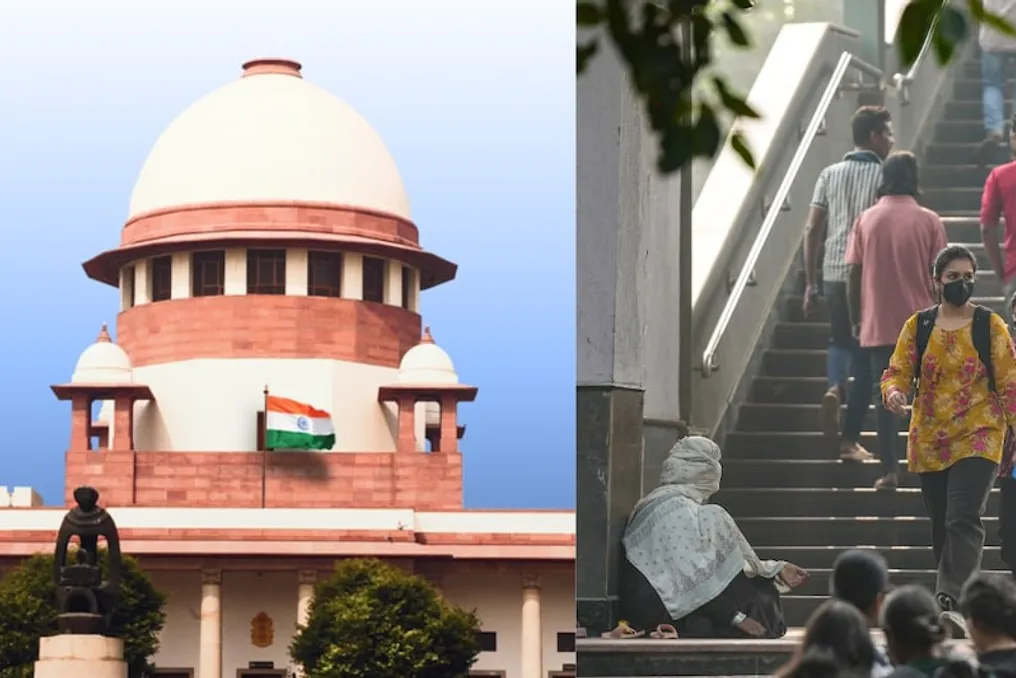
On Monday, the Supreme Court criticized civil authorities and the Central Pollution Control Board (CPCB) over the worsening pollution of the Yamuna River, even despite significant financial investments in river cleanup. The judicial bench, comprising judges Manoj Misra and Manmohan, instructed the CPCB to monitor water quality where the river and 520 drains enter and exit states, Union territories, and districts.

However, the court noted that connecting to the sewage system will remain a difficult task due to the lack of a reliable sewerage system and the mixing of stormwater and sewage runoff. Furthermore, the court opined that it would be difficult, if not impossible, for civil authorities to connect sewage in most illegal and unauthorized colonies built on encroached land, as they lack grid planning and have almost no space for laying a sewage system.

The Supreme Court directed the CPCB to track water quality at entry and exit points from states, Union territories, and districts. If the water quality deteriorates in any parameter while passing through any jurisdiction, the corresponding administration will be held accountable and fined.

Similar stories

Congress questions Prime Minister Modi about air pollution in Delhi
Read more
timesofindia.indiatimes.com

Congress questions Prime Minister Modi about air pollution in Delhi

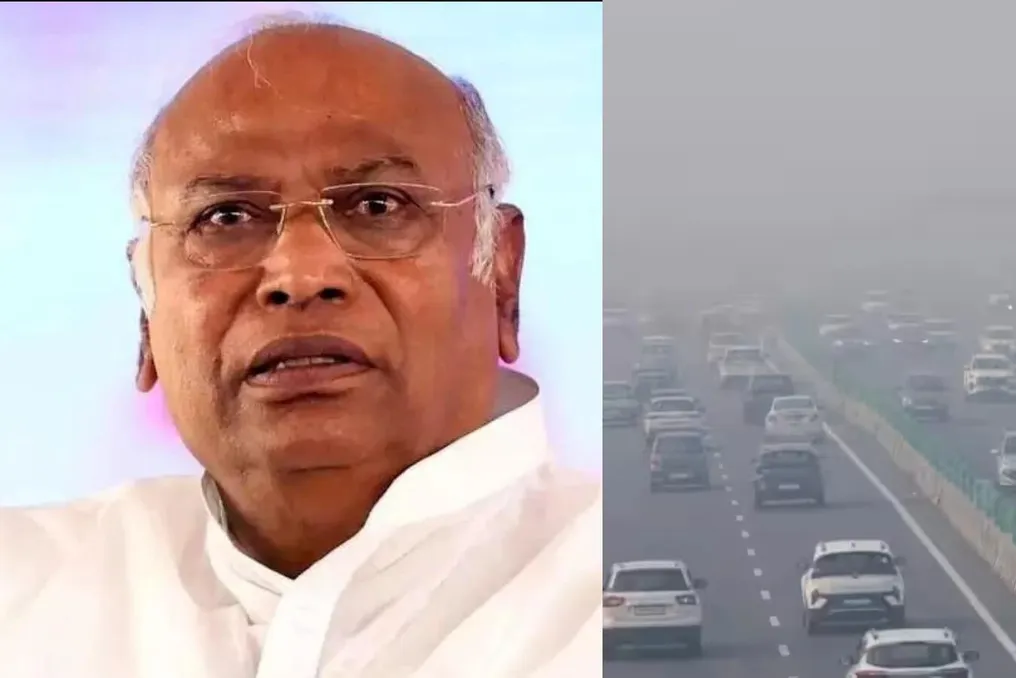
Congress Chairman Mallikarjun Kharge criticized the government led by the Bharatiya Janata Party (BJP) on Tuesday regarding the growing air pollution in Delhi. He raised the question of why the national capital is turning into a 'Vishwaguru' in terms of pollution.

Kharge stated that clean air is an inherent right, not a privilege that the government can grant. Furthermore, the Congress chief pointed out discrepancies in air quality monitoring, which raised additional questions about how the government is handling the pollution problem.

He also referred to estimates of air pollution-related mortality to emphasize the scale of the public health crisis. Moreover, Kharge reminded of the Supreme Court directive addressed to Delhi, Haryana, Uttar Pradesh, and Rajasthan, all governed by the BJP, demanding detailed responses and proposed measures to combat the pollution crisis within two weeks.

Supreme Court strengthens control over air pollution in Delhi-NCR, requests reports on transport inspections
Read more
www.aajtak.in

Supreme Court strengthens control over air pollution in Delhi-NCR, requests reports on transport inspections

The Supreme Court has adopted a strict stance regarding the growing air pollution in the Delhi-NCR region, particularly that caused by vehicle emissions. The court has demanded that the governments of Delhi, Haryana, Uttar Pradesh, and Rajasthan submit detailed action plans within two weeks.

The bench, comprising Chief Justice Suryakant, Justice Joymalya Bagchi, and Justice V. Mohan, instructed the government of Delhi, MCD, the Delhi Police Transport Department, as well as the governments of Haryana, Uttar Pradesh, and Rajasthan, to develop a comprehensive strategy for controlling traffic movement, ensuring emission standards compliance, and restricting polluting vehicles.

The court also requested information on the criteria and procedures for adhering to vehicle emission norms and standards, as well as details of the rules for issuing Pollution Under Control (PUC) certificates. Furthermore, information was sought regarding measures taken against vehicles that do not meet old and established standards. The court required the submission of complete statistics on the number of inspected vehicles and issued fines.

The states were given two weeks to submit their responses, and the next hearing on this matter is scheduled for November 23.

The situation with air pollution and Air Quality Index (AQI) in the capital city of Delhi remains serious. According to data from the Central Pollution Control Board (CPCB) as of the morning of November 10, many areas of the capital recorded an AQI above 300.

The worst situation was observed in Chandni Chowk, where the AQI reached 400. In Pusa, the AQI was 398. Other recorded values include 380 in the Commonwealth Olympic Complex, 384 in NSUT Jafpur, 373 in Tokra Garden, 372 on Matura Road, and 375 in Sirifort. Readings of 360 were also noted in Aya Nagar, 364 at Burari Crossing, and 361 at IIT Delhi.

Air quality in other parts of the capital was also extremely poor. In Shadipur, the AQI was 325, on Lodhi Road it was 324, in Burari it was 315, in Jadroda Kalan it was 320, in Mandir Marg it was 307, and in Bavana it was 328. An AQI of 296 was registered in Tikri Kalan, and 295 in Vasundhara Enclave.

According to CPCB standards, an AQI level from 301 to 400 is classified as 'very poor', while values from 401 to 500 are considered 'hazardous'. Consequently, in most monitoring points in Delhi, including Chandni Chowk, the air quality was categorized as 'very poor'.
Diwali turned Delhi into a gas chamber: the need for personal initiatives to solve pollution
Read more
www.aajtak.in

Diwali turned Delhi into a gas chamber: the need for personal initiatives to solve pollution

Delhi, like in previous years, once again found itself in a gas chamber during the Diwali festival, leading to a sharp rise in the air quality index to hundreds of points. Children, the elderly, and the sick are the most vulnerable to pollution. This situation has repeated this year.

The Supreme Court issued a comment on Friday, noting that Delhi's decline during Diwali is linked to the culture of gift-giving. Chief Justice Suryakant stated that the tradition of exchanging gifts has been transformed by wealthy people into a symbol of social status. Long traffic jams due to cars increase the emission of pollutants.

The court emphasized that merely introducing bans will not be enough; cultural changes and active citizen participation are necessary. This comment is not limited only to gifts. The pollution generated during Diwali is created by the residents themselves. Where is it justified to throw fireworks beyond the established norm? For hours, individuals launch very loud firecrackers, which is more of an attempt to show off to neighbors than an expression of joy.

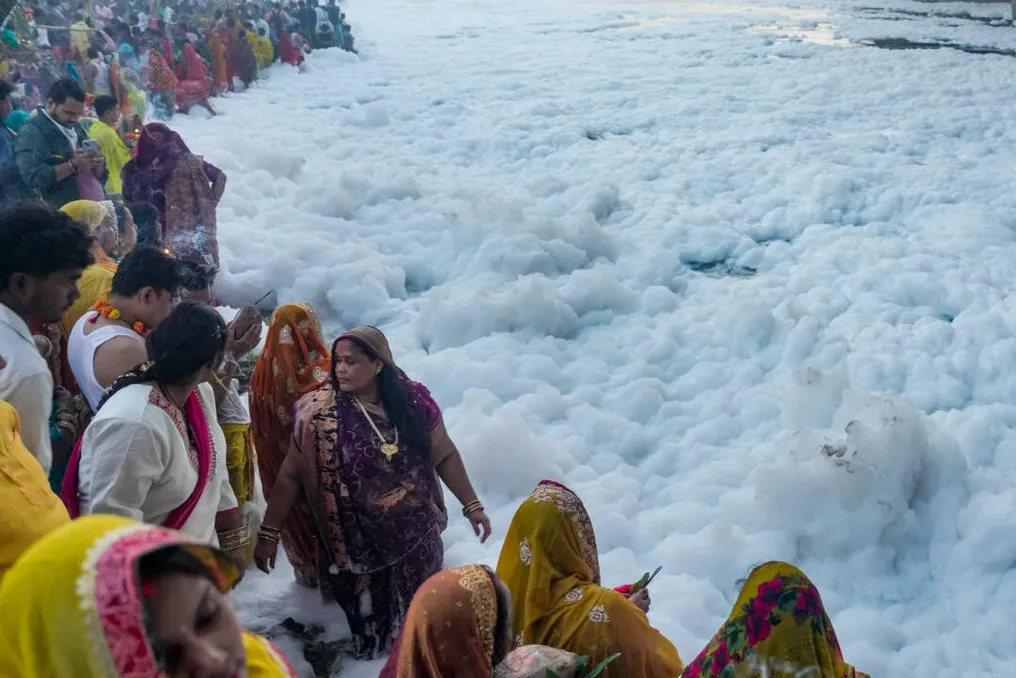
This category also includes river pollution, the use of deafening DJs and horns. We prioritize the habit of showing off at the expense of the environment. The government and courts issue annual decrees allowing limited use of green fireworks and setting deadlines. However, these orders are regularly violated as if they never existed. Therefore, the problem lies not in the legislation, but in our habits.

No court or government can save Delhi from pollution alone. Until we take the initiative ourselves, the situation will not improve. Stubble burning, transport, industry, and construction dust play a significant role, but in the sharp increase around Diwali, our personal responsibility is also involved. Smoke and noise emanating from every home envelop the city together. Cars stand in traffic for hours to deliver gifts, burning fuel and increasing smoke. Fireworks smoke mixes with the air, and the noise from DJs and horns increases noise pollution. We do all this while being aware of the consequences.

The solution starts at the personal level. Diwali is a festival of joy, and it is important to light lamps, share sweets, and meet. However, it should not become a festival of ostentation and competition. The festival and joy can be celebrated using as few fireworks as possible. The habit of giving gifts can be changed through digital or shared methods. Instead of spending hours in different cars, one can gather together to celebrate. The role of the government and the court is important: they can create rules, monitor, and apply strict measures. But their work will only be successful if the public complies with the rules. The Supreme Court rightly noted that the more bans there are, the more violations there are.

The true solution lies in the movement of the people. Residents' associations, social networks, and local groups can work in this direction. It is necessary to raise awareness about how our small habits lead to big losses. Delhi's pollution is not just a problem for one city; it is a problem of health and the future of the entire region. Children's lungs suffer, the number of respiratory diseases is growing, and economic damage is being inflicted. To break this vicious cycle, the government, farmers, industrialists, and ordinary citizens must work together. But the beginning must be made by the individual. The Supreme Court's comment serves as a warning. Now we have an answer. It is time to take responsibility so that Delhi can breathe.

Popular