
The market offers numerous air purifier models and various filter types. However, many consumers are unaware of the differences between technologies such as HEPA Filter, Activated Carbon Filter, and Ionizer Technology. This technical review aims to explain how air purifiers work, describe the technology of different filters, and highlight key considerations when choosing a suitable device.
Similar stories
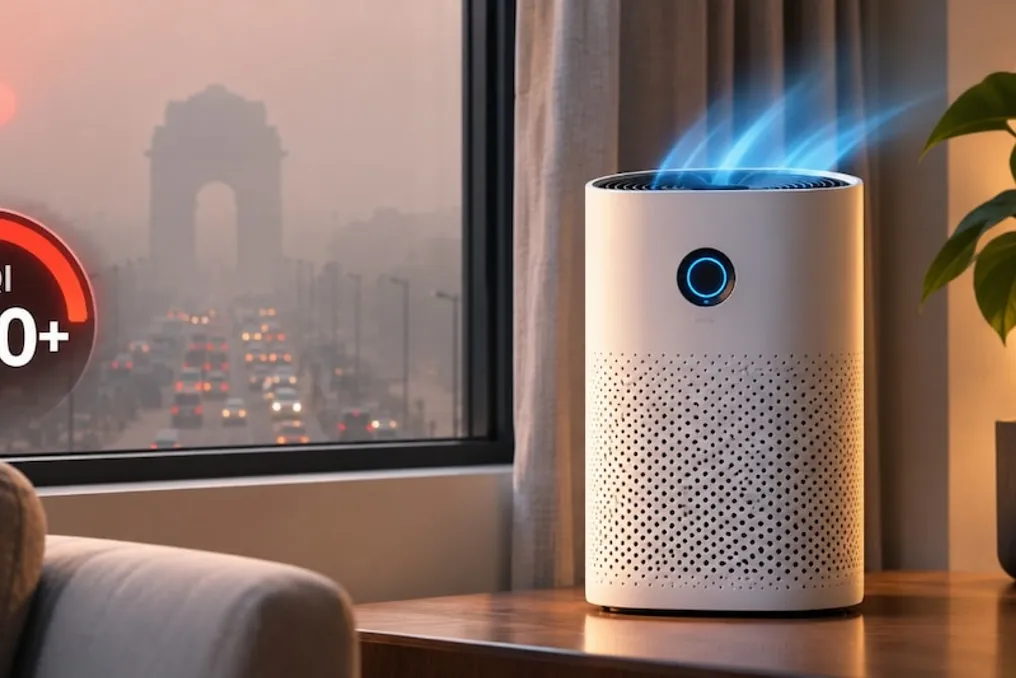
What to consider when buying an air purifier in the price range of 5,000 to 20,000 rupees
In conditions of severe air pollution in Delhi and NCR, caused by Diwali firework smoke, the air quality in several areas of Delhi, Noida, Ghaziabad, and Gurugram has reached critical levels. On government AQI monitoring stations, the reading exceeded 400, while some private applications showed readings of 1000 and above. Consequently, residents are closing windows and considering purchasing air purifiers.
However, the market offers numerous models of various prices and sizes. Some are advertised with HEPA filters, others claim multi-stage purification, and some boast the ability to clean large rooms. Therefore, a purchase decision based solely on brand or advertising may be mistaken. If you plan to buy an air purifier for your home this winter, it is crucial to understand the following points.
The most important parameter when choosing an air purifier is CADR, or Clean Air Delivery Rate. This indicator determines the volume of clean air the machine can provide per hour. The higher the CADR value, the faster the device can filter particles present in the room's air.
One should not rely solely on companies' claims about coverage area, such as 300, 400, or 500 square feet. Three factors are important: room area, ceiling height, and the machine's actual air cleaning capacity. For example, a room of about 200 square feet may require a CADR of at least 130 CFM, while a 300 square foot room requires about 195 CFM. These calculations are based on a standard ceiling height. In highly polluted regions like Delhi-NCR, it is better to choose a model with a slightly higher CADR relative to the room size. Using a small purifier in a large hall will yield limited effect.
The second critically important element is the presence of a HEPA filter, which helps capture fine particles such as PM2.5. PM2.5 poses a particular danger during winter pollution and fireworks smoke, as these particles can penetrate deep into the lungs along with breathing.
When purchasing, one must check whether the company clearly specifies the filter characteristics and its testing standards. One should not trust advertising claims such as 'HEPA-like technology' or '99.9% purification.' The actual performance of the filter, the machine's CADR, and its effectiveness in a specific room are more important.
An activated carbon filter will also be useful
While a HEPA filter is designed to capture airborne particles, it is insufficient for removing all types of gases or odors. An activated carbon filter can be useful here. If your area has problems with odors from traffic, smoke, or other sources, consider a model with a sufficient amount of activated carbon. However, it should be remembered that not every carbon filter can remove all types of gases, so you need to clarify with the company exactly which gases or odors it promises to reduce.
Find out the filter replacement cost in advance
When buying an air purifier, you must consider not only the price of the machine itself but also the cost of its filters. Most models require periodic filter replacement, and in the dusty and polluted conditions of Delhi-NCR, filters can become dirty quickly. Therefore, in addition to the stated filter lifespan, you should check how much a new filter will cost and how easily it can be found. Models might look attractive on Amazon and Flipkart, but if filter replacement is very expensive or unavailable, a cheap machine can turn into a high long-term cost.
Noise, electricity, and sensors are also important
Since an air purifier may run for many hours a day, attention should be paid to noise level and power consumption. Especially for the bedroom, it is recommended to choose a quiet sleep mode model. At the same time, keep in mind that the noise at maximum speed can be higher, so a decision cannot be made based only on the sound in sleep mode.
PM2.5 sensors and a display showing real-time air quality are useful features as they help understand changes in the room's air. Automatic mode allows the machine to automatically increase fan speed when pollution rises. Nevertheless, sensor readings do not guarantee air purity in all corners of the house.
Avoid machines that produce ozone
Some purifiers use ionization, plasma, or other methods. Before buying, ensure that the machine does not emit ozone. Ozone can cause irritation in the lungs and exacerbate respiratory problems. Preference should be given to models that purify air without generating ozone.
Can one purifier clean an entire house?
Generally, one machine works most effectively in the room where it is installed. If you spend most of your time in the bedroom, first buy a purifier suitable for that specific room. Relying on one small machine for a large house or multiple separate rooms will not bring significant benefit. It is also important not to place the machine right against a wall, curtains, or furniture; free airflow must be ensured.
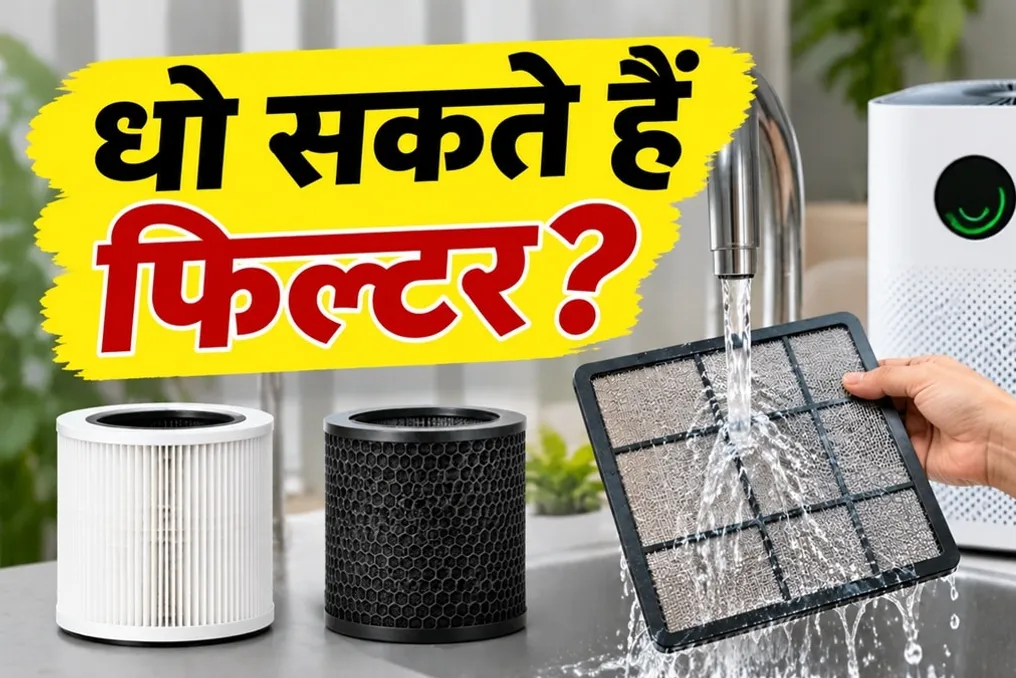
Can an air purifier filter be cleaned with water: tips for saving money
In the Delhi-NCR regions, air pollution levels have exceeded the 400 mark, which is a dangerous indicator. In many cities, including Delhi, people use air purifiers to improve air quality in their homes, and there are many different models available on the market.
Most residents of India purchase air purifiers, but they often fail to clean or replace filters regularly, leading people to face poor air quality.
Many wonder whether it is possible to clean an air purifier filter using water. It is important to know the details of this issue.
It is necessary to clean air purifier filters regularly to ensure clean air. Furthermore, pre-filters used in air purifiers can be washed with water.
However, HEPA and activated carbon filters located inside air purifiers cannot be washed with water. Some purifiers with electrostatic filters allow water to be used for their cleaning.
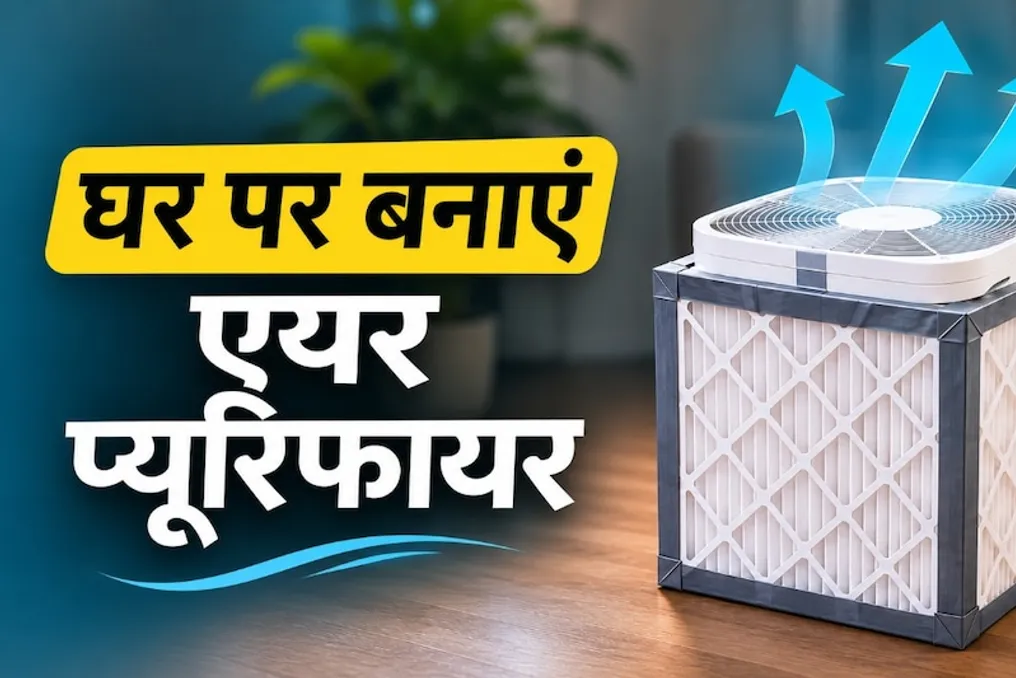
No need to buy an expensive air purifier: how to make one yourself at home
Due to air pollution in many cities across the country, including Delhi-NCR, there is an urgent need for protective measures. In Delhi, the AQI has exceeded 400 and may reach 500–1000 by the end of the month. Although masks can be used when going outside to protect against pollution, the question of indoor air quality remains.
Many people believe that closing doors and windows will prevent contamination, but fine dust and smoke particles can still penetrate inside. Furthermore, cooking, cleaning, and other household chores also generate fine particles in the air, increasing the demand for air purifiers. Commercial air purifiers cost thousands of rupees, and premium models are even more expensive. However, if the budget is limited, there is an alternative option—creating your own air purifier (DIY) with minimal cost.
For this, you will need a fan, high-quality air filters, cardboard, and reinforced tape. The US Environmental Protection Agency (US EPA) and the US Centers for Disease Control and Prevention (CDC) have provided information on such homemade purifiers and their advantages. These constructions are known as Corsi-Rosenthal Boxes.
It is important to understand that most DIY purifiers found online use MERV-13 filters, not true HEPA filters. It is necessary to understand the differences between them to know how to build such a purifier, what materials will be needed, and whether it can help combat pollution in Delhi-NCR.
Before making the purifier, you must study the filters. The names HEPA and MERV are often available for sale, but they are not interchangeable. HEPA stands for High Efficiency Particulate Air. Such filters are designed to capture the smallest particles in the air. According to the generally accepted definition of HEPA in the US, they are capable of filtering at least 99.97% of particles measuring 0.3 microns.
MERV-13 is a separate rating system that indicates the efficiency of filters for HVAC systems used in residential and commercial buildings. According to the CDC, a MERV-13 filter can capture at least 85% of particles measuring 1 to 3 microns. This means that MERV-13 is a good option, but it cannot be called a HEPA filter. If you want to create an inexpensive air purifier at home, the MERV-13 filter construction is a practical choice.
There are several ways to make a home purifier. The simplest method is to attach an air filter to a fan. For a more effective design, you can assemble a Corsi-Rosenthal Box consisting of four filters. For this, you will need four 20x20 inch HVAC filters, preferably with a MERV-13 rating, 2–4 inches thick. A suitable 20x20 inch box fan, sturdy cardboard, reinforced tape, and scissors are also required.
It is important that the fan can draw air through the filters and expel it in another direction. Simply attaching a filter to the back of a regular desk or floor fan will not result in a scientifically proven air purifier.
In this design, the four filters are arranged in the shape of a square box. The advantage of this approach is that it provides a large surface area for air filtration. This reduces the load on the fan, allowing a greater volume of air to pass through the filters. First, place all four filters on the floor. Note that each filter has an arrow indicating the airflow direction. The filters should be installed so that their arrows point inwards into the box.
Then, use reinforced tape to join the edges of all four filters, forming a square frame. You must ensure that there are no gaps between the filters, as any unfiltered leak will reduce the purifier's efficiency. After this, cover the bottom part of the square structure with sturdy cardboard. The fan is placed on top so that it draws air through the filters and expels the cleaned air upwards.
All gaps between the fan and the filters must also be sealed with reinforced tape. Then, a circular cardboard shroud, called a shroud, is attached to the front of the fan. This helps improve airflow. Thus, your Corsi-Rosenthal Box is ready.
If buying four filters is beyond your budget, you can use a single-filter construction. For this, you will need a suitable box fan and one MERV-13 filter of the same size. The filter should be placed on the side of the fan from which air is drawn. It is important to observe the direction of the airflow arrow on the filter. The fan will first draw air through the filter and then expel it in another direction. Carefully seal all edges of the filter with reinforced tape. Then, install a cardboard shroud in front of the fan to improve airflow. This design is simpler and cheaper to make than the four-filter box, but its air purification capacity may be lower.
What is the real impact of DIY air purifiers on reducing pollution?