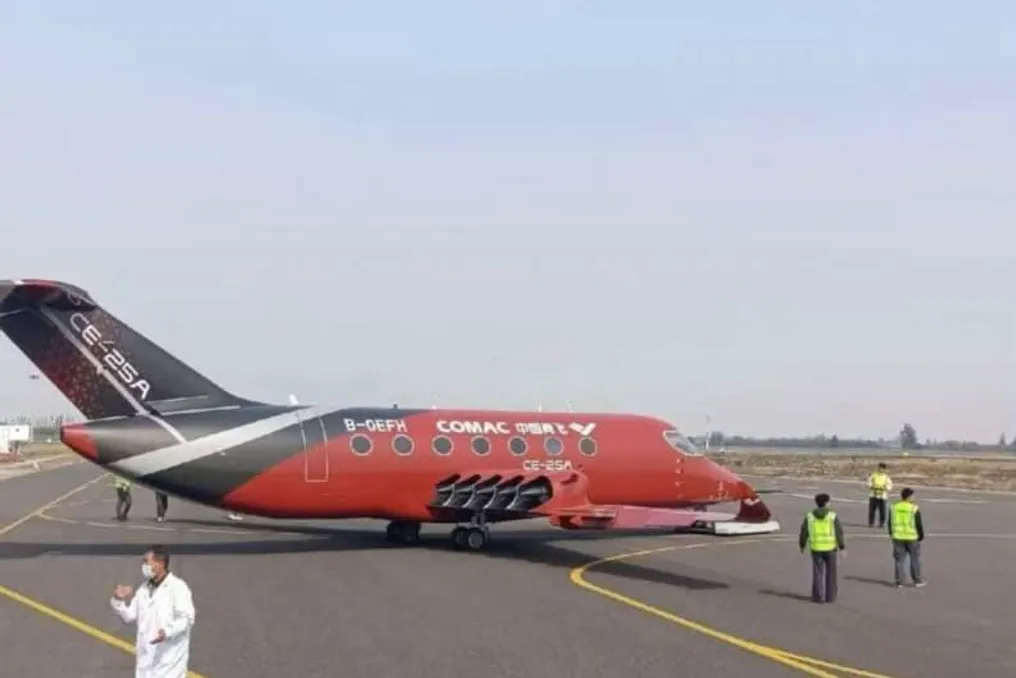
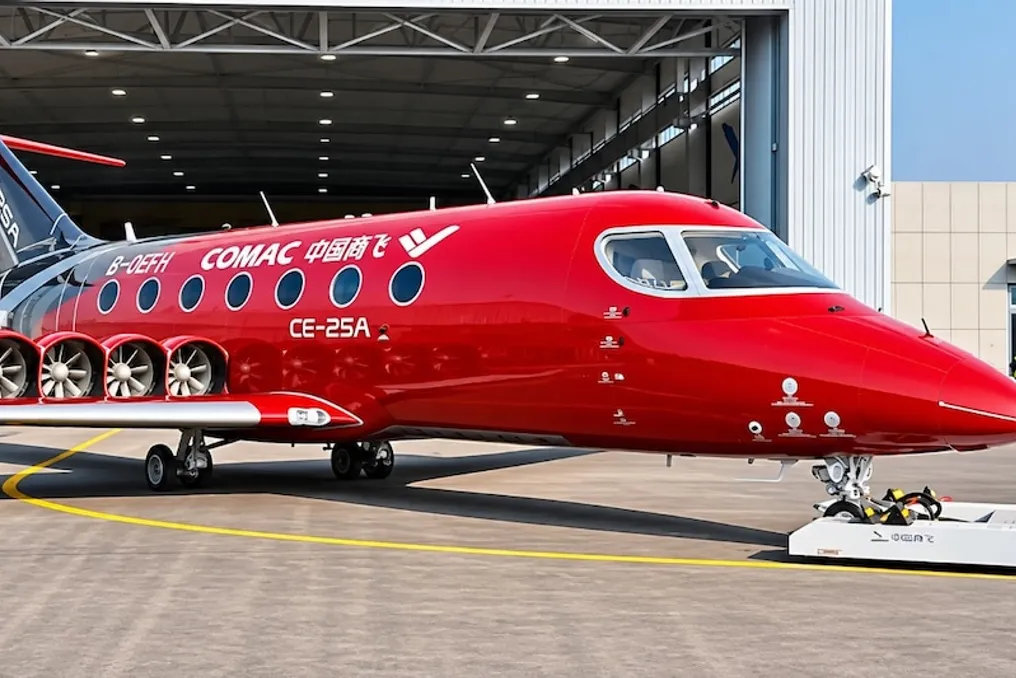
In the field of aviation, following the development of electric vehicles, work has intensified on creating aircraft that operate on batteries. A Chinese company introduced its electric aircraft, the CE-25A, which completed its first manned flight designed to carry 19 passengers.
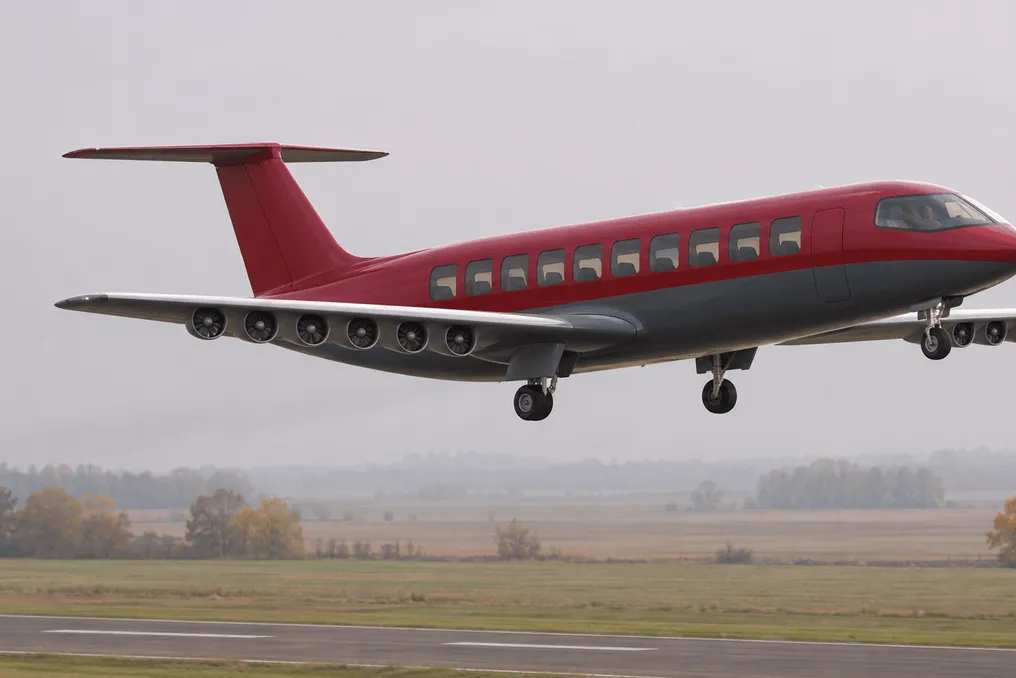
This airframe does not rely on one or two large engines like traditional airplanes. Instead, ten electric fans are installed on the wings, generating thrust for forward movement. According to the company, the aircraft is capable of covering a distance of up to 400 kilometers at a speed of 300 kilometers per hour.
Electric vehicles have become common sights on the roads, and buses and trucks are also transitioning to electric propulsion. However, developing electric aircraft presents a much more complex challenge. While battery weight is an issue in cars, in an airplane flying thousands of meters high, this battery creates numerous technical difficulties.
Enormous amounts of energy are required for takeoff, maintaining flight, and safe landing. Traditional airplanes obtain this energy from aviation fuel. However, the Chinese CE-25A offers a different approach, using electric motors and fans instead of fuel-powered engines. This is why it is considered an important experiment in the direction of commercial electric aviation.
The CE-25A aircraft was developed by China's state aviation construction company, COMAC. It made its first flight with a pilot and crew on November 14, 2026, in Binzhou city, Shandong province. Two pilots and one flight test engineer were in the cockpit.
This aircraft weighs about 10 tons and can accommodate a maximum of 19 passengers. According to the company's statement, its cruising speed is 300 kilometers per hour. It is designed for flights at an altitude of approximately 2,400 meters, with a stated range of 400 kilometers.
Its most distinctive feature is the ten electric fans located on the wings—five on each wing. They differ from the large engines of conventional airplanes and are called electric ducts. Blades inside them rotate, directing air backward to provide the necessary thrust for the aircraft.
Typically, passenger airplanes are equipped with one or two large engines that push air backward, propelling the aircraft forward. But in the CE-25A, the function of generating thrust is distributed among multiple small electric fans. This technology is called Distributed Electric Propulsion. Simply put, the force driving the aircraft is distributed across several points rather than coming from a single source.
The CE-25A features individual electric fans on the wings, each powered by an electric motor drawing power from the battery. These fans rapidly expel air backward, creating a push for the aircraft's movement. The advantage of this design is the ability of engineers to test the wing and fan structure separately. The multitude of fans reduces the dependence of the entire process on one or two large engines. Nevertheless, real energy savings and maintenance simplicity will only become clear through further experiments.
The use of electric motors and fans opens up new possibilities for aircraft design. In the future, there is potential to develop quieter and short-haul suitable aircraft using this technology.
The battery is a critically important part of the electric aircraft. In the CE-25A, energy from the battery is supplied to the electric motors, which rotate the fans on the wings, thereby propelling the aircraft. It is important to understand the significant difference between a car and an airplane. A car moves on the ground and can stop if necessary, whereas an airplane constantly requires energy to maintain flight.
Therefore, the battery used in the aircraft must be not only light but also capable of storing a large amount of energy. Creating an electric aircraft is significantly more complex than creating an electric vehicle because increasing the battery weight requires even more energy for flight. Furthermore, additional energy must be accounted for for passengers, baggage, weather conditions, and flight safety.
COMAC developed the CE-25A in collaboration with China's battery company CATL, Jiaotong University of Shanghai, and other partners. This project combined aircraft construction technologies with battery research.
Although the stated range of the CE-25A is 400 kilometers, this means it is not intended for long-haul international flights. Its main purpose is to carry out short trips between cities and surrounding areas.