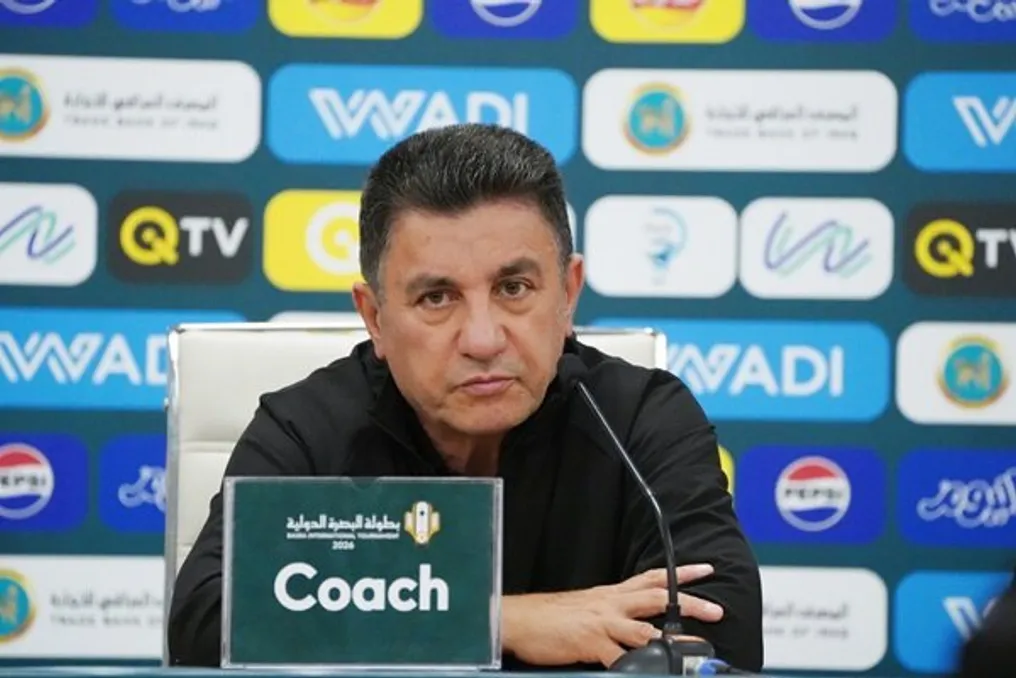
Iran's Coach Ghalenoei Announces Continuation of Generational Change in Iranian Football
Read more
Tehran Times
www.tehrantimes.com

Iran's Coach Ghalenoei Announces Continuation of Generational Change in Iranian Football

Amir Ghalenoei, the head coach of the Iranian national team, announced that the process of integrating young players and restructuring the squad will continue at an accelerated pace.

Speaking at a press conference ahead of Iran's match against Iraq in the Basra Football Tournament 2026, Ghalenoei emphasized the significance of this encounter, noting that games between these neighboring countries always hold special importance, whether they are friendly matches or official competitions.

He stated: 'Matches between Iran and Iraq are always important because the two teams are technically very close. It doesn't matter if the game is a friendly or an official one; these encounters always have their own significance.'

Ghalenoei added that the upcoming match will provide another opportunity to continue the generational transition in the national team. He specified: 'However, our approach to tomorrow's match is to continue the process of squad restructuring and integrating young players, which we have already started, but at a faster pace.'

The Iranian coach also touched upon football cooperation and the exchange of coaches and players between the two countries. He characterized both nations as possessing talented and technically proficient football professionals, welcoming the presence of Iranian coaches working in Iraqi football.

Ghalenoei noted: 'I am glad that two of our good coaches have moved to Iraq and are working in its football system. Such exchanges can benefit football in both countries, just as Iraqi players previously came to Iran and contributed to our football.'

Referring to the experience of former Iranian international player Alireza Mansourian in Iraq, Ghalenoei mentioned that Mansourian led Al-Talaba club during a difficult period but managed to improve the team's standing by the end of the season. He added that Mansourian's experience in the Iraqi league could strengthen football ties and stimulate the exchange of technical knowledge between the two states.

Ghalenoei also expressed respect for the Iraqi national team, highlighting the close relationship between the two neighboring countries. He stated: 'Iran and Iraq are two great nations in the region with brotherly relations. That is the most important thing.'

The Iranian coach praised Iraq's progress in international football, specifically recalling the country's historic victory in the AFC Cup in 2007. He added: 'The Iraqi football team demonstrated its capabilities in previous years. In particular, when they won the 2007 Asian Cup, I was the head coach of the Iranian national team. I remember Younis Mahmoud, who captained that team and is now the president of the Iraqi Football Association.'
Similar stories

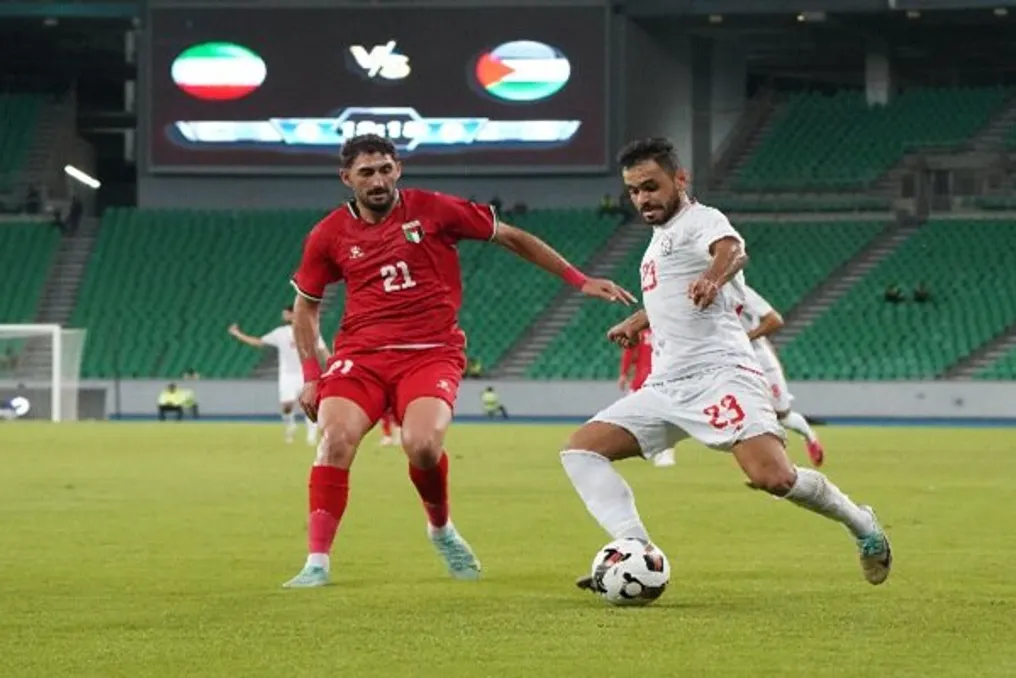
Iran's victory over Palestine showed signs of generational change but highlighted the need for tougher tests
Read more
www.tehrantimes.com

Iran's victory over Palestine showed signs of generational change but highlighted the need for tougher tests

Iran's 2-0 victory over Palestine in Basra demonstrated encouraging signs of a new generation taking over, yet it also revealed an old problem: the national team requires more attacking diversity and, more importantly, stronger opponents to gauge its progress.

The Need for More Serious Tests for Iran's Youth Renewal

The team, managed by Amir Ghalenoei, used the tournament's first match in Basra to give opportunities to young players, as the average age of the squad was four years lower than that of the team that lost to Russia during the previous international break. Five young footballers—goalkeeper Mohammad Khalifeh, Mohammad Farabasi, Ali Golizadeh, Hossein Gudarzi, and Afshin Sadeghi—made their international debuts, and the coach gave playing time to 22 out of 29 members of his squad.

Positive aspects were noted: Hosseinjad and Gudarzi showed potential, with the latter making a decisive contribution after coming on as a substitute. His two excellent crosses led to goals by Sardar Azmoun and Saleh Hardani, securing the win in the final minutes of the match.

Nevertheless, the result should not hide the limitations of Iranian play. Palestine was reduced to 10 men in the 66th minute, and prior to that, Iran struggled to break through their defensive organization. Both goals were scored after a sending-off, and wing crosses once again proved to be the most effective attacking route.

Iran created chances and could have scored more, but the reliance on crosses underscored the lack of alternative solutions in the final third of the pitch. Against more organized and physically stronger opponents, such predictability could become a serious problem.

Amir Ghalenoei admitted that the victory is only part of the bigger picture. He stated that the priority during the current international window was providing opportunities to young players, adding that Iran needs to face bigger teams to assess its readiness. He also emphasized the importance of playing in front of large crowds and under high pressure, pointing to the need for high-level friendly matches before the 2027 Asian Cup.

This makes Tuesday's match against Iraq particularly significant. Unlike Palestine, Iraq should provide a more complex test both tactically and emotionally, especially in front of their home fans.

Iran's recovery process began with some encouraging individual performances. However, integrating young players is only the first step. The team needs challenging matches, and 'Team Melli' must develop more ways to create and execute scoring opportunities. The victory in Basra was a useful start, but not proof of a completed transition.

Amir Ghalenoei states that generational change is a natural process in football
Read more
www.tehrantimes.com

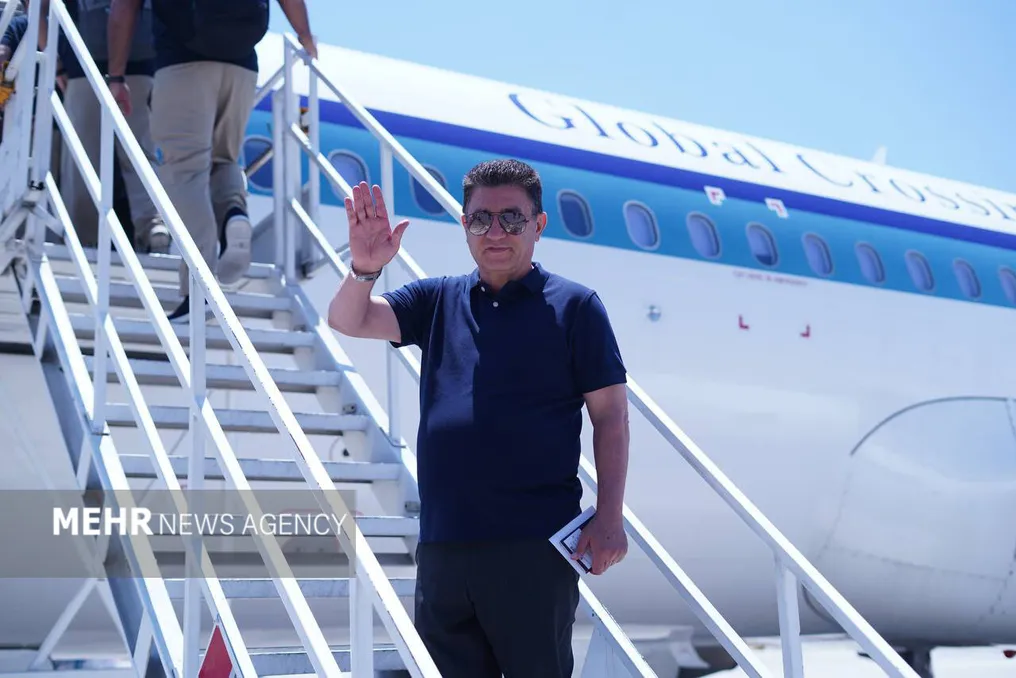
Amir Ghalenoei states that generational change is a natural process in football

The head coach of the Iranian national football team, Amir Ghalenoei, believes that generational change is an integral part of football, but player selection for the national team will always be based on merit, assessing athletes by their technical and tactical skills.

Currently, the Iranian national team is in Basra, Iraq, where it is set to participate in a tournament involving four teams.

Ghalenoei, who included several young players in his latest squad, explained that the coaching staff initially planned to introduce more youth during the previous international break.

He noted: 'We also intended to create this opportunity during the last FIFA international window, but due to the overlap with competitions in Nagoya, the plan was postponed to the upcoming window.'

The coach emphasized that players who previously played for the national team remain in the team's plans. He added: 'If they are in good shape and meet the necessary technical standards, age will not be a decisive factor.'

Furthermore, Ghalenoei announced that the coaching staff intends to give younger players more opportunities in the current and subsequent international windows as Iran prepares for the upcoming AFC Asian Cup.

'Our goal is to give young players more chances to play so that, approaching the Asian Cup, we can form a squad that combines youth and experience, and be better prepared for the competition.'

Stressing that selection will depend on performance and abilities, Ghalenoei concluded: 'The national team is a place for the best players. Generational change is a natural part of football, but the most important principle is that any player demonstrating excellent technical and tactical qualities deserves a spot in the national team.' He also added: 'We have currently decided to create more opportunities for young players, but this does not mean that experienced players will be ignored.'

Popular