Uzbekistan enters the world's top ten in detecting malicious files on computers
Read more
Podrobno.uz [uz]
podrobno.uz

Uzbekistan enters the world's top ten in detecting malicious files on computers

Uzbekistan ranked ninth in the global rating for the share of users whose computers were found to have malicious files. In the third quarter of 2026, among users of Kaspersky Lab security software in the country, malware capable of damaging devices or stealing data was detected in 25.25% of users.

At the Kaspersky CyberSecurity Weekend 2026 conference held in Tashkent, it was noted that the average global figure for the same period was 10.88%. In this ranking, Uzbekistan is positioned between the Republic of Congo and Cameroon; Turkmenistan, Tajikistan, and Afghanistan are ranked above it. It should be emphasized that the statistics only account for users of the company's products who consented to the transfer of threat data without disclosing personal information.

According to the company, from January to September 2026, 53.2% of users in Uzbekistan had encountered such threats at least once. Among company employees, this percentage was 44.1%, and 29.4% of users detected dangerous files coming directly from the internet, while nearly 14% of corporate clients recorded similar incidents. These figures are calculated over nine months, which does not allow for direct comparison with data from one quarter.

Valery Zubanov, Managing Director of Kaspersky Lab in Kazakhstan, Central Asia, and Mongolia, commented on the reasons for Uzbekistan's high ranking. He suggested that this is related not so much to increased hacker interest in the country as to specific consumer habits and the use of various services. For example, there is a higher risk of problems where people frequently exchange documents via flash drives. The frequency of software updates and the installation of protection tools also influence the situation.

Experts warn that businesses face additional risks associated with the growing activity of backdoors—programs that provide unauthorized access to a computer—and stealers designed to steal passwords and credentials. Such attacks can lead to the loss of critical information or temporary suspension of production processes.

Zubanov recommended that companies focus on training personnel in cybersecurity basics: timely software updates, secure password storage, and distrusting suspicious calls and files. Anna Kulashova, Vice President of Business Development for Russia, CIS countries, and Mongolia, added that internal corporate documents should not be carelessly uploaded to public artificial intelligence services.

Previously, Minister of Digital Technologies Sherzod Shermatov called on Uzbek organizations to intensify measures to strengthen the security of their systems and conduct regular checks for vulnerabilities.
Similar stories

About 2.1 million attempts to access fraudulent websites blocked in Uzbekistan
Read more
podrobno.uz

About 2.1 million attempts to access fraudulent websites blocked in Uzbekistan

From January to September 2026, nearly 2.1 million attempts to visit phishing resources were blocked in Uzbekistan. These fake pages are created with the aim of stealing users' bank details and passwords.

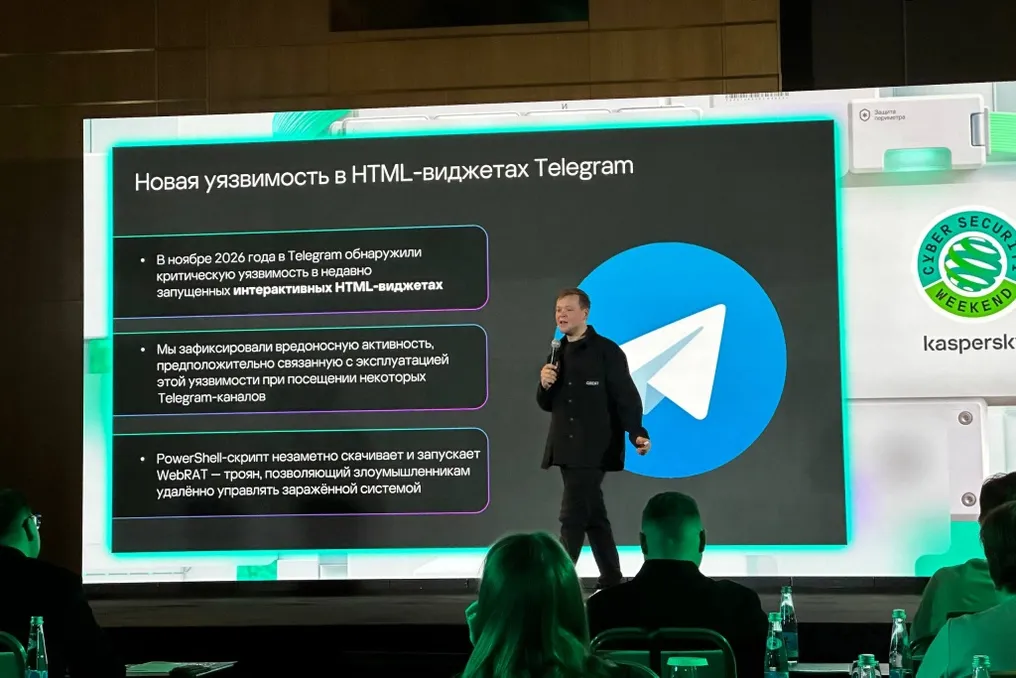
According to data presented at the Kaspersky CyberSecurity Weekend 2026 event in Tashkent, in the third quarter of 2026, the number of such attempts exceeded the figures of the first quarter of 2025 by more than threefold. It is important to note that blocking an attempt to open a dangerous website by security software does not guarantee that the user has not become a victim of fraudsters.

How the deception is carried out

One of the most common methods of deception involves emails mimicking messages from employers or well-known online services. During internal audits in Uzbek companies, it was found that 13% of staff clicked on links in emails concerning the alleged expiration of a password. Furthermore, 7% of employees responded to a notification about the approval of a ChatGPT work account, and another 6% responded to a message about alleged incorrect use of medical insurance.

These scenarios were part of controlled testing aimed at assessing employee susceptibility to fraud schemes, so the results obtained do not indicate actual account breaches.

Use of new technologies in fraud

Konstantin Isakov, a cybersecurity expert, reported on another tactic: attackers sent messages promising compensation payments. To increase trust, they used the legitimate Google service, but the links could lead to fake web pages.

Experts also note that fraudsters actively use artificial intelligence to create convincing messages free of grammatical errors. Consequently, even a well-written email should not be considered safe if it suddenly requires clicking a link, providing a password, or confirming bank card details.

Recommendations for users and companies

Valery Zubanov, Managing Director of Kaspersky Lab in Kazakhstan, Central Asia, and Mongolia, emphasized that companies must not only purchase protection tools but also conduct employee training on security rules. Specialists advise ordinary users to always check the website address and never enter passwords or SMS codes via links contained in suspicious messages.

Previously, Telegram users received warnings about fake notifications requiring them to undergo a 'security check' within twelve hours; in reality, such messages are used to steal accounts.

Popular