
The Uzbek stage of the international hackathon 'NASA International Space Apps Challenge – 2026' took place in the IT Park building in Fergana city.
Similar stories
Ten Winners Visit NASA Space Center
The national stage of the 'NASA International Space Apps Challenge 2026' has concluded in Uzbekistan.
Ten winners of this event are planning to visit the NASA Space Center.
Voyager 1 probe will reach one light-day distance from Earth; NASA invites public to commemorative events
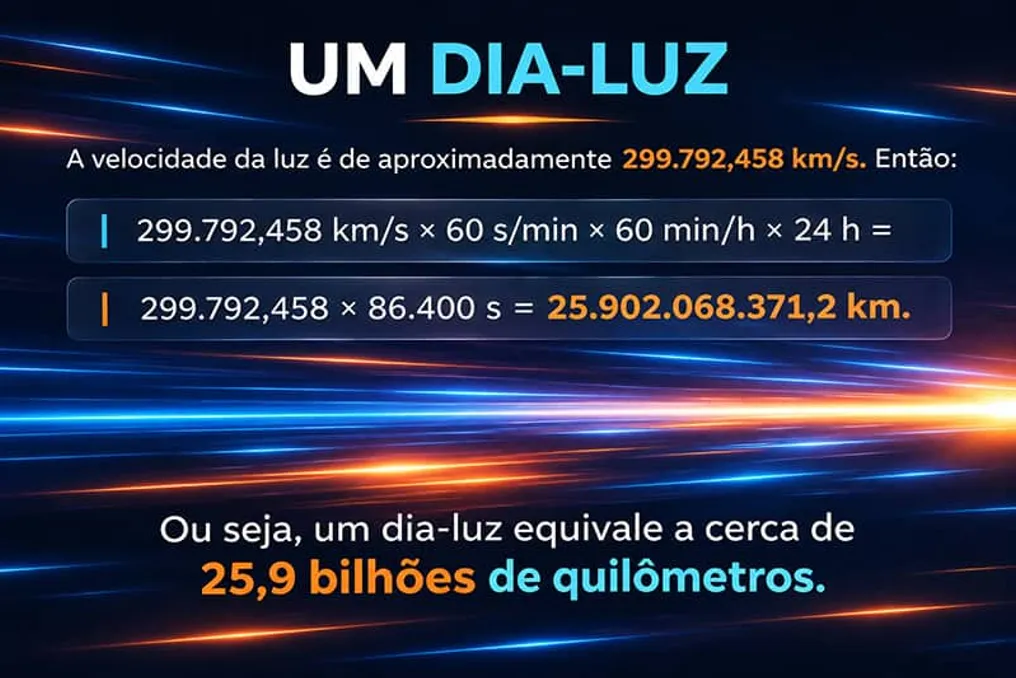
The Voyager 1 probe, launched by NASA in 1977, is about to reach a historic milestone in space exploration: for the first time, a human artifact will be at a distance equivalent to one light-day from Earth, which corresponds to approximately 25.9 billion kilometers.
One light-day is defined as the distance light travels in 24 hours in a vacuum. This concept follows the logic of the light-year, an astronomical unit known for the distance light travels in a year. Considering that light travels at about 300 thousand kilometers per second, one light-day is equivalent to about 25.9 billion kilometers.
Since its launch on September 5, 1977, Voyager 1 has been exploring space. It is currently located at about 173 astronomical units (AU) from Earth, making it the first spacecraft to pass through the heliosphere, cross the heliopause, and enter interstellar space. An astronomical unit represents the average distance between the Earth and the Sun, which is 149,597,870.7 km, placing Voyager 1 at a distance of 25,882,237,241 km at this moment.
At its current position, signals transmitted from Earth take 23 hours, 58 minutes, and 54 seconds to reach the probe. With its current speed of approximately 61,155 km/h, it is estimated that about seven days remain until Voyager 1 reaches the distance corresponding to 24 hours of light travel.
To celebrate this achievement, NASA has organized two special events and invited people from around the world to participate in the celebrations.
The first event, scheduled for Tuesday (17th), consists of a symbolic action to represent the trajectory of Voyager 1. Called 'Shine Brightly for Voyager Light Day,' the initiative aims to generate a wave of golden light around the planet after sunset, which will reach the spacecraft when it reaches the historic milestone. To participate, interested parties must access a specific website, which allows smartphones and tablets to be converted into light signals with the inscription 'VGR,' which is Voyager's call code in Morse code. NASA encourages participants to record and share photos or videos of this action on social media, using the agency's official tag, @NASA.
The second event will take place on Thursday (19th) at 12:00 PM Eastern Time (equivalent to 2:00 PM in Brasília), at NASA's Jet Propulsion Laboratory (JPL) located in Southern California. The program will include a panel discussion with mission members and space agency representatives.
According to NASA, the discussion will cover the current status of the Voyager 1 and Voyager 2 probes, ongoing scientific discoveries in interstellar space, and the challenges of keeping spacecraft operational for long periods and at great distances. Following the debate, there will be a question-and-answer session with the press.
The agenda also includes a preview of a documentary about the Voyagers, produced by NASA+, the agency's streaming service. The release of this documentary is scheduled for 2027, coinciding with the mission's 50th anniversary.
Confirmed participants include Nicky Fox, Associate Administrator of NASA's Science Mission Directorate; Jonathan Lunine, Chief Scientist at JPL and Planetary Science Professor at the California Institute of Technology (Caltech); Suzanne Dodd, Voyager Project Manager; Linda Spilker, Voyager Project Scientist; Kareem Badaruddin, Mission Manager, and Jamie Rankin, Deputy Project Scientist, affiliated with Princeton University.
Even though it is billions of kilometers from Earth, Voyager 1 continues to transmit data to NASA via a high-gain antenna that directs radio signals to the planet. These electromagnetic waves travel at the speed of light, but the journey between the spacecraft and Earth takes almost 24 hours.
This implies that any command sent from Earth takes approximately one day to reach the probe, and a subsequent response requires a similar interval. Consequently, a complete round-trip communication can take almost 48 hours.
The capture of this data depends on large antennas installed on Earth, designed to receive extremely weak signals. The equipment processes these transmissions to recover the scientific information sent by the spacecraft. The signal transit time is also used by NASA to calculate the exact location of Voyager 1, since the speed of light is known.
In 2012, Voyager 1 crossed the heliopause, which is the boundary of the heliosphere, a region shaped by the influence of the solar wind, thus becoming the first spacecraft to enter interstellar space. However, crossing this boundary does not necessarily define the end of the Solar System, as there is no single established limit. One interpretation suggests that the limit extends to where the Sun's gravitational pull is still felt. From this perspective, the boundary is located beyond the Oort Cloud, a distant area containing icy bodies. According to NASA, the Voyager probes will still take about 40 thousand years to reach this limit, covering a distance equivalent to approximately two light-years.
NASA's Swift Space Observatory Completes Mission After 22 Years of Operation
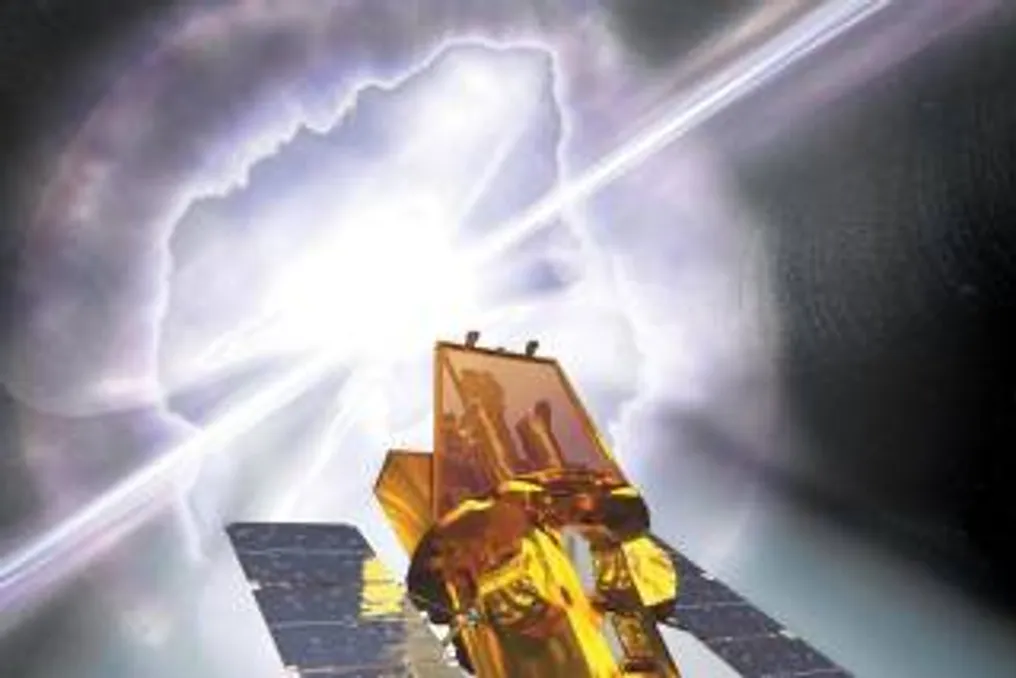
The Swift Space Observatory from the U.S. National Aeronautics and Space Administration (NASA) has completed its mission after 22 years of productive activity.
This was reported by the Turkish news agency Anadolu.