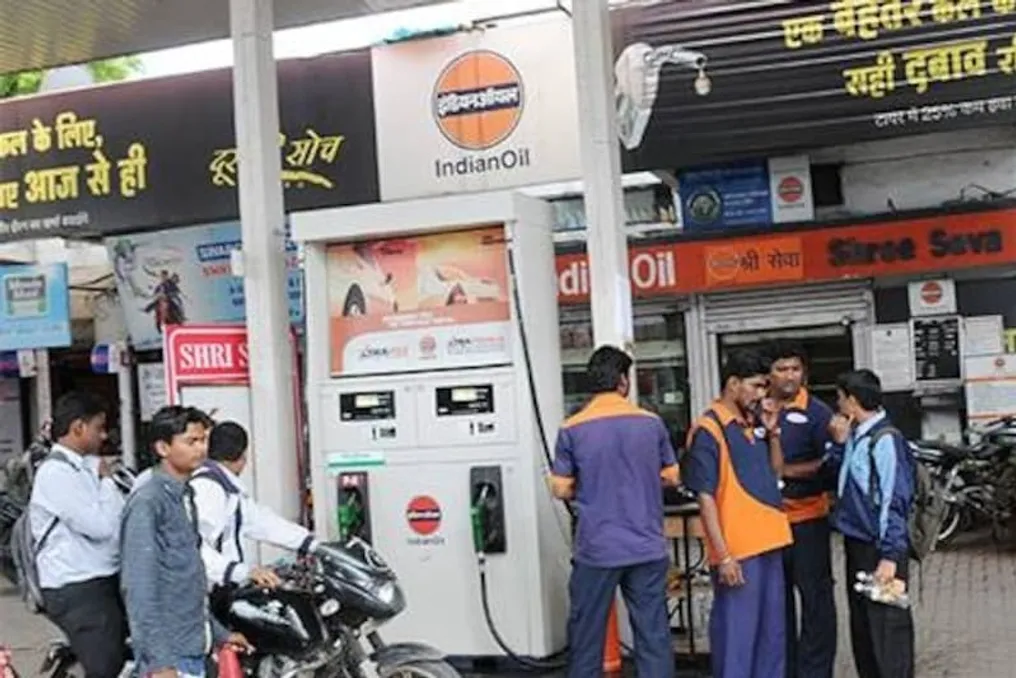
Union Minister Suresh Gopi states that immediate reduction in diesel fuel prices is impossible
Read more
The times of India
timesofindia.indiatimes.com

Union Minister Suresh Gopi states that immediate reduction in diesel fuel prices is impossible

Union Minister Suresh Gopi stated that an immediate reduction in gasoline and diesel fuel prices is impossible due to losses incurred by oil companies amounting to 42,000 crore rupees and disruptions in fuel supplies.

Gopi noted that the oil companies have suffered losses of 42,000 crore rupees, which complicates an instant price reduction. He emphasized that any relief through lower retail prices must account for these accumulated losses.

Addressing reporters at Minamakkam airport, the minister said: 'We can wish for prices to drop the next day. But technically, it is not possible right now. Oil companies have already incurred losses of 42,000 crore rupees. All of this must be compensated.'

He suggested that state governments could provide support by reducing gasoline taxes. Mentioning the recent price hike, Gopi noted that fuel has become more expensive in both Kerala and Karnataka, but he could not explain the price increase in Tamil Nadu.

The minister also raised the issue of difficulties in the availability of petroleum products, stating that the government is working to resolve these issues. He said: 'There is chaos in the supply of petroleum products. We are doing everything necessary to fix it.'

These supply problems arise against the backdrop of the conflict in the Middle East and its impact on energy markets. It is worth noting separately that MB Patil, the Minister of Industry of Karnataka, accused the Centre of exacerbating the crisis in the ethanol sector by setting higher blending targets without ensuring sufficient procurement volume. He argued that the government refuses to purchase even 20-30 percent of the produced ethanol and called for an investigation into alleged violations of the blending program.

Similar stories

Pakistan lowers gasoline prices by 3 rupees; diesel fuel remains unchanged
Read more
www.aajtak.in

Pakistan lowers gasoline prices by 3 rupees; diesel fuel remains unchanged

The government of neighboring Pakistan has made a significant decision that will bring relief to ordinary citizens by lowering the cost of gasoline. According to the new amendments, the price of one liter of gasoline in Pakistan has dropped to 325 Pakistani rupees. Meanwhile, the government under Shahbaz Sharif decided to keep the prices of diesel fuel at the previous level.

These new tariffs came into effect on November 18. A Don report, based on a notification issued by the Oil and Gas Regulatory Authority (OGRA), notes that this is the eleventh round of gasoline price reductions in the country. Currently, gasoline costs 325 Pakistani rupees per liter, while the price of high-octane diesel fuel is 358 Pakistani rupees per liter.

The main reason for the sharp rise in gasoline and diesel fuel prices in Pakistan was the war between the US and Iran. Before the conflict, on February 28, the cost of one liter of high-octane diesel fuel was 281 rupees, but by April 3, when the conflict peaked, the price rose to 520.35 rupees. Similarly, before the military actions, the price of gasoline was about 260 rupees per liter, and on April 3, it reached 458.41 rupees.

The government of Pakistan, led by Shahbaz Sharif, levies substantial taxes on gasoline and diesel fuel. According to Don, a tax of 114 rupees per liter is imposed on gasoline, and 100 rupees per liter on diesel fuel. However, international oil prices have decreased following the increase in crude oil and fuel reserves in the US.

As part of the Fuel Relief Scheme, announced on November 2nd for 30 days, refineries will contribute to excise duties, allowing the government to reduce gasoline prices for consumers by up to 14.71 rupees per liter. Furthermore, after the escalation of the situation in the Middle East, a fuel subsidy was launched by the government on September 17, which applies to motorcycles, rickshaws, and vehicles with engines up to 800 cubic centimeters.

The decline in global crude oil prices occurred on Wednesday morning after US data showed an increase in crude oil and fuel reserves for the previous week. Nevertheless, the decrease was partially offset by attacks related to the US and Iran, as well as disruptions in shipping through the Strait of Hormuz.

On the global market, Brent Crude traded around $92 per barrel, WTI Crude Oil Price was $83 per barrel, and Murban Crude Oil Price reached $91 per barrel. The price of natural gas decreased and trades at $3.347.

Dealers Insist on Increased Commissions for LPG and Gasoline-Diesel; Possible Price Hikes for Cylinders and Fuel
Read more
www.aajtak.in

Dealers Insist on Increased Commissions for LPG and Gasoline-Diesel; Possible Price Hikes for Cylinders and Fuel

LPG distributors are demanding an increase in commissions for 14.2 kg domestic cylinders from the current 73 rupees to the level of 120–150 rupees. Gas station dealers have also requested an additional margin of 1.50 rupees per liter of gasoline and 2.50 rupees per liter of diesel fuel. Amid rising operating costs, dealers have appealed to the Ministry of Oil and state oil companies, demanding a review of commission rates.

Consumers are closely monitoring prices for gas cylinders and fuel, and now that the dealers responsible for their supply have activated their demands for increased commissions. LPG distributors want to raise their commission for a 14.2 kg domestic cylinder from the current 73.08 rupees to 120–150 rupees. Furthermore, gas station operators are pushing for a 30–40 percent increase in their margin.

According to industry sources, dealers have presented their demands to the Ministry of Oil and Natural Gas, as well as to the state oil companies (OMCs). They argue that due to the constant rise in costs for staff salaries, electricity, maintenance, and other operational expenses, conducting business at the current commission levels is becoming difficult.

The dealers have demanded changes to commissions for both LPG and gasoline-diesel. LPG distributors insist on raising the commission for a 14.2 kg LPG domestic cylinder from 73.08 rupees to 120–150 rupees, which would be an increase of about 47 rupees if proposed at 120 rupees and about 77 rupees if proposed at 150 rupees. As for gasoline and diesel dealers, they are seeking an overall commission increase of 30–40 percent, which includes a request for an additional margin of 1.50 rupees per liter of gasoline and 2.50 rupees per liter of diesel fuel.

Dealers point out that the operating costs for gas stations and LPG agencies have significantly increased over the past few years. This has been driven by rising employee wages, increased electricity costs, maintenance, and other necessary services. Gas station operators also have to provide free services to customers, such as tire inflation. In the LPG sector, distributors' business and margins are also under pressure due to mandatory e-KYC procedures and the expansion of PNG connections. Industry sources believe that the commission has not been adequately adjusted compared to the rise in costs, prompting dealers to demand a margin increase from the government and oil companies.

According to official data from the Petroleum Planning and Analysis Cell (PPAC), the last revision of the commission for domestic LPG distributors took place on October 4, 2023. At that time, the commission for a 14.2 kg cylinder was increased from 64.84 rupees to 73.08 rupees, and for a 5 kg cylinder—from 32.42 rupees to 36.54 rupees. The last adjustment of the margin for gasoline and diesel dealers occurred on December 1, 2024, although changes were also made on October 30, 2024.

If the dealers' demands are met, it will lead to increased additional costs for oil companies in the form of commissions. However, it is not yet determined whether this burden will be directly passed on to consumers. The government and oil companies need to make a separate decision on this matter. Therefore, an increase in commission itself does not automatically mean a price hike for gasoline, diesel, or domestic gas. Currently, the Ministry of Oil or state oil companies have not made any official statements regarding commission increases and subsequent price rises for gasoline, diesel, or domestic gas cylinders.
Popular