
Tickets for Mzansi Young Farmers Indaba 2027 available at special Black Friday prices
Read more
Food For Mzansi
foodformzansi.co.za

Tickets for Mzansi Young Farmers Indaba 2027 available at special Black Friday prices

During Black Friday, while shoppers are buying televisions and air fryers, young farmers can take advantage of a more favorable offer—early bird tickets for the Mzansi Young Farmers Indaba 2027. The early purchase offer expires definitively on Friday, December 5, 2026.

The event is scheduled for Wednesday, March 31, and Thursday, April 1, 2027, in Pretoria. It will bring together young farmers from nine provinces with representatives of agribusiness, financiers, retailers, and policymakers who shape this sector.

The Indaba 2027 program focuses on two critical issues for young farmers: regenerative agriculture and climate change. Participants can expect presentations from leading speakers over two days, including discussions, panel debates, and practical sessions dedicated to improving soil health, adapting to changing climates, and establishing sustainable farms.

Ivory Price, co-founder and managing director of Food For Mzansi, notes: 'At Food For Mzansi, we practice farming with the heart and mind of people, and that is where it comes to life. Young farmers and agro-processors from all corners of the country come to Pretoria to learn, be noticed, and do business.' He emphasizes that regenerative agriculture and climate change are not abstract topics for them, but a daily reality on their farms. Therefore, he advises against buying gadgets this Black Friday and instead investing in attending the Indaba, which will yield returns.

Mzansi Young Farmers Indaba 2027 also functions as a trade platform, providing young farmers and agro-processors with an opportunity to meet people who can help them develop their businesses. Delegates can connect with:

  • Banks and development finance institutions offering loans and banking services for farmers and agro-processors.
  • Embassies and diplomatic missions within the international agricultural exhibition.
  • Agri-tech companies showcased in the agri-tech pavilion with farm tools.
  • FMCG companies interested in integrating farmers and agro-processors into their supply chains.
  • Insurance companies within the insurance exhibit.

By purchasing a ticket before December 5, participants receive a two-day early bird ticket for only 595 rand, a reduction from the standard price of 765 rand. This is a saving of 170 rand (22%), amounting to less than 300 rand per day for two full days of learning, networking, inspiration, and real business opportunities. Additionally, organizations, educational institutions, and farmer groups can book packages of 10 or 20 seats.

Similar stories

According to Vastu, there are five places in the house where food should not be eaten, as this can lead to poverty
Read more
www.aajtak.in

According to Vastu, there are five places in the house where food should not be eaten, as this can lead to poverty

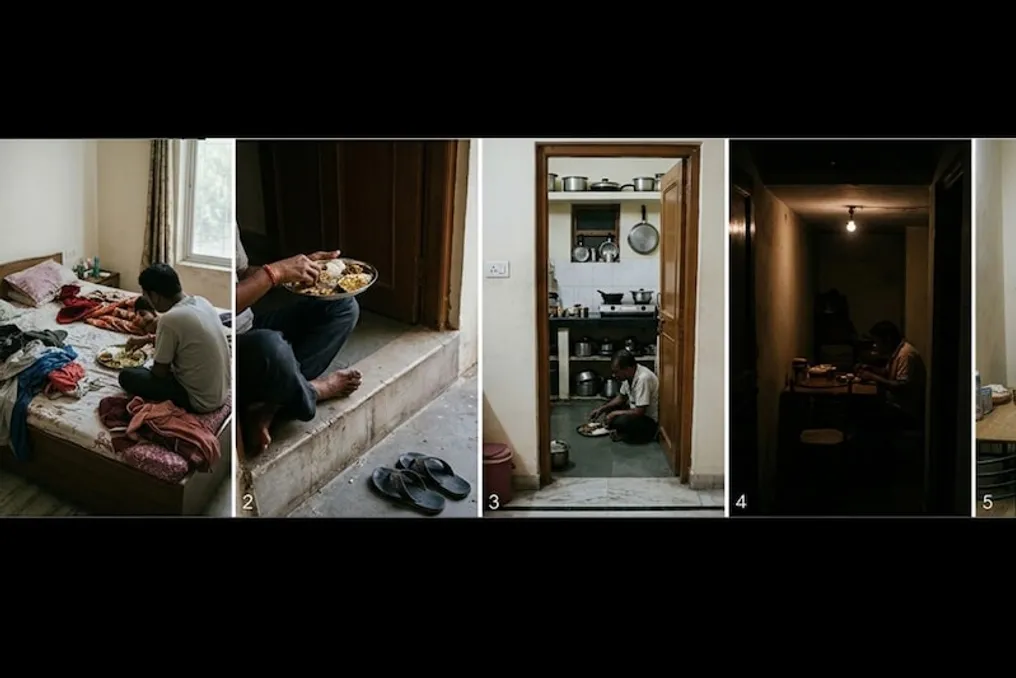
When choosing a place to eat, people often rely on personal convenience: some eat while watching TV, sitting in bed, while others rush and start their meal near the kitchen threshold or door. However, Vastu Shastra has specific rules regarding where one should eat.

According to Vastu principles, eating is viewed not just as a way to satisfy hunger, but also as a connection with food and the goddess Annapurna. This is why it is recommended to pay close attention to cleanliness, direction, and the surrounding environment while eating. There is a belief that an improper place for a meal can negatively affect the positive energy of the home. Below are five places where one should refrain from eating.

1. Do not eat in bed

The modern pace of life has led many to get used to eating while in bed, especially when watching television or using a mobile phone. Nevertheless, Vastu does not approve of this habit. Since the bed is associated with rest and sleep, eating there can negatively impact the positive atmosphere in the home. Some religious beliefs link this to financial difficulties and mental distress. Furthermore, there is a risk of crumbs falling onto the bed during meals, creating mess.

2. Do not eat near the main entrance of the house

The main entrance of the house is considered extremely important in Vastu. It is believed that positive energy and prosperity enter the dwelling through this spot. Therefore, having a meal at the main entrance threshold is not considered auspicious. According to religious beliefs, such behavior can negatively affect the family's peace and financial situation. Consequently, one should choose a place for eating with minimal foot traffic where one can sit comfortably.

3. Do not eat at the kitchen threshold

The kitchen in the home is revered as the place of the goddess Annapurna, as this is where food is prepared, so cleanliness and order in this area are very important. Vastu advises against eating in the doorway or threshold of the kitchen. According to beliefs, eating at the threshold can disrupt the home's energy balance. Moreover, sitting near the kitchen doorway can create obstacles to movement. It is best to designate a specific place for eating, either inside the kitchen or in the dining room.

4. Do not eat in dark or dimly lit places

Vastu also requires adequate lighting during meals. Eating in the dark or in poor light is undesirable. It is believed that such an environment can intensify feelings of anxiety and negativity in the soul. From a practical standpoint, sufficient lighting facilitates control over the quality and hygiene of the food. Therefore, try to eat where it is bright and where the surroundings remain clean.

5. Do not eat near the bathroom

According to Vastu, eating near a bathroom is also considered inauspicious. The bathroom is associated with personal hygiene and cleanliness, so the eating area should be separate from it. In religious views, this is seen as a contradiction to food purity. Additionally, from a health and sanitation perspective, it is better to avoid eating near the bathroom.

Vastu pays attention not only to the location but also to the direction one faces while eating. According to beliefs, it is most favorable to sit during a meal facing east or north.

  • East: Facing this direction is considered good for health and a positive mood.
  • North: In Vastu, the north is associated with well-being and positive energy.
  • South: Some Vastu principles recommend avoiding the direction where one faces south.

Additional eating recommendations

Besides Vastu rules, there are other useful habits related to nutrition. Hands must be washed before eating, and the eating area must be kept clean. One should avoid using cracked or broken dishes. Food should be placed on a plate or dish, and one should eat while sitting comfortably. During meals, mobile phones and televisions should be kept away to fully concentrate on the food.

How to make Ragi Mudde from rice flour and clarified butter, a traditional dish of Karnataka
Read more
www.aajtak.in

How to make Ragi Mudde from rice flour and clarified butter, a traditional dish of Karnataka

South Indian dishes are valued worldwide for their unique spices, lightness, and nutritional value. Although many are familiar with idli and dosa, you may never have tried the famous Ragi Mudde from Karnataka. Despite its seemingly simple appearance, this traditional dish boasts an excellent taste and is a rich source of nutrients. If you consume ragi or wish to include it in your diet, we offer a simple recipe.

Ragi Mudde:

The following ingredients are required to prepare this dish: 1 cup of ragi flour, 2–2¼ cups of water (use twice as much water as flour for accurate measurement), 1 teaspoon of ghee or oil, and salt to taste (about ¼ teaspoon).

The cooking process begins by mixing 2 tablespoons of ragi flour with about half a cup of cold or regular water in a bowl, whisking the mixture thoroughly until all lumps are gone. Then, in a heavy-bottomed pot, pour the remaining water, add salt and ghee. When the water starts to boil, gradually pour in the prepared suspension while stirring constantly to prevent lumps from forming.

After the mixture boils again, reduce the heat and begin evenly sprinkling the remaining dry ragi flour on top. After this, cover the pot and let it cook over low heat for 4–5 minutes. Then, remove the lid and vigorously and thoroughly mix the dough with a whisk or wooden spoon until all the flour comes together into a single mass and stops sticking to the sides of the pan. Turn off the gas and leave the mixture covered for another 2–3 minutes.

When the mass cools slightly (to a temperature that can be touched by hand), apply a little water or ghee to your palm. Gently moisten the dough, shaping large round balls resembling flatbreads.

How to make imarti: A recipe for crispy and juicy lentil and ghee dessert
Read more
www.aajtak.in

How to make imarti: A recipe for crispy and juicy lentil and ghee dessert

If you want to treat yourself to something sweet and delicious on the weekend, we offer a simple recipe for juicy and crispy lentil imarti that you can make at home. This traditional Indian sweet, made from lentils, has a crispy crust on the outside and is filled with syrup inside.

Many believe that the perfect shape and crunch, like in halwa, are only available in stores, but this is not true. Using only lentils and ghee, without chemicals, colors, or molds, you can create perfectly juicy imarti at home.

The following ingredients are required for preparation: 1 cup of white split lentils (soaked for 4-5 hours), 1 tablespoon of arrowroot or cornstarch (for crispiness and binding), a pinch of food coloring or saffron (optional), ghee for frying, 2 cups of sugar (for the syrup), and 1 cup of water. You will also need 1/2 teaspoon of green cardamom powder and 1/2 teaspoon of lemon juice to prevent the syrup from crystallizing.

To achieve the perfect result, the lentils must be thoroughly ground, completely drained of liquid, and made into a very smooth puree with minimal water. Then, add 1 teaspoon of arrowroot to the dough and knead by hand in one direction for 8-10 minutes. The dough is ready when it becomes light and starts floating in water. It is important that the syrup is sticky and has a single thread; adding lemon juice to the syrup prevents the sugar from crystallizing.

First, bring 2 cups of sugar and 1 cup of water to a boil in one pot. Add the cardamom powder, saffron, and 1/2 teaspoon of lemon juice to prepare a single-thread syrup, then turn off the heat.

The prepared lentil dough should be placed in cheesecloth with a small hole or a pastry bag. Heat the ghee in a wide (flat) pan over medium heat. Form rings from the bag, making circular motions in the oil to achieve the imarti shape.

Fry the imarti over medium or low heat until golden and crispy on both sides. Immediately remove the hot imarti from the pan and dip them in slightly warm syrup for 2-3 minutes to absorb the juice.

After removing them from the syrup, serve the juicy imarti both hot and cold.

Popular