In Assamese village, forest spiders are fried in mustard oil and served as a seasonal delicacy
Read more
The Better India
thebetterindia.com

In Assamese village, forest spiders are fried in mustard oil and served as a seasonal delicacy

For Bhupen Rabhi, an elder of the village in Assam, consuming spiders is part of a food tradition he grew up with. He recalls how his parents and grandmothers collected large, hairy spiders from nearby forests, brought them home, and prepared them as a seasonal delicacy.

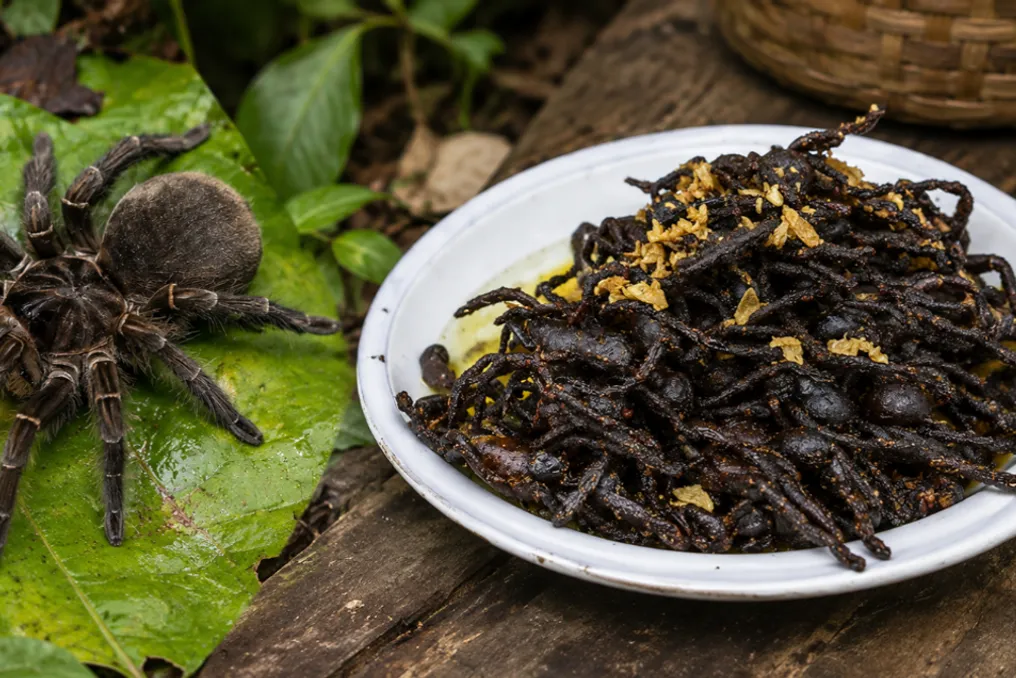
The spider, known locally as Bhaluk Makara, is the Indian black ground tiger spider (Lyrognathus crotalus)—a species of tarantula inhabiting Northeast India. Annually, between April and June, members of the indigenous Rabha community in the Kamrup (Agriculture) district of Assam collect these spiders from underground burrows along the edges of Sal forests.

After collection, the spiders are washed, soaked in hot water, and then fried in mustard oil with added salt and garlic powder. Traditionally, this dish is accompanied by local rice beer.

The reason for this consumption lies in long-standing knowledge of nutrition, the seasonal availability of spiders, and the close connection of the community to the surrounding forest environment. In August 2026, a study published in Proceedings of the Zoological Society first documented the consumption of this spider species in scientific literature. The study allowed for a deeper examination of how this culinary tradition is preserved from generation to generation, while also raising important questions about species conservation.

How are these forest spiders collected and prepared?

The village of Muman, located about 65 kilometers southeast of Guwahati, is home to members of the Rabha community who live near forests dominated by Sal trees. Here, Bhaluk Makara resides in underground burrows. Its local name reflects its appearance: Bhaluk means bear, referring to the large black body of the spider covered in thick fur, and Makara means spider.

To understand the community's relationship with this species, researchers Jotiprakash Bora, Kuldip Bora, Chandramita Bora, and Samir Terdalkar conducted fieldwork from April to June 2025. They surveyed 34 members of the Rabha community, including village elders and experienced collectors, to ascertain the timing of spider collection, their preparation methods, and how this practice was passed down.

According to residents, spiders are particularly abundant in April and May, making these months preferred for collection. Collectors usually go into the forest for three or four days a month during peak season. Depending on availability, one trip can yield about 20–30 spiders. Finding them requires good knowledge of the forest. Collectors locate burrows at the forest edges and either carefully dig the earth or insert a wooden stick to encourage the spider to emerge.

After collection, the spiders are brought home, washed, and repeatedly soaked in hot water for several minutes. They are then fried in mustard oil for about seven to ten minutes until golden brown, adding salt and garlic powder for flavor. For families who have followed this practice for generations, collecting Bhaluk Makara involves knowledge of the spider's habitat, its seasonal availability, and preparation methods learned from elders.

Why does the Rabha community eat spiders for generations?

For the Rabha community, Bhaluk Makara is part of a broader food culture closely linked to the surrounding forests. Agriculture is an important source of livelihood, while fishing, animal husbandry, weaving, and gathering forest resources are also part of the community's life. Rice is the staple food, accompanied by fish, meat, vegetables, and wild edibles gathered locally. Bhaluk Makara fits into this tradition of preparing foods available in the local environment.

This practice has been passed down through generations: older family members taught younger ones where to find spiders and how to prepare them. Bhupen Rabhi told Mongabay India that this tradition was transmitted orally within the community. He recalled: 'Spiders were regularly collected and eaten by our parents and grandmothers as a seasonal delicacy.'

And this tradition continues among the younger members of the community. Ashok Rabha, a spider collector just over twenty years old, described collecting spiders as a pleasant shared experience and 'a kind of ritual initiation.' For him, searching for burrows, collecting spiders, and eating them together is also a way of participating in a practice learned from previous generations.

Rohini Kumar Nongbag, another experienced collector, told Mongabay India that young people continue to collect spiders in pre-monsoon months. These accounts show that the practice remains part of community life, not just a memory of older generations. However, researchers note that this tradition may be limited to certain Rabha villages and households, rather than being observed by the entire community.

Similar food practices have been documented in other parts of Northeast India. In March 2026, a study published in Frontiers in Sustainable Food Systems recorded the consumption of two species of orb-weaver spiders among indigenous communities in Nagaland. Locals call them Siyankiyu in the Lotha Naga language; these spiders are prepared using ingredients such as ginger, chili, and bamboo shoots. Researchers surveyed 33 people and found that knowledge of spider collection and preparation was also passed down through generations. Although the species and recipes differ, both studies demonstrate how traditional food practices are connected to local biodiversity and the knowledge developed by the community over time.

Can this food tradition continue with spider protection?

Although the August 2026 study documented an established food tradition, it also highlighted how much remains unknown about the species. In the Rabha community, Bhaluk Makara is considered a nutritious seasonal product, but its nutritional composition has not yet been determined by laboratory tests. Researchers also found no reports of medicinal use of the spider among the surveyed community members.

Another important question concerns the spider population. Some collectors believe the species remains as numerous as before. Manoj Rabha, who has been collecting spiders for about 12 years, told Mongabay India that he has not noticed a significant decline. According to him, experienced collectors can still gather up to 30 spiders in one trip. However, these observations have not yet been confirmed by scientific population studies.

Jotiprakash Bora, a wildlife researcher and fellow at Ferguson College in Pune, explained to Mongabay India that the researchers did not conduct an independent assessment of the spider population or abundance. Scientists still need to understand how many spiders inhabit these forests, how fast they reproduce, and whether repeated collection affects their numbers. This is especially relevant because some tarantula species grow slowly and require many years to reach maturity, potentially making them vulnerable to over-harvesting.

It is important to note that the study does not establish that the existing collection methods of the Rabha community are harming the spider population. Instead, researchers called for further study of the species' ecology, population dynamics, nutritional composition, and conservation status before drawing conclusions about sustainability. For Bhupen and other members of the Rabha community, Bhaluk Makara remains a familiar seasonal product associated with the forests around their villages and the knowledge they inherited. The new research brings this knowledge into the scientific sphere, opening opportunities for a better understanding of the spider and its habitat. It also underscores the importance of documenting indigenous food practices through the experiences of those who practice them to better understand and protect both their cultural knowledge and the associated biodiversity.


Similar stories

SARAS 2026 Food Festival in Delhi Offers Dishes from All Over India, From Ragi Siddu to Floral Tea
Read more
www.aajtak.in

SARAS 2026 Food Festival in Delhi Offers Dishes from All Over India, From Ragi Siddu to Floral Tea

Residents of Delhi planning to spend the weekend with an unusual gastronomic experience can visit Sundar Nursery, where the SARAS Food Festival 2026 is taking place. At the event, visitors are given the opportunity to taste traditional dishes from various states of India.

The festival features tastes from different corners of the country: whether it's Siddu from Himachal, Min-kari from Kerala, floral tea from Nagaland, or Mawa Kachori from Rajasthan. It is an ideal place for culinary lovers who wish to get acquainted with the traditional cuisine of different regions.

A feature of this festival is that one can find not only popular street foods but also rare traditional treats that are difficult to find in ordinary Delhi restaurants. Furthermore, at stalls organized by women's groups from villages, local handicrafts and souvenirs can be purchased.

Tasting Three Types of Siddu from Himachal

Those waiting for the opportunity to taste Siddu from Himachal Pradesh in Manali or Shimla can enjoy this dish right in Delhi. Three varieties of Siddu are available at the Himachal stall. Siddu is a traditional dish made by steaming dough filled with walnuts and served with sauce. The sauce gives the dish a special flavor, and it is worth trying for all connoisseurs of mountain cuisine.

In addition to Himachali Siddu, visitors can try special Masala Alu from Uttarakhand. These spicy boiled potatoes are served with cucumber raita. If you have tried Jackhiya Alu from Uttarakhand, you will like this dish too.

Enjoy Floral Tea from Nagaland

After the meal, you can choose something unusual to drink, such as Roshol Tea from Nagaland. Its uniqueness lies in the fact that it is made from flowers. Hot floral tea on a cool evening is a special pleasure, especially for those who want to move away from usual coffee or tea.

Kappa with Min-kari and Tuna Fry from Kerala

Seafood lovers should visit the Kerala stall. There, they can try dishes such as Malabar Parotta, Kappa with Min-kari, and Tuna Fry. Kappa, or tapioca (cassava), is prepared according to a special Kerala recipe and served with fish curry. Tuna Fry consists of fish fried in spices.

Special Traditional Dishes of Rajasthan

The Rajasthan stall features numerous well-known traditional dishes. Among them are Dal Baati Churma, Piyaz Kachori, and the famous Mawa Kachori from Jodhpur. Mawa Kachori is stuffed with cottage cheese and dried fruits, then fried and dipped in sugar syrup. For sweet lovers, there are also options of Ghevar and Rabri-Jalebi.

Must Visit If You Love South Indian Cuisine

Special offers are provided for connoisseurs of South Indian cuisine. At the Karnataka stall, you can find Neer Dosa, which is served with chutney made from black lentils, coconut, and chili. Hyderabad Dum Biryani and kebabs from Telangana are also available.

Try Dishes from Goa and Other States

The Goa stall offers shrimp samosas that will appeal to seafood lovers. Additionally, you can try Kaladi Kulcha from Jammu and Kashmir, filled with traditional Dogra cheese and vegetables, as well as Chila-phara from Chhattisgarh. Puran Poli from Maharashtra and Kakara Phita from Orissa are also available.

When and How to Get to Sundar Nursery?

If you plan to visit this festival, you will have the opportunity to do so in December. The event takes place at Sundar Nursery from November 21 to December 8, 2026. Entry to the festival itself is free, but a ticket to Sundar Nursery park must be purchased. The ticket price for adult Indian citizens is 50 rupees. Sundar Nursery is conveniently accessible from JLN Stadium and Jangpura metro stations.

Safari launches in Tapti reserve in Baitul (Madhya Pradesh), where antelope and birds will be observed
Read more
www.aajtak.in

Safari launches in Tapti reserve in Baitul (Madhya Pradesh), where antelope and birds will be observed

In Baitul, Madhya Pradesh, a new stage of tourism development has begun. As part of the preparations for launching safaris in the first Tapti Conservation Reserve, an initial familiarization tour was conducted on Saturday. Government representatives, officials, and children inspected the natural beauty and tourism potential via safari jeeps along forest trails.

This initiative will not be limited to simple tourist walks; it will also create new employment opportunities among local youth. The tour started in Mahupani and allowed viewing of numerous natural attractions, including the Ghodidev viewpoint, within the forest area spanning about 28 kilometers. As part of this project, the foundation stone was also laid for the safari entrance, ticket counters, and tourist facilities in Mahupani, the construction of which will cost over 42 million rupees.

Tapti Conservation Reserve boasts rich biodiversity, including antelopes, sambar, foxes, and various bird species. It is planned that tourists will be able to enjoy the natural beauty of these forests through jeep safaris in the future.

A key feature of this safari is a program aimed at involving local young people in employment. The Forest Department is training 27 young residents from surrounding villages in safari guide skills. Furthermore, rural families will be integrated into tourism activities through jeep management, driving, and providing guesthouses.

Minister Mohan Yadav announced the allocation of approximately 100 million rupees for the development of the reserve and the creation of a butterfly park. The first familiarization trip to Tapti Conservation Reserve has sparked new hopes for nature tourism in Baitul. Now it remains to see how quickly this safari initiative will turn into regular tourist activity. However, it is evident that if the plans are implemented, the safari can become not only a source of adventure for visitors but also a new means of income for the youth of Baitul.

New Assam rules restrict drone use to protect Amur Falcon migration
Read more
thebetterindia.com

New Assam rules restrict drone use to protect Amur Falcon migration

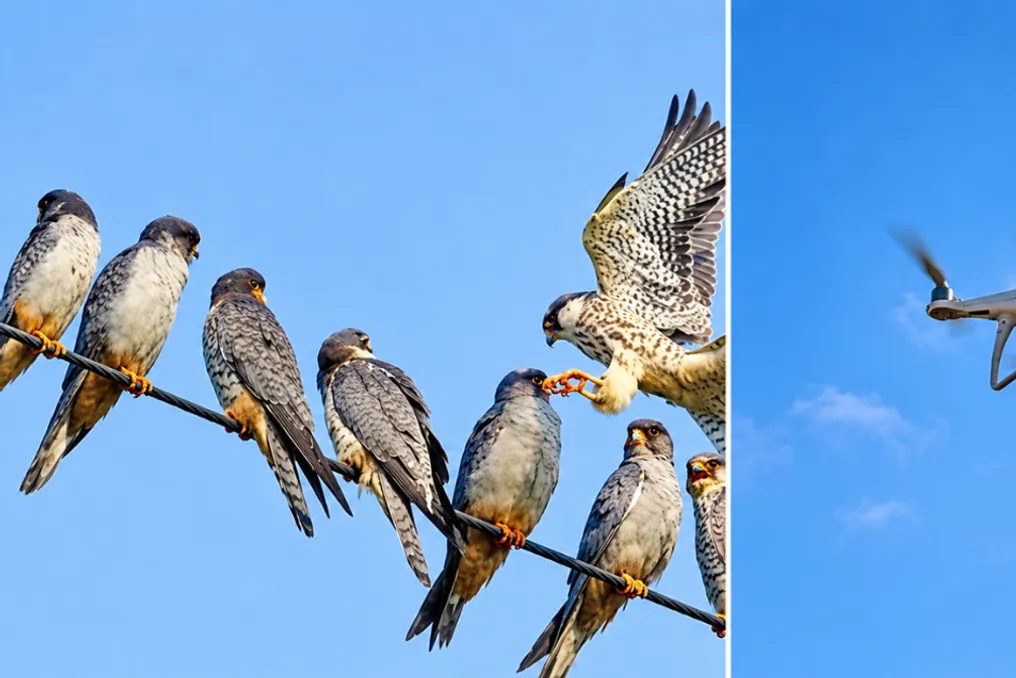
Every winter, the forests of Northeast India become temporary resting places for one of the world's most remarkable migratory bird species. Amur Falcons, which migrate from breeding grounds in Siberia and Northern China, arrive in Assam in October and November to replenish energy reserves before their further journey to South Africa.

This year, as over one hundred thousand of these birds gather in seasonal roosting sites across Assam, the state has introduced restrictions on drone activity near their habitats. On Friday, November 6, 2026, the Assam Forest Department banned unauthorized recreational, commercial, and secondary drone operations around identified Amur Falcon congregation and roosting sites.

These zones include Umrangso in Dima Hasao district and Dharamtul in Morigaon district. It was stated that such restrictions are necessary to ensure the birds' 'undisturbed rest, feeding, and migratory movement.'

A stopover site requiring protection

The importance of these sites was documented in a 2024 study published in the journal Indian BIRDS titled 'Amur Falcons Falco amurensis at Umrongso, Assam: Estimating roost size and monitoring migratory dates.' Researchers Anvarudin Choudhury and Faisal Taiebull observed the Amur Falcon roost in Umrangso, Dima Hasao district, in the autumn of 2022.

Four counters participated in the study, including two trained local assistants who independently assessed the number of birds gathering at the site each night. Researchers recorded the first arrival on October 4, and all birds left the site by December 13. During the second and third weeks of November, the roost counted over one hundred thousand falcons; on November 7, the estimated congregation exceeded two hundred thousand.

It was noted that the birds depend on specific areas with suitable vegetation and abundant food, especially winged termites, to replenish energy during migration. Researchers also pointed out that a previously known roosting site in Habang was abandoned due to human interference.

Scientific data on drones and birds

Concerns related to drone activity are also supported by scientific research. A 2024 meta-analysis titled 'A Meta-analysis of the Impact of Drones on Birds,' published in Frontiers in Ecology and the Environment on October 10, examined 149 peer-reviewed studies on bird reactions to drones.

Researchers found that the probability of birds taking flight in response to drones depends on factors such as the distance between the aircraft and the birds, the drone's speed, the species' body size, and reproductive status. The analysis showed that smaller bird species generally exhibit a higher tendency to flee than larger ones. Faster drone approaches also increased the likelihood of disturbance.

It is important to note that researchers warned that drones should not be automatically considered harmless monitoring tools. While they can help collect wildlife data with less disturbance than some traditional methods, their use requires species-specific precautions and careful flight protocols. For large congregations of Amur Falcons, avoiding unnecessary drone activity can help minimize sudden disturbances during feeding and resting.

Turning conservation into a shared responsibility

The new restrictions also emphasize the importance of monitoring and public awareness. Divisional forest service staff have been tasked with identifying and marking sensitive roosting sites, as well as coordinating with district administrations and police to ensure compliance. Temporary no-drone zones may be declared as necessary under applicable regulations.

Tourists, photographers, content creators, and local communities must also be informed about the importance of keeping these habitats undisturbed. These restrictions will remain in effect during the bird presence season at designated sites or until further notice.

An update reports that all three satellite-tagged Amur Falcons—Apapang (male), Alang (young female), and Ahu (female)—are currently making their daring crossing over the Arabian Sea. Apapang has flown non-stop for 76 hours, covering an average of 3100 km at a speed of 1000 km per day, aided by a strong easterly tailwind. This makes the journey even more unusual, as they are heading to Somalia in their epic 3000 km oceanic flight.

This step followed concerns raised by the conservation organization Aaranyak, which strongly urged authorities to limit drone operations near major congregation sites. The organization welcomed the subsequent order.

There are other signs of progress in understanding and protecting this species. On October 23, two geo-tagged Amur Falcons, Apapang and Alang, returned to Tamenglong in Manipur after completing their annual migration cycle through 23 countries in Asia and Africa. Tracking such birds helps researchers document migration routes and identify habitats needing protection.

As the falcons continue their seasonal passage through Northeast India, Assam's restrictions draw attention to a crucial aspect of migratory bird conservation: protecting not only the birds themselves but also the conditions that allow them to complete their journeys. Keep drones away from sensitive roosting sites, involve local communities in monitoring, and ensure visitors adhere to eco-friendly practices to make these seasonal habitats safer for the birds returning year after year.

Popular