Study shows accelerating the shift to electricity could save India 9.6 lakh crore rupees annually by 2035
Read more
The times of India
timesofindia.indiatimes.com

Study shows accelerating the shift to electricity could save India 9.6 lakh crore rupees annually by 2035

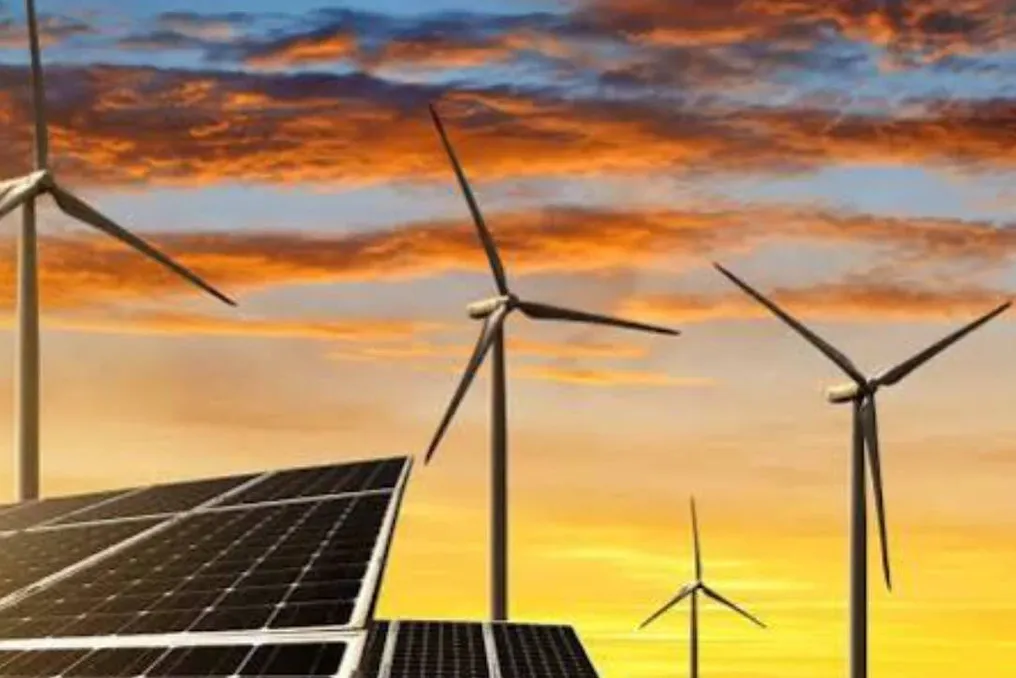
According to a new study, India's dependence on imports of oil, gas, and coal can be significantly reduced by accelerating the electrification process. This could potentially decrease the annual fossil fuel import bill by over 40%, bringing it down to 7.4 lakh crore rupees by the 2035 fiscal year, compared to a projected 17 lakh crore rupees if the current trajectory is maintained.

Such a transition could provide an annual saving of 9.6 lakh crore rupees by 2035, while simultaneously reducing India's vulnerability to global oil price shocks, geopolitical turmoil, and currency fluctuations. The study forecasts that direct fossil fuel import costs could be reduced to zero by the 2045 fiscal year, whereas the status quo scenario anticipates annual import expenditures of 23.3 lakh crore rupees.

The report, titled 'Decoupling from Fossil Fuel Imports: An Accelerated Electrification Scenario for India,' from the research firm Climate Compatible Futures asserts that electrification must go beyond just renewable energy generation and encompass the transformation of energy consumption methods in transport, industry, agriculture, and buildings.

The urgency of this task is underscored by India's recent experience with global energy disruptions. Shipping restrictions through the Strait of Hormuz, which began in February 2026, pushed Brent crude prices above $100 per barrel. Consequently, India's raw oil import bill rose by 48% year-on-year between April and August, and the rupee depreciated by nearly 8% during 2026, reaching a historical low of 96.90 against the dollar.

In the 2026 fiscal year, India spent $174.9 billion on crude oil and petroleum products, accounting for about 22% of total imports. Dr. Manish Ram, director of Climate Compatible Futures, noted: 'Every few years, there is an oil shock somewhere that turns into a rupee crisis at home. We viewed this as a problem to be managed with reserves and interest rate decisions. Electrification allows India to solve this problem at its root.'

The study identifies transport as the most significant opportunity for India to reduce its reliance on crude oil. It estimates that by 2035, 45% of the fuel demand in this sector could shift from fossil fuels to electric power through the use of electric motorcycles, three-wheelers, buses, cars, urban fleets, and delivery vehicles.

By 2045, this figure could reach 93%, with most currently used petroleum products being replaced by electricity, green hydrogen, and bioenergy. For segments that are difficult to electrify directly, sustainable aviation fuel and alternative fuels will be crucial.

The residential and commercial sectors could shift 44% of their fuel demand from fossil sources by 2035. The proposed plan involves a phased abandonment of LPG and natural gas in homes and commercial premises by 2045 through the use of electric kitchen appliances, household devices, and efficient cooling systems.

Agriculture and other sectors could achieve a shift of 47% by 2035 thanks to electric irrigation pumps, agricultural machinery, and reliable rural power supply. As for industry, a reduction of 28% is possible by 2035, and 61% by 2045. Proposed solutions include electric boilers, heat pumps, and furnaces, as well as green hydrogen for steel and chemical production. The study recommends providing subsidized financing and technical support at the cluster level to help micro, small, and medium enterprises (MSMEs) cover the costs of transitioning to new technologies.

This transition will require substantial expansion in clean electricity generation, transmission, distribution, and storage. According to the study, the total energy demand under the accelerated trajectory will reach 15,785 billion units (BU) by the 2045 fiscal year, compared to 13,059 BU in the status quo scenario. The higher demand is partly due to an additional 2,726 BU of electricity needed for green hydrogen production.

The share of electricity in total energy demand could rise from the current 29% to 54% by 2035 and to 76% by 2045. The combination of direct electricity, green hydrogen, and bioenergy could replace about 87% of the fossil fuel demand projected in the status quo scenario by 2045.

The study calls for the development of a national electrification roadmap that considers the specifics of each sector, setting milestones for 2035 and 2045, accelerating the adoption of electric vehicles, creating specialized industrial electrification programs, and proactively planning for renewable generation, transmission, and storage.

India already possesses the foundation for this transition: 99.6% of its broad-gauge railway network is already electrified, electric vehicles accounted for 13.11% of vehicle sales in September 2026, and the share of non-fossil sources exceeds half of installed power capacity. Ram stated: 'India does not need convincing to electrify. It is already doing so. The real question is whether it is electrifying fast enough to change its import dependency.'

However, the report clarifies that zero fossil fuel imports does not mean a complete cessation of consumption. Industrial coal, as well as certain types of fuel for aviation and shipping, which together account for less than 8% of projected energy demand, will continue to be used but will be supplied through domestic production.

It is important to note that all forecasts are based on various scenarios and are not guaranteed outcomes. Import cost estimates use fuel prices from the 2025 fiscal year, and achieving targets depends on technology implementation, accessible financing, reliable power supply, and the availability of raw materials for sustainable bioenergy.


Similar stories

Uzbekistan saved 15.76 million cubic meters of gas thanks to renewable energy sources
Read more
uzdaily.uz

Uzbekistan saved 15.76 million cubic meters of gas thanks to renewable energy sources

The Ministry of Energy reported that on November 12, 2026, Uzbekistan managed to save 15.76 million cubic meters of natural gas. This was made possible by the use of renewable energy sources and small solar panels.

On that day, the country produced 266.1 million kWh of electricity. Solar, wind, and hydroelectric power plants, as well as small-scale solar panels, provided 59.1 million kWh, which accounts for 22.2% of the total volume.

Electricity generation from these sources also helped prevent the emission of 33,900 tons of harmful substances into the atmosphere. The Ministry of Energy specified that the volume of electricity generated at solar and wind stations depends on weather conditions.

It was noted that production may decrease on days with insufficient solar activity or low wind speed. Nevertheless, every kilowatt-hour produced by these facilities helps save natural gas, reduce environmental impact, and use energy resources more efficiently.

Increasing the share of renewable energy in the energy system contributes to the more rational use of available fuel and strengthens the country's energy security.

Rating agency Moody's raises India's economic growth forecast to 7%
Read more
www.aajtak.in

Rating agency Moody's raises India's economic growth forecast to 7%

Despite tensions in the Middle East or the oil and gas crisis, the Indian economy is demonstrating resilience. Agencies such as the IMF and the World Bank have highly rated the Indian economy. Recently, good news came from abroad for the Indian economy: the rating agency Moody's increased India's growth forecast to 7%.

India proved to be better prepared for shocks in the global energy supply chain caused by the war in Iran. Thanks to this, Moody's adjusted the country's growth forecast for the fiscal year ending in March 2027, raising it from 6.5% to 7%.

Moody's noted that significant economic growth, strong domestic demand, and improved investment activity are helping India cope with external pressure and global turmoil. The report indicates that these strong macroeconomic foundations will allow the economy to maintain growth of around 7% in the medium term. This revised forecast came after the Indian economy demonstrated a higher growth rate in the quarter from April to June 2026, reaching 7.8%.

In its latest report, Moody's explained the forecast increase by stating that India handled the energy price shock better than previously expected. The country successfully diversified its sources of crude oil and gas supplies, which reduced the risk of disruptions in the global energy market. Furthermore, support from fuel sales companies and tax reductions helped consumers avoid the immediate impact of rising energy prices.

Despite the favorable prospects for the Indian economy, Moody's highlighted several risks that could affect the growth trajectory. The report states that rising price pressures could lead to a decline in domestic consumption. There is also a possibility of the weak southwest monsoon affecting agricultural production and weakening rural demand. Moreover, tight monetary policy could slow down the recovery of private investment, and inflation dynamics will be closely monitored in the near future.

The rating agency also pointed to signs of potential improvement in private sector investment. High-frequency indicators, such as good output and capital goods imports, rapid growth in industrial lending, and increased capacity utilization, suggest that India is moving towards a new cycle of private capital expenditure. Sustained growth in private investment, combined with consumption and government infrastructure spending, could provide an additional source of support for economic growth.

International Energy Agency: Green energy development helped India save over $100 billion in 15 years
Read more
timesofindia.indiatimes.com

International Energy Agency: Green energy development helped India save over $100 billion in 15 years

According to a recent report by the International Energy Agency (IEA), the expansion of renewable energy (RE) capacity over the past fifteen years has allowed India to save over $100 billion by avoiding expenditures on coal and natural gas imports.

With existing RE capacities of 300 GW, India has become the world's second fastest-growing renewable energy market, strengthening its energy security. Between March 2014 and September 2026, India added 168 GW of solar and 38 GW of wind capacity, while installed bioenergy capacity reached nearly 12 GW.

The IEA forecasts that by 2030, if international fuel prices remain around the average level of 2024–2025, the cumulative savings from coal and natural gas imports could reach $240 billion. The annual savings at that time are projected to be about $35 billion, which will exceed India's total expenditure on non-coking coal and natural gas imports in fiscal year 25.

The 'India Renewable Energy Market Report 2026' also showed that without the addition of solar photovoltaic, wind, and bioenergy capacities since 2010, India's coal imports in 2025 would have been approximately 110 million tons higher.

IEA Executive Director Fatih Birol noted that India's experience demonstrates how consistent policy can reduce renewable energy costs and attract investment, providing valuable lessons for other developing economies.

India achieved its goal of ensuring 50% of installed electricity capacity from non-fossil fuels in 2025, five years ahead of schedule. The IEA emphasized that this growth was not only due to large-scale projects but also to rooftop solar installations, corporate RE procurement, and the expansion of domestic production. Special attention was paid to the PM Surya Ghar Muft Bijli Yojana program to accelerate rooftop solar panel installation and PM-KUSUM to support solar-powered irrigation pumps and farm feeders.

Popular