Huawei introduces paid Xiaoyi AI subscription with credit-based plans ranging from 49 to 499 yuan per month
Read more
Pandaily
pandaily.com

Huawei introduces paid Xiaoyi AI subscription with credit-based plans ranging from 49 to 499 yuan per month

Huawei announced the launch of a paid subscription for its Xiaoyi AI assistant on November 16. This system consolidates previously separate paid features, including those available in Xiaoyi Work, into a single credit-based model. Users can track their balance and usage of AI credits, and subscribe via the Xiaoyi page in the system settings.

The subscription is compatible with HarmonyOS devices such as phones, tablets, and PCs, and also works on Windows. It covers capabilities like document creation, content generation, image processing, and cloud storage.

Subscription Tiers and Credit Usage Details

According to IT Home and MyDrivers, existing Xiaoyi Work subscribers can switch to any of the new plans at no extra cost. If a user lacks credits, they have the option to purchase additional packages instead of upgrading to a more expensive plan.

The cost of credits is determined by the complexity of the task being performed. Simple operations, such as searching for information, translating, or adding an event to a calendar, consume approximately 1 to 5 credits. Medium-complexity tasks, such as structuring documents, drafting emails, or creating a simple presentation, require about 10–30 credits. Analyzing large documents or performing complex agent tasks may require 50 to 200 credits per operation.

Some basic functions remain free and are not deducted from the credit balance, including editing photos on the device, summarizing documents, and voice communication. Only those who have subscribed pay for cloud functions of the advanced cloud infrastructure agent.

The subscription is based on Xiaoyi Work—Huawei's agent for performing office, coding, and design tasks on various company devices. On November 5, Xiaoyi Work became the first product to use Huawei's openPangu-2.1-Pro model, which Huawei Cloud opened to developers as an API on November 15. Huawei has not yet disclosed which specific models correspond to which tasks, nor has it published a full list of credit costs beyond the indicated ranges.

Similar stories

Huawei releases foldable smartphone Mate X8 with Kirin 9050 Pro processor, starting price from 12,999 yuan
Read more
technode.com

Huawei releases foldable smartphone Mate X8 with Kirin 9050 Pro processor, starting price from 12,999 yuan

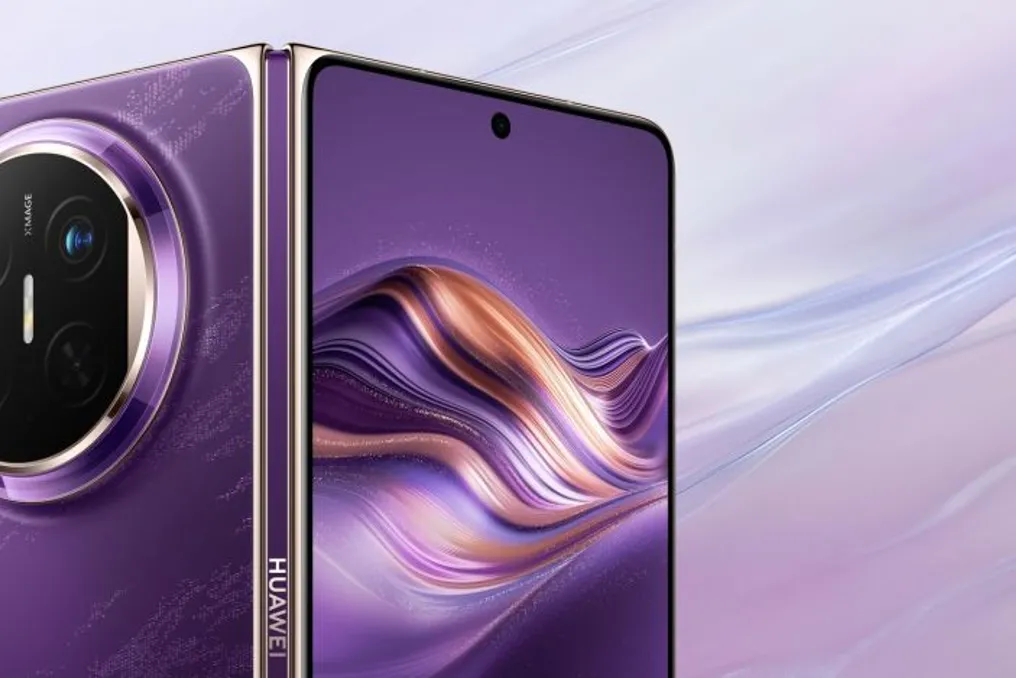
Huawei introduced its foldable smartphone Mate X8 in the Chinese market on Tuesday. The starting price for the model with 12GB of RAM and 256GB of internal storage is 12,999 yuan. Additionally, a version with a 16GB/2TB configuration is available for 20,999 yuan.

The Mate X8 is currently Huawei's thinnest book-style foldable device: it measures approximately 4.2 mm thick when unfolded and 8.95 mm when folded.

The smartphone operates on the Kirin 9050 Pro processor and runs on HarmonyOS 7. Huawei claims that the device's neural processor is capable of running 'mixture-of-experts' type artificial intelligence models with up to 30 billion parameters directly on the device.

Software features include multitasking tools, photo editing, and AI assistance specifically designed for use on the large screen when unfolded.

The rear camera system includes a 50-megapixel main module with a variable aperture and optical image stabilization, a 50-megapixel periscope telephoto camera, and a 40-megapixel ultra-wide camera. The phone also supports the Z10 modular accessory, which extends Huawei's mobile photography system beyond the built-in lenses.

Xiaomi unveils flagship smartphones Xiaomi 18 Pro and Xiaomi 18 Pro Max with 200MP cameras
Read more
www.aajtak.in

Xiaomi unveils flagship smartphones Xiaomi 18 Pro and Xiaomi 18 Pro Max with 200MP cameras

Xiaomi has released two new flagship smartphones to the global market: the Xiaomi 18 Pro and the Xiaomi 18 Pro Max. These devices are equipped with dual 200MP rear cameras, an additional AMOLED display on the back panel, and a private display function.

The Pro Max model features the Snapdragon 8 Elite Extreme Gen 6 processor. However, in global versions, battery capacities have been reduced compared to their Chinese counterparts.

A feature of the new series is the presence of a display on the back of the body, which allows users to view notifications or see a shot through the rear camera during selfies without turning the phone over. This design was common in the Xiaomi 18 Pro lineup and is presented on the world market.

The Xiaomi 18 Pro and Xiaomi 18 Pro Max were demonstrated at an event in Paris on November 17. Both phones are available for purchase in certain regions of the world and come in four color options, including blue, red, and white.

Prices for Xiaomi 18 Pro Max

The Xiaomi 18 Pro Max starts at a price of approximately 1.64 lakh rupees. In Europe, the version with 12GB of RAM and 256GB of storage costs 1599 euros, equivalent to about 1.64 lakh rupees. A more powerful configuration with 12GB of RAM and 512GB of storage is priced at 1799 euros (about 1.85 lakh rupees). The top-tier option, equipped with 16GB of RAM and 1TB of storage, will cost 2099 euros, which is approximately 2.16 lakh rupees.

As for the Xiaomi 18 Pro, its starting price is 1399 euros (approximately 1.44 lakh rupees). The configuration with 12GB of RAM and 512GB of storage is available for 1599 euros. These prices refer to the European market; information on prices and sales timelines in India has not yet been provided by the company.

Functionality of the Rear AMOLED Screen and Selfies

The most distinctive feature of the Xiaomi 18 Pro Max is the rear panel display, which is a 2.9-inch touch AMOLED screen located next to the camera module. In the Xiaomi 18 Pro model, this screen measures 2.7 inches. Both panels support a 120Hz refresh rate.

This auxiliary screen is used not only to display notifications but also allows users to view their own shot when taking selfies or videos using the rear cameras. This reduces reliance on the front camera when wanting to get higher quality shots using the main camera. Furthermore, widgets and other alerts can be displayed on this small screen, eliminating the need to constantly turn on the main screen.

Private Display for Privacy

The Xiaomi 18 Pro series also includes a private display function. This feature restricts the viewing angle of the screen, preventing casual viewing of personal information such as messages or photos by people around you. This is especially useful when using the phone in public places, such as the subway, bus, or cafe.

Since modern smartphones contain a lot of sensitive data, ensuring screen privacy is becoming an important requirement. Xiaomi took this need into account when developing this series.

Camera with Dual 200MP Lenses and 8K Recording

The camera is another significant feature of the phone. The Xiaomi 18 Pro Max is equipped with three rear cameras: a 200MP main lens with OIS, a 200MP periscope telephoto lens with OIS support, and a 50MP ultra-wide-angle lens. The front camera is designed for selfies and video calls and has a resolution of 50MP.

Having two 200MP cameras allows not only for taking high-quality photos but also for using the periscope lens to capture distant objects. The ultra-wide-angle lens is suitable for wide-coverage photos. The phone supports 8K video recording at 30 frames per second. The camera system was developed in collaboration with Leica, which is important for color reproduction and image processing, although real performance will be determined after use and reviews.

Latest Snapdragon Processor

The Xiaomi 18 Pro Max uses the Qualcomm Snapdragon 8 Elite Extreme Gen 6 processor, built on a 2nm process and reaching a clock speed of up to 5.01 GHz. The Xiaomi 18 Pro is equipped with the Snapdragon 8 Elite Gen 6 processor. Both devices feature LPDDR5X memory and UFS 4.1 storage, and run on HyperOS 4, based on Android 17. Thanks to the more powerful chipset in the Pro Max, better performance is expected in gaming, video editing, and other resource-intensive tasks.

It is worth noting that the battery capacity of the global version of the Xiaomi 18 Pro Max is lower compared to the Chinese version: it was 8500mAh in China, while in the global version it is 7050mAh. Similarly, the Xiaomi 18 Pro battery in China had a capacity of 7000mAh, while in the global version it is 6000mAh.

Both smartphones support fast wired charging at 100W and wireless charging at 50W. Reverse wired charging at 27W is also provided, allowing other devices to be charged from the phone itself.

Currently, Xiaomi has introduced the 18 Pro series in a limited number of global markets, and the company has not yet announced official dates and prices for sales in India.

Possible Chinese spy linked to Jensen Huang had business ties with Huawei
Read more
olhardigital.com.br

Possible Chinese spy linked to Jensen Huang had business ties with Huawei

Alice Huang, who is suspected of being a Chinese spy, allegedly held stakes in companies associated with Huawei while conducting business with Nvidia and maintaining a romantic relationship with Jensen Huang, the former CEO of the company. The investigation revealed connections between Alice's enterprises and structures that provided computing power to China's largest chip manufacturer competitor.

These links were discovered by Tesari analysts, a private intelligence firm specializing in national security investigations. The firm shared its findings exclusively with CNBC, which examined Chinese corporate registries and local reports gathered by the team.

According to Brian Andersen, Vice President of National Security at Tesari and a former agent of the U.S. Department of Homeland Security, these connections could form the basis for investigating potential national security threats and technology transfer. Jensen Huang acknowledged having an extramarital relationship, but the exact start date of his relationship with Alice is unknown. They were first seen together publicly in December 2023, which coincides with some of the business ties uncovered during the investigation.

Huawei is considered one of Nvidia's main competitors in China, particularly in the AI chip, processor, and networking equipment segments. This company is also viewed as a strategic enterprise for the technological goals of the Chinese government. Andersen from Tesari believes that the identified connections require attention from US authorities. He stated: 'This activity, which surfaced through analysis of Alice's network, warrants a national security and technology proliferation investigation.'

In the view of this executive, if the U.S. Department of Commerce or homeland security agencies find evidence of controlled equipment being transferred to Huawei without authorization, possible charges could include export control violations, collusion, and smuggling.

CNBC emphasizes that it is unclear whether the data center in Shenzhen itself acquired GPUs from Nvidia. The company that owned most of the facility, Zhejiang Century Huatong Group, began purchasing chips in 2023 and had business dealings with Hexi through joint participation in Century Longteng. Hexi exited its stake in the data center developer in 2024. Nevertheless, individuals connected to Alice's business network remained associated with this enterprise.

Alice's husband, Kang Wei, founded Hexi, where she previously held an executive position. In 2022, he became the head of Century Longteng, the company controlling the majority stake in the Shenzhen facility. Kang also participated in the signing ceremony of a commercial agreement with Huawei. The investigation did not determine whether Jensen Huang knew about these business ties. Nvidia and Huawei did not respond to CNBC's requests for comment. Jensen did not respond to a message left on his phone, and Alice was not found.

Popular