ACE Robotics introduces ACE-CaP-0: AI agents write reusable code for robots with 92.1% success rate
Read more
Pandaily
pandaily.com

ACE Robotics introduces ACE-CaP-0: AI agents write reusable code for robots with 92.1% success rate

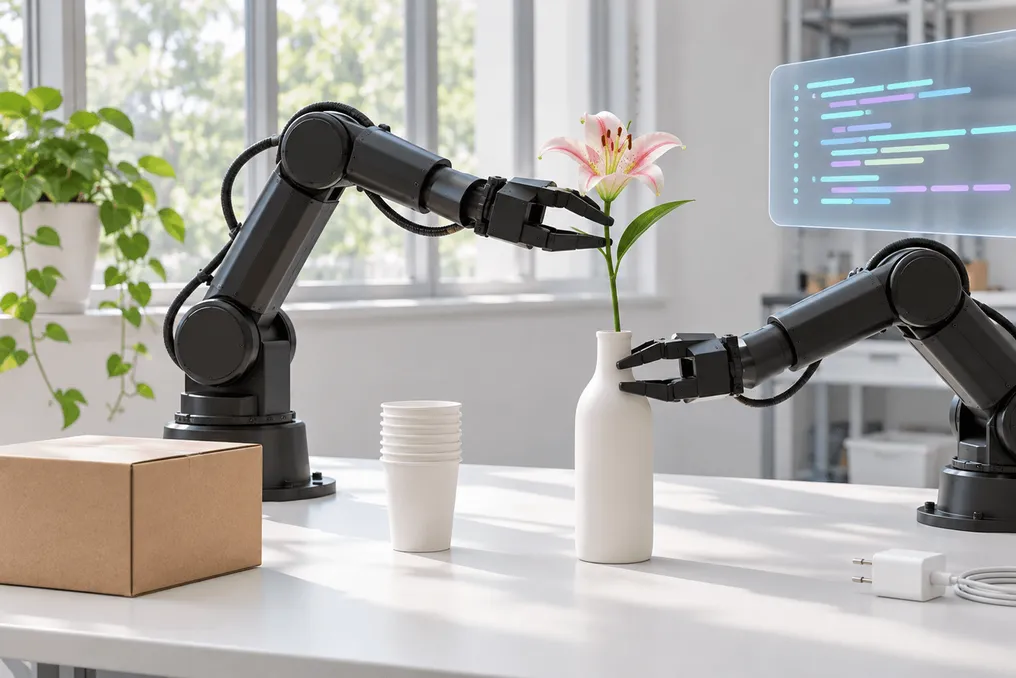
ACE Robotics, a company focused on embodied artificial intelligence and led by co-founder SenseTime's Yang Xiaogang, has released the ACE-CaP-0 model. As part of this research approach, a general AI agent is responsible for writing, testing, and refining robot control software, which is then fixed as reusable skills that can operate autonomously without agent intervention.

The paper was posted on arXiv on November 12, and the company announced the work on November 13. This method is based on the 'Code as Policies' concept, which describes robot behavior through executable code instead of calling a large model at every step. The authors argue that multiple model calls slow down the robot, whereas the finished program utilizes the logic already embedded during its creation.

The main challenge lies in developing reliable code without requiring numerous expensive physical tests. In ACE-CaP-0, the agent independently decides when to request assistance.

Methodology and Results

In the comparison conducted by the team, the best results were achieved using on-demand demonstrations combined with selective simulation usage. The success metrics were obtained through the authors' own tests. Across eight real-world tasks, including charging station installation, bread packaging, bottle cap removal, cup insertion, flower placement, and shoe packaging, the recorded programs successfully completed 221 out of 240 attempts, achieving 92.1% success.

Seven of these tasks reached a success rate of at least 90%, and the charging station installation task demonstrated 100% success. The average task completion time ranged from 0.97 to 2.27 minutes. The programs function based on the robot's own perception and control, without human or coding agent intervention.

It should be noted that the results obtained are based on one setup with two manipulators selected by the team and have not yet been independently reproduced. ACE Robotics states that this work aligns with their plan to integrate general models with their global Kairos model.
Similar stories

Peacebird tests Aitu sewing robots at factory for processing shirt cuff parts
Read more
pandaily.com

Peacebird tests Aitu sewing robots at factory for processing shirt cuff parts

Peacebird is conducting tests of sewing robots developed in collaboration with Aitu at its factory in Ningbo. During a demonstration on November 18, the machines showed the ability to process shirt cuff components.

Reports published on November 19 and 21 concern validation on small batches at the factory, not the launch of a new robot or a fully automated sewing department.

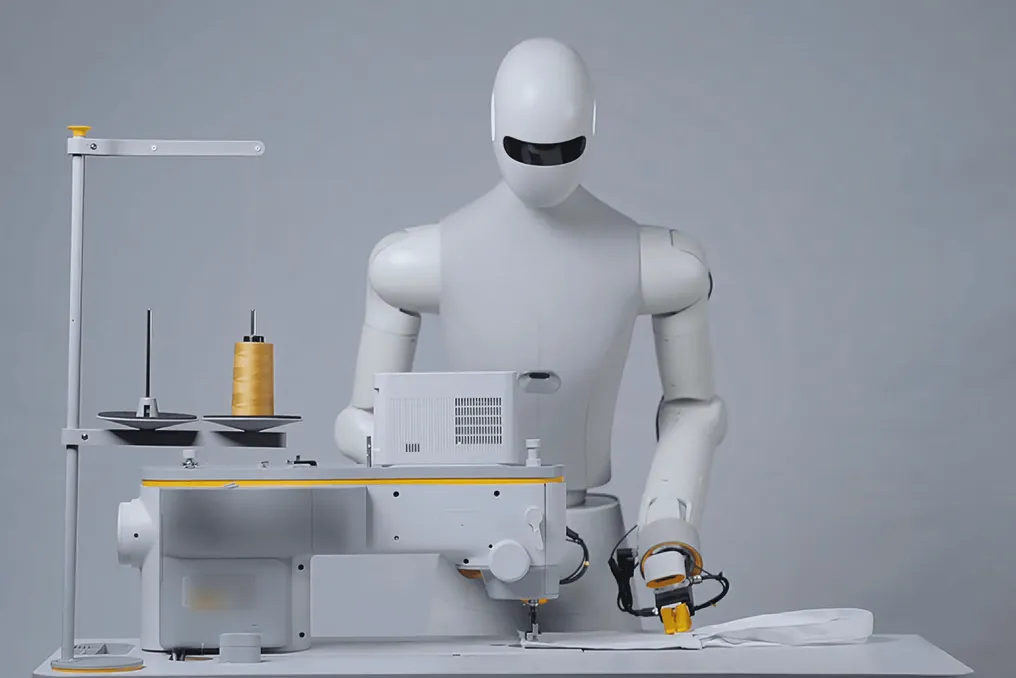
At the demonstrated station, the robot is capable of identifying and picking up cut fabric, placing two pieces into a template, after which the sewing process is transferred to connected sewing equipment. It is important to note that the robotic processing system and the sewing machine work together, rather than a humanoid performing every stage of clothing production independently.

Manipulating fabric is more difficult than handling a rigid factory part because its thickness, elasticity, and friction can vary, and thin or slippery material may deform during gripping. Aitu claims that their system combines visual perception with tactile and force feedback to correct the method of picking up and positioning parts.

For fabrics trained in the standard way, the company reports a successful capture rate of over 96%. However, this figure does not reflect the yield of finished products, the completion of the entire sewing process, or that the robot performs equally well with every textile part.

According to the company's data, the overall productivity at this station is approximately 50%–70% of the productivity of a skilled worker, meaning the machines are still slower than experienced people. More complex operations, such as installing zippers and assembling sleeves with curves, still require further refinement.

One bottleneck is coordination: after placing the material, the robot waits for the template to pass through the sewing process. Aitu proposes a solution by overlaying the next placement onto the sewing process, as well as improving fixtures and algorithms. Any increase in productivity remains a development goal, not an achieved production metric.

The reports separately describe samples that were completed in just three hours using digital design, automatic cutting, and template-based production. This represents a broader selection workflow, not the time required for this robot to autonomously sew an entire garment.

Peacebird plans to conduct an internal review of the technology before considering wider application and sharing proven methods with suppliers. Current data pertains to a specific factory and limited operations, and it does not prove implementation across all suppliers, elimination of skilled seamstress jobs, or an independently audited production economy.

Company 'Melty' introduced 'Melty Gym'—a platform for training robots in video games, such as GTA 5
Read more
www.aajtak.in

Company 'Melty' introduced 'Melty Gym'—a platform for training robots in video games, such as GTA 5

The startup 'Melty' has launched a new platform called 'Melty Gym,' which aims to use video games as an environment for robot training. On this platform, robots can master tasks through repeated action and error analysis.

Despite the potential, the question remains open as to how reliably robots can perform skills learned in a virtual environment in the real world.

The company 'Melty' was founded by David Miller and is a startup part of Y Combinator Fall 2026. Initially, the company focused on modifying and linking various video games. Now, it applies this technology to the field of robotics.

Researchers can upload their robot models into existing games on 'Melty Gym.' They also have the ability to configure game conditions, goals, and robot behavior for training and testing purposes.

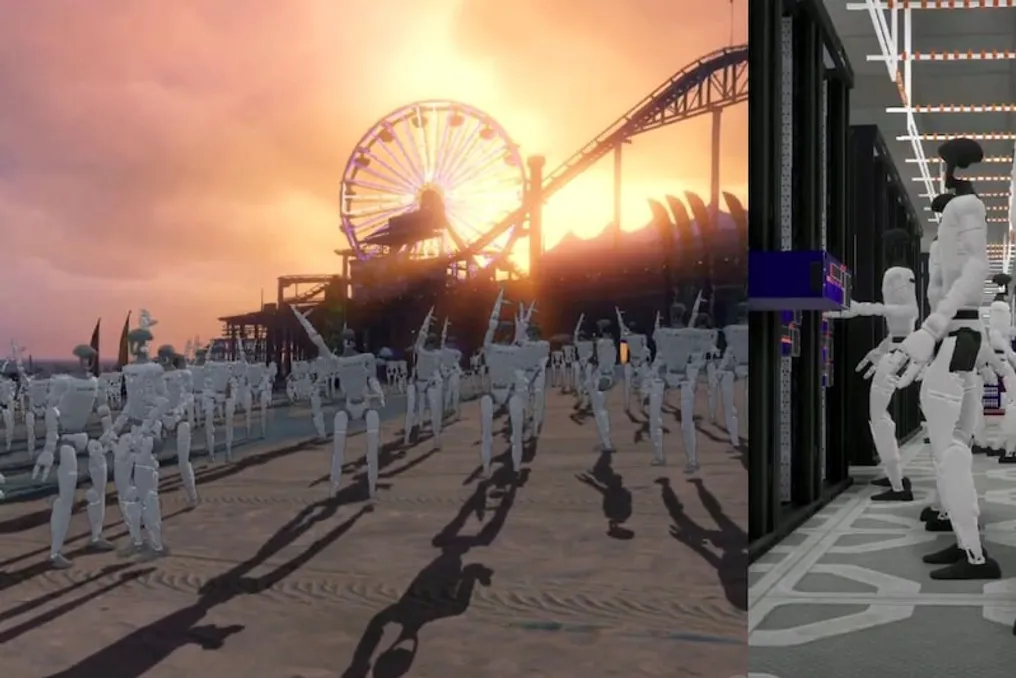
During a demonstration presented on November 13, anthropomorphic robots were shown in the game Grand Theft Auto V (GTA 5). After receiving a task, they attempted to open car doors, sit in seats, and drive vehicles in the virtual city. Additionally, some robots operated in a simulated data center environment, performing tasks on server racks.

Many experiments are planned to be conducted in these virtual worlds, allowing AI models to learn from mistakes without the need for real robots for every attempt.

This approach could be significant because training real robots can be expensive and time-consuming. Working with physical machines involves limitations related to equipment costs, potential damage to the machinery, and the time required to resume operation after a failure.

The virtual environment allows researchers to conduct more experiments, test various scenarios, and expand the scope of learning without constant physical testing. Video games provide a complex environment, including streets, buildings, objects, and moving characters, allowing developers to reuse created worlds for different training sessions.

Nevertheless, there is a significant limitation to this method. Completing a task in a video game does not guarantee that a robot will be able to perform the same task in the real world. Real-world factors, such as friction, balance, sensors, and unpredictable surroundings, present challenges that the virtual environment cannot fully replicate.

'Melty Gym' is currently only available for initial research trials. The company has not yet published results confirming the degree of reliability of skills acquired in the virtual environment when transferred to real robots. Currently, 'Melty Gym' offers a new method for robot training, and the key question remains the practical applicability of skills learned in video games in the real world.

ACE Robotics uses Mundo model and self-improving skills to automate hotel laundry process
Read more
pandaily.com

ACE Robotics uses Mundo model and self-improving skills to automate hotel laundry process

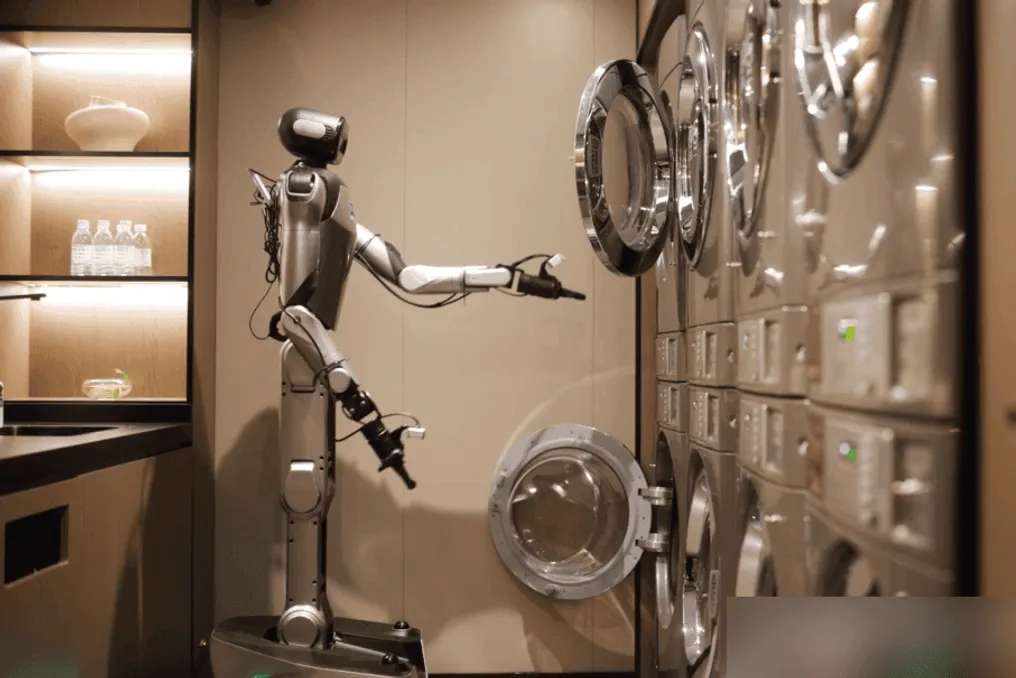
ACE Robotics has implemented its Mundo model to perform tasks in a hotel laundry. As part of this workflow, the robot collects linen baskets from guest rooms, delivers them to the laundry, starts washing and drying machines, and then returns the clean clothes.

The company describes this system as a collaboration between two 'brains' combined with a self-improvement cycle. This is the first commercial use of the Mundo model since ACE Robotics and S-Lab from NTU presented it last month.

The Mundo model transforms photographs of hotel rooms, corridors, and the laundry itself into a digital twin that robots can physically interact with. This digital twin includes characteristics such as object mass and coefficient of friction. Each attempt in this virtual environment generates trajectories, contact states, and visual feedback, which are used to refine the robot's policies before operating on the real object.

The work is divided between two components. A general cloud model, identified by QbitAI as GPT-Astra, is responsible for task decomposition, reasoning, and strategy search within Mundo. Once a method reaches convergence, it is saved as a reusable skill. Then, a local execution model on the robot calls these skills to perform precise actions.

ACE Robotics notes that using the cloud model for every real-time decision took over thirty minutes for a full cycle, whereas the local model completed the same cycle in only 18.648 seconds. A scheduler called BotAgent breaks down the washing process into 53 atomic actions and 14 semantic steps, organizing over 200 sequences of actions depending on room location, elevator status, and laundry machine queues.

When any skill fails, the cloud model analyzes video from multiple cameras and sensor logs to determine the cause of the problem. In one instance, it switched to an overhead camera when the wrist camera was blocked. In another case, it adjusted the gripper lift trajectories and finger angles when jeans got stuck in the dryer drum. The robot is also capable of resetting the scene autonomously, and a separate copy of the model evaluates each round, allowing for the rollback of worse versions.

For just unloading the dryer, ACE Robotics conducted 165 cycles on real robots over 57 hours, resulting in 37 improvement suggestions and about 80 skill versions. The cycle time stabilized at 170–210 seconds, and the percentage of jeans left in the drum decreased from an average of 48% to 32%, with the best result being 19%. Chairman Wang Xiaogan stated that instant retail is the likely next scenario. It should be noted that these results were achieved by the company and have not yet undergone independent verification.

Popular