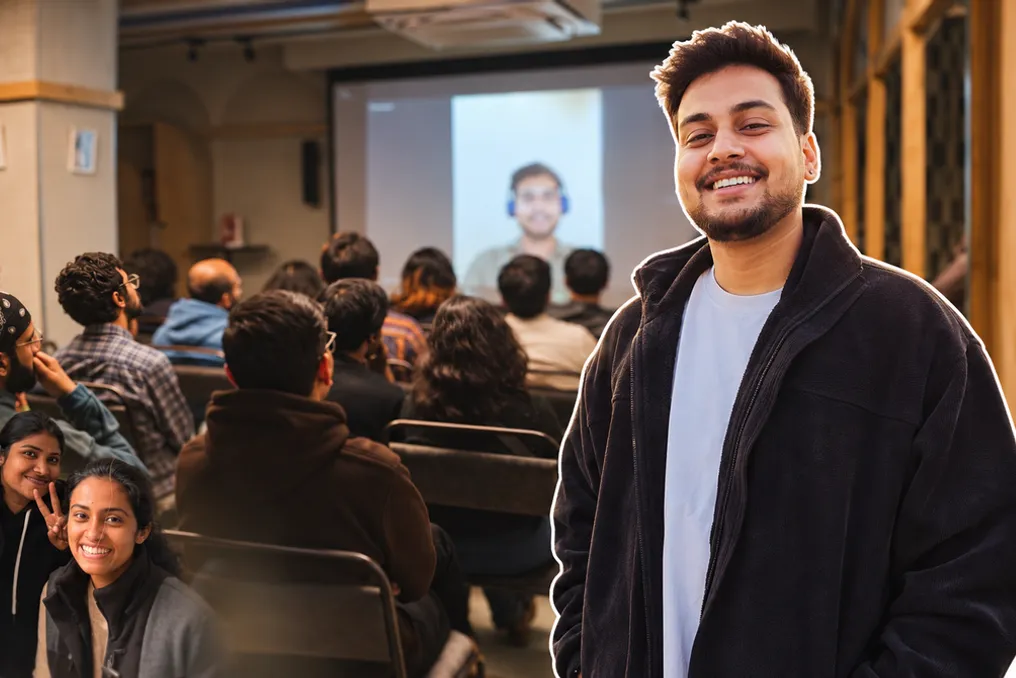
When Gautam Ram Chandra began taking calls from transgender and queer individuals seeking emotional support, he found that the experiences he heard were painfully familiar. Many years ago, living in Lucknow, Gautam struggled to find other queer and trans people with whom he could connect. As a transmasculine person, he also faced discrimination when seeking medical help.
He recalls: 'Back then, I had no hope, and I thought I wouldn't survive.' Today, Gautam helps create the environment that was once necessary for him. Connecting with people who share similar experiences has given his work deep personal meaning. He shares: 'I helped myself... I helped my inner teenager by talking to these people.'
Gautam is part of Safe Access, a non-profit organization working to make healthcare and emotional support more accessible to LGBTQ+ individuals across India. Through his Community Wellbeing Project (CWP), trained queer and transgender peer supporters attend to those who may have no other recourse.
According to its founder Shubham Choudhary, the program receives an average of over 750 support calls monthly. For Gautam, this journey began with a simple desire to find people who understood his experiences.
Finding a place where they could belong
In 2019, Gautam saw a job posting at Safe Access. At the time, he lived in Lucknow and felt isolated from the queer and transgender community. His own experience of discrimination also complicated accessing medical care. He applied for an internship and began helping the organization identify queer-friendly healthcare professionals in Lucknow.
This experience introduced Gautam to people who understood his difficulties. It also helped him realize that the discrimination he experienced was something he could stand up against. He says: 'I realized what happened to me wasn't normal, and that I should raise my voice.'
What started as an internship eventually turned into a longer-term commitment. Gautam explains: 'I joined them as a full-time employee after the internship because I liked the work. I wanted to do more, especially in healthcare, as a trans person.'
He later helped develop the Community Wellbeing Project, a program that brought together LGBTQ+ community members for mutual emotional support.
Why it was so difficult to find suitable psychiatric care
Safe Access was founded in 2019 by Shubham Choudhary, now 33, who grew up in Delhi. The idea arose while Shubham was filling out an incubator program application. One question made him seriously consider his desired career. He told The Better India: 'What do you want to do for your own community?' 'And then everything clicked, and I realized I wanted to work in healthcare for queer and trans people because it is a very ignored topic.'
Although the 2018 Supreme Court ruling decriminalizing consensual same-sex relations between adults was a major milestone, Shubham notes that many LGBTQ+ individuals continued to face difficulties accessing medical care. Finding a doctor who understands their identity could require long journeys, fear of discrimination, or deciding whether it was safe to disclose personal information.
He recalls: 'Both I and people from the community had a common struggle in finding medical help. Long trips, fear of discrimination, constant hesitation about disclosing one's identity to doctors.'
Initially, Safe Access focused on creating a directory of queer and trans-friendly mental health doctors and specialists. However, conversations with community members and a survey conducted by the organization revealed another pressing need: accessible psychiatric support. This problem became evident during the COVID-19 pandemic in 2020. As people faced isolation and emotional stress, the demand for mental health services increased. Several approved mental health professionals from the directory were booked for six to twelve months and asked to remove their names.
Shubham and his team began exploring another possibility. What if people within the LGBTQ+ community could be trained to provide emotional support to others with similar experiences? Shubham says: 'Peer support existed in the community for a very long time. People sought support from each other for years.'
He continues: 'We might not have called it peer support, but we always did it. I received it and I provided it.'
The team wanted to formalize this existing practice by providing structured training, supervision, and clear boundaries. This idea led to the creation of the Community Wellbeing Project.
How the program helps people find someone to talk to
In early 2021, Safe Access gathered its first cohort of 30 peer supporters. They were students and working professionals from different regions, languages, religions, and social strata. Over about three weeks, the group underwent 32 hours of online training. Sessions covered active listening, basic counseling skills, ethical boundaries, burnout prevention, suicide prevention, and identifying resources for people in need of support. They also practiced through mock calls and supervised sessions.
After the training, the peer supporters went through a six-month period of supervised practice. If they encountered a situation they didn't know how to handle, they could consult with mental health professionals associated with the program. For a person seeking support, the process is designed to be accessible. An individual can visit the Safe Access website, view available peer supporters, and choose someone based on factors like language, identity, or location. They can then connect via a general hotline number for a free, confidential one-on-one conversation. If they feel comfortable, they can schedule another call with the same peer supporter. They can also choose someone else if they wish. The program provides a space for emotional support and listening, with a model that includes trained peers and professional supervision.
Since its inception, CWP has grown to four cohorts, with 120 peer supporters trained or participating. Some continue their involvement for four to five years, which Shubham finds particularly significant. Another encouraging sign for him is when someone who initially seeks support eventually decides to become a peer supporter. One such person is Rohan (name changed), a medical student who first learned about Safe Access in 2024.
'I felt listened to, and I wasn't judged'
At his medical college, Rohan knew no openly queer people. It was difficult for him to talk about his identity or share what he was going through. He says: 'I don't even know any other queer people in my college, and I can't talk to anyone about my feelings... because of that, I feel like my identity is repelling.'
During the first year, the experience of being with someone he trusted left him anxious and emotionally drained. But talking about what happened also meant the potential disclosure of his queer identity to others. He recalls: 'I couldn't tell anyone what I was going through without revealing my identity. I felt like I was in a bubble that I couldn't pop.'
In 2024, he stumbled upon Safe Access on Instagram and started using the peer support service. For the first time in a difficult period of his life, he felt he could openly discuss his emotions. Rohan shares: 'I felt like I was being listened to, and I wasn't judged, and that my emotions were valid in society. It was very helpful for me during that period of my life.'
He was struck by how his peer supporter listened. He explains: 'The concept of active listening and emotional reflection was very helpful when my peer supporter did it for me.'
This experience led Rohan to think about other queer people who might be going through similar situations without anyone to talk to. 'I was in a state where I couldn't even talk about my problems with my mother or brother. I wanted to join Safe Access because I want to create a much better space for other community members. A non-judgmental space where their voices can be heard.'
Ultimately, he joined the program himself as a peer supporter. At the time of the interview, he had been providing support through CWP for just over two months.
His experience reflects what Shubham sees within the program: people who once needed support are now choosing to become that support for others.
Discovering purpose in helping others feel less alone
For Gautam, becoming a peer supporter also changed his understanding of the issues faced by other community members. Initially, he expected to offer support and connect people with useful resources. But when the calls started coming in, he heard about experiences that went far beyond his own. Gautam shares: 'As soon as I started working within CWP, I thought I could help or provide resources to people, but after completing the training and starting the calls, the stories and people were a big awakening for me.'
He encountered transmasculine and non-binary people facing domestic restrictions, forced marriage, violence, interrupted education, and financial barriers to accessing psychiatric care. Gautam was particularly concerned about those living in small towns and rural areas where access to certified counseling could be difficult. He speaks about some people seeking support: 'They can't even go for a consultation because they don't have money, and that was the only way to talk to someone.'
These conversations raised Gautam's awareness of how differently people experience discrimination and isolation, even within the same community. The work also gave him a sense of connection that he had found hard to find earlier in life. He built relationships with other peer supporters who understood the importance of listening, respecting boundaries, and creating space for difficult conversations. Gautam recalls: 'We were taught to listen to people, but we also practiced it with each other. I experienced this kind of space for the first time in my life.'
For someone who once felt lonely in Lucknow, the opportunity to offer similar understanding to others became an important part of his life. And for Rohan, who recently started his journey as a peer supporter, the goal is similar. There is a message he often returns to, especially when he starts doubting himself. He says: 'I heard this phrase: 'You are good enough.' Sometimes I wonder, am I good enough? I constantly have to convince myself that I am good enough.'
'Now my mission is also to tell others that they are good enough.'
If you or someone you know is looking for queer-approved emotional support, the Safe Access Community Wellbeing Project offers free, confidential peer support calls across India. You can contact their hotline at +91 01141219911 or by email at contact@safeaccess.co.in.