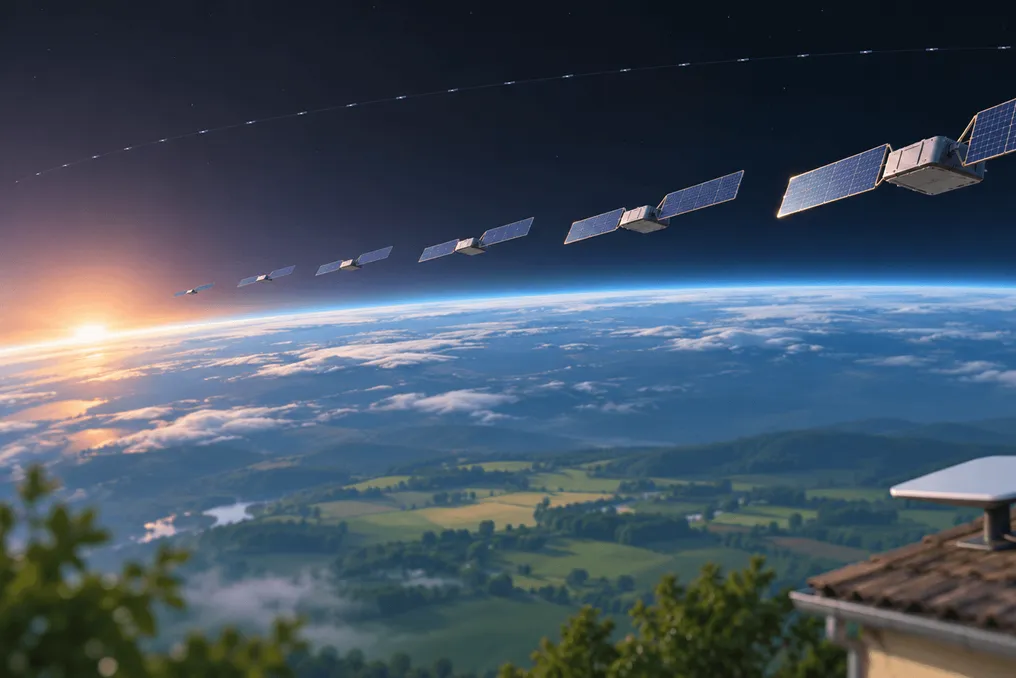
Qianfan constellation reaches 274 satellites, lagging behind SpaceSail's year-end target
Read more
Pandaily
pandaily.com

Qianfan constellation reaches 274 satellites, lagging behind SpaceSail's year-end target

China's satellite internet constellation Qianfan, also known as Thousand Sails and officially named SpaceSail Constellation, currently has 274 satellites in orbit. According to a report by Economic Observer on November 15, this number is 50 satellites short of the 324 threshold set by SpaceSail operator for launching commercial services by the end of the current year.

The latest batch of satellites was launched on November 3 using the Kinetica-2 rocket. This rocket delivered 18 Qianfan satellites from the Dunfeng pilot zone for commercial space innovation in Jiuquan. This was the eleventh launch of the constellation this year. Assuming 18 satellites per mission, at least three more launches will be required, considering there are about six weeks left in the year.

SpaceSail CEO Shen Hongbo previously stated in June that the first phase would be completed by the end of the year, after which the constellation would begin providing global services and transition to commercial operation. Information on whether the remaining launches have been booked before December 31 has not been disclosed, and the new satellites must also undergo phased correction and in-space testing before joining the network.

Furthermore, other preparatory work is underway. According to an available report, Brazil is likely to be the first market. SpaceSail planned to start commercial service there in the fourth quarter but has not yet announced prices or a specific date. In China, ordinary consumers cannot yet use the network: existing satellites are intended for specialized terminals, terminal prices have not been announced, and there is no public data on SpaceSail obtaining a license for public telecommunication services. Initial domestic demand is expected to come from aviation, shipping, and remote energy and mining sites. In December 2025, SpaceSail signed an in-flight connectivity agreement with Airbus.

In January, the head of the constellation's satellite system, Hu Haiyin, noted that the number of satellites needs to double to ensure full commercial service. The Guowang constellation from China SatNet, planned for over 10,000 satellites, was also mentioned, having conducted 12 launches this year, the last of which was on November 9.
Similar stories

Amazon Leo mission fails, resulting in the loss of 40 satellites launched by the Vulcan rocket
Read more
tecnoblog.net

Amazon Leo mission fails, resulting in the loss of 40 satellites launched by the Vulcan rocket

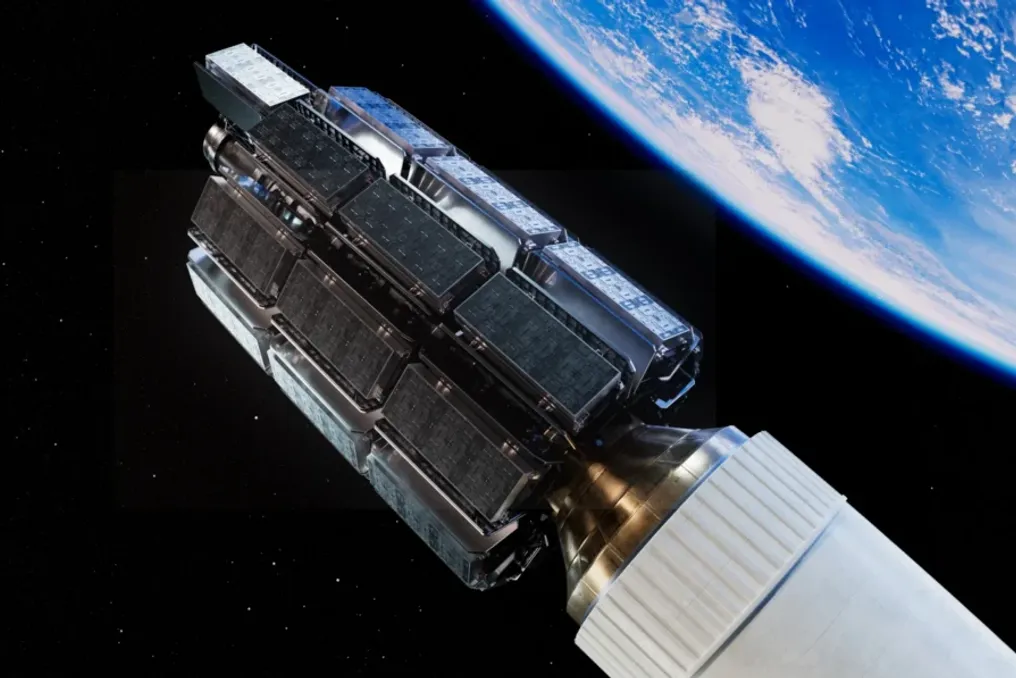
A Vulcan rocket, operated by United Launch Alliance (ULA), suffered a failure during a mission conducted this Sunday, November 15th. The objective of the launch was to place 40 satellites belonging to the Amazon Leo constellation into orbit. The incident occurred approximately ten minutes after liftoff at Cape Canaveral, Florida, culminating in the total loss of the payload.

As reported by Reuters, this represents the first mission failure in the twenty years of ULA's existence, a joint venture formed by Boeing and Lockheed Martin. This flight was also scheduled to initiate a set of 38 launches contracted by Amazon to expand its satellite internet network.

In addition to broadband, Amazon is expanding its satellite fleet to support the Direct-to-Device service, which aims to compete with the well-known plan offered by Starlink. The failure impacts Amazon's expansion plans, which has managed to position 398 satellites in orbit through 14 launches since 2025, reaching just over 10% of its established goal.

Unlike SpaceX, which uses its own vehicles to launch Starlink satellites, Amazon relies on agreements with various suppliers to put its constellation into space. Meanwhile, Starlink already has over 11,000 satellites in orbit, serving millions of users globally.

ULA confirmed, through a statement released on the social network X, that the vehicle presented an 'anomaly' about ten minutes after departing from the Cape Canaveral Space Force Station, making it impossible to insert the satellites into orbit. According to Reuters, the problem appears to have arisen shortly after the separation between the first and second stages of the Vulcan, as the Amazon satellites were located in the upper stage. The exact cause of the failure has not yet been determined.

In response, ULA stated that it has begun analyzing the data recorded during the flight. Amazon also commented after the mission loss, acknowledging that 'there is risk in any launch,' especially in 'inaugural missions like LV-01.' The company, under the management of Andy Jassy, reiterated its long-term commitment to ULA.

This event interrupts a streak of success maintained since the founding of United Launch Alliance in 2006, resulting from the merger of Boeing's Delta program and Lockheed Martin's Atlas program. However, the mission with the Amazon satellites was only the fifth flight of the Vulcan rocket, which was launched in 2024, and this was the first in nine months. During this period, the rocket remained on the ground under investigation due to technical issues at ULA.

One of these issues involved the side solid boosters, which showed failures in the two preceding flights of the rocket. Another issue involves the BE-4 engines from Blue Origin, as a rocket from this company exploded in May, just days before another launch intended to carry Amazon Leo satellites. A source heard by the agency indicates that Blue Origin is already participating in the investigation of the failure that occurred this Sunday, although, so far, there is no evidence that the BE-4 engines were responsible for the accident.

Reuters points out that the investigation into the Vulcan may force the rocket to remain inoperable for several months, which would further reduce market availability, especially after recent failures registered by SpaceX.

ADA Space launches five satellites for the third batch of its Star-Compute space computing program
Read more
pandaily.com

ADA Space launches five satellites for the third batch of its Star-Compute space computing program

ADA Space announced the deployment of five computing satellites for the third batch of its Star-Compute program. This launch took place at the company's facility in Taizhou, Zhejiang Province, on November 13. All five units were developed by the company itself and are scheduled to be launched soon. Once in orbit, they will integrate into the network with satellites already operational from the first two batches.

The goal of the Star-Compute project is to create a space network capable of accommodating 2800 satellites for artificial intelligence processing. ADA Space founder, Lu Chuan, presented this program along with partners at the Wuzhen Summit of the World Internet Conference. During this event, the start of the Three Bodies Satellite Constellation, which ADA Space is developing jointly with Zhejiang Lab, was also announced. The International Telecommunication Union has approved and published the orbits and spectrum for all 2800 satellites.

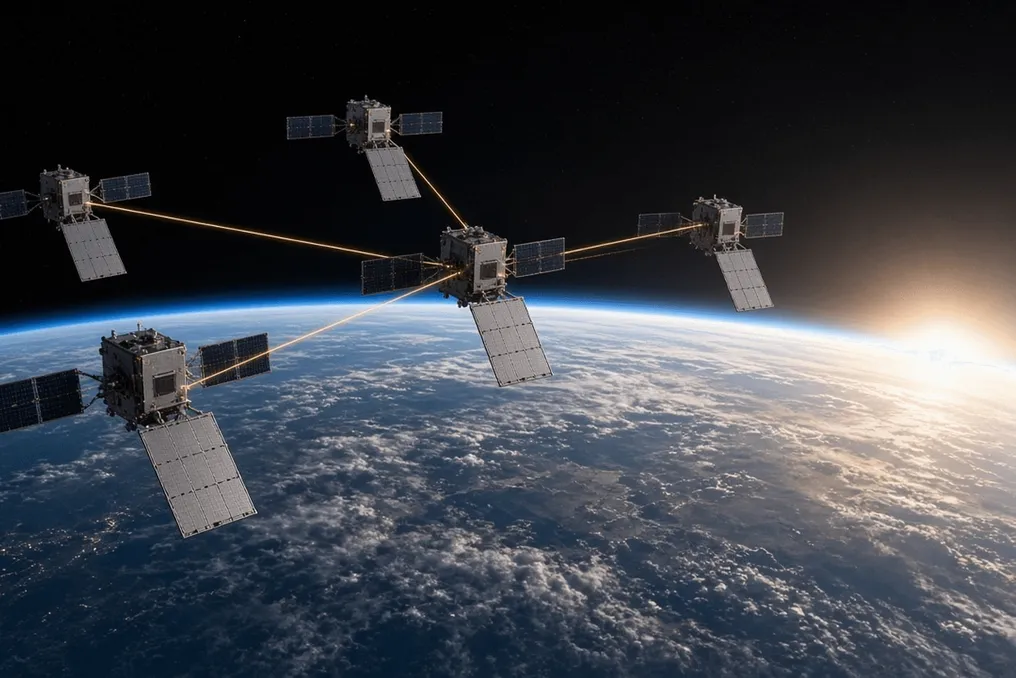
The first batch, consisting of 12 satellites, was launched on May 14, 2025, using the Long March 2D rocket from Jiuquan. At that time, the company called it the world's first space computing constellation. It was reported then that each satellite was equipped with an onboard AI model with eight billion parameters and a computing power of up to 744 trillion operations per second, while laser links between satellites provided speeds of up to 100 Gbps.

The second batch, comprising eight satellites, was launched on October 14, 2026, aboard the LandSpace Zhuque-2E rocket, bringing the total number of satellites to twenty. According to reports at the time, this batch was intended to test advanced onboard computing, laser communication with satellites, and deployable cooling radiators.

The core concept involves processing data directly in orbit instead of transmitting the entire volume of information to ground stations. For example, remote sensing images can be analyzed onboard, and only the resulting data is transmitted. ADA Space also stated that it used a large language model in orbit and controlled ground robots from space using this constellation.

ADA Space has not disclosed details regarding the payload, computing power, carrier used, or launch date for the third batch. If all five satellites reach orbit, the total number of units in the constellation will increase to 25.

Popular