Researchers at Sun Yat-sen University introduce GeoThinker-F, accelerating spatial reasoning by 3.6 times
Read more
Pandaily
pandaily.com

Researchers at Sun Yat-sen University introduce GeoThinker-F, accelerating spatial reasoning by 3.6 times

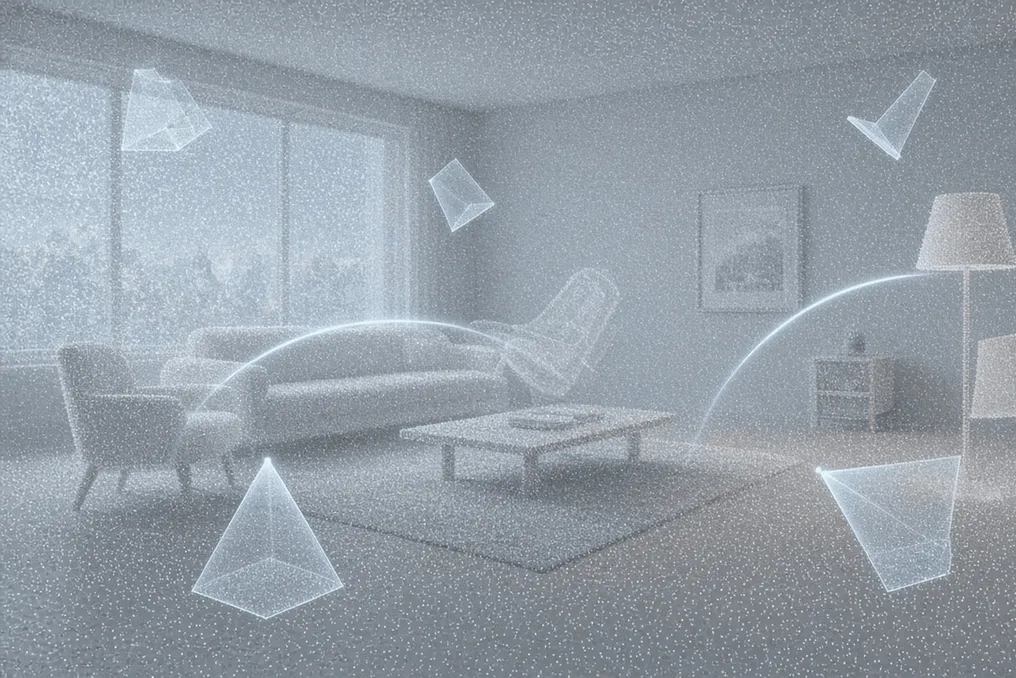
A team led by Professor Liang Xiaodan from Sun Yat-sen University has developed the GeoThinker-F method. This approach enables a vision-and-language model to analyze three-dimensional space without needing to run an external geometric encoder during inference.

During testing, the team achieved a reduction in latency from 1.45 seconds to 0.40 seconds, representing an acceleration of approximately 3.6 times. Meanwhile, the spatial reasoning metrics remained comparable to the results of the previous GeoThinker version.

Companies including XPeng, Nanyang Technological University, and Mohammed bin Zayed University of Artificial Intelligence participated in the development. The paper was posted on arXiv on October 14, and the Chinese publication Leiphone covered it on November 13.

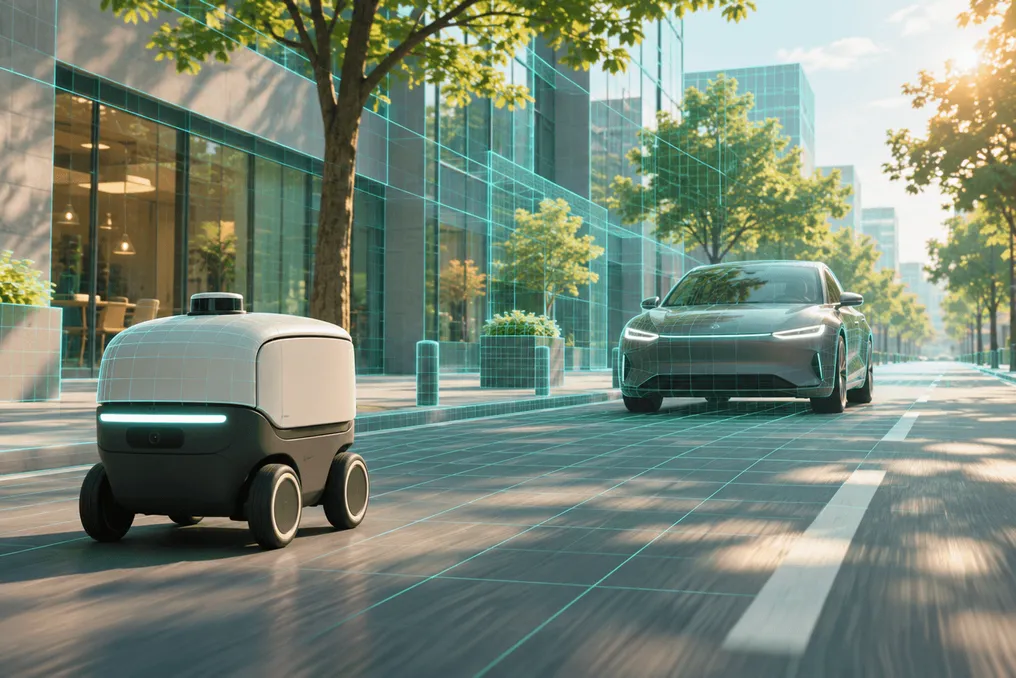
The ability to determine object locations and relationships between them is critically important for autonomous driving and robotics. The conventional method involves feeding the model features obtained from a 3D geometric encoder, such as VGGT, which extracts depth data and point clouds from multiple perspectives.

The team's first GeoThinker work, accepted at ICML 2026, allowed the model to select only the geometric features relevant to the given question, achieving a score of 72.6 on the VSI-Bench benchmark for spatial analysis. However, even then, the model still used VGGT with every query.

GeoThinker-F uses VGGT exclusively during the training phase, across two stages. During inference, the model only requires video frames and the question itself.

The authors note that the analysis shows that the prediction heads only exert influence after the first stage of training, which they believe indicates that the improvements are due to what these heads have learned, rather than additional parameters. It should be noted that the results have not yet been independently reproduced.

Similar stories

CNPq updates Lattes Platform, introducing new features for CV search and viewing
Read more
tecnoblog.net

CNPq updates Lattes Platform, introducing new features for CV search and viewing

The National Council for Scientific and Technological Development (CNPq) has implemented an update to the Lattes Platform, making an updated version of the search tool available. Users can now find researchers using not only name and CPF, but also specific identifiers such as ORCID, ISSN, and DOI.

Among the presented improvements is a change in how curricula are displayed. Profiles now include business cards equipped with a QR Code, which simplifies sharing information. Furthermore, features have been incorporated that allow viewing both academic connections and productivity indicators.

The search functionality was enhanced with the addition of filters covering scholarship modality, type of scientific production, and the most recent curriculum update date. Additionally, the main page now presents consolidated statistics on registered profiles, detailing numbers of masters, doctors, and institutions.

These innovations were communicated the day before, November 24th, and are being progressively implemented for the entire academic community. The platform currently hosts a total of 10 million curricula, with approximately 2 million inserted only in 2026, according to CNPq.

The update also includes visual adjustments and an integration with VLibras, a tool intended for translating digital materials into Brazilian Sign Language. CNPq assures that all previously registered data has been maintained, and the previous version of the platform will remain accessible during the transition period.

LZ-Space completes ground tests of robotic system ahead of field validation
Read more
pandaily.com

LZ-Space completes ground tests of robotic system ahead of field validation

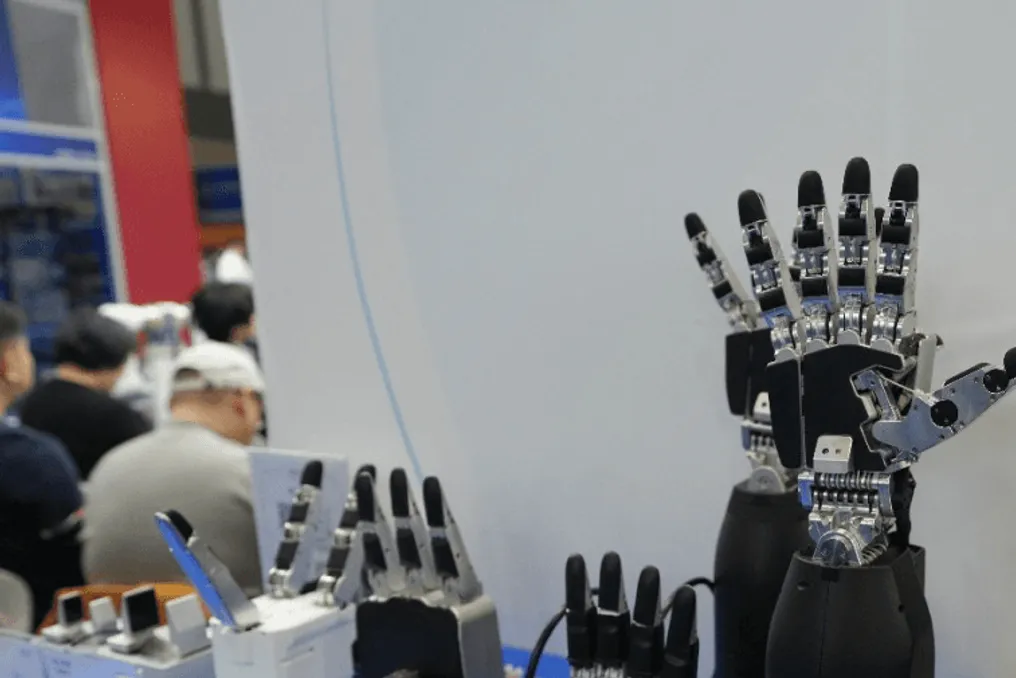
LZ-Space, the developer of the robotic manipulation system from Ussi using the English name DEXTEROUS HAND, announced the completion of spacecraft installation checks and ground environmental tests. This information was presented at an exhibition in Nanjing.

It is important to note that confirmation of functionality in space is still pending, and current achievements relate to ground tests, not orbital operation.

The developer presented nine models of robotic arms at the World Exhibition of Intelligent Manufacturing, which took place from November 19 to 21. The presented line includes designs ranging from two-fingered to five-fingered and is intended for industrial processing, remote control, research, and future space missions.

The space system is a combination of a robotic arm, a five-fingered gripper, and a remote control unit, rather than just an autonomous gripper.

Details of Ground Work Performed

According to information provided by the company via Leiphone, the ground work performed included vibration testing, cyclic vacuum testing with a temperature range from minus 25 to 60 degrees Celsius, as well as testing for total dose and single radiation particles. The spacecraft installation checks should be considered integration work on the ground, not proof of system operation in orbit.

The company identifies potential application areas such as tool usage, inspection and servicing of spacecraft, refueling operations, and conducting space experiments. These tasks remain target directions.

Further flight testing will depend on mission organizational decisions, and the presented report does not establish a fixed launch date or commencement of operational service.

Future Development and Industrial Capabilities

A more autonomous version, named LZ-SpacePro, is under development and is planned for release in early 2027. This company plan is separate from the current status of the system's ground tests and any possible space flight schedule.

Industrial claims require separate consideration. The stated maximum payload capacity of 30 kilograms applies to the heavy industrial LZ-Pro series, demonstrated for material handling, and cannot be automatically applied to LZ-Space or considered a characteristic of all arms presented at the exhibition.

During demonstrations for industry, the movement of containers using two arms and the manipulation of electrical connectors through gripping, insertion, and tightening were shown. The company emphasizes that implementation still requires verification based on client working parts, layout schemes, cycle times, retooling, and failure conditions.

The English name is visible on the exhibitor's own signage in photos taken during the event coverage; fictional English personal names are not used in the materials. The disclosed stages represent engineering progress claimed by the company, not independent qualification results or evidence of completed deployment in space.

Researchers from Zhejiang University introduce SpaceCast-Bench to evaluate models for predicting spatial changes
Read more
pandaily.com

Researchers from Zhejiang University introduce SpaceCast-Bench to evaluate models for predicting spatial changes

Researchers from Zhejiang University have published SpaceCast-Bench, a new dataset designed to test the ability of Vision-Language Models (VLMs) to predict changes in spatial relationships within a scene after an object has been moved, rotated, or deleted, without showing the final result. The paper was posted on arXiv in October, and the code is available on GitHub under the Apache-2.0 license, while the data is hosted on Hugging Face. This research was covered by Leiphone's AI Technology Review on November 13th.

Most existing spatial benchmarks focus on perception, meaning the relationships already visible in the image. SpaceCast-Bench uses a different approach—an 'observation-transformation-inference' scheme. The model receives an image of the scene from one or more viewpoints, then receives a description of the intervention, such as moving a bed 1.5 meters north, and must logically deduce how the scene will look after this unseen change.

The tasks within the benchmark are divided into three levels of difficulty: static perception; local prediction, which covers moved, rotated, or deleted objects and associated elements; and global prediction, where the entire layout is rotated.

Details and Testing Results

The benchmark includes 3862 questions based on 182 real indoor scenes from the ScanNet and ScanNet++ datasets. It covers 16 types of tasks and utilizes various coordinate systems oriented towards the camera, object, or world.

When tested on 21 models, the best result achieved was 58.0%, which significantly lags behind the human performance of 87.2%. Six models specialized in spatial tasks showed results ranging from 25.7% to 29.1%, which was close to the random baseline of 25.9% and lower than all tested closed and open-weight models. Strong generalist models, such as Gemini 3.5 Flash and Qwen3.7-Plus, were able to recover accuracy after global rotation following dips in local changes, whereas specialized models like SenseNova-SI-1.2 showed further degradation.

Regarding attachment relationships, such as when a cup moves along with the book underneath it, Qwen3.7-Plus reached 80.4%, while SpatialLadder only showed 9.3%. The 'Chain-of-Thought prompting' technique did not yield consistent improvements in results.

Impact of Additional Data

The most significant benefit came from explicitly providing three-dimensional information. Adding 3D metadata in text form increased the average score of closed models by 30.7 points and open models by 10.9 points. Using input data in a 'bird's-eye view' also had a positive effect. However, providing images of results generated by image editing models proved less reliable: among incorrect answers, 80.3% were related to generation errors using Qwen-Image-Edit, and 38.3% were related to using GPT-image-2.

Removing intermediate views in the world frame reduced directional accuracy from 39.9% to 34.6%. Applying staged fine-tuning on programmatically generated data allowed Qwen3-VL-4B to improve its score from 34.0% to 65.7%, leading to an overall increase in the average score across six out-of-domain benchmarks. The authors emphasize that the benchmark covers programmatic transformations, rotations, and deletions, but not deformations, collisions, or other physical dynamics.

Co-authors, including first-rank collaborators, are graduate students Li Hongxin and Su Jinyue, and the corresponding author is Shen Yunliang, the first author of HuggingGPT. Other co-authors include professors Zhuang Yueting and Xiao Jun.

Popular