Uzbekistan and Acwa agree on developing carbon markets
Read more
UzDaily
uzdaily.uz

Uzbekistan and Acwa agree on developing carbon markets

The National Committee for Ecology and Climate Change reported that Uzbekistan and the Saudi company Acwa signed a memorandum of cooperation in the field of carbon markets and international mechanisms for reducing greenhouse gas emissions.

The signing of the memorandum took place at the COP31 climate conference in Antalya. The parties who signed the document were Aziz Abduhakimov, advisor to the president and chairman of the National Committee for Ecology and Climate Change of Uzbekistan, and Mohammed Abdullah Abunayyan, founder and chairman of Acwa.

The agreement provides for studying opportunities for Acwa's projects in Uzbekistan so that they can participate in international carbon market mechanisms under the Paris Agreement. Among such projects are the Bash, Zhankeldy, and Kunrad wind power plants, including a battery energy storage system, as well as the Karatau wind power plant project.

The parties intend to assess whether these projects meet the criteria of the Paris Agreement and study the procedures for their approval and registration. Furthermore, they plan to consider possibilities for generating, transmitting, and using carbon credits and emission reduction results.

A separate part of the memorandum is dedicated to technical and regulatory cooperation. This includes exchanging experience and knowledge in the field of carbon markets, improving monitoring, reporting, and verification systems, as well as strengthening institutional capacity.

In addition, the parties plan to work on increasing the climate resilience of renewable energy facilities and energy infrastructure. Specifically, they intend to exchange information on climate risk assessments for wind power plants and energy storage systems, taking into account factors such as extreme temperatures, dust, and sandstorms.

It is also envisaged to study the application of climate information and early warning systems to protect energy facilities. The goal of the memorandum is to expand Uzbekistan's participation in international climate cooperation and utilize the potential of renewable energy to achieve the country's climate goals.


Similar stories

Uzbekistan and ACWA signed memorandum to study carbon credit generation in wind farms
Read more
podrobno.uz

Uzbekistan and ACWA signed memorandum to study carbon credit generation in wind farms

Uzbekistan and the company ACWA have signed a memorandum of cooperation aimed at working in the field of carbon markets and international methods for reducing greenhouse gas emissions.

The signing ceremony took place during the 31st session of the Conference of the Parties to the UNFCCC (COP31), which was held in Antalya, Turkey.

The signing was carried out by Aziz Abduhakimov, advisor to the President of Uzbekistan and chairman of the National Committee on Ecology and Climate Change, and Muhammad Abdullah Abunayyan, founder and chairman of the board of directors of ACWA.

The agreement provides for studying the possibilities of integrating the company's energy projects in the Republic into international carbon market mechanisms in accordance with the terms of the Paris Agreement.

Project Implementation Opportunities

The list of projects to be considered includes the 'Bash', 'Jankeldy', 'Karatau', and 'Kungrad' wind power complexes, the latter of which is equipped with an energy storage system using battery batteries. Experts will assess the compliance of these facilities with the requirements of the Paris Agreement, study the procedures for their official registration and approval, and develop methods for creating, transferring, and utilizing carbon credits and verified emission reduction results.

The partnership also covers aspects of technical and regulatory interaction. This includes exchanging experience on carbon market operations, improving monitoring, reporting, and verification systems, as well as strengthening specialized institutional potential.

Furthermore, the parties plan to work on increasing the climate resilience of renewable energy infrastructure. To this end, information exchange will be organized regarding the assessment of climate risks for wind power plants and energy storage under extreme temperatures, sand and dust storms, and the possibility of implementing early warning systems to protect energy facilities.

The implementation of this memorandum is intended to promote Uzbekistan's broader participation in global climate cooperation and utilize the potential of clean energy to achieve national environmental goals.

Uzbekistan signs agreements on biochar production projects with two companies
Read more
uzdaily.uz

Uzbekistan signs agreements on biochar production projects with two companies

Uzbekistan has reached an agreement on cooperation with the companies Smart Carbon and BIZPANDO in the field of agricultural waste processing, biochar production, and carbon credit project development.

These agreements were signed by the Ministry of Agriculture during the international climate conference COP31.

As part of the planned cooperation with Smart Carbon, the parties plan to produce biochar from cotton stalks. The BIZPANDO agency received an agreement for the processing of various types of plant residues and the development of carbon credit mechanisms.

These projects involve using pyrolysis to process agricultural waste to obtain biochar. This material is intended to improve soil quality and achieve long-term carbon sequestration.

It is expected that these initiatives will help reduce greenhouse gas emissions and transform crop residues left in the fields into secondary raw materials with economic value.

The Ministry of Agriculture noted that such projects can provide farmers with additional sources of income and promote the expansion of circular economy principles in the agricultural sector.

Furthermore, the agreements are aimed at promoting environmentally sustainable production and creating opportunities for Uzbekistan to participate in the global carbon credit market.

Uzbekistan prepares to introduce national carbon pricing system
Read more
uzdaily.uz

Uzbekistan prepares to introduce national carbon pricing system

Uzbekistan plans to transition from the current Monitoring, Reporting, and Verification (MRV) emissions system to implementing national carbon pricing mechanisms and industrial decarbonization measures.

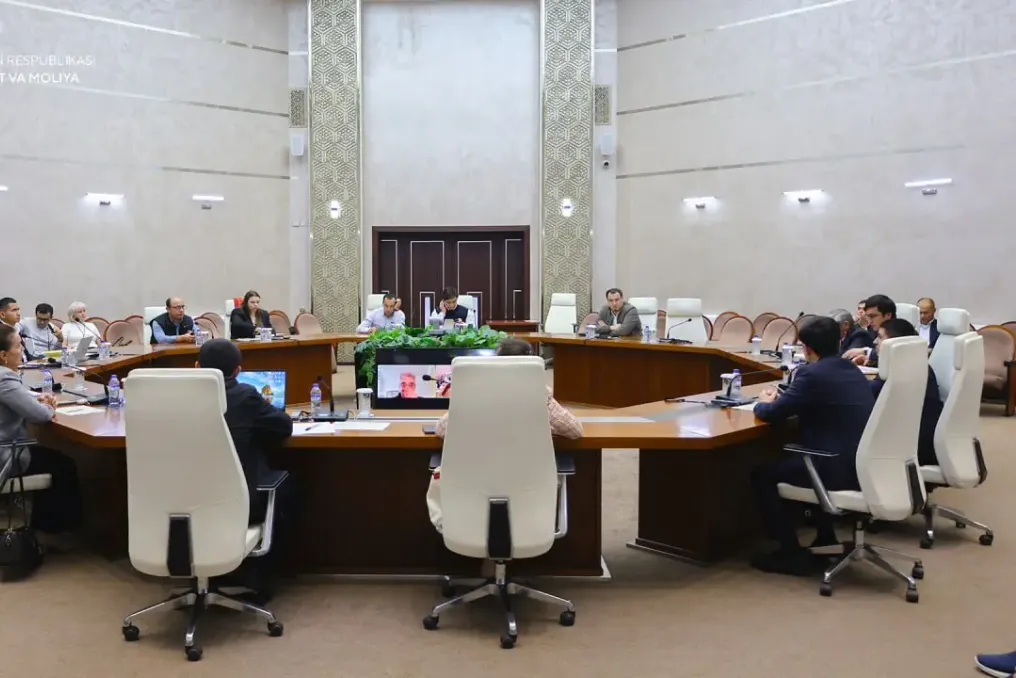
Discussions on this topic took place at a seminar on November 3, which included representatives from state ministries, agencies, and industrial enterprises. The event was organized by the Ministry of Economy and Finance of Uzbekistan, the Green Economy Projects Center under the ministry, and the German Agency for International Cooperation (GIZ) as part of the 'Green Industrialization' project. International expert Zsolt Lengyel participated in the seminar.

The main focus of the discussions was on the practical application of Emissions Trading Systems (ETS) and carbon pricing mechanisms for industrial modernization, accelerating the decarbonization process, and assisting Uzbekistan in meeting its Nationally Determined Contributions (NDCs) within its climate commitments.

Participants studied the experience of European Union countries in implementing MRV systems and carbon regulation mechanisms. Using the example of the German agency DEHSt, the seminar presented the principles of emissions trading, database management, emissions monitoring, and independent data verification, as well as the allocation of emission quotas, including auctions.

Differences between emission quotas and carbon credits obtained through individual projects were also discussed, along with measures to prevent double counting. Participants examined how revenues from carbon pricing can be directed towards industrial decarbonization and stimulating green investments.

Another important topic was the European Union's Carbon Border Adjustment Mechanism (CBAM) and its potential impact on the competitiveness of Uzbek producers, especially manufacturers of mineral fertilizers and other export-oriented products. The seminar also addressed issues ensuring that carbon-related payments contribute to the development of the country's domestic economy.

At the conclusion of the discussions, participants emphasized the need to create a reliable historical database of emissions at the enterprise level. Such data will serve as the basis for developing rules for allocating emission quotas and introducing national carbon pricing mechanisms.

Popular