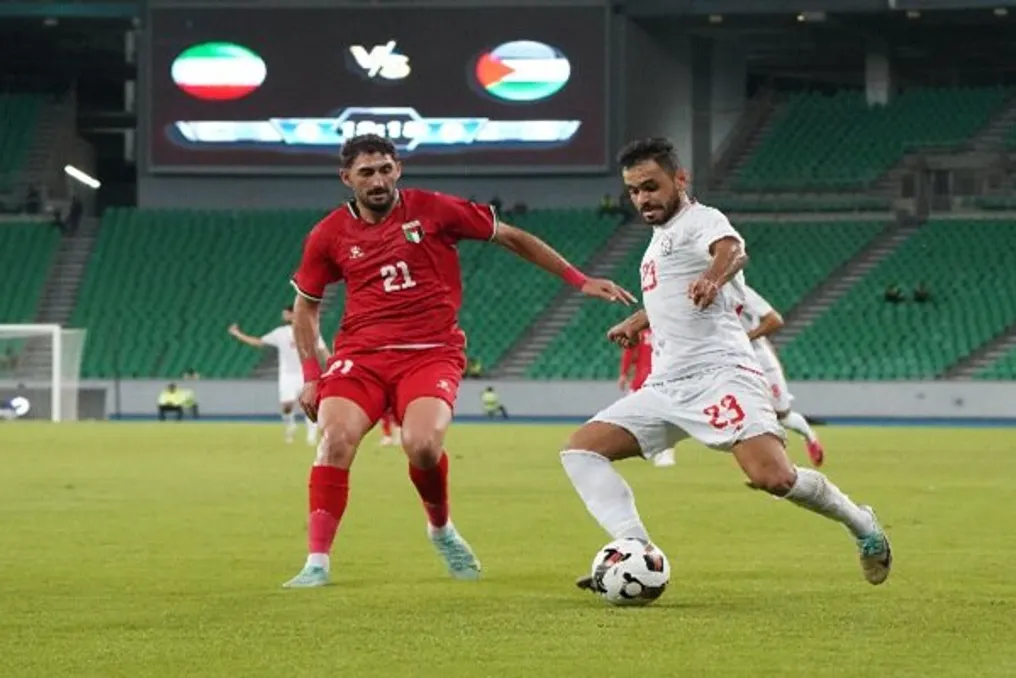
Iran's 2-0 victory over Palestine in Basra demonstrated encouraging signs of a new generation taking over, yet it also revealed an old problem: the national team requires more attacking diversity and, more importantly, stronger opponents to gauge its progress.
The Need for More Serious Tests for Iran's Youth Renewal
The team, managed by Amir Ghalenoei, used the tournament's first match in Basra to give opportunities to young players, as the average age of the squad was four years lower than that of the team that lost to Russia during the previous international break. Five young footballers—goalkeeper Mohammad Khalifeh, Mohammad Farabasi, Ali Golizadeh, Hossein Gudarzi, and Afshin Sadeghi—made their international debuts, and the coach gave playing time to 22 out of 29 members of his squad.
Positive aspects were noted: Hosseinjad and Gudarzi showed potential, with the latter making a decisive contribution after coming on as a substitute. His two excellent crosses led to goals by Sardar Azmoun and Saleh Hardani, securing the win in the final minutes of the match.
Nevertheless, the result should not hide the limitations of Iranian play. Palestine was reduced to 10 men in the 66th minute, and prior to that, Iran struggled to break through their defensive organization. Both goals were scored after a sending-off, and wing crosses once again proved to be the most effective attacking route.
Iran created chances and could have scored more, but the reliance on crosses underscored the lack of alternative solutions in the final third of the pitch. Against more organized and physically stronger opponents, such predictability could become a serious problem.
Amir Ghalenoei admitted that the victory is only part of the bigger picture. He stated that the priority during the current international window was providing opportunities to young players, adding that Iran needs to face bigger teams to assess its readiness. He also emphasized the importance of playing in front of large crowds and under high pressure, pointing to the need for high-level friendly matches before the 2027 Asian Cup.
This makes Tuesday's match against Iraq particularly significant. Unlike Palestine, Iraq should provide a more complex test both tactically and emotionally, especially in front of their home fans.
Iran's recovery process began with some encouraging individual performances. However, integrating young players is only the first step. The team needs challenging matches, and 'Team Melli' must develop more ways to create and execute scoring opportunities. The victory in Basra was a useful start, but not proof of a completed transition.