In Spain, realizing the dream of owning a home has become extremely difficult, even for those with jobs and regular income. The rise in real estate prices combined with high inflation has created conditions where even well-employed individuals cannot afford a house.
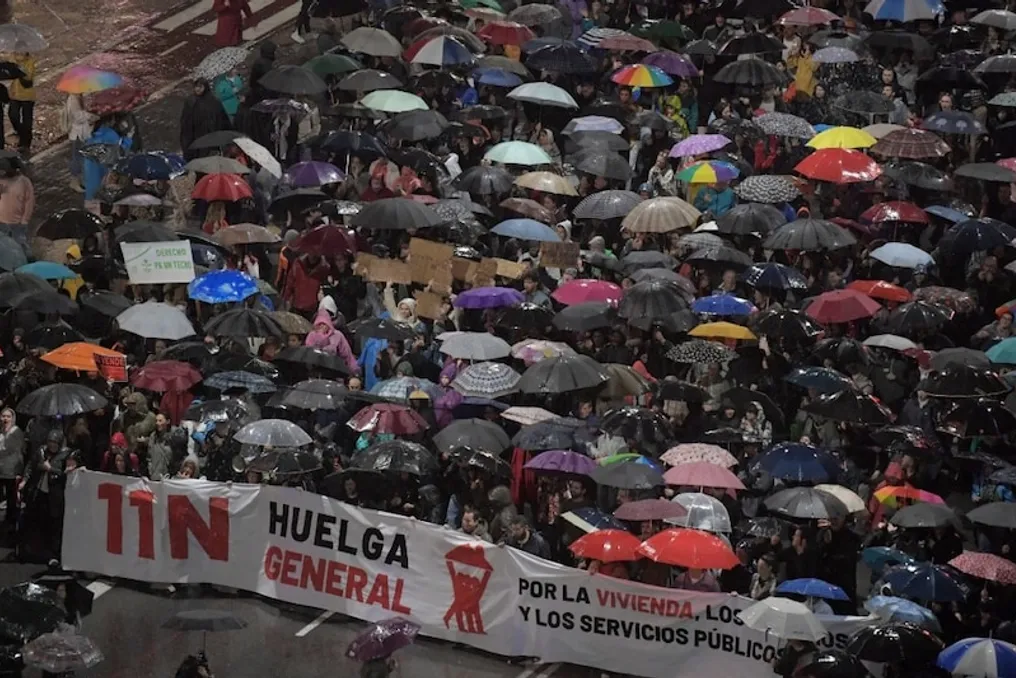
The situation has reached a critical point, forcing hundreds of thousands of workers onto the streets to protest. According to data on the general strike held on November 11, approximately 4 million employees participated.
The main reason for the housing crisis in Spain is the significant gap between housing costs and the level of household income. Property prices are rising faster than citizens' wages are increasing.
According to a report by Khaleej Times, data from the National Statistics Institute of Spain shows that between 2015 and 2025, housing costs increased by 84.6 percent. At the same time, over the period from 2015 to 2024, the average annual gross salary of employees increased by only 27.85 percent.
This gap has widened recently: in the second quarter of 2026, housing prices rose by 12.2 percent compared to the previous year, while the average wage growth was only about 3–4 percent.
This directly affects those trying to buy a home for the first time. Even with an increase in income, it becomes difficult for them to save the necessary amount for a down payment.
The problem of buying a home in Spain is not limited to the price of the property itself; a significant initial sum is required. According to Khaleej Times, to purchase a house costing around 200,000 euros (approximately 2.15 crore rupees), a person may need about 60,000 euros (approximately 64 lakh rupees) for the down payment and other associated purchase expenses.
Even with a stable monthly income, saving such a large sum is a difficult task, especially if most of the earnings go towards rent and daily necessities. In such circumstances, those who can rely on financial support from parents or family have an advantage, while independent buyers face constant difficulties.
The shortage of housing is also a serious factor in this crisis. The number of people wishing to buy or rent housing is growing, but new construction is not keeping pace with this demand.
According to estimates by the Bank of Spain, cited in a Khaleej Times report, a deficit of approximately 750,000 homes emerged in the country between 2021 and 2025. Only 92 thousand new homes were built in 2025, while the number of new families needing housing reached 225 thousand.
This means that the housing supply significantly lags behind the demand. The consequence of this is increased competition for affordable housing and the ability of landlords to set arbitrary rental prices.
According to forecasts by the Bank of Spain, quoted in a Deutsche Welle (DW) report, the housing deficit in the country could exceed 1 million units by 2028, threatening further complication of the purchasing and renting process.
In Spain, the number of people who are employed but do not have enough money left after paying rent to cover other essential living expenses is growing. A study conducted by Oxfam Intermón and published by Khaleej Times showed that about 770,000 employees are experiencing financial difficulties due to the rising cost of housing.
According to this study, one in three people living in market-rate rented accommodation falls into poverty after paying rent. Figures from the Bank of Spain indicate that 4 out of every 10 families renting housing spend more than 40 percent of their income on housing. This leaves people with very little money for food, transport, savings, and other needs.
The situation is similar among young people. According to Khaleej Times, in 2025, 44.3 percent of young people aged 26 to 34 continued to live with their parents. Furthermore, 47.3 percent of them cited the economic impossibility of buying or renting housing as the main reason for this living arrangement.
The Bank of Spain reports that young people, on average, leave their parents' home at 30.4 years old, which is significantly later than the EU average of 26.2 years. Thus, even with employment and income, young professionals find it difficult to start an independent life.
The growing difficulties in acquiring housing or paying rent have ceased to be solely an economic issue and have become a major social and political problem in the country. According to a Deutsche Welle report from November 11, a nationwide strike took place in Spain for the first time in 14 years.