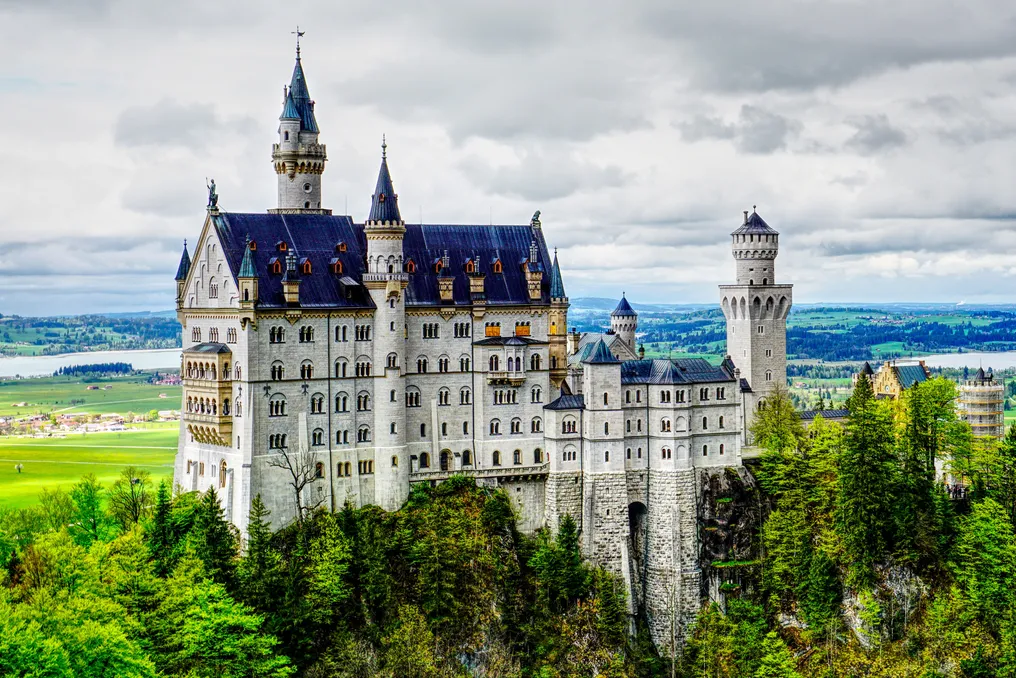
Neuschwanstein Castle is world-famous, and this is no coincidence. This structure, located in Bavaria, in the far south of Germany, is the direct source of inspiration for Sleeping Beauty Castle (and later for Cinderella), a symbol of Disney and its theme parks.
Many people do not know that the palace itself was a fantastic creation. Although its architecture seeks to evoke a sense of antiquity, it is actually a relatively modern construction, dating from the second half of the 19th century. Neuschwanstein was conceived as a retreat for King Ludwig II of Bavaria, who could never fully enjoy it.
To understand the trajectory of this castle, whose origin differs from most European fortifications, one must understand the passion of Ludwig II. Passionate about Richard Wagner's operas and an enthusiast of medieval legends, Ludwig II ordered the construction of Neuschwanstein in 1869. His requirement was that the palace be so spectacular that it seemed taken from an extravagant fictional work of an opera.
Over the following seventeen years, until Ludwig II's death, the castle evolved exactly according to this ideal. Unlike many castles with military or governmental functions, Neuschwanstein was created to be a scenic highlight in the landscape, which explains its unique beauty and continuous attraction to visitors.
In addition to the architecture that inspired the Disney icon, the castle stands out for its location on a hill with a panoramic view of the region, allowing a glimpse of the southern German Alps towards the border with Austria. Since 2025, the structure has been recognized as a World Heritage Site by UNESCO, along with Linderhof, Schachen, and Herrenchiemsee, other palaces built by Ludwig II in his devotion to such works.
The King of Bavaria lived through a turbulent period: he ascended the throne in 1864 but saw his region lose autonomy in 1871 with the consolidation of German unification. Gradually, he distanced himself from governmental responsibilities and increasingly dedicated himself to grandiose artistic projects, such as the construction of these impressive palaces.
Ludwig II's desire to adorn the Bavarian map with magnificent structures resulted in several unfinished works. Neuschwanstein was envisioned as a tribute to Wagner's work, who died in 1883 without having the opportunity to visit the castle. Furthermore, Ludwig barely resided in the palace; records indicate that he stayed only 172 days there, which was not yet finished when he himself died in 1886.
Located in the far south of Germany, near the border with Austria, Neuschwanstein is approximately a two-hour drive from Munich, the capital of Bavaria. To visit, it is crucial to plan the trip and manage the risk of ticket unavailability, as tickets are limited and visits are scheduled. Purchase must be made at the Hohenschwangau castle ticket office, located about 40 minutes away; currently, online reservations are possible.
Tickets for Neuschwanstein cost 23.50 euros for adults, with possibilities for discounts and exemptions for certain groups. The summer months, being the most sought after, require more meticulous planning to avoid frustration. It is advisable to draw up a preliminary itinerary, as the external appearance of the castle already causes a great impact. The exterior architecture is the main reason for its fame, since it never served a significant practical function for Bavaria or Germany. For those who wish to explore the interior, they should be aware that the guided tour is brief, lasting about half an hour, and many travelers feel the experience does not justify the time.