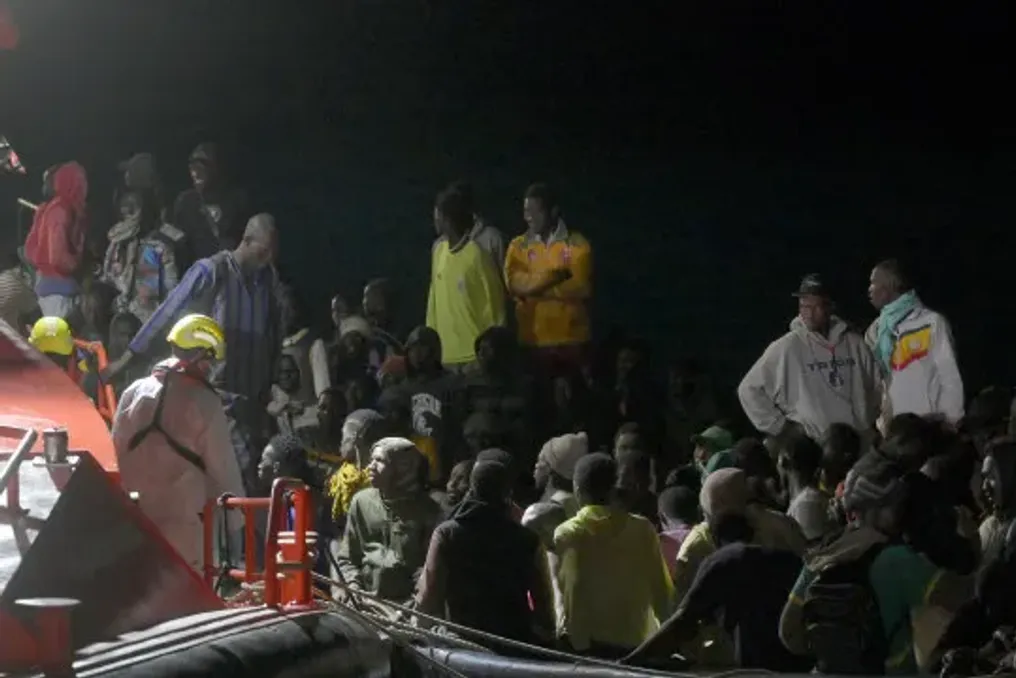
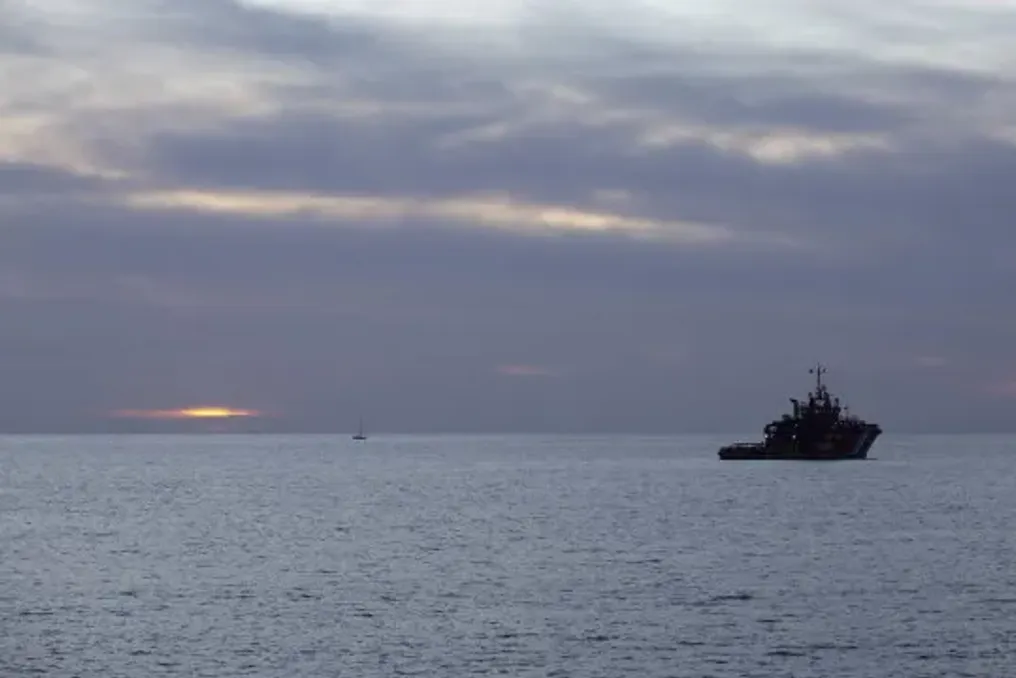
Authoritative maritime services reported that the total number of migrants arriving in the Canary Islands since Saturday has exceeded 510 people. Today, another 19 people from the sub-Saharan region arrived on the Spanish island of El Hierro on a new vessel.
A small boat, similar to those typically used on this migration route and called 'cayucos,' was rescued by the Spanish maritime security agency south of El Hierro. The 19 migrants aboard were taken to the port of La Restinga, where they will first receive medical assistance before identification begins.
Including this new vessel, the total number of arrivals in the Canaries in recent hours reached 510 people, encompassing eight vessels. Three of these were rescued off El Hierro, and four off Lanzarote.
In one of the vessels carrying 130 migrants, seven people died, authorities reported after rescuing survivors this morning approximately 150 kilometers northeast of Arrecife (Lanzarote). Only two bodies were found among the seven deceased, as survivors stated that the other five were thrown into the Atlantic Ocean under circumstances that are yet to be determined.
In addition to this inflatable raft, another 'cayuco' with 107 migrants reached El Hierro on Saturday evening after being rescued approximately nine kilometers from the island.
Tonight in Lanzarote, another ship with 59 men from North Africa was discovered, which was brought ashore by authorities eight kilometers from the northern coast of the island. The Spanish maritime service also rescued two other inflatable rafts off the coast of Lanzarote: one with 35 men and another with 36, all from North Africa. Two more rafts were brought to El Hierro, totaling over 100 people.
The Atlantic route, starting from Morocco and Western Sahara via the shortest path, as well as from Mauritania, Senegal, Gambia, and Mali via longer crossings, is considered one of the most dangerous in the world. Crossings can take several days or even weeks in the open sea.
The Atlantic is known for its strong currents, and there are reports of vessels found months later in another part of the world (for example, in Brazil or the Caribbean), where all passengers perished.
Over the last two years, there has been a decrease in the number of crossings towards the Canary Islands compared to the historical records of 2023 and 2024, but the lethality of this route has increased due to the opening of longer and more dangerous routes (such as those departing from Guinea-Conakry or Gambia).
Estimates suggest that in 2025, 17,788 irregular migrants arrived in the Spanish islands aboard 263 vessels, while according to UN data for the current year, 416 deaths or persons missing at sea have been registered.
Nevertheless, the non-governmental organization (NGO) Caminando Fronteras documents 1,906 deaths on this Atlantic route alone in 2026. The flow of vessels on this route usually increases in autumn, and over 5,000 arrivals have already been recorded since October.
The International Organization for Migration's (IOM) 'Missing Migrants' project records at least 4,857 official cases of death and disappearance between 2014 and mid-2024, but the organization itself admits that the real number is likely significantly higher.