How to start an agricultural business and earn millions in income
Read more
Aaj Tak
www.aajtak.in

How to start an agricultural business and earn millions in income

There is a growing interest in entrepreneurship in India, especially among the younger generation, who prefer to engage in business rather than seek employment. In this regard, a line of business has been presented that can be combined with farming and which is capable of generating significant income. This business can even be started in rural areas.

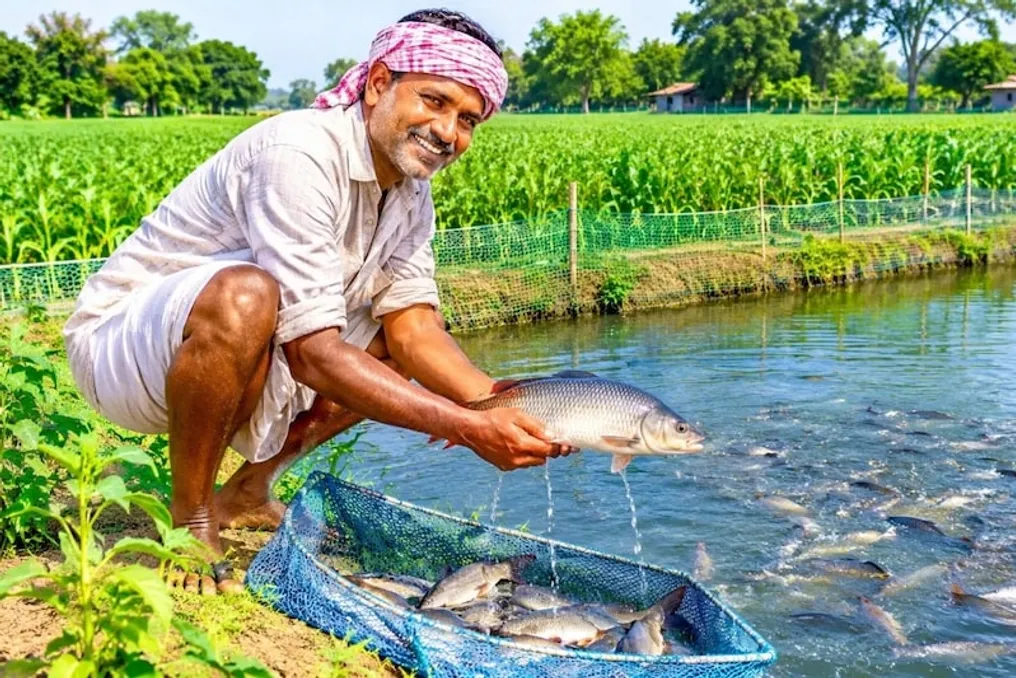
This refers to fish farming. Due to the growing demand for fish in India, aquaculture has become an attractive earning opportunity. Farmers can increase their income by cultivating fish species such as Rohu, Catla, and Mrigal using scientific methods in ponds. ICAR studies have also shown examples of additional income from growing vegetables on the banks of ponds alongside fish farming.

Fish farming, or aquaculture, is a business that a farmer can start by creating a pond on their land or by using an existing one. A feature of this endeavor is the possibility of increasing profit not only through the sale of fish but also through growing fruits and vegetables on the pond banks.

India is the second-largest fish-producing country in the world. According to the central government, the volume of fish production grew from 95.79 million tons in 2013-14 to 197.75 million tons in 2024-25, representing an increase of about 106 percent. Approximately 3 million fishermen and fish farmers depend on this industry for their livelihood.

According to the government, domestic fish production also increased in 2024-25. Pond, lake, river, and other freshwater sources contributed significantly to this growth. This creates new opportunities for employment and business in villages.

Income from fish farming depends on the size of the pond, the type of fish cultivated, water quality, and the market selling price. In one ICAR study, an integrated farming model with a scientific approach was applied. With traditional methods, production was about 950 kg of fish per hectare, yielding a gross income of about 1.90 million rupees, and a net annual profit after deducting expenses was approximately 50,000 rupees.

When farmers began applying scientific fish farming methods, production increased to approximately 2,850 kg per hectare. Larger fish were sold at an average price of 240 rupees per kilogram, generating fish sales revenue of about 6.84 million rupees. Growing vegetables and fruits on the pond banks brought an additional income of about 95,000 rupees. The total net annual profit under this model was about 4.65 million rupees per hectare.

The main options for cultivating freshwater fish in ponds are Rohu, Catla, and Mrigal. The technology of simultaneously keeping these fish is called integrated fish farming. With this technique, different fish species utilize different feeding levels in the pond, allowing for more efficient use of water body resources.

Costs for fish farming depend on whether the farmer already has a pond or if they have to build a new one. Building a new pond involves costs for earth excavation, water supply, and necessary structures. Additionally, costs include fish seeds, feed, fertilizers, medicines, labor, and maintaining water quality.

NABARD's specific cost list for 2025-26 indicates a unit cost of 8.29 million rupees per hectare for integrated carp fish farming in a new pond. This is a standard cost set for banking and project analysis, but it does not mean that actual expenses will be the same everywhere.

If a farmer already has a pond, they will not have to bear the full construction cost, which can reduce initial investments. Nevertheless, a budget must be prepared for feed, seeds, maintenance, and other operational expenses.

The central government implements the 'Pradhan Mantri Matsya Sampada Yojana' (PMMSY) program to support fish farming. Under this program, assistance is provided for pond construction, fish production, modern technologies, feed mills, cold chains, and market services. Support is provided based on established costs and criteria for various activities. The subsidy amount may vary depending on the beneficiary category, project, and state rules. Therefore, before applying, it is important to obtain information on current guidelines and criteria from the local fisheries inspector.

Fish farming is also supported in Uttar Pradesh under this program. According to the central government's response from July 2026, funding of 1.294.32 billion rupees was approved for projects in the state's fisheries sector. These projects include pond development, scientific aquaculture, biofloc, RAS, and other amenities.

The following conditions are necessary: having sufficient water so that the pond remains watered year-round; selecting quality seeds acquired from a certified hatchery; managing feed, as excess or insufficient feed affects both production and costs; preventing diseases through regular monitoring of water quality and fish health; market knowledge, including establishing contacts with local markets, wholesalers, hotels, and retailers before releasing the fish; and expert consultation, as first-time business owners must undergo training at the fisheries department or agricultural science center.

The possibility of earning income also exists through the pond banks.

Similar stories

Krishna Yadav turned a modest pickle business into a multi-million rupee enterprise
Read more
www.aajtak.in

Krishna Yadav turned a modest pickle business into a multi-million rupee enterprise

Krishna Yadav, residing in Najafgarh, Delhi, has become an inspiration for women who dream of achieving something significant despite difficult life circumstances. Initially earning a living by selling vegetables by the roadside due to financial hardship, Krishna Yadav started her journey by producing and selling pickles with just 500 rupees. Thanks to her perseverance and hard work, this small business has transformed into an enterprise worth millions of rupees.

When Krishna Yadav arrived in Delhi with her family from a small village in Uttar Pradesh, she faced serious economic problems. The situation was so severe that the family had to survive on meager means. During this period, she decided to use her traditional skills as a basis for earning a livelihood. Pickles were already being prepared at home, and Krishna Yadav underwent training at an agricultural science center, gaining knowledge about processing fruits and vegetables and adding value to them.

In 2002, she began selling pickles, setting up a small roadside stall with an initial capital of 500 rupees. Her start was with carunda pickles. To attract customers, she offered them samples of the pickles and provided drinking water by the roadside. Gradually, the taste of her pickles gained popularity, and the business began to grow.

Afterward, she started making various types of pickles, including pickled peaches, lemons, and chilies, and named her business 'Shri Krishna Pickles'. Today, under this brand, not only pickles but also various food products such as chutneys, jams, and syrups are produced. According to Krishna Yadav, the product range exceeds 250 items, and the annual turnover has reached millions of rupees.

Krishna Yadav's special contribution is that she managed to involve other women in her business, helping them achieve self-sufficiency. She is currently actively working to make women more independent. Her struggle and entrepreneurial spirit have received national recognition; she has been awarded the Women's Power Award, the Uttar Pradesh Ratna Award, and various awards from Indian agricultural departments and ministries, as well as honored by the President of the country.

Krishna Yadav's story proves that huge capital is not required to achieve success; what is needed is skill, diligence, and firm determination. Her journey, which started with 500 rupees, is today a shining example of women's empowerment and self-reliance.

Growing Hot Peppers: Information on Costs and Potential Profit
Read more
www.aajtak.in

Growing Hot Peppers: Information on Costs and Potential Profit

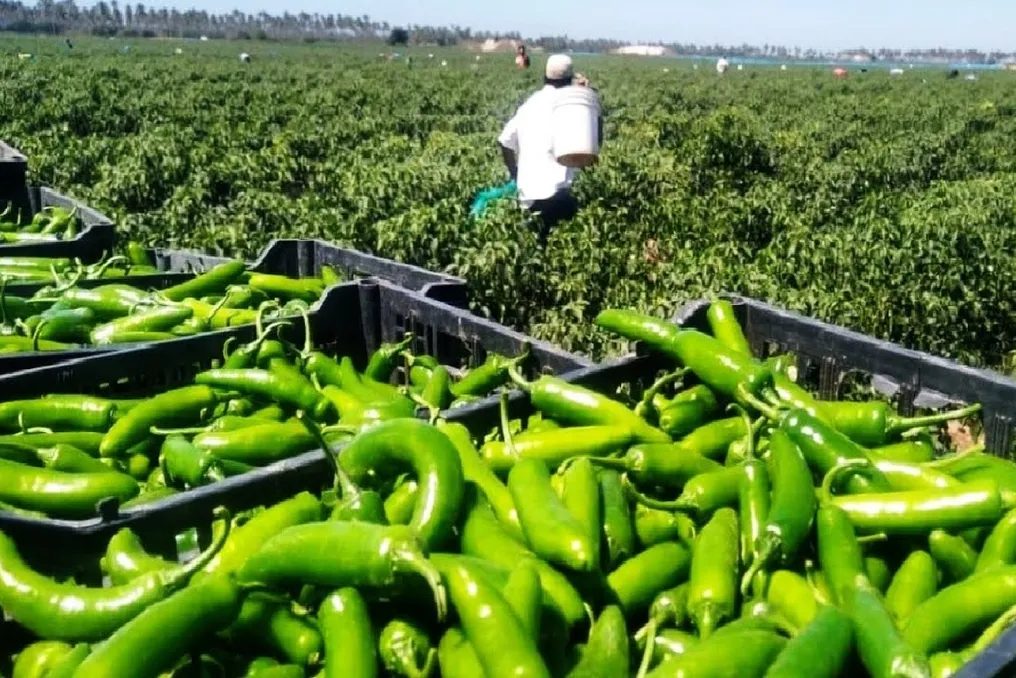
If you are looking for an alternative source of income besides traditional crops, consider growing hot peppers. This product has constant year-round demand and can be sold both in local markets and large wholesale markets. A feature of this crop is the possibility of multiple harvests after the plant has fully developed.

Farming Opportunities

Both small and large farmers can grow hot peppers. At the initial stage, you can start with a small plot to gain experience in market operations and yield. Loamy soil with good drainage is best suited for this, as water accumulation can damage plant roots. Therefore, proper water drainage must be ensured when preparing the field.

Choosing Varieties for High Yield

When cultivating hot peppers, variety selection is crucial. Farmers can consider improved and hybrid varieties such as Kashi Ratna, Kashi Jamuna, Arun-99, and VNR-6013. These varieties are characterized by good yield and increased resistance to certain diseases. However, not every variety is suitable for all regions. Before purchasing seeds, it is recommended to consult an agronomic center or an agricultural specialist in your area.

Starting the Process with Seedlings

Hot pepper cultivation begins with sowing seeds in a nursery to prepare seedlings. It is necessary to choose high-quality certified seeds. In the nursery, plants should be watered as needed and protected from pests and diseases. Usually, healthy seedlings are ready for transplanting into the field after 30–35 days. When planting, it is important to maintain the correct spacing so that the plants have enough room to grow.

Precautions After Planting

Regular care is required after transplanting plants into the field. Weeding must be done periodically so that weeds do not absorb nutrients. Watering should be carried out taking into account the soil type and weather conditions. During flowering and fruiting, moisture deficit must be avoided, but waterlogging in the field must also be prevented. The use of fertilizers and nutrients should be based on soil analysis and the advice of an agronomist.

When Do Fruits Appear?

Fruits on hot pepper plants may begin to appear approximately 50–60 days after transplanting. This period can vary depending on the variety, weather, and farming methods. Harvesting is done when the pepper is fully ripe and ready for sale in the market. The fruits should be carefully detached from the stem to avoid damaging the branches and the rest of the harvest.

Multiple Harvests

One of the advantages of growing hot peppers is that harvesting does not require it to be done all at once. Depending on the condition of the crop, the farmer can harvest peppers weekly or every 8–10 days. With proper care and favorable weather, harvesting can continue for several months, allowing the farmer to sell their produce at different times on the market. However, the duration of production depends on the variety, weather, and the overall condition of the crop.

Yield Per Hectare

With ordinary hot pepper varieties, a yield of about 200–250 quintals per hectare can be obtained. When using improved varieties and ensuring optimal conditions, the yield can reach 300–400 quintals per hectare. It should be noted that this is the maximum potential volume, which is not guaranteed. Actual yield depends on the soil, seeds, weather, irrigation, fertilizers, and pest and disease control.

Costs and Income in Agriculture

In growing hot peppers, costs are related to seeds, nursery, field preparation, fertilizers, irrigation, labor, pest and disease control, harvesting, packaging, and transportation. Costs can vary significantly depending on the region and farming methods. According to available agricultural studies, the cost per hectare ranges from approximately 1.3 lakh rupees to over 3.3 lakh rupees. This amount should not be considered fixed for every farmer. To calculate the income, assume that 250 quintals, or 25,000 kg of peppers, were obtained from one hectare. If the farmer receives an average price of 40 rupees per kilogram, the total sales volume will be 10 lakh rupees. Real profit will only be realized after deducting the costs of farming, harvesting, packaging, and transportation. Income can also change depending on fluctuations in market prices.

Tips for High Income

Before starting to grow hot peppers, you need to study information about the soil, weather, and market in your region. You should use certified seeds and choose varieties suitable for your climate. Ensure good drainage in the field and avoid excessive use of fertilizers or pesticides. If the plants show signs of problems such as leaf curling, spots, or fruit rot, you should seek advice from an agronomist. Also, before planting, gather information about demand, prices, and buyers in nearby markets to minimize difficulties in selling the harvest.

Popular