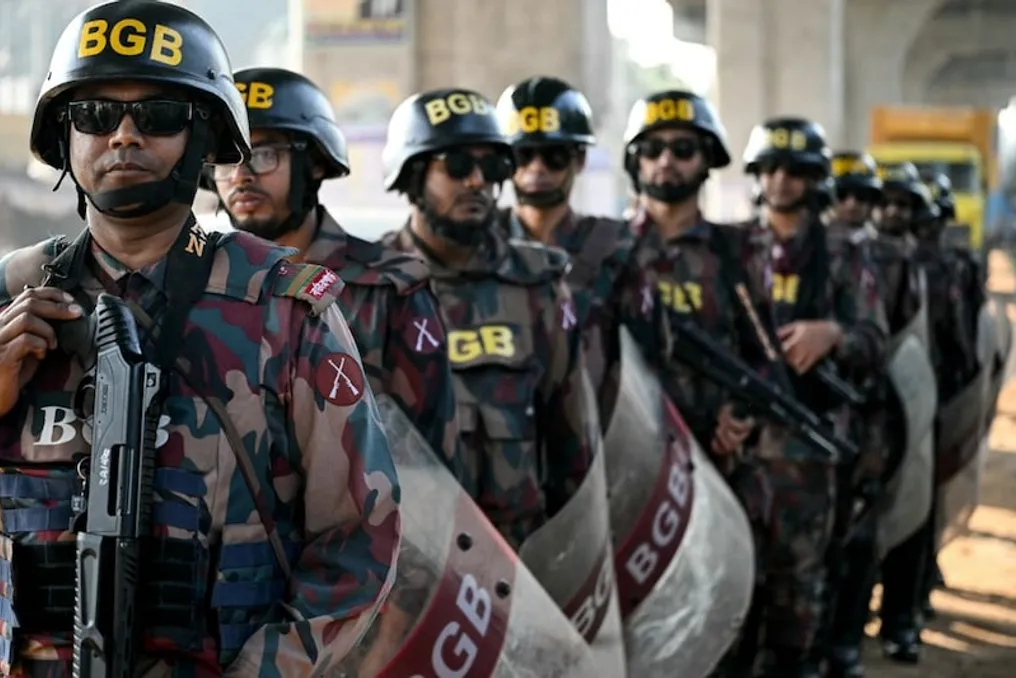
Textile industry migrant workers in Bangladesh protest over wage demands; 50 factories closed, security forces deployed
Read more
Aaj Tak
www.aajtak.in

Textile industry migrant workers in Bangladesh protest over wage demands; 50 factories closed, security forces deployed

Unrest among workers in Bangladesh's textile industry has flared up again. On Sunday, employees of garment factories held demonstrations in several industrial areas, demanding an increase in wages. Amid these protests, 13 garment factories were uncertainly closed, and another five declared a holiday. According to factory owners, the total number of enterprises whose operations were disrupted in the industrial zone reached 50.

Workers took to the streets in the areas of Konabadi and Mauchak, located near the capital Dhaka, in Gazipur. Police used tear gas and sound grenades to disperse employees who were protesting near one of the garment factories. Local time indicated that the police began actions around 8:30 AM. Subsequently, employees from neighboring factories also took to the streets, forcing management to close several production workshops.

Amjad Hossain, Superintendent of Gazipur Industrial Police, reported that on Sunday morning, workers attempted to gather in various locations, but security forces prevented this in a timely manner. A police presence has been deployed in sensitive areas of the industrial zones. To maintain law and order, the Bangladesh Coast Guard (BGB) deployed 13 platoons of paramilitary forces. Additionally, personnel from the anti-terrorism police, special response battalion, and Ansar Battalion were involved in security provision. Furthermore, 25 executive magistrates assumed relevant duties.

Workers in Bangladesh's garment sector have been demanding an increase in the minimum monthly wage from 12,500 BDT to 30,000 BDT for several weeks. They argue that the costs of food, housing rent, transportation, and medical care are constantly rising, while their income has not increased proportionally to these expenses.

The government established a Minimum Wage Council on November 1st. At the first meeting of the Council, it was decided to finalize recommendations for the new wage system by the end of November. The next Council meeting is scheduled for Monday, where representatives of the Bangladesh Garment Manufacturers and Exporters Association (BGMEA) will also present their proposals and demands.

Bangladesh is the second-largest apparel exporter in the world after China. More than 4 million people work in this industry, and its share of the country's total export revenue exceeds 80 percent. International brands such as H&M, Zara, and Gap purchase clothing from Bangladesh.

Factory owners warned that continuous strikes and factory closures during the peak production season could negatively affect the delivery of orders for the spring and summer collections. This creates a risk of weakening foreign buyer confidence and order cancellations.
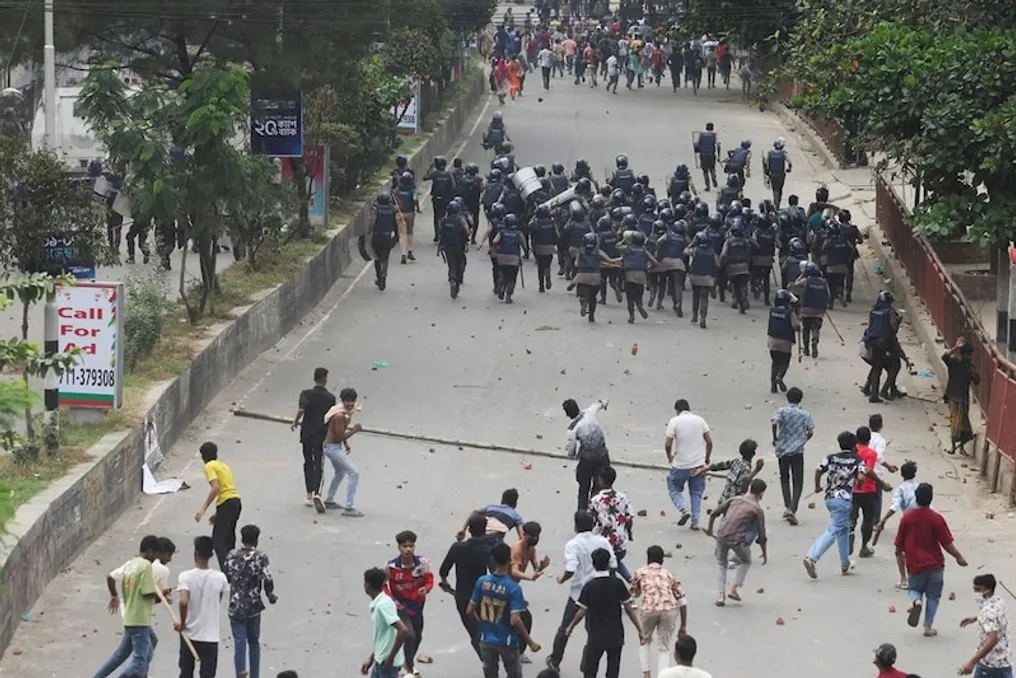
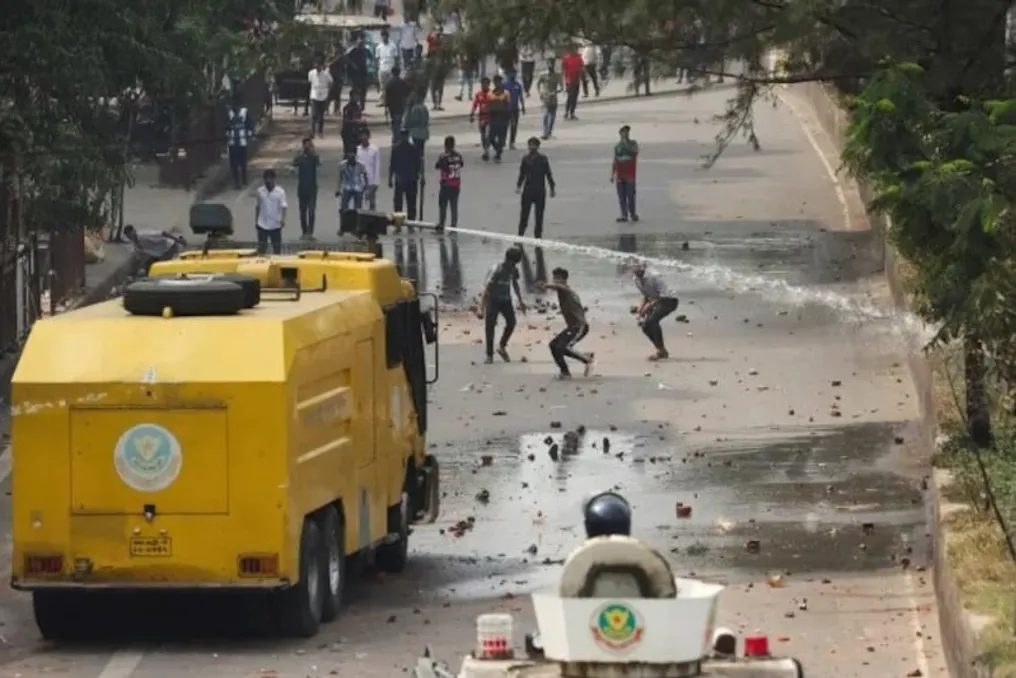
Similar stories

Mass protests erupt in Bangladesh over low wages, hundreds of factories shut down
Read more
www.aajtak.in

Mass protests erupt in Bangladesh over low wages, hundreds of factories shut down

The situation in Bangladesh has flared up again after nearly 28 months as residents took to the streets. The protests have been accompanied by attacks on police officers, arson, and stone-pelting. Although many roads remain blocked, the cause of the current demonstrations is not a change in government, but rather the demand for a wage increase among textile industry workers.

Earlier, in July 2024, protests against Sheikh Hasina took place in Bangladesh. However, the current demonstrations are characterized by an organized movement: textile workers are taking to the streets, halting traffic and shops, and becoming aggressive when met with resistance.

These demonstrations began on October 31. Workers blocked roads in industrial areas such as Mirpur (Dhaka), Ashulia, Savar, and Gazipur, and suspended the operation of garment factories. As a result of the protests and strikes, about 529 enterprises were affected, and approximately one million workers were impacted.

Incidents of violence, arson (of police vans and vehicles), and vandalism occurred in some places. Police used tear gas, water cannons, and sonic grenades; BGB forces were also deployed in several areas.

Work resumption was expected on Monday, but this did not happen. Workers took to the streets again. Demonstrations are ongoing in several streets in the Mirpur area of the capital, where clashes are being observed.

According to the English newspaper The First Alo, on Monday morning, around 10:45, some workers attempted to exit an alley in the Senpara Parbat area (Mirpur-10) onto the main road. Police drove them away and released several tear gas balls. Later, in Mirpur-2, near the Proshika intersection next to the stadium, workers also tried to get onto the road, and the police pushed them back.

Eyewitnesses reported that workers arrived in small groups from the Rupnagar area and moved through Mirpur-2 towards Proshika, bypassing the stadium. The situation remains tense, and metro service is disrupted in Mirpur.

Textile workers in Bangladesh are demanding a minimum wage of 30,000 Taka, whereas they are currently paid only 12,000 Taka. Workers argue that rising prices and the increased cost of living (including food, housing/rent, transport, and healthcare) have significantly reduced their purchasing power, making it impossible to support a family at the current pay level. It is believed that wages in the Bangladeshi garment sector are among the lowest in the world.

Recent instability in the Bangladeshi garment industry is linked to the involvement of industrialists associated with the ousted government of Sheikh Hasina. According to The Daily Star, Home Minister Salahuddin Ahmed stated on November 2 that some factory owners connected to Awami League, former MPs, and ministers are provoking instability in the textile industry. He accused supporters of the overthrown government of inciting workers to block highways, commit arson, and engage in violence, asserting that the government possesses video and audio evidence of these events. The minister also noted that some factory owners deliberately closed their businesses to exacerbate the situation.

According to The One Report, during the unrest, at least 529 textile factories in Mirpur, Savar-Ashulia, Gazipur, and Mymensingh declared holidays. The government has established a special commission to determine the minimum wage level.

The garment industry is considered a pillar of the Bangladeshi economy. The ready-made garment sector is among the country's largest export industries and is the primary source of foreign currency earnings. Bangladesh is among the leading textile exporters, and its products are in high demand in major markets, including Europe and America. Factories produce T-shirts, shirts, trousers, jeans, jackets, and other ready-made clothing. Millions of people work in this industry, a significant proportion of whom are women.

In 2024–2025, exports from this sector amounted to approximately $39.35 billion, exceeding 81% of the country's total exports. Bangladesh ranks second globally in ready-made garment exports, trailing only China. Nevertheless, this sector faces several challenges, such as low worker wages, poor working conditions, demands for salary increases, and factory strikes.

Workers Protest in Bangladesh Over Wage Hike, Riots Occur
Read more
www.aajtak.in

Workers Protest in Bangladesh Over Wage Hike, Riots Occur

Workers in Bangladesh held demonstrations on Sunday in Gazipur and the capital Dhaka, demanding an increase in the minimum wage. In Gazipur, workers blocked the Dhaka-Tangail highway, insisting on a monthly salary of at least 30,000 Taka, which is approximately 23,000 rupees.

During the protests, the government announced the creation of a new minimum wage council. Local media reported that in Gazipur, workers took to the highway with slogans, and employees arrived at many sections of the highway, including Safipur Bazar, Chandra Palli Bidhyut, Mauchak, and Telichala, armed with batons. Workers from neighboring factories joined the action after registering at their workplaces in the morning.

During the demonstrations in the Konbari area, a police box located in the middle of the Dhaka-Tangail highway was set on fire. The incident was provided by the head of the Konbari police station, Iftehar Hossain. Five platoons of the Bangladesh Coast Guard (BGB) were deployed to stabilize the situation.

Similar actions also took place in Dhaka, where textile industry workers blocked the Mirpur-10 intersection. Employees arrived from various areas of Mirpur on Sunday morning and blocked the intersection, leading to the closure of the Mirpur-10 metro station gates. Police were dispatched to the scene.

Bangladesh's textile industry comprises about 4,000 registered factories employing over 4 million people. According to the Bangladesh Garment Manufacturers and Exporters Association (BGMEA), the country is the second-largest textile exporter in the world after China. In the fiscal year 2025-26, textile exports from Bangladesh amounted to $38.70 billion, with products sent to over 150 countries.

Meanwhile, Minister of Labour and Employment Ariful Haque Chowdhury called on protesting workers to return to work. During a press conference at his secretariat, he stated that the government is considering the workers' demands 'with the utmost seriousness.' He announced that a new minimum wage council has been established in response to workers' requests and expressed hope that workers would now leave the streets and return to their factories.

Sheikh Ashfaqur Rahman, a senior district and session judge, will serve as the chairman of the new minimum wage council. Employer representatives on the council include ABM Shamsuddin, Director of BGMEA, and Asif Ayub, General Secretary of the Bangladesh Employers' Association. Worker representatives include Babul Akter, General Secretary of BGIWF, and Anwar Hossain, Chairman of the Bangladesh Ethnic Workers' Party. Professor Mosleh Uddin Ahmed from the Faculty of Public Administration at Dhaka University has been appointed as an independent representative of the council. Babul Akter noted that he received information about the establishment of the wage council and hopes that the government will soon begin its work.

Popular