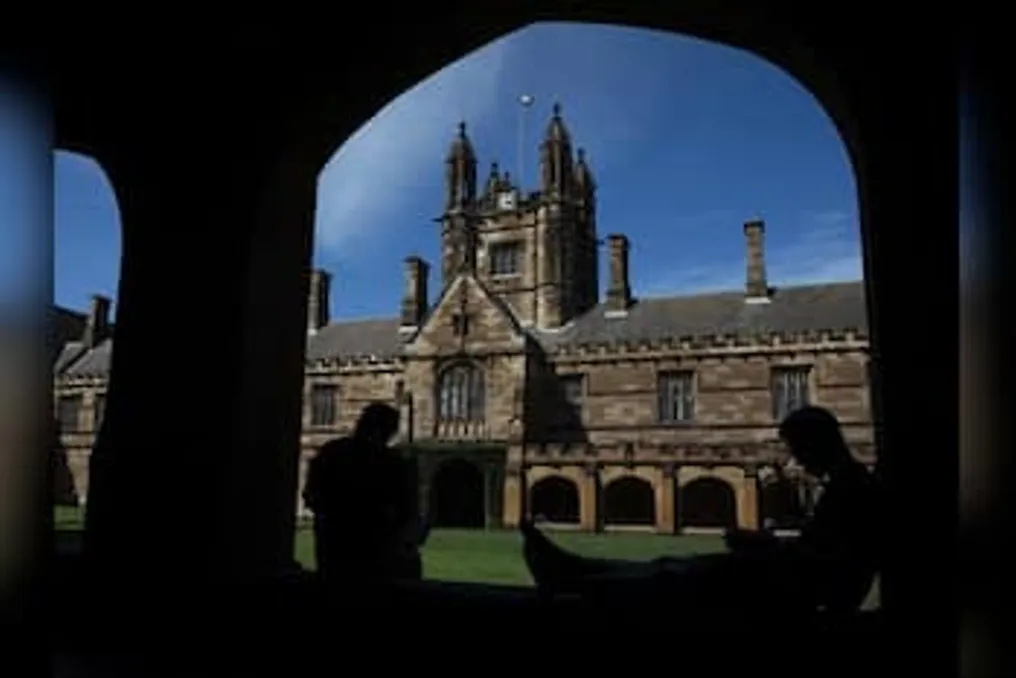
India invites Singaporean universities to open campuses and establish university towns
Read more
Business Standard
business-standard.com

India invites Singaporean universities to open campuses and establish university towns

India's Minister of Education, Pranal Joshi, announced that India has invited Singaporean universities to establish campuses within the country and requested Singapore's expertise for developing planned university towns, utilizing the model of the National University of Singapore's (NUS) University Town.

These proposals were discussed during a bilateral meeting between Joshi and Singapore's Minister of Education, Desmond Lee, at the Singapore Management University (SMU) following the opening of the fourth Singapore-India hackathon. In a post on X, Joshi noted that the parties discussed strengthening cooperation in school education, higher education, professional development, research, and innovation.

Joshi emphasized: 'I have invited more Singaporean universities to establish campuses in India and requested Singapore's expertise to develop our proposed University Towns, based on the NUS University Town model.'

This invitation aligns with India's efforts to attract foreign universities under the National Education Policy (NEP) 2020. In 2022, the UGC listed leading Singaporean institutions, including NUS, Nanyang Technological University (NTU), and Singapore Management University (SMU), among about 260 foreign universities selected as potential partners for collaboration and campus expansion in India. Former UGC Chairman M. Jagadesh Kumar stated that the commission would work with interested Singaporean institutions to facilitate their entry into the Indian market. However, none of the Singaporean universities are currently listed in the UGC's roster of foreign higher education institutions with campuses in India.

According to UGC regulations of 2023, foreign universities can open campuses in India provided they obtain the necessary permissions and meet the criteria. By August 2026, the UGC has sent 16 letters of intent to 15 foreign institutions from Australia, Italy, the UK, and the USA.

Meanwhile, the university towns proposed by India were announced in the Union Budget 2026-27. This budget provides for the creation of five such integrated academic zones near major industrial and logistics corridors. These zones are expected to integrate numerous universities, colleges, research institutes, training centers, and residential facilities. The Ministry of Education has begun consultations with state governments, academic institutions, and industry representatives to form the appropriate structure.

The NUS University Town represents a comprehensive campus ecosystem that combines residential facilities, educational infrastructure, learning clusters, and common spaces to stimulate academic and social activity.

The two ministers also discussed mutual recognition of qualifications, deepening faculty and student exchanges, joint capacity-building programs, and strengthening industry-academia linkages.

Joshi added that they discussed cooperation in artificial intelligence in education, advanced materials, clean energy, fintech, semiconductors, and other new technologies, as well as joint research and support for startups and innovators in deep tech through Bharat Innovates.

Joshi also proposed holding the fifth Singapore-India hackathon in India in 2027 and establishing a periodic Conference of Indian and Singaporean Higher Educational Institutions. The fourth edition of the hackathon, organized by SMU's Institute of Innovation and Entrepreneurship, the All India Council for Technical Education, and the Ministry of Education's Innovation Hub, is taking place in Singapore from November 15 to 17, gathering about 120 students from both countries.


Similar stories

Four British universities conduct joint graduate recruitment in India
Read more
www.aajtak.in

Four British universities conduct joint graduate recruitment in India

For students dreaming of studying at foreign universities, a new opportunity has emerged to build a career directly in India. Four British universities are organizing a joint placement drive for their postgraduate students studying in India for the first time. Thanks to this initiative, over 250 students may secure employment even before completing their studies.

Students from sectors such as finance, technology, artificial intelligence (AI), management, and creative industries will participate in this recruitment drive.

The joint recruitment drive will involve campuses of four British universities in India. These include: The University of Bristol Campus in Mumbai, the University of York in Mumbai, the University of Liverpool in Bangalore, and the University of Aberdeen in Mumbai.

This initiative is being implemented by the global education company Emeritus. The event is named UK Universities Placement Week. This is the first instance where all four universities are jointly organizing recruitment for their postgraduate first-year students.

More than 250 postgraduate students from these four universities will take part in the recruitment drive. These students plan to complete their degrees in 2027. Participants include both recent graduates and professionals with 2.4 to 3 years of work experience. Students' fields of study and experience cover finance, banking, IT, consulting, auditing, accounting, sales, marketing, business analytics, media, and design.

The recruitment drive will take place at the end of November. Companies will be able to conduct interviews and offer jobs to the students. It is important to note that companies can issue job offers before the completion of studies. Interested companies must report their hiring needs by mid-November. Following this, the Central Placement Committee will review the companies' applications and their hiring requirements.

The universities will review student profiles against available vacancies and select suitable candidates. Subsequently, selected companies can conduct online or offline interviews with students from all four campuses in Mumbai and Bangalore.

Students in this recruitment drive study courses related to finance, technology, AI, management, and creative industries. Education at these university campuses is based on curricula developed by their parent universities in the UK. Academic assessment standards also align with those of the parent campus.

These institutions focus on preparing students according to industry demands. To achieve this, they provide opportunities for practical assignments, live projects, and interaction with corporate activities.

Typically, the campus recruitment season in India ends around August or September. Therefore, this November drive can provide companies with an additional hiring opportunity. This allows companies to assess students' talent and skills even before graduation. At the same time, students get a chance to find employment before receiving their diploma. However, participation in the drive does not guarantee employment; selection will depend on company needs, the selection process, and interviews.

India urges students to verify medical universities in Uzbekistan against standards
Read more
uzdaily.uz

India urges students to verify medical universities in Uzbekistan against standards

The Indian government strongly recommends that students planning to pursue medical education in Uzbekistan thoroughly examine the universities and their curricula to ensure compliance with the requirements of the country's National Medical Commission (NMC).

The Ministry of External Affairs of India continues dialogue with Uzbekistan regarding the education of Indian students, including those studying medical programs. Randhir Jaiswal, a representative of the Indian Ministry of External Affairs, stated that New Delhi aims to guarantee that the education received meets NMC standards.

These remarks were made by Jaiswal during a regular press briefing in New Delhi on Tuesday, in response to a question about the decline in the number of Indian citizens enrolling in MBBS programs in Uzbekistan.

He reported that India maintains contact with Uzbek authorities and advised prospective applicants to consult the guidelines published by the Indian Embassy in Tashkent and the National Medical Commission. These recommendations apply to enrollment in medical programs not only in Uzbekistan but also in other countries.

The representative emphasized that the Indian government pays special attention to the quality of medical education and protecting students from potential exploitation by unscrupulous intermediaries and other individuals both in India and abroad.

In April, the NMC released a guideline for Indian applicants planning to receive basic medical education in Uzbekistan. The Commission referenced cases where Indian citizens enrolled in private medical colleges abroad whose programs and learning conditions did not meet the requirements established in India.

The NMC urged potential students to check the status of educational institutions and avoid enrolling in unauthorized institutions or programs that do not comply with regulatory standards. The Commission warned that failure to meet the established requirements could lead to the refusal of medical qualification registration in India.

Mandatory criteria include the duration of study, language of instruction, curriculum content, volume of clinical training, as well as the conditions for completing internships or clinical practice.

Uzbekistan implements BTEC qualifications in 45 additional colleges
Read more
uzdaily.uz

Uzbekistan implements BTEC qualifications in 45 additional colleges

The international education company Pearson and the Agency for Vocational Education of Uzbekistan are expanding their cooperation in personnel training. As part of the next stage of the BTEC international professional qualifications program, these qualifications will be introduced in 45 additional state technical colleges across the country.

It is expected that 3,500 more students will begin studying under these programs in the 2026/2027 academic year. This initiative is part of the national strategy 'Uzbekistan-2030' and aims to modernize vocational education, improve the quality of specialist training, and expand employment opportunities for youth.

BTEC programs will cover areas of importance to the national economy, including engineering, information technology, construction, tourism, hospitality, healthcare, and social care.

Teacher Training and International Educational Standards

Teacher training is a key element of this partnership. Pearson and the Agency for Vocational Education are working to ensure that educational institutions and teaching staff are ready to launch the new programs. More than 380 teachers from the vocational education system have already completed week-long training courses in Tashkent.

The training focused on improving teaching methods, approaches to assessing students' knowledge and skills, and student support systems. Special attention was paid to practical assignments simulating real work situations, as this approach is fundamental to BTEC programs focused on developing practical skills demanded by employers.

Jane Baker, Vice President of Pearson for Professional Qualifications, noted that this expansion will allow youth in various regions of Uzbekistan to obtain internationally recognized certificates. She emphasized that a technical college student in Samarkand or Nukus should have the opportunity to receive a qualification recognized by employers in Tashkent or abroad.

Azimjon Husanov, Director of the Agency for Vocational Education, also highlighted the significance of this partnership for integrating Uzbekistan's vocational education system into the international educational environment. He stated that cooperation with Pearson is an important step towards bringing the system in line with global standards, providing youth with practical skills that meet the requirements of both domestic and international labor markets.

Further Education and Employment Opportunities

Pearson BTEC qualifications are recognized in over 70 countries. Their educational model is based on practical tasks and the assessment of professional competencies, allowing students to acquire knowledge and skills directly applicable to their future careers. These qualifications are valued by employers and educational institutions, opening up additional prospects for graduates for professional growth and further university studies.

The expansion to 45 state technical colleges marks another stage in the widespread implementation of international educational standards in Uzbekistan. An increase in the number of participating institutions and coverage of more youth across the country is planned. Overall, the interaction with Pearson reflects Uzbekistan's commitment to making vocational education more practice-oriented and closely linked to the needs of the economy, which is particularly relevant amid technological changes and growing demand for specialists with specific professional skills.

The introduction of BTEC programs is intended to expand youth access to competitive education, improve workforce preparation, and strengthen the links between the vocational education system and the labor market.

Popular