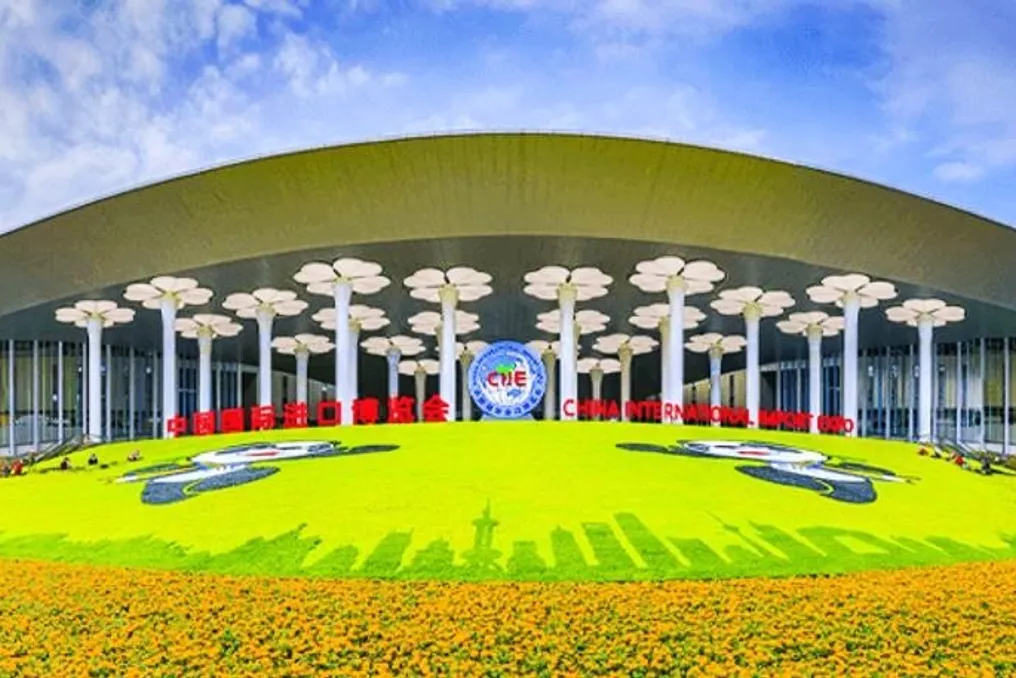
The Islamic Republic of Iran demonstrated significant and multifaceted participation at the Ninth China International Import Expo (CIIE 2026), held in Shanghai. This event marked an important moment in expanding economic, technological, and investment ties between Tehran and Beijing.
The exhibition, which took place from November 5 to 10, 2026, at the Shanghai National Exhibition and Convention Center, gathered over 162 countries across an area exceeding 440,000 square meters. In the commercial sector, 4,142 foreign companies participated, while 69 countries and international organizations were represented in the national pavilions. Of the companies listed among the world's top 500, 300 took part.
Iran's presence at CIIE 2026 was not merely a product display but a strategic initiative aimed at deepening economic diplomacy, showcasing technological achievements, and building sustainable partnerships with Chinese counterparts. The Iranian delegation, led by Ambassador Abdolreza Rahmani Fazli, used this platform to present a comprehensive vision of Iran's economic potential, emphasizing knowledge-based industries, strategic sectors, and joint investment opportunities.
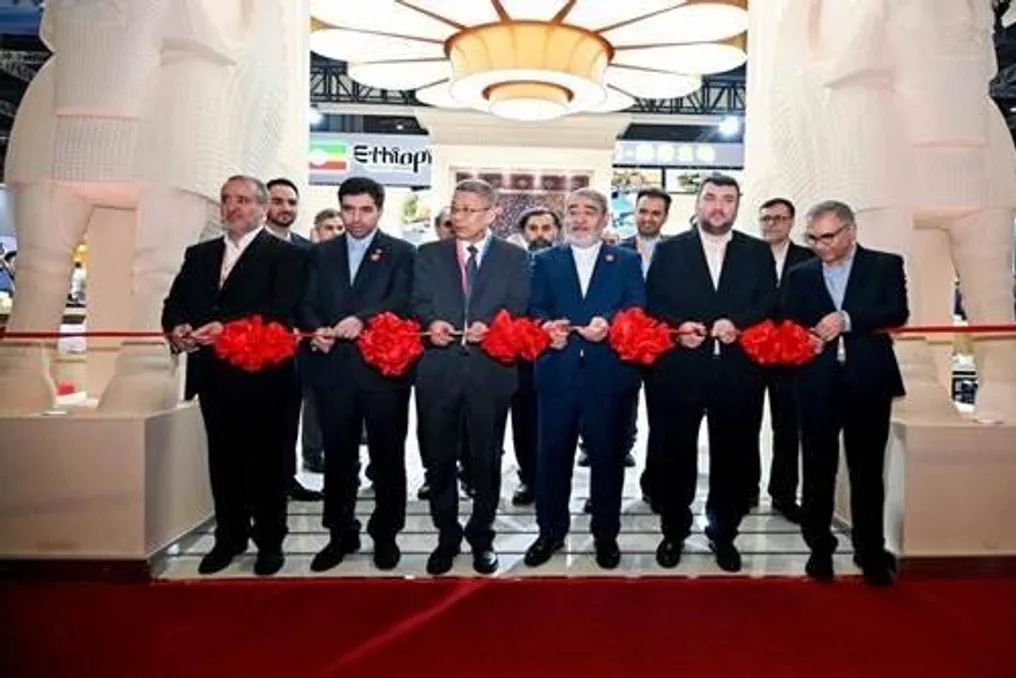
The national pavilion of the Islamic Republic of Iran at CIIE 2026 was designed under the concept of 'Connecting Authenticity and Innovation.' It highlights the integration of the country's cultural and civilizational identity with Iran's modern innovative and technological capabilities. The pavilion includes sections dedicated to knowledge- and technology-based products, Iranian crafts, and fine art, demonstrating the country's creative, manufacturing, and export potential.
During the opening ceremony of the national pavilion, Ambassador Rahmani Fazli stressed the necessity of developing economic, technological, and joint investment cooperation between the two states. He noted that Tehran values the constructive stance and valuable support from the Chinese government and people. Characterizing Iran-China relations as based on mutual respect, common interests, and multilateralism, he added that 'the joint opposition of the two countries to unilateral approaches demonstrates the depth of their political and security relations and is the strongest foundation for developing Tehran-Beijing trade and economic ties.'
The Ambassador also described CIIE as a step towards deepening scientific and economic exchange between participating countries. He reported that the Iranian pavilion presented the country's innovative achievements in fields such as nanotechnology, biotechnology, medicine, and medicinal plants. He expressed hope that these capabilities would serve as a basis for exploring the potential of creating joint value chains between Iran and China.
Referring to China's 15-year five-year plan launch, Rahmani Fazli described it as a far-sighted roadmap focused on innovation, the digital economy, green development, technological self-sufficiency, and international cooperation. According to him, this plan covers areas such as the development of artificial intelligence and digital technologies, the growth of green and low-carbon industries, strengthening knowledge-based production, and increasing economic productivity, creating new opportunities for cooperation beyond the inspiring vision.
The Ambassador further identified areas such as joint research projects, commercialization of new industries, clean production, and the development of technological standards as most suitable for developing bilateral cooperation. Mentioning the potential of the 'Belt and Road Initiative,' he stated: 'There are valuable opportunities for joint investment by Iran and China in infrastructure, advanced industries, renewable energy, smart transport, and green economy, which can lead to tangible results in bilateral cooperation.'
The Chinese publication China Youth Daily specifically noted that alongside technological products and achievements, Iranian works of art and crafts were also showcased at the exhibition. The Iranian Ambassador, referencing the historical cultural connection between Tehran and Beijing dating back to the Silk Road, stated: 'Iran and China, as two ancient civilizations in East and West Asia, are a prime example of long friendship, mutual respect, and fruitful cooperation.'
He also noted the 55th anniversary of establishing diplomatic relations between Iran and China and the 10th anniversary of comprehensive strategic partnership as valuable opportunities to underscore Tehran's and Beijing's shared will to strengthen multilateralism and constructive interaction.
Parallel to CIIE 2026, the Iran-China Forum on Investment and Trade was held, gathering about 300 business representatives, members of trade associations, chambers of commerce, and Chinese officials to discuss supply chain cooperation opportunities between Iran and China.
Mehdi Heidari, Deputy Minister of Economy and Head of Iran's Organization for Investment, Economic and Technical Assistance, announced that Iran has prepared a portfolio of approximately 150 projects across 11 strategic sectors with a total estimated value of $300 billion. He specified that modernizing and expanding the country's energy and infrastructure sectors over the next five years will require about $250 billion in investment, with about 30 of the projects presented to foreign investors belonging to the petrochemical sector and requiring over $45 billion.
Abdulsadegh Nisi, Advisor to the Head of Iran's Trade Promotion Organization (TPO) and General Director of its East Asia and Oceania Department, highlighted the expansion of high value-added goods exports and the strengthening of trade corridors as two main areas of economic cooperation between Iran and China. He called for a shift from exporting raw materials and semi-finished products to finished goods in sectors such as food, agriculture, petrochemicals, mining, construction materials, and manufacturing.
The Governor of South Khorasan Province, Seyed Mohammad Reza Hashemi, presented the province's economic potential, pointing to more than 58 active mineral types, over 300 sunny days per year, and the potential for solar and wind energy generation as key investment advantages. He also noted that South Khorasan produces about 98 percent of the world's seedless apricot, ranks first in Iran for jojoba production, and second for saffron production, and is home to about 80 species of medicinal plants.
Hosein Rouzbakh, Head of the Organization of International Scientific and Technical Cooperation Development, called for moving beyond traditional commodity exchange towards technological and industrial partnership, as well as joint investments. Mehrdad Rahimi, Deputy for International Affairs of the National Petrochemical Company, emphasized the importance of the Chinese market for Iran's petrochemical industry and called for expanding cooperation in investment, financing, transportation, and completing the industry's value chain.
The Tehran Chamber of Commerce, Industry, Mining, and Agriculture (TCCIMA) participated in CIIE 2026 for the third consecutive year, providing a platform to seek cooperation opportunities with Chinese economic players and showcase the capabilities of Iranian companies. Mahmoud Najafi Arab, President of the Tehran Chamber, stressed the need for an effective presence of the Iranian private sector in global markets and deemed the chamber's role in organizing the presence of economic enterprises as vital and influential.
Najafi Arab discussed the Tehran Chamber's approach to expanding trade interactions between Iranian and Chinese companies, aiming to move beyond the traditional buyer-seller model. He emphasized the need to develop joint cooperation, technology and technical experience transfer, and strengthen the production capacities of enterprises in both countries. The Tehran Chamber's pavilion was located in Hall 7.1, where representatives of enterprises engaged in food and agriculture, dates, dairy products, saffron, sweets, and chocolate were present.
A joint meeting was held between the Tehran Chamber delegation and Iranian traders residing in Eastern China, attended by the Iranian Ambassador to China and the head of the Iranian Consulate in Shanghai. The goal of the meeting was to identify obstacles to trade development between Iran and China and propose solutions to strengthen trade relations in the areas of investment, identifying high value-added products for target export markets, and supporting economic entities.
Mehdi Farazi, Head of the Iranian Consulate in Shanghai, reported that 20 private entities representing Iranian merchants and business owners in Eastern China attended the meeting. Issues related to monetary and banking transfers, logistics, achieving stable sales, and strengthening investments were discussed.
Najafi Arab mentioned the Tehran Chamber's scientific research cooperation with the Strategic Deputy of the Presidency to decentralize southern ports and strengthen alternative transport and logistics routes to facilitate the country's trade operations. He stated that 'China is one of Iran's main trading partners, and exchange with this country can be expanded through investment and the transfer of knowledge and technology.' He also announced that the Tehran Chamber is opening representative offices in some Chinese cities to simplify economic contacts for the private sector.
Mohammad Ali Rezaei Kamal Abad, President of the Iranian Union of Medicinal Plants, Saffron, and Food Products, announced the launch of a factory in the Khorgos region to enter the Chinese market. He noted that the global turnover of medicinal plants reached about $120 billion in 2023 and is projected to soon reach $200 billion. He expressed regret over Iran's small share in saffron exports, noting that imports of this product into China via Iran were less than 30 tons, while China supplies its saffron through intermediary countries such as the UAE and Afghanistan.
In the concluding part of the joint meeting, Ambassador Rahmani Fazli stressed the importance of continuity and serious follow-up in international trade. He stated that the Iranian Embassy in China supports economic entities to develop trade relations and counteract pressure caused by sanctions and economic blockade. He viewed strengthening economic diplomacy as one condition for increasing the country's currency inflows and noted the value of the Tehran Chamber's continuous participation in CIIE for the third time in a row.
The Ambassador also announced the significant presence of Iranian companies operating in the fields of energy, petrochemicals, mining, agriculture, dairy, and new technologies at the exhibition. He added: 'Tehran is fully ready for further expansion of mutual cooperation with the Chinese side in the fields of trade, investment, and technology transfer.'
Abdulsadegh Nisi, General Director of the TPO's East Asia Office, called for assessing potential, strengthening the e-commerce sector, developing export incentives, simplifying the process of establishing trade centers in target export markets, and implementing practical exhibitions in various regions.