In 1853, a resident of Catalonia, Spain, began excavating a well in his backyard and found an underground gallery leading to an underground river. Access to this cave was complicated, and only in 1957 was one of its entrances cleared.
At the site, researchers identified geological layers and archaeological finds that help in understanding human presence in the area over time, including prehistoric tools and a Homo sapiens femur. This cave is known as Cova de la Font Major, and it is one of the largest in the world, with over 3.5 kilometers of galleries.
The site underwent restorations starting in the 1990s and has since operated as a cave museum open to daily visitors. However, it was only in 2019 that researchers detected parallel traces and other markings on the cave walls indicating the existence of Paleolithic engravings, which had been practically invisible for decades.
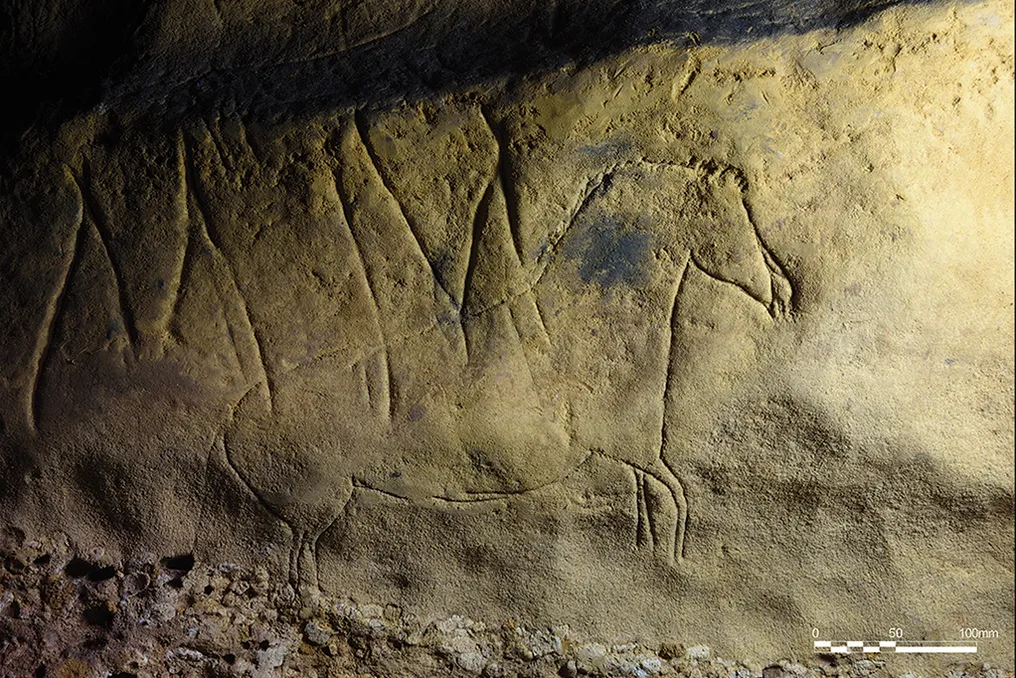
Because of this, regional archaeology teams have focused recent efforts on finding more engravings. A new study, published in the scientific journal Antiquity, conducted a detailed analysis of the cave and cataloged 280 graphic symbols, 55 of which are animal representations. The other drawings are more conceptual, such as geometric patterns and sequences of parallel lines.
This discovery is noteworthy because most of the known rock art assemblages in the Mediterranean do not have such a high number of fauna drawings. The material highlights representations of horses and bears, as well as figures of goats, cattle, and deer.
The study's authors state that 'the Font Major assemblage is one of the largest assemblages of Paleolithic rock art in the Iberian Mediterranean. Its recent discovery requires a reconsideration of regional prejudices.'
This discovery changes the way the Paleolithic period in northeastern Iberia is interpreted, an area that was long considered sparsely populated during prehistory, with few records of rock art. Previously, only two Upper Paleolithic engravings were known in Catalonia.
This suggests that local communities might have possessed their own artistic tradition and be more numerous than previously thought. Although the precise dating of the engravings is still under discussion, the research points to the possibility that many of them belong to pre-Magdalenian phases, i.e., earlier than the Magdalenian, a final phase of the Upper Paleolithic known for its artistic expressions. This implies that some of these representations may be more than 18 thousand years old.
The next step in the investigation is to try to determine the age of the animal representations through uranium series analyses in calcite deposits covering one of the figures. It is important to note that many of the engravings have suffered damage over the decades due to intense foot traffic at the site, which caused wear, graffiti, and inscriptions on the walls, including names and dates over some representations. Currently, the areas with the engravings are closed to the public.